You’ll maximize storage by vacuum sealing proteins like freeze-dried meats (10+ years), powdered eggs and milk (10-20 years), and blanched vegetables such as bell peppers and broccoli (2-3 years frozen). Grains, legumes, and pasta extend dramatically when sealed—rice lasts eight years, beans reach 10-12 years, and pasta stores for 2-3 years. Don’t overlook baked goods, cookies, and pantry staples like herbs and chocolate chips, which resist oxidation and contamination. Understanding which items truly benefit from sealing reveals optimization strategies worth exploring.
Proteins That Seal Well for Extended Storage
When you’re looking to maximize your freezer storage capacity, proteins stand out as ideal candidates for vacuum sealing. You’ll extend beef and poultry storage from 6-12 months to three years by vacuum sealing, while maintaining nutritional value and quality throughout the extended period. Freeze dried meats offer lightweight, portable options lasting 10+ years when stored correctly in airtight containers. You can achieve 20 grams of protein per serving with freeze-dried beef steak dices, making them ideal for emergency kits. Searing the steak before freeze drying ensures that flavor and texture are preserved. Powdered proteins provide remarkable shelf life advantages. You’ll get approximately 6 grams of protein per serving from powdered eggs—lasting up to 10 years—and powdered milk delivers 8 grams per serving with a 20-year shelf life. Always cool proteins completely before sealing to prevent moisture accumulation. Vacuum sealing also helps to reduce freezer burn and spoilage, further extending the quality of your proteins.

QUANTITY & QUALITY - With each resealable pouch containing the equivalent of 2 lbs of fresh beef, you can enjoy a generous amount of meat that will taste as fresh & delicious as the day it was packaged.

freeze dried meat - an excellent source of protein, use mountain house cooked, diced beef in any recipe requiring beef like stews, soups, and tacos!

EMERGENCIES, EVERYDAY USE, FOOD STORAGE, CAMPING and PREPPING. Lightweight pouch requires no refrigeration.
Vegetables and Produce for Long-Term Preservation
While proteins benefit greatly from vacuum sealing’s oxygen-removal properties, vegetables and produce present unique challenges that require different preparation strategies. You’ll find that firm vegetables like bell peppers, broccoli, and cauliflower vacuum seal effectively after blanching and freezing. Effective blanching techniques**—typically 2-5 minutes—deactivate enzymes, preserving color and texture during long-term storage. Moisture management proves critical; high-moisture vegetables such as cucumbers and lettuce aren’t recommended for vacuum sealing due to spoilage risks. Root vegetables benefit considerably from blanching before sealing, maintaining quality substantially longer than fresh storage. When you combine vacuum sealing with freezing, vegetables retain quality for 2-3 years compared to 8-12 months with standard freezing. Dehydrated produce requires vacuum sealing to exclude oxygen, extending pantry shelf life to six months or longer. It’s interesting to note that just like vacuum sealing vegetables can help maintain their quality, other methods like Dutch oven cooking** can also enhance food preservation by creating a sealed environment for slow cooking.
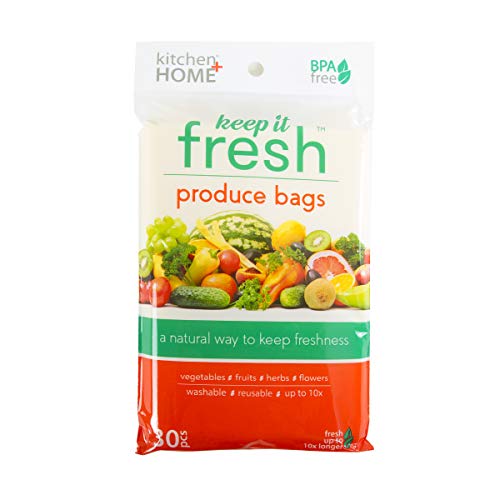
PRESERVE FRESHNESS – As fruits and vegetables ripen they naturally emit ethylene gas which speeds up the natural decomposition process. Keep it Fresh produce bags absorbs this harmful gas and slows down the ripening process, so your produce and flowers stay fresh up to 10 times longer!

Perfect For Holding Fruits And Vegetables: This set of reusable produce bags is often used when going to wet markets, supermarkets and shops, and at home.Mesh produce bags are perfect for holding vegetables and fruits, such as oranges; potatoes; cabbage to keep fruits and vegetables fresh, and can also be used to store other packaged foods

Grow with Confidence: Made from heavy-duty, breathable non-woven fabric that promotes healthy root growth, prevents circling, and provides excellent drainage to avoid soggy soil.
Grains, Legumes, and Pasta Storage Solutions
Because dry goods like grains, legumes, and pasta lack the moisture content that complicates vegetable storage, they’re excellent candidates for vacuum sealing and can achieve dramatically extended shelf lives—often spanning years rather than months. Grain storage extends up to 8 years when you vacuum seal rice, oats, barley, quinoa, and wheat at room temperature. Legume preservation similarly achieves 10–12 years for beans, lentils, and chickpeas when properly sealed. Pasta lasts 2–3 years vacuum sealed. You’ll protect all these foods from moisture, pests, and oxygen exposure using mason jars or FoodSaver bags. Guarantee you dry legumes completely before sealing, label containers with dates, and maintain cool, dry storage conditions to maximize longevity and nutritional retention. Sous vide cooking can also enhance the preservation of these stored items by ensuring that they retain their flavor and nutrients when eventually prepared.
【BPA-Free · A Choice for Peace of Mind】 Our vacuum sealer bags are made of food-grade special materials that do not contain BPA and other ingredients, allowing you to safely store various types of food. They have excellent temperature resistance, capable of withstanding a temperature range from -18℃ to ~100℃. Whether it is for refrigerator refrigeration, freezer freezing, or even the sous vide cooking scenario, they can be easily adapted, providing protection for you and your family's dietary health.

Compatible with All Desktop Vacuum Sealers: These vacuum sealer bags are designed to work with all traditional desktop vacuum sealer machines. Simple to operate and convenient to use. (Note: These bags do not feature an air valve and are not compatible with handheld vacuum sealers.)

VACUUM SEALER BAGS ROLLS: 8"x20' 3rolls+11"x20' 3rolls, XinBaoLong Food Saver Bags Rolls, Commercial Grade, Heavy Duty, BPA Free for Vac Storage, Kitchen Gadgets, Kitchen Accessories
Baked Goods and Snacks Worth Vacuum Sealing
Unlike the shelf-stable dry goods that naturally resist spoilage, baked goods and snacks require strategic preservation to combat moisture loss, oxidation, and microbial growth—processes that vacuum sealing effectively halts. You’ll extend homemade cookies from 3-5 days to 2 weeks in your pantry, while freezer-stored packaged cookies reach 2 years instead of 18 months. Cookie dough transforms from a 1-2 day refrigerated product to a year-long frozen option when vacuum-sealed. Muffins and waffles benefit similarly, lasting 2 years and 1 year respectively in frozen conditions. Delicate croissant varieties and scone flavors maintain structural integrity and prevent staleness through air exclusion. Pre-freezing items before sealing firms them, preventing compression damage while preserving flavor profiles and texture quality throughout extended storage periods.
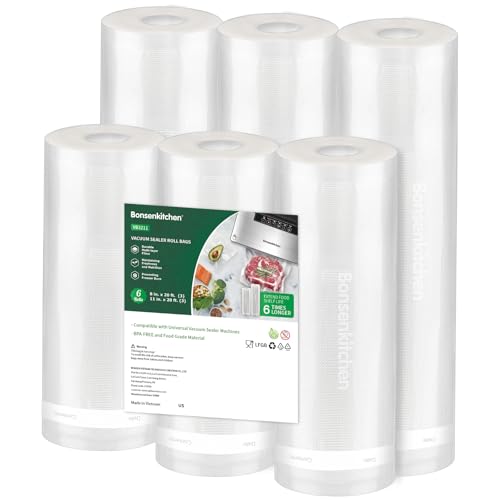
BPA FREE: Bonsenkitchen vacuum food sealer roll bags can be microwaved, frozen, re-used, washed, boiled and dishwasher safe. Allows you to precisely control your cooking temperature to achieve perfect results. You can cook sous vide in Bonsenkitchen bags by placing them in water at any temperature up to 230°F/110°C

Easy Use Design: No scissors required for these bags. Just align to seal and tear to open.
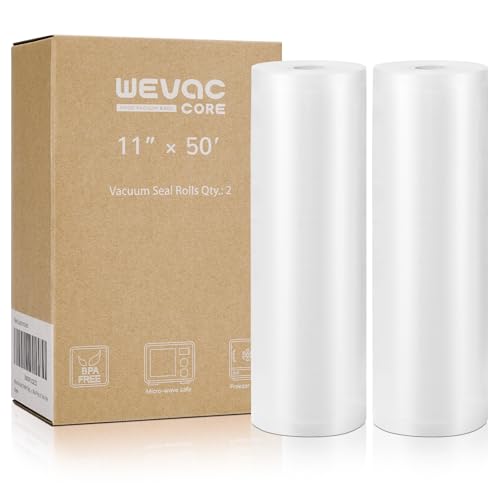
HEAVY DUTY AND PUNCTURE PREVENTION - 2 pack of 11 inch by 50 feet rolls with embossed channels to increase suction, keep fresh without freezer burn or dehydration
Pantry Staples and Specialty Items for Vacuum Sealing
Extending the shelf life of your pantry’s foundation—grains, legumes, proteins, and specialty items—transforms vacuum sealing from a convenience into a strategic preservation method. You’ll maximize storage efficiency by transferring rice, beans, and pasta from bulky packaging into vacuum bags, which protects against moisture and pests while preserving flavor for up to 15+ years in cool, dark conditions. Vacuum sealing is particularly effective because it creates an airtight seal, which helps slow oxidation and prevents mold and bacteria growth.
You should vacuum seal herbs, spices, and coffee to delay potency loss and maintain aromatic integrity. Specialty items like chocolate chips, baking mixes, and popcorn resist spoilage and infestation when properly sealed. You’ll prevent hardening in brown sugar and clumping in dry goods through airtight protection. This methodical approach reduces repurchasing frequency, minimizes food waste, and delivers measurable cost-efficiency across your entire pantry management system. Additionally, vacuum sealing can extend the shelf life of food by 3 to 5 times longer compared to conventional storage methods, enhancing your overall food preservation strategy.

Jumbo (39.35" x 27.55") Vacuum Storage Bags 7 Pack

[Maximize Storage Space by 80%] Unlock unparalleled space-saving with our premium vacuum storage bags, meticulously designed to shrink your clothes and bedding items like duvets, pillows, and comforters down to 20% of their original size. Ideal for both room organization and maximizing suitcase space, these bags transform cluttered areas into tidy, spacious zones, making them essential for vacuum seal bags for clothing.

Store away blankets, comforters, clothes, pillows and more at a size reduction.