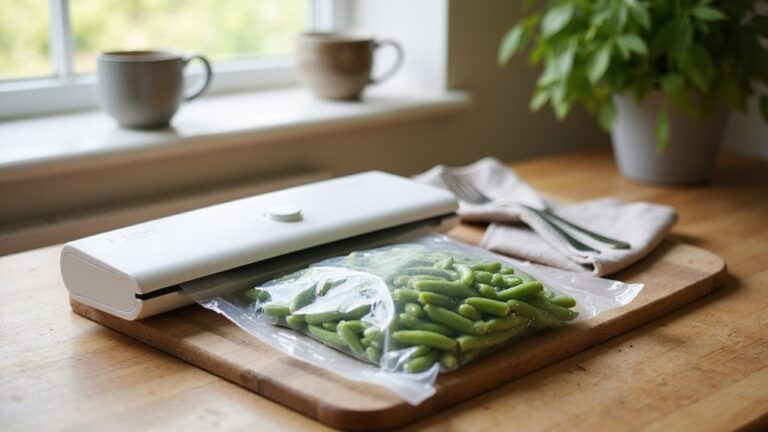
You can safely store vacuum-sealed raw chicken for 1 to 2 weeks in your refrigerator at or below 40°F (4°C). In the freezer, it’ll remain good for 9 to 12 months, with ideal quality extending to 24 months depending on the cut and initial freshness. Cooked vacuum-sealed chicken lasts 3 to 4 days refrigerated or 2 to 12 months frozen. However, storage times vary considerably when you’re dealing with marinated or dried preparations.
Vacuum-Sealed Chicken in the Refrigerator
Vacuum sealing dramatically extends your chicken’s refrigerator life—raw vacuum-sealed chicken typically stays fresh for 1 to 2 weeks, compared to just 1 to 2 days for non-sealed poultry. This extended shelf life results from reduced oxygen exposure, which slows bacterial proliferation and preserves quality.
Your storage tips should include maintaining consistent refrigeration at or below 40°F (4°C) and positioning packages at the back of your refrigerator for ideal temperature stability. Label packages with sealing dates for tracking purposes. The FDA recommends limiting storage to 10 days maximum. However, actual shelf life depends on the chicken’s initial freshness and seal integrity. Inspect packaging regularly for leaks or damage before consumption. When in doubt, discard the chicken to prevent foodborne illness. Additionally, vacuum sealing also reduces freezer burn and spoilage, enhancing the overall preservation quality.

15-pack of assorted size vacuum storage compression bags for storing off-season clothes, towels, linens, and more

【Value Pack for Easy Preservation】-Includes 100 poultry shrink bags, 100 zip ties, and 1 silicone straw. Perfect for freezing, marinating, brining, and preserving chicken, rabbit, or small game. Great for chicken shrink bags for freezer.Ideal for chicken shrink bags for freezer.

5-pack of Large size vacuum storage compression bags for storing off-season clothes, towels, linens, and more
Vacuum-Sealed Chicken in the Freezer
Freezing dramatically extends your chicken’s shelf life compared to refrigeration—raw vacuum-sealed chicken remains good for 9 to 12 months in the freezer, with ideal quality retention potentially extending to 24 months depending on the cut and initial freshness. This ensures that your chicken maintains its flavor and nutrients for a longer duration, ultimately providing a more enjoyable meal experience.
Effective freezer storage depends on proper moisture management. Before sealing, partially freeze your chicken for 30 to 60 minutes and place paper towels in the bag to absorb excess liquid. This prevents moisture from compromising your seal’s integrity and causing package leakage, which can lead to freezer burn and spoilage.
Use thick, high-quality vacuum pouches and portion meat into meal-sized quantities before sealing. Chamber vacuum sealers reduce forced liquid extraction better than standard equipment. Maintaining an airtight seal throughout storage prevents freezer burn and oxidation, preserving your chicken’s quality until you’re ready to use it. Additionally, utilizing a vacuum sealer can enhance the marination process, allowing flavors to penetrate the meat much faster than traditional methods.
Vacuum-Sealed Marinated and Dried Chicken
While proper freezing handles plain chicken effectively, marinated and dried varieties require adjusted storage strategies due to their distinct chemical compositions. Marination effects considerably impact shelf life—acidic marinade components accelerate oxidation in vacuum-sealed conditions, potentially reducing ideal freezer storage from 24 months to 8-12 months. You’ll want to freeze marinated chicken for 30-60 minutes before vacuum sealing to improve seal quality and minimize enzymatic activity. Additionally, using a parchment paper method can offer similar protection against moisture in various food storage techniques.
Dried chicken offers superior preservation characteristics. Its reduced moisture content greatly inhibits bacterial growth, and vacuum sealing prevents rehydration while maintaining texture integrity. When you combine dehydration with vacuum sealing, you’re creating an exceptionally stable product. Vacuum sealing also optimizes backpack space by reducing bulk and weight—critical factors for hiking trips.
For both varieties, employ these preservation techniques: portion into meal-sized quantities, use high-quality freezer-safe bags, and maintain consistent 0°F temperatures to maximize longevity.
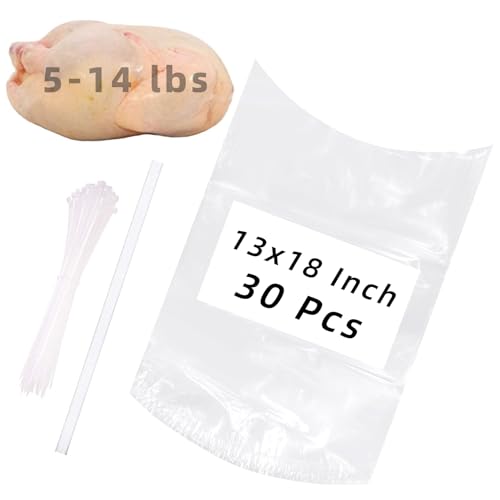
Package: 30 pcs clear poultry shrink bags + 30 pcs zip ties + a silicone straw(extracting air from the body cavity), sufficient quantity to completely meet your daily life

Universal Design: Compatible with All 'Clamp Style' Vacuum Sealer Machines

Compatible with All Desktop Vacuum Sealers: These vacuum sealer bags are designed to work with all traditional desktop vacuum sealer machines. Simple to operate and convenient to use. (Note: These bags do not feature an air valve and are not compatible with handheld vacuum sealers.)
Vacuum-Sealed Cooked Chicken
Cooked chicken presents distinct storage advantages when you seal it properly, as the removal of oxygen dramatically slows both bacterial proliferation and oxidative degradation. You’ll maintain storage safety for 3-4 days in refrigeration below 40°F, compared to 2-3 days for non-sealed chicken. Freezer storage extends viability to 2-12 months, with ideal quality retention within the first 2-3 months.
For preparation tips, cool cooked chicken to room temperature before vacuum sealing to prevent moisture condensation. Confirm no air pockets remain in the seal, as these compromise bacterial protection. Divide chicken into portion-sized packages for efficient thawing. Additionally, using infrared thermometers helps monitor the surface temperature of cooked chicken to ensure it is stored at safe levels. Label packages with sealing dates to enable proper rotation. Use freezer-rated bags for maximum barrier protection against oxidation and freezer burn during extended storage. Additional methods like sealing food properly can enhance the effectiveness of vacuum sealing even further.

LOCK IN FRESHNESS - These poultry shrink bags tighten around whole birds to help reduce trapped air and limit freezer burn during storage. The clear film helps protect flavor, moisture, and texture while keeping each chicken, duck, rabbit, or small game package easy to identify in a busy freezer.

VACUUM SEALER BAGS ROLLS: 8"x20' 3rolls+11"x20' 3rolls, XinBaoLong Food Saver Bags Rolls, Commercial Grade, Heavy Duty, BPA Free for Vac Storage, Kitchen Gadgets, Kitchen Accessories

Large Quantity: You will get 30pcs chicken pouches + 30pcs zippers + silicone straw (to extract air from the body cavity), enough quantity to fully satisfy your daily life.
Thawing and Refreezing Vacuum-Sealed Chicken
Since proper thawing directly determines both safety and quality retention, you’ll want to prioritize refrigerator thawing at 40°F (4°C) or below to prevent bacterial proliferation. Plan for approximately 24 hours per 5 pounds of chicken. Cold water thawing offers an alternative if you maintain an intact vacuum seal and change water every 30 minutes.
Regarding refreezing, you can safely refreeze chicken thawed refrigeration-style if it hasn’t exceeded 2 hours outside cold storage. However, refreezing isn’t recommended after warm water or room temperature thawing due to bacterial contamination risks.
Following these safety guidelines and thawing methods minimizes foodborne illness risk. Quality declines with each freeze-thaw cycle due to moisture loss, so use refrozen chicken within 1–2 months. Always inspect for off odors, sliminess, or discoloration before cooking.