You can master red meat at 54–63°C for your preferred doneness, chicken breasts at 145°F for juicy results, and delicate fish at 127–142°F depending on fat content. Vegetables maintain cellular structure at 183°F minimum, while eggs transform at precise temperatures between 63–75°C. Vacuum-sealing traps aromatics and prevents nutrient loss. Multi-stage finishing with high-heat searing creates complex flavor layers impossible through traditional cooking alone. Uncover how temperature precision orchestrates texture and taste simultaneously.
Achieving Perfect Doneness With Red Meat
Sous vide’s defining advantage is its ability to deliver consistent doneness throughout your steak by maintaining precise water-bath temperatures that won’t fluctuate. Temperature precision determines your final result: rare steaks cook at 56°C (133°F), yielding tender, juicy meat with vibrant color. For medium-rare, you’ll target 54–58°C (129–136°F), balancing tenderness and firmness. Medium steaks require 60°C (140°F), offering traditional texture while retaining moisture. Sous vide cooking allows for an extended cooking window, providing the opportunity for exact doneness without the risk of overcooking. Well-done sous vide steak reaches 63°C (145°F) and above, producing firmer texture with reduced juiciness. Cooking time typically spans 1–3 hours for 1–2 inch cuts, though thickness varies your timeline. This method eliminates guesswork: your steak reaches exact doneness edge-to-center, preventing undercooking or dryness that traditional methods risk. Additionally, finishing the steak with a high-heat sear develops a flavorful crust while ensuring a tender, evenly cooked interior.

Perfect results every time: Never over or under cook your food again. The Anova Precision Cooker Nano circulates water at the exact temperature required for perfectly cooked meals, no matter what's on your menu..Temperature : 0˚-92˚C (32˚-197˚F) | +/- 0.1˚C (0.2˚F) accuracy.

✔[Good Performance Sous Vide] Wancle newly released 1100W high-performance sous vide cooker with as high as 1100W power and 18% more utilization rate of electricity. The unique 3D water circulation heating can reach the set temperature faster with high efficiency. All functional modules of the latest Wancle sous vide precision cooker have been optimized with 40% less in size, better portability and easy storage compared with other competitive products.

Get Doneness Right: Take the guesswork out of medium-rare steaks, juicy chicken, tender fish, and more with precise control that keeps the water at your chosen temperature. With 1100W power for baths up to 15L, continuous circulation moves heated water throughout the container and around your food for steady, even heat from every direction.
Mastering Tender Chicken Breasts
While red meat’s marbling provides natural insurance against dryness, chicken breasts demand meticulous temperature control to achieve that elusive balance between tenderness and juiciness. You’ll find that 145°F produces soft, juicy results without stringiness, making it your ideal target temperature. Proper cooking also ensures that you avoid issues such as rusty cast iron, which can impair the flavor and performance of your skillet.
Before sealing, massage seasoning techniques thoroughly across the chicken surface—Italian seasoning, garlic powder, salt, and pepper create your foundational base. For marinade variations, experiment with honey, lime juice, and olive oil for subtropical profiles, or incorporate fresh herbs like rosemary and thyme. It’s important to ensure you insert the thermometer into the thickest part of the chicken to accurately check the internal temperature and avoid overcooking.
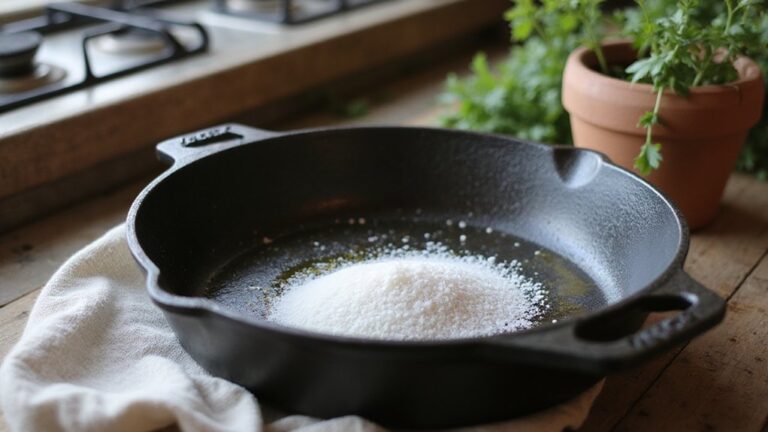
Cook for 1½ to 2 hours at 145°F, then pat your chicken dry and sear it 45-60 seconds per side in preheated cast iron. The high-heat searing develops that golden crust while preserving the perfectly cooked interior you’ve worked to achieve.

Versatile Cooking Skillet: The Lodge Cast Iron Skillet is a multipurpose, everyday cooking pan that excels at searing, sautéing, baking, frying, and campfire meals


Quality Cast Iron Frying Pan: The Lodge Seasoned Cast Iron Skillet is loved for its great heat retention, incredible durability, and ability to make almost any recipe you dream up
Cooking Vegetables Without Losing Texture
Vegetables present an entirely different challenge than protein—they’ll turn to mush if you’re not deliberate with your temperature and timing. You’ll maintain cellular structure by cooking at 183°F (84°C) minimum, where pectin dissolves without damaging cell walls. Adjust cooking time rather than temperature to achieve your desired texture across vegetable variety. Spinach crisps in 10 minutes; bell peppers need 45 minutes for tender results. Tougher greens like kale require 1–3 hours for complete tenderness. Vacuum-sealing during cooking traps aromas and prevents nutrient leakage into water. Add fresh herbs, citrus zest, or whole spices before sealing to infuse concentrated flavors. These cooking techniques preserve vibrant colors, vitamins, and carotenoids better than conventional methods.
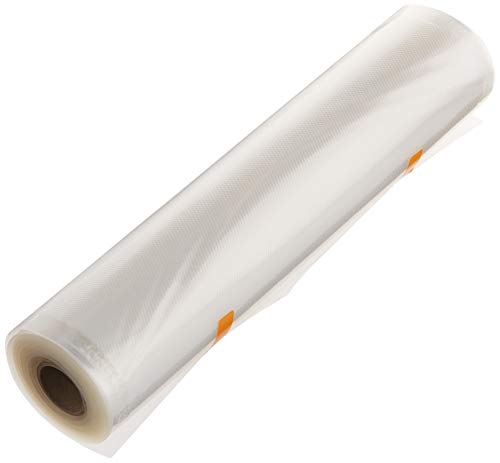
ROLL OUT: Including 2 rolls measuring 11" x19. 6' each, you have the ability to custom cut your bags to any length you wish. A perfect option for the cook who likes to keep their options open.

🔋 Cordless & Rechargeable for Anytime Use Enjoy powerful suction without cords! Our electric handheld vacuum sealer features a built-in rechargeable battery, making it perfect for home kitchens, camping trips, or meal prepping on the go.

Compatible with All Desktop Vacuum Sealers: These vacuum sealer bags are designed to work with all traditional desktop vacuum sealer machines. Simple to operate and convenient to use. (Note: These bags do not feature an air valve and are not compatible with handheld vacuum sealers.)
Creating Consistent Egg Preparations
Unlike vegetables that risk turning to mush or proteins that require precise searing, eggs demand exactness through temperature control alone—and that’s precisely where sous vide excels. You’ll achieve remarkable texture control by selecting your target temperature carefully. At 63°C for 45 minutes, you’ll get runny whites with creamy yolks. Bump it to 75°C for 13–15 minutes, and you’ll enjoy firmer whites resembling traditional poached eggs while maintaining that signature creaminess. Additionally, cooking eggs at specific temperatures allows for a variety of textures, from soft to hard boiled results. Intermediate temperatures around 65–71°C for 60 minutes yield consistent soft or hard boiled results. After cooking, shock your sous vide eggs immediately in an ice bath to stop the cooking process and ease shell removal. This precision transforms egg preparation into a repeatable, foolproof technique every single time. Additionally, seasoning the cast iron after cleaning ensures optimal flavor and longevity of your cookware.
Preserving Delicate Fish and Seafood
Fish and seafood demand gentler handling than heartier proteins, making sous vide your ideal cooking method for maintaining moisture and tender texture. You’ll achieve excellent results by vacuum-sealing fish with complementary fats like butter and aromatics such as lemon or herbs. Try fish brining with salt for thirty minutes before cooking to enhance flavor retention and texture. Sous vide marinades penetrate deeply in the sealed environment, developing complex flavors impossible through conventional methods. Cook fatty fish like salmon between 127–135°F for medium-rare richness, while lean white fish requires 130–142°F. Delicate fillets need shorter cooking times at lower temperatures to preserve tenderness. After cooking, gently pat your fish dry and sear briefly for visual appeal, avoiding post-cook handling that causes flaking.
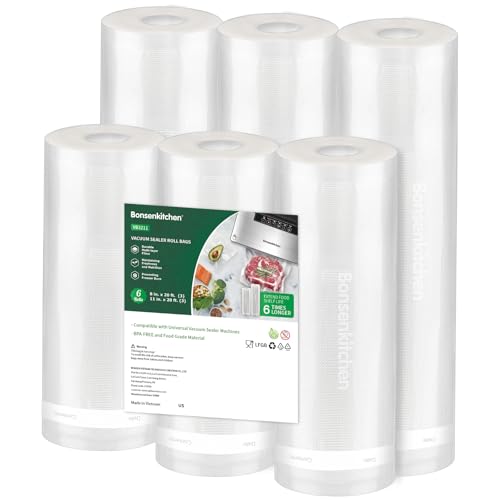
BPA FREE: Bonsenkitchen vacuum food sealer roll bags can be microwaved, frozen, re-used, washed, boiled and dishwasher safe. Allows you to precisely control your cooking temperature to achieve perfect results. You can cook sous vide in Bonsenkitchen bags by placing them in water at any temperature up to 230°F/110°C
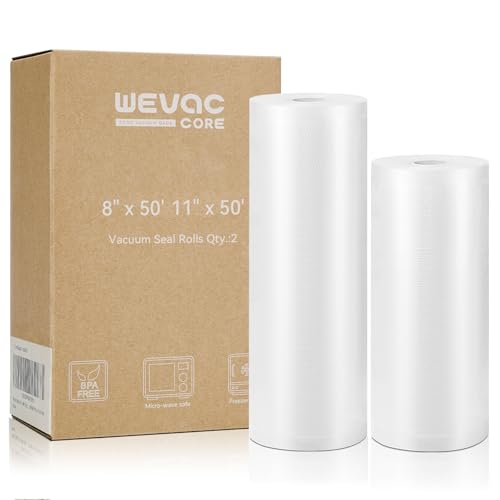
HEAVY DUTY AND PUNCTURE PREVENTION - 8 inch and 11 inch by 50 feet rolls with embossed channels to increase suction, keep fresh without freezer burn or dehydration

HEAVY DUTY AND PUNCTURE PREVENTION - 8x12 pre-cut Quart bags with embossed channels increase suction, keep fresh without freezer burn or dehydration
Batch Cooking for Weekly Meal Prep
How can you transform your weekly cooking routine into an efficient, organized system that delivers ready-to-eat meals throughout the week? You’ll start by selecting recipes with complementary ingredient pairing to streamline shopping and prep work. Launch longest-cooking proteins first—chicken breasts, steak, and pork chops at their ideal temperatures—while preparing vegetables simultaneously. Vacuum-seal everything to extend shelf life and maintain texture during storage, as vacuum sealing extends food freshness significantly. When reheating, submerge sealed bags in water baths 5–10°C below original temperatures for 30–60 minutes, preserving nutritional integrity that microwaves destroy. Pair your proteins with sous vide sauces prepared separately, allowing customization throughout the week. This technique-driven approach eliminates daily cooking stress while maximizing ingredient efficiency and minimizing food waste through strategic temperature control and airtight preservation. Additionally, consider how using modern dish soaps for cleaning your sous vide equipment can enhance your meal prep experience by ensuring that everything is sanitized and ready for use.

【42 PCS Food Vacuum Sealer Set, Use for Home /Restaurant /SuperMarket】Kosbon 42 PCS Sous Vide Vacuum Sealer Set - 30 Reusable Bags, 5 Clips and Sealing Clips for Anova, Joule Cookers.
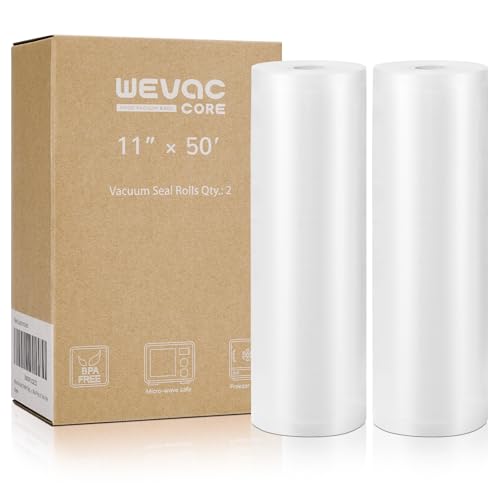
HEAVY DUTY AND PUNCTURE PREVENTION - 2 pack of 11 inch by 50 feet rolls with embossed channels to increase suction, keep fresh without freezer burn or dehydration

【BPA FREE】Bonsenkitchen food sealer roll bags can be microwaved, frozen, re-used, washed, boiled and dishwasher safe. Allows you to precisely control your cooking temperature to achieve perfect results. You can cook sous vide in Bonsenkitchen bags by placing them in water at any temperature up to 195°F/90°C.
Temperature Control Across Different Proteins
Once you’ve mastered batch cooking fundamentals, precision temperature control becomes your greatest lever for transforming proteins from mediocre to exceptional. Sous vide precision demands you match exact temperatures to your protein and desired outcome. Chicken breast thrives at 155°F (68°C) for 45 minutes, while pork chops require 130°F (54°C) for ideal tenderness. Beef steaks range from 120°F–155°F depending on doneness preference. Fish demands the most delicate approach—110°F (43°C) for medium-rare or 124°F (51°C) for tender, flaky results.
You’ll achieve safe pasteurization between 140°F–155°F with varying cook times, making it essential to reach the safe serving temperature of 165 degrees Fahrenheit for whole chicken to eliminate harmful bacteria. Proper placement into the thickest part of the meat is crucial for accurate results. Temperature variance of just 1°C shifts final texture dramatically, especially with seafood. You’re not merely cooking; you’re engineering precise protein transformations through calibrated heat application.
Flavor Infusion Techniques in Sealed Bags
Beyond calibrated heat lies the art of extracting maximum flavor from your sealed environment. You’ll gain infusion benefits by vacuum-sealing ingredients with your base liquid—oil, alcohol, or syrup—which removes air and intensifies extraction. This sealed approach prevents evaporation, preserving volatile aromatic compounds that traditional methods lose.
Lower temperatures combined with extended timing yield subtle, nuanced flavor profiles. Higher heat accelerates extraction but risks over-infusion or compound degradation. You’ll achieve faster, more consistent results than room-temperature infusions through gentle, constant heat application.
After infusing, cool your liquid immediately in an ice bath to halt the process. Strain solids carefully, then store in airtight containers. Refrigerate your finished infusions and label them with dates for reliable tracking and reproducibility across future batches.
Storage Methods for Make-Ahead Meals
Since sous vide’s precision cooking creates shelf-stable foundations for batch meal prep, you’ll maximize your investment by mastering proper storage techniques that preserve both safety and quality. For refrigerator duration, vacuum-sealed meals remain safe for up to 4 days at standard temperatures, extending to 7 days when stored at 41°F or below. Quick-chill your cooked proteins and vegetables in ice water baths for 30-45 minutes before refrigeration to prevent bacterial growth. When implementing freezing protocols, vacuum-seal individual servings for up to 3 months of reliable storage, or extend preservation to one year with proper labeling and technique. Store meals flat to maximize space while preventing damage. Always date-mark packages with preparation dates and contents, enabling systematic rotation and preventing consumption beyond safe windows. Additionally, vacuum sealing can extend shelf life of your meals significantly when done correctly.
Multi-Stage Cooking for Complex Dishes
While sous vide excels at achieving precise internal doneness, you’ll release its full potential by combining it with finishing techniques that develop crust, char, and textural complexity—a multi-stage approach that transforms tender, evenly cooked proteins and vegetables into restaurant-quality dishes. Multi-stage processes enable flavor layering through controlled temperature progression. Cook lamb at 54-57°C for medium-rare, then sear it in a screaming-hot skillet to build a caramelized exterior. Proper refilling techniques for your torch before searing will help ensure optimal performance. Similarly, prepare asparagus sous vide at precise temperatures, then broil to char the tips. This sequential method prevents overcooking interiors while maximizing browning and textural contrast. You’ll separate ingredients into different water baths when they require distinct temperatures, ensuring each component reaches ideal doneness simultaneously. For optimal results, consider measuring the surface temperatures of your pans or broilers with an infrared thermometer to ensure they’re at the right temperature for finishing techniques, as infrared thermometers primarily measure surface temperatures.