

You’ll transform your kitchen with small cast iron skillets, crafting restaurant-quality single-serve meals in under 30 minutes. From fluffy Dutch Baby pancakes and seared salmon to crispy skillet cookies and hot fudge pudding cake, you’re unveiling endless possibilities. These versatile cookware pieces deliver even heat distribution and naturally non-stick seasoning that improves with every use. You’ll reveal how proper care and simple techniques elevate everyday ingredients into impressive dishes.
Why Choose a Small Cast Iron Skillet for Single-Serve Cooking
There’s a reason cast iron has remained a kitchen staple for centuries—it’s simply unmatched for heat retention and even cooking. When you’re preparing single-serve meals, a small skillet’s compact size heats quickly, delivering energy efficiency without sacrificing performance. You’ll appreciate the cast iron benefits that develop over time: a naturally non-stick seasoned surface that improves with each use, eliminating the need for synthetic coatings. Furthermore, its durability and versatility make it ideal for a variety of cooking techniques, from frying to baking.
The cooking versatility these skillets offer is remarkable. You can sear delicate eggs, brown meat perfectly, or simmer sauces with precision temperature control. Their durability means your investment lasts generations, and maintenance requires only warm water and a brush. For dorm rooms or tight kitchens, small cast iron skillets provide professional-grade cooking in a practical, portable package. Additionally, cooking with cast iron can contribute small amounts of dietary iron, enhancing the nutritional value of your meals.

5.5-inch square skillet for grilled cheese or ham & cheese sandwiches

TIMELESS CAST IRON QUALITY: The TableCraft CW30122 round skillet embodies the enduring appeal of cast iron, offering exceptional heat retention and even cooking for all your culinary masterpieces.

Mini 4.5" Cast Iron Skillet Single Serve Set of 2
Essential Tips for Selecting the Right Skillet Size
Because cast iron skillets come in numerous sizes, understanding how to measure and select the right dimensions confirms you’ll get a pan that truly fits your cooking needs. When evaluating small skillets, you’ll notice that top diameter differs from actual cooking surface—typically 1-2 inches smaller due to sloped walls. An 8-inch skillet accommodates two eggs or one protein portion comfortably, while a 9.5-inch model offers slightly expanded capacity without sacrificing storage efficiency. Consider your stovetop layout and cabinet space before deciding; compact 8-9.5 inch models integrate seamlessly into apartment kitchens. Verify burner coverage confirms even heating across your cooking surface, especially since cast iron skillets are known for their exceptional heat retention. As a beginner, starting with an affordable 8-inch skillet lets you test cast iron cooking before investing in multiple larger pans. Additionally, remember that surface condition is crucial for optimal cooking performance, affecting food release and overall efficiency.

【Premium Enameled Cast Iron】Crafted from heavy-duty enameled cast iron,this 8 inch skillet offers superior durability, excellent heat retention, and even heat distribution. Ideal for long-lasting daily use, this frying pan is perfect for searing, sautéing, baking, grilling, and roasting a variety of dishes.

SEASONED COOKWARE FOR IMMEDIATE USE: Pre-seasons every pan with 100% natural vegetable oil, giving it a non-stick finish without synthetic chemicals, to enhance the non-stick performance and deliver authentic flavors right out of the box. The more you use your skillet, the better the seasoning becomes for effortless cooking.

Quality Cast Iron Frying Pan: The Lodge Seasoned Cast Iron Skillet is loved for its great heat retention, incredible durability, and ability to make almost any recipe you dream up
Breakfast and Brunch Favorites for One
Now that you’ve selected the perfect small skillet for your kitchen, you’re ready to put it to work crafting impressive breakfast and brunch dishes designed just for you. Single serve omelets shine in mini cast iron, where you’ll sauté vegetables and meats first, then pour beaten eggs over them for a perfectly cooked result. Reviving a rusty skillet before use can dramatically improve your cooking experience. Breakfast burritos benefit from your skillet’s even heat distribution—crisp your tortilla, then fill it with scrambled eggs, sausage, peppers, and cheese all cooked in one pan. Hash brown skillets deliver crispy potatoes topped with bacon, cheddar, and baked eggs with runny yolks. Mini frittatas loaded with spinach, ham, and sausage bake until set. Dutch Baby pancakes showcase cast iron’s heat retention for puffy, golden results. Each option delivers balanced nutrition with minimal cleanup. Remember, a well-seasoned skillet improves with use, providing a natural, long-lasting non-stick surface that enhances your cooking experience.

Package includes 6 pack 4-inch mini cast iron skillets with standard size specification, featuring compact portable design and perfect individual portion capacity. The mini frying pans are ideal for frying eggs, searing steak, vegetables, baking mini desserts, and serving appetizers, dips, and side dishes

Durable Cast Iron Construction: Made from cast iron for long-lasting use and even heat distribution.
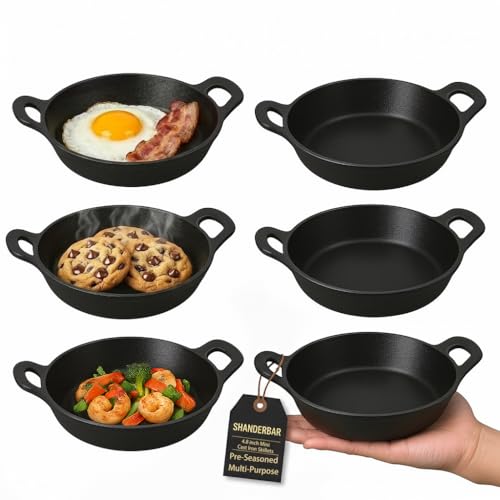
True Mini Size for Single Servings: Please note these are miniature 4.8-inch skillets designed specifically for individual portions. Outer diameter: 4.8" (12.2 cm). Total width with handles: 6" (16 cm). Height: 1.3" (3.2 cm). They are the absolute perfect compact size for baking a single-serve cookie, frying one egg, or serving dips. (Please verify the 4.8" mini size meets your needs before purchase)
Protein-Packed Dinner Ideas
Your small cast iron skillet transforms into a powerhouse for crafting satisfying, protein-rich dinners that rival restaurant quality while keeping cleanup minimal. You’ll find countless high protein flavors that cater to single servings without sacrificing taste or nutrition.
From Shrimp & Sausage Skillet ready in 20 minutes to Garlic Butter Pork Tenderloin, your cast iron benefits shine through even heat distribution and superior searing capabilities. Proper handling techniques ensure that even challenging proteins are cooked to perfection, like in the Ground Turkey Sweet Potato Skillet and Chimichurri Shrimp Broccoli Skillet, which deliver omega-3s and essential nutrients in one pan.
The cast iron benefits extend beyond cooking—these vessels retain heat perfectly, creating restaurant-quality crusts on salmon, steak, and lamb chops. Moreover, the ability to evenly distribute heat ensures that each meal cooks consistently, enhancing overall flavor. Whether you’re preparing Beef Stroganoff or Spicy Salmon with Sweet Potato, your skillet guarantees each dinner feels indulgent while providing substantial protein for sustained energy throughout your evening.

Convenient Package: the package includes 2 pieces of mini cast iron skillets with wooden base; Please make sure that this is the size you need; Approximately 6.1 inches in diameter and around 1.57 inches in height, which suits multipurpose cooking requirements, enabling the user to fry, and grill easily

Secure Dual Assist Handle: The Lodge Seasoned Cast Iron Dual Handle Pan features dual assist handles for a secure grip when moving this cast iron skillet

SEASONED COOKWARE FOR IMMEDIATE USE: Pre-seasons every pan with 100% natural vegetable oil, giving it a non-stick finish without synthetic chemicals, to enhance the non-stick performance and deliver authentic flavors right out of the box. The more you use your skillet, the better the seasoning becomes for effortless cooking.
Vegetarian and Plant-Based Single-Serve Dishes
Just as your cast iron skillet excels at searing proteins, it’s equally masterful at coaxing remarkable depth from plant-based ingredients. You’ll uncover that vegan alternatives shine when prepared in cast iron’s consistent heat.
Try a Vietnamese tofu in tomato sauce—bold, complex flavors develop beautifully in under an hour using pantry staples. Layer flavor pairings like cumin, ancho chili powder, and paprika into tofu scrambles for nutrient-dense breakfasts. Your skillet transforms whole roasted cauliflower into an impressive centerpiece with minimal cleanup, while proper preparation ensures even cooking and enhanced flavor.
For lighter options, combine dandelion greens with beans or prepare a vibrant tofu orange veggie skillet. Green beans almondine—garlic and almonds in fifteen minutes—offers elegant simplicity. Each preparation harnesses cast iron’s heat retention, delivering concentrated flavor and nutrition in compact, satisfying portions. Additionally, proper seasoning of your skillet helps enhance the flavors of your dishes while preventing sticking.
Mastering the Searing Technique
While plant-based dishes showcase cast iron’s versatility, the skillet truly reveals its power when you master the searing technique—a foundational skill that transforms ordinary ingredients into restaurant-quality meals. You’ll achieve superior results by preheating your skillet to 500°F, ensuring the surface reaches uniform heat. Pat your ingredients dry to prevent steaming, then add high smoke-point oil only after full preheating. For exceptional crust formation, you’ll want to avoid moving food for 2-5 minutes, allowing the Maillard reaction to develop that coveted brown exterior. Keep in mind that using oils with high smoke points is crucial for preventing burning during searing. Resist overcrowding your skillet, as steam undermines searing effectiveness. Additionally, keep in mind that acidic foods should generally be avoided for extended cooking in cast iron to maintain the skillet’s seasoning and prevent unwanted flavors. Whether you’re flipping frequently for consistency or using a weight for even contact, these searing techniques create restaurant-caliber results in your small cast iron skillet.
Oven-Baked Recipes That Shine in Cast Iron
Once you’ve mastered searing, you’ll find that cast iron skillets truly come alive in the oven, where their exceptional heat retention and even distribution transform simple ingredients into restaurant-quality baked dishes. You’ll realize that preheating your oven to the recommended temperature—typically 350–375°F—ensures consistent results across all your recipes. Whether you’re baking French toast casseroles, individual mac and cheese portions, or peach cobblers, skillet rotation halfway through cooking prevents hot spots and guarantees even browning. Additionally, you can make a hearty Mountain Man Breakfast that combines protein-rich ingredients with ease for a filling meal. The skillet’s depth accommodates generous layers of ingredients without overflow, while its seamless change from stovetop to oven streamlines your cooking process. You’ll appreciate how these versatile dishes emerge with golden, caramelized crusts, ready to serve directly from the skillet. Additionally, using a Dutch oven can create a steamy environment that enhances the texture of baked goods, similar to making artisan bread.
Quick Weeknight Meals Under 30 Minutes
After mastering oven-baked techniques, you’ll find that cast iron skillets excel at delivering restaurant-quality dinners in a fraction of the time. One pan efficiency means you’re tackling quick meal ideas that demand minimal prep and cleanup—perfect for hectic evenings.
You can whip up pan-fried Dover sole with capers and lemon in under 15 minutes, or try garlic butter shrimp that’s ready in 20–25 minutes. Craving something heartier? A chicken and black bean burrito skillet delivers lean protein and fiber within 30 minutes. To ensure perfect cooking temperatures, utilize a temperature control method that guarantees even heat distribution.
Cast iron’s superior heat retention guarantees even cooking while reducing overall kitchen time. Most recipes rely on pantry staples and common fresh produce, eliminating complicated shopping lists. These skillet meals scale beautifully for single servings, giving you restaurant-quality results without the stress.
To enhance your flavors, consider adding aromatics like onions and garlic to your skillet dishes for a depth that rivals hearty stews.


Reliable Heat Resistance: Designed for skillets 9 inches and larger, the Lodge Silicone Hot Handle Holder delivers a secure grip on hot cookware with heat resistance up to 500°F

Desserts and Sweet Treats in Your Skillet
Your cast iron skillet isn’t just for savory dishes—it’s a personal dessert maker that transforms simple ingredients into warm, indulgent treats in minutes. Skillet cookies bake in just 8-10 minutes, spreading to create crispy edges and soft centers you’ll crave. Deliciously simple brownie variations offer dense, fudgy textures in 12-15 minutes, while hot fudge pudding cake delivers a molten surprise. Fruity desserts shine through apple cakes that caramelize beautifully and cobblers featuring fresh or canned fruit. Mini pies and tarts round out your options with golden, bubbling fillings. Master these baking techniques by adjusting temperatures and timing to your skillet’s size. Each dessert pairs perfectly with ice cream or whipped cream, delivering restaurant-quality results from your kitchen. For precision in your baking, consider using a wireless meat thermometer to ensure your skillet is at the perfect temperature for optimal results.
Seasoning and Caring for Your Cast Iron Investment
While skillet desserts deliver impressive results, the magic behind every perfect bake comes from proper maintenance of your cast iron pan. You’ll build a durable nonstick surface through consistent seasoning techniques—applying thin oil layers, baking at 450–500°F, and repeating cycles to create multiple protective coats. For cast iron care, clean gently after each use with coarse salt and warm water, never soaking. It’s important to scrub with salt to safely remove impurities without damaging the skillet’s seasoning. Dry thoroughly and lightly oil while warm to prevent rust. Store in dry conditions and avoid acidic foods on new pans. If flaking occurs, scrub and reseason promptly. Regular cooking naturally enhances your seasoning, transforming your skillet into a cherished kitchen tool that’ll outlast decades of use. To ensure the longevity of your skillet, remember that proper care includes a rinse with warm water and gentle scrubbing to maintain its protective layer.


