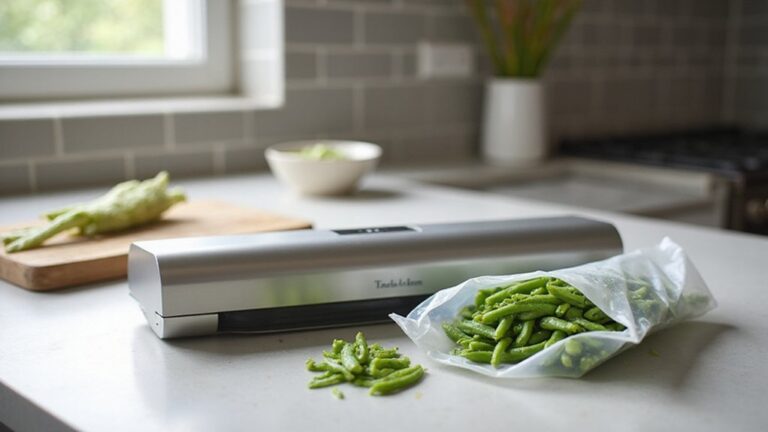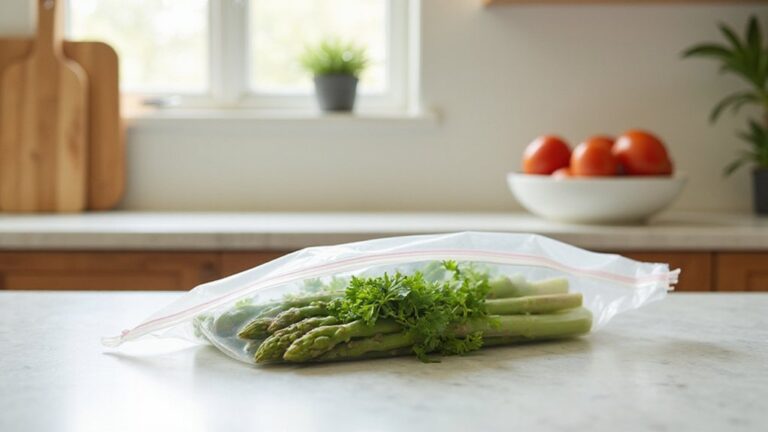
You’ll position a straw in your freezer bag’s corner, then partially seal around it. Use hand pressure to remove bulk air before applying continuous suction through the straw. Submerge the sealed bag in water for enhanced air removal, then quickly extract the straw and seal completely. This method creates anaerobic conditions that inhibit bacterial growth by 98% and extends shelf life markedly. Proper technique, however, requires understanding specific food safety protocols and best practices.
Preparation and Materials for Straw Vacuum Sealing
Before you begin vacuum sealing with a straw, you’ll need to gather several essential materials and prepare your workspace methodically. Select freezer-rated bag types with double zippers for maximum security and airtight sealing. Inspect bags for holes or punctures before use. Larger bags accommodate bigger food items more effectively.
Choose sturdy straw sizes that fit snugly within your bag’s opening without gaps. Clean straws thoroughly to eliminate residue. Flexible options position easily, while rigid straws provide better control.
Prepare your food by removing excess moisture and marinade. Cut items to fit comfortably without overcrowding. Arrange food inside the bag before introducing the straw. Wash your hands and don gloves when handling raw proteins. This methodical preparation guarantees successful vacuum sealing with minimal complications.

Package Includes—Seventy four (74) Hefty Slider Quart Freezer Bags for meal prepping, lunch packing, camping, traveling, freezer storage, organizing, and more

40-count box of double-zipper quart freezer bags

Food Preservation: Ziploc Brand Freezer Half Gallon bags help protect against freezer burn for up to 12 weeks
Step-by-Step Straw Vacuum Sealing Method
Now that you’ve prepared your materials and food items, you’re ready to execute the vacuum sealing process itself. Position your straw in the bag’s corner and partially seal around it. Use hand pressure to remove bulk air before beginning air extraction through the straw. Apply continuous suction until the bag collapses around your food contents, maintaining direct control over pressure intensity.
For enhanced results, submerge the sealed bag in water. Water pressure forces remaining air through the straw opening while gravity assists compression. Once air removal is complete, quickly extract the straw and immediately finish sealing to prevent air re-entry. Your sealing technique determines vacuum quality and long-term food preservation. Verify complete compression before freezing for peak freezer burn prevention.

15-pack of assorted size vacuum storage compression bags for storing off-season clothes, towels, linens, and more

5-pack of Large size vacuum storage compression bags for storing off-season clothes, towels, linens, and more

【Value Pack for Easy Preservation】-Includes 100 poultry shrink bags, 100 zip ties, and 1 silicone straw. Perfect for freezing, marinating, brining, and preserving chicken, rabbit, or small game. Great for chicken shrink bags for freezer.Ideal for chicken shrink bags for freezer.
Efficiency and Effectiveness
While the straw method won’t match professional vacuum sealers’ consistency, it’ll deliver results close enough for practical home food preservation. You’ll achieve air removal rates that reduce oxygen concentration substantially through manual lung extraction combined with water displacement techniques. This approach eliminates nearly all trapped air from freezer bags, creating anaerobic conditions that inhibit bacterial growth by as much as 98% compared to non-sealed storage. Additionally, using this method can help extend shelf life for your food, as vacuum sealing can keep items fresh up to five times longer. Vacuum sealing not only prevents freezer burn but also helps maintain the flavors and nutrients in your food.

HEAVY DUTY AND PUNCTURE PREVENTION - 200 pack of 6 by 10 inch precut bags with embossed channels to increase suction, with a box for storage, keep fresh without freezer burn or dehydration
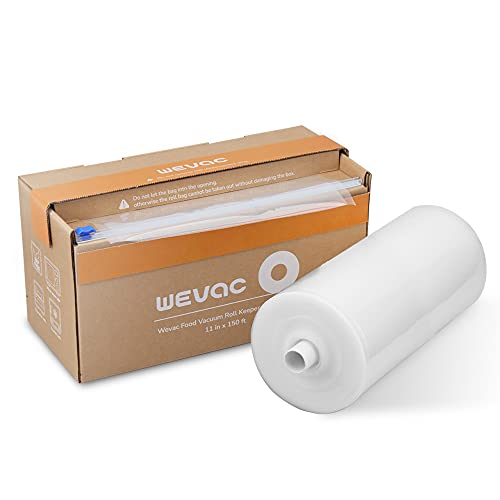
HEAVY DUTY AND PUNCTURE PREVENTION - 1 pack of 11 inch by 150 feet roll with embossed channels to increase suction, with a cutter box for cutting and storage, keep fresh without freezer burn or dehydration

【BPA FREE】Bonsenkitchen vacuum food sealer roll bags can be microwaved, frozen, re-used, washed, boiled and dishwasher safe. Allows you to precisely control your cooking temperature to achieve perfect results. You can cook sous vide in Bonsenkitchen bags by placing them in water at any temperature up to 230°F/110°C
Advantages and Limitations
The straw method’s practical effectiveness comes with distinct trade-offs you’ll want to understand before committing to this preservation approach. Your benefits overview includes low-cost accessibility, minimal equipment needs, and space optimization for freezer storage. You’ll appreciate the convenience and portability this DIY method offers anywhere, anytime.
However, your drawback analysis reveals significant limitations. You can’t achieve the oxygen reduction that electric sealers provide, so shelf life extension remains moderate rather than dramatic. Moist foods present particular challenges since you’ll struggle removing all air effectively. You’re restricted to short- to medium-term storage, and residual oxygen compromises texture and flavor preservation. Manual sealing creates vulnerability to accidental air reentry over time, requiring consistent attention and technique precision.
Food Safety Considerations
Because you’re creating an anaerobic environment with the straw method, you’ll need to understand the serious health risks that accompany reduced-oxygen food storage. Clostridium botulinum thrives in oxygen-free conditions, and foodborne pathogens won’t visibly alter your food’s appearance or smell. You must maintain strict sanitation protocols: wash your hands before sealing, clean all utensils and surfaces, and avoid cross-contamination between foods. Never vacuum-seal raw onions, fresh mushrooms, or garlic due to botulinum concerns. Keep all perishable vacuum-sealed items refrigerated below 40°F immediately—don’t leave them unrefrigerated longer than two hours. Some methods, including using Ziploc bags, can enhance safety by reducing the risk of accidental contamination. Label everything with the sealing date and use-by date. Frozen items require thawing in the refrigerator. Remember: vacuum packaging extends shelf life but doesn’t eliminate spoilage risk or replace proper food safety practices. Additionally, proper food storage techniques such as vacuum sealing can significantly preserve the quality and safety of your food items for longer periods.
Practical Tips and Variations
Now that you understand the critical food safety requirements, you’ll want to master the practical execution of the straw method to maximize effectiveness and minimize risks. You’ll achieve superior air removal by combining water displacement with manual suction—submerge your bag gradually while pressing gently to dislodge trapped bubbles, then extract remaining air through the straw. For alternative methods, consider skipping the straw entirely for wet foods and relying solely on water displacement. You’ll optimize results using smaller bags for reduced air volume and positioning your straw close to the zipper. Additionally, a Dutch Oven Cobbler recipe makes an excellent companion to vacuum-sealed fruits, enhancing your desserts with rich flavors. Practice regularly to build lung capacity and technique. Keep all movements quick and deliberate to prevent water ingress while maintaining seal integrity throughout the process. Additionally, a vacuum sealing method can significantly improve the quality and longevity of frozen foods by extending shelf life.