You’ll want to preheat your Dutch oven for 30 to 60 minutes at 450–500°F before baking sourdough. This duration guarantees ideal temperature stability and maximum oven spring. Account for a 10–20 minute temperature lag inherent to cast iron’s thermal mass, so use an oven thermometer inside the pot for accuracy. Start preheating when your dough enters its final rise stage. The specific timing you’ll need depends on your oven type and Dutch oven thickness—details worth exploring further.
Standard Preheating Duration and Timing
Sure! Here is your modified content with the new sentence included:
—
Whether you’re working with a standard home oven or a commercial unit, you’ll want to preheat your Dutch oven for 30 to 60 minutes before baking sourdough. This preheating duration guarantees your vessel reaches ideal temperature for maximum oven spring and crust development, which is essential for creating a crusty, bakery-style loaf.
Timing your preheating duration with dough proofing is essential for seamless execution. Start preheating as your dough enters its final rise stage, allowing both processes to finish simultaneously. This coordination means your Dutch oven will be searing hot exactly when your scored dough is ready for baking.
Shorter preheats of 25–30 minutes may suffice for quick-heating ovens, while thicker cast iron Dutch ovens benefit from the full 60-minute window. Insufficient preheating compromises crust crispness and loaf expansion, so prioritize adequate heat penetration before loading your dough. Additionally, using a Dutch oven can reduce disease transmission risks since it offers a hygienic option, similar to non-contact infrared thermometers.

Even Heat Distribution Retention: This Umite Chef Dutch oven Made with heavy-duty enameled cast iron, ensures even heat distribution for perfect searing and slow cooking, locking in flavors. thickened walls lock in heat for slow braising, searing, and baking. Unlike thin pots that scorch food, this professional-grade Enameled cast iron potSuperior heat retention after preheating (allow 5-7 mins for even distribution). CRITICAL: Always cool naturally for 45+ mins before cleaning. Thermal shock (hot-to-cold contact) cracks enamel. USE TIP: Preheat 2-3 mins on medium-low only

BREAD BAKER'S DUTCH OVEN, 500°F OVEN-SAFE, SOURDOUGH-READY – one of the highest ratings in its class – delivering the sustained heat that sourdough, artisan bread, and pizza dough demand. Thick cast-iron walls trap and circulate heat like a brick oven, producing bakery-quality crusts at home. The tight-sealing lid features raised self-basting nodes that continuously recirculate steam: a perfect moisture chamber, every single bake.

PFAS-FREE & NON-TOXIC COOKWARE: ATTENTION: If your manual mentions "enamel" or "low-medium heat only", it is incorrect. This is 100% pure cast iron cookware! Not Enamel-Coated: Safe for High-Heat Cooking! Metal utensils OK (avoid sharp edges) Every Umite Chef cast iron pot has been burned with 100% natural, food-grade vegetable oils—absolutely zero PFAS, PFOA, PTFE, synthetic coatings, or toxic chemicals. Our seasoning naturally builds with use, developing a superior non-stick surface over time while ensuring oven-to-table safety
Optimal Temperature Settings for Cast Iron
To achieve the best results with your cast iron Dutch oven, you’ll want to preheat it between 450°F (230°C) and 500°F (260°C)—the range that balances ideal oven spring with reliable crust development. Cast iron’s superior heat retention and consistent temperature distribution create an even baking environment that mimics professional steam ovens. The thick walls guarantee uniform heating throughout the pot, eliminating hotspots that cause scorching. A little extra maintenance, such as cleaning with baking soda, can ensure that your Dutch oven stays in optimal condition for baking.
Many experienced bakers start at 500°F (260°C) with the lid on for approximately 20 minutes, maximizing steam generation for crust formation. You’ll then lower the temperature to around 475°F (246°C) after removing the lid for the finishing phase. If you’re experiencing bottom crust burning, reduce your preheat temperature slightly—cast iron’s exceptional heat retention often requires calibration for your specific oven. Additionally, it’s essential to avoid thermal shock by allowing the Dutch oven to heat gradually with the oven as it preheats.

Heavy-Duty Camping Cookware: Designed for campfire coals, the Lodge Seasoned Cast Iron Camp Dutch Oven uses a flanged lid to distribute heat above and below for even cooking

2-in-1 Versatile Cookware Design: The Lodge Cast Iron Double Dutch Oven is a Dutch oven and dual-handle skillet in one smart design, expanding your options for searing, baking, frying, and more

PRE-SEASONED CAST IRON: 7-quart heavy-duty dutch oven pot with lid and dual side handles for easy lifting and maneuvering
Understanding Dutch Oven Temperature Lag
While you’ve set your oven to 500°F and waited what feels like an eternity, your Dutch oven’s interior hasn’t actually reached that temperature yet—and that’s where temperature lag becomes your biggest concern. Cast iron properties—specifically its high thermal mass—cause this delay. You’re looking at a 10–20 minute lag between when your oven signals it’s preheated and when your Dutch oven’s interior stabilizes at target temperature. This is similar to the process of cooking a chuck roast in a Dutch oven, where achieving even cooking is essential for optimal results. Temperature measurement with an oven thermometer placed inside your Dutch oven reveals this discrepancy. Thicker-walled Dutch ovens experience longer lag times. For consistent oven spring and crust development, you’ll need accurate interior temperature readings. Plan for 20–30 minutes of total preheating time. This guarantees immediate steam generation when you transfer your dough, eliminating the risk of poor ear formation and uneven baking. Additionally, understanding the distance-to-spot ratio can help ensure you’re achieving precise temperature readings within your cooking environment.

【10QT CAMPING DUTCH OVEN】 The Velaze 10 Quart camping dutch oven is made of cast iron with a high-quality design and excellent thermal conductivity and heat retention. The flanged lid holds hot coals and inverts for use as a griddle. The extra stand support allows the oven to sit perfectly over the table.

2-in-1 Versatile Cookware Design: The Lodge Cast Iron Double Dutch Oven is a Dutch oven and dual-handle skillet in one smart design, expanding your options for searing, baking, frying, and more

Quality Enameled Dutch Oven: The Lodge Essential Enamel Cast Iron Dutch Oven gives you all the benefits of cast iron cooking, great heat retention and durability, without fear of rust; it's also PFAS free
Impact of Preheating on Bread Quality
Once you’ve achieved proper Dutch oven temperature, you’ll find that preheating’s ultimate purpose isn’t simply reaching a target number—it’s creating the precise conditions for ideal oven spring and crust development. You’ll notice that excessive preheating temperatures above 500°F actually impede your results by setting the crust too quickly, entrapping the loaf before full spring occurs. This premature crust formation prevents your dough’s surface from remaining pliable during the critical twenty-minute spring phase.
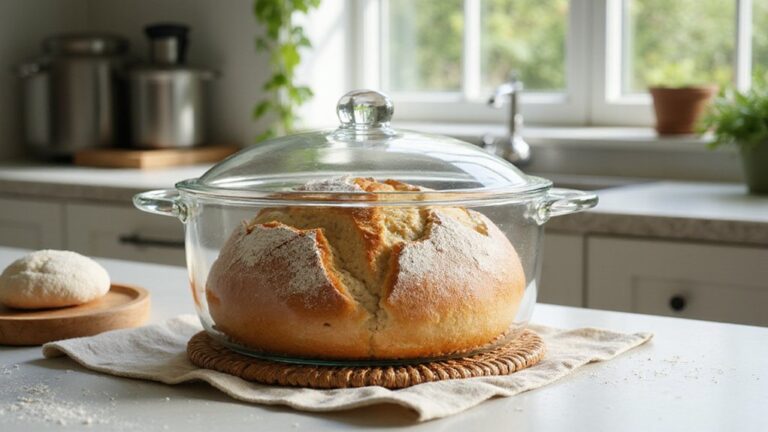
The preheating benefits emerge when you balance thermal consistency with steam retention. A moderately preheated Dutch oven—around 450°F—allows controlled spring development while maintaining crust formation flexibility. You’ll achieve superior bloom and oven spring compared to unpreheated alternatives, without the structural degradation that excessive heat creates. Preheating with the lid on helps trap steam during the initial baking phase, enhancing crust formation. Temperature consistency directly impacts your sourdough’s predictability and final quality. Additionally, it’s important to note that using a glass lid on a Dutch oven can limit its effectiveness at higher temperatures, as glass lids have temperature limits that may affect your baking results.
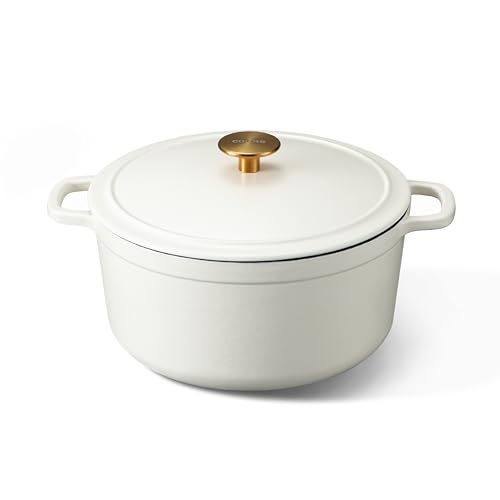
Superior Even Heat Control: One-piece thick cast iron delivers uniform heat with zero hot spots and excellent heat retention, ideal for searing, braising and crusty bread baking. Preheat on medium-low heat; cool naturally before washing to prevent enamel cracking.
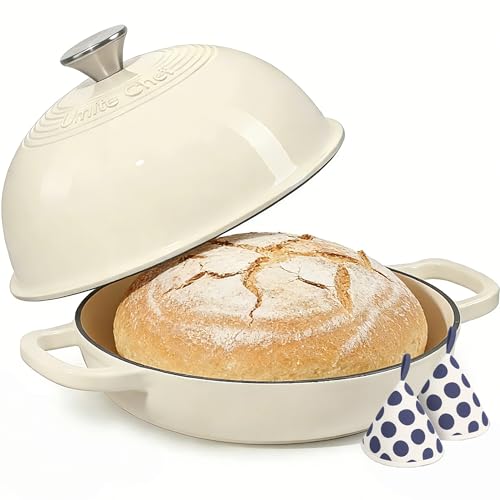
Achieve Professional Artisan Bread at Home - Expertly designed for bread baking, this 6 qt cast iron bread oven creates the ideal steam baking environment. Crafted from high-quality cast iron, it ensures superior heat retention for a crispy, golden crust and impressive oven spring—just like a bakery. The domed cloche lid traps moisture perfectly, guaranteeing delectable results every time

The Ultimate 9-in-1 Pro Bread Baking Kit – From Beginner to Artisan. This complete set is engineered for perfect homemade bread, covering the entire workflow: a 5QT Enameled Cast Iron Sourdough Bread Oven (with lid), 10inch Rattan Proofing Banneton, Stainless Steel Dough Scraper, Bread Sling, Dough Whisk, Bread Scoring Lame, Cleaning Brush, and Heat-Resistant Gloves. No need for extra purchases. Ideal for sourdough, no-knead, rustic bread, and even meatloaf.
Step-by-Step Preheating Workflow
Understanding the ideal 450°F sweet spot means little without executing the preheating process itself—and that’s where precision in your workflow truly matters. You’ll begin by setting your oven to 450-500°F, then immediately place your clean, dry Dutch oven inside before turning it on. This guarantees even heat distribution throughout both pot and lid. Maintain this preheat for approximately one hour, allowing the Dutch oven’s interior and exterior to reach target temperature. Near preheat’s end, retrieve your dough from refrigeration to maximize the cold-to-hot contrast. When ready, you’ll carefully transfer your dough into the preheated pot, prioritizing steam retention by immediately covering with the lid. This dough handling technique preserves the moisture essential for ideal oven spring and crust development.

【Airtight Lid Locks In Freshness & Flavor】Experience the magic of this Dutch oven with lid, precision-engineered to create a tight seal. It locks in moisture and essential nutrients, delivering richer flavor and incredibly tender, juicy results in every dish—from slow-braised meats to hearty soups. Achieve a perfect, crispy crust on your artisan loaves—it's the ultimate Dutch oven for bread baking. The interior self-basting dots continuously redistribute condensation, ensuring your food stays perfectly moist, never dry or mushy

Exceptional Heat Retention: Elevate your culinary skills with the Overmont Dutch oven. This heavy-duty cast iron Dutch oven ensures even heat distribution and exceptional heat retention, making it ideal for slow-cooked meals, stews, and braised dishes. Its ability to maintain consistent heat helps cook food evenly, enhancing flavor and texture for perfect results every time. We also include a cookbook with 10 classic recipes to inspire your cooking. 𝐍𝐎𝐓𝐄: 𝐅𝐨𝐫 𝐛𝐞𝐬𝐭 𝐫𝐞𝐬𝐮𝐥𝐭𝐬 𝐨𝐧 𝐭𝐡𝐞 𝐬𝐭𝐨𝐯𝐞𝐭𝐨𝐩, 𝐮𝐬𝐞 𝐦𝐞𝐝𝐢𝐮𝐦 𝐭𝐨 𝐥𝐨𝐰 𝐡𝐞𝐚𝐭 𝐭𝐨 𝐩𝐫𝐞𝐯𝐞𝐧𝐭 𝐟𝐨𝐨𝐝 𝐟𝐫𝐨𝐦 𝐬𝐭𝐢𝐜𝐤𝐢𝐧𝐠 𝐝𝐮𝐫𝐢𝐧𝐠 𝐮𝐬𝐞.

PERFECT FOR 1–3 PEOPLE: Designed for singles, couples, and small households, this 4.5QT Dutch oven provides the ideal capacity for soups, stews, pasta, side dishes, and meal prep without excessive leftovers or food waste. Perfect for everyday cooking, weeknight dinners, and apartment kitchens where versatility matters most.