
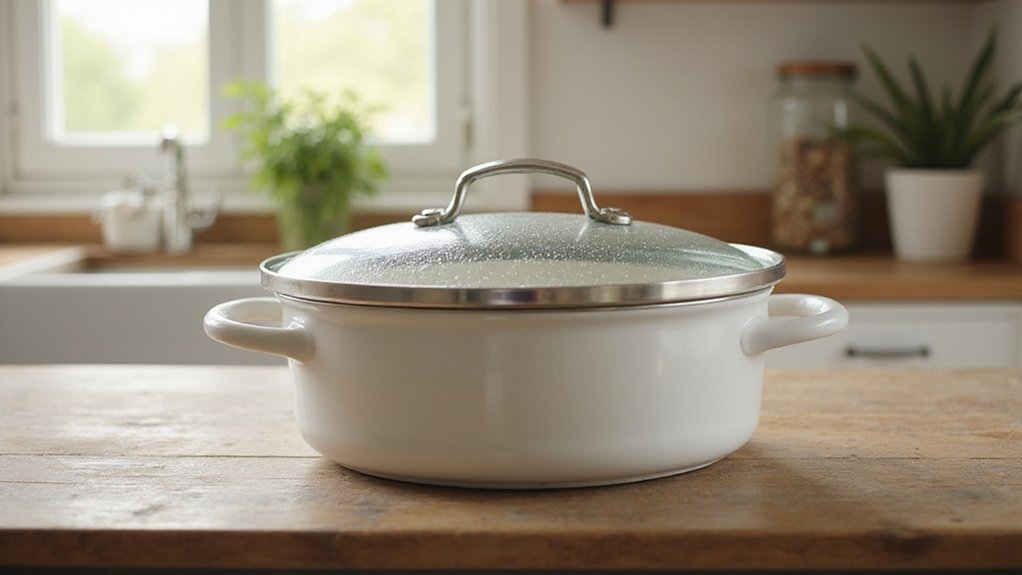
Wondering if you can put a Dutch oven with a glass lid in the oven? The good news is, it’s usually safe if you check the lid’s temperature rating first. Most tempered glass lids can handle up to around 400°F.
While brands like Pyrex and Anchor Hocking go up to 425°F. Keep reading to learn how to make sure your lid is oven-safe and avoid thermal shocks.
The Short Answer: Yes-But Only If You Check the Temperature Rating
Yes, you must check the temperature rating before using your Dutch oven’s glass lid in the oven. Limits can vary widely by brand, ranging from 350°F to 500°F. It’s essential to verify this to prevent the glass from shattering under heat stress. Look for the oven-safe symbol etched on the lid’s underside or the bottom of the pot to confirm it’s rated for oven use. Borosilicate glass models generally handle higher temperatures than tempered glass, but never assume this—always check the specific rating. Inspect the lid for any hairline cracks or chips; even tiny flaws can cause the glass to fail violently when heated. For measuring the internal temperature of candy syrups, digital probe thermometers are recommended for accuracy, unlike infrared models which are less reliable for such tasks. Properly rated glass ensures your dish stays safe and intact during oven cooking.
What Temperature Can Your Dutch Oven Glass Lid Handle?
Most glass lids for Dutch ovens can handle temperatures between 350°F and 500°F, but it’s essential to check your specific lid’s specifications. Standard tempered glass lids typically tolerate up to 400°F, whereas premium options like Pyrex can withstand around 450°F. Your lid’s exact heat limit depends on its construction and materials.
The presence of a metal hinge or handle does not affect the glass’s temperature limit but can conduct heat, which may cause it to become hotter than the glass itself. Always look for the “Oven-Safe” symbol or a specific temperature rating printed on the underside of the lid. If this information isn’t visible, visit the manufacturer’s website for details.
Exceeding the recommended temperature range risks shattering the glass, so verifying your lid’s specific limit before subjecting it to high heat is crucial. Never assume your lid can handle the heat based on appearance or brand alone. For example, sous vide cooking relies on precise, lower temperatures to avoid such risks.

Strong, borosilicate glass construction for freezer to oven use Withstands extreme temperature changes without the risk of cracking or shattering
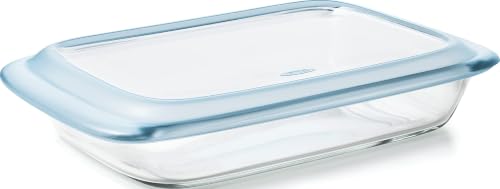
FREEZER-TO-OVEN: Thermal shock-resistant borosilicate glass allows this baking dish to go from the freezer directly to the oven without cracking. Ideal for meal prep, potlucks, entertaining, and convenient for everyday cooking and storage needs.

【Premium Glass Food Storage Containers with Lids】Our BOROHOUSE 10-piece set includes 5 large (1040ml/35.2oz) and 5 small (370ml/12.5oz) containers, perfect for meal prep, leftovers, and organized kitchen storage.
Why Tempered Glass Lids Can Take More Oven Heat
Tempered glass lids can withstand oven temperatures typically ranging from 350°F to 400°F, making them suitable for most roasting and baking tasks. This high heat tolerance comes from a specialized heat-treatment process that involves heating the glass to extreme levels followed by rapid cooling of its surface. This process induces internal compressive stresses within the glass, significantly boosting its strength and durability. As a result, tempered glass lids resist breaking at temperatures that would shatter regular glass—usually around 302°F to 392°F. For example, this same principle of controlled heat distribution is why a Dutch oven excels at slow-cooking pork chops in a rich gravy without scorching.
Premium brands push these limits even higher: Pyrex and Anchor Hocking lids are safe up to 425°F, Calphalon up to 450°F, and Glasslock can handle up to 482°F. The reinforced structure helps distribute thermal stress evenly across the lid’s surface, preventing hot spots that might cause breaking. This even distribution of heat and stress makes tempered glass lids reliable for prolonged oven use, especially during roasting meats or baking casseroles where sustained high temperatures are involved. To maintain safety, you must ensure the oven temperature does not exceed 450°F when using a Calphalon lid.
Thermal Shock Is the #1 Risk: How to Avoid Shattering Your Lid
Thermal shock is the primary risk to glass lids, which can cause shattering if not managed carefully. The key issue isn’t the high temperature itself but the rapid rapid change in temperature. When your lid experiences sudden heating or cooling, uneven expansion occurs, creating stress points that can lead to cracks or breakage. To avoid this, never pour cold liquid onto a hot lid or place a hot lid onto a cold, wet surface like a damp towel, metal countertop, or even a cooled ceramic surface. Instead, always set your lid on a dry cloth, wire rack, or wooden cutting board to allow it to cool gradually. Preheating your lid in the oven before use helps it adjust slowly to heat; avoid transferring it directly from the fridge to hot environments. For accurate oven temperature readings, use an infrared thermometer and follow distance-to-spot ratio guidelines to ensure the measurement area stays on the lid surface rather than picking up surrounding oven heat. Following these precautions significantly reduces the risk of thermal shock and keeps your glass lid intact for the long haul. However, you should always confirm whether your lid is made from borosilicate or soda lime glass, as each type handles thermal stress differently and may require additional precautions. For further protection, consider seasoning your cast iron skillet with olive oil to create a polymerized layer that resists thermal stress. Additionally, if your Dutch oven has a plastic knob, check its heat limit to avoid damage, as these knobs are often rated only up to 400°F.

MAGIC MILL'S ULTIMATE GLASS FOOD STORAGE CONTAINERS – Transition from plastic to a sustainable lifestyle with our premium glass food storage containers made from high-quality borosilicate glass, designed to last and offer a long-term solution for storing your favorite meals and ingredients.

6-PIECE BAKEWARE SET: 6-piece set of 3 oven-safe glass baking dishes and 3 lids for making casseroles, desserts, stews, and more

PRODUCT SIZE: 10.5inch high and 6.5inch wide, our air tight pantry is suit for tea, honey, coffee beans,Spice,Cereal,Egg,Flour.
5 Mistakes That Push Your Glass Lid Past Its Limit
Even if you handle your glass lid carefully, certain mistakes can cause it to break or weaken over time. One common error is exceeding the manufacturer’s temperature limit, usually between 400°F and 450°F. Pushing beyond this range causes the glass to soften or shatter, as it cannot withstand extreme heat. Always check your lid’s specifications and stay within those temperature boundaries.
Another mistake is subjecting the lid to rapid temperature changes. Placing a cold lid directly into a hot oven or rinsing it with cold water while hot causes thermal shock. This sudden shift can create micro-fractures or cause the glass to crack unexpectedly. To prevent this, allow the lid to heat or cool gradually, and avoid drastic temperature swings.
Physical damage also compromises the integrity of your glass lid. Chips, scratches, or tiny cracks weaken the structure even if they seem minor. These flaws can expand over time, especially under heat or stress, increasing the risk of breakage. Regularly inspect your lid for damage and replace it if you notice any signs of wear.
Pay attention to the handle safety. Many lids have plastic or silicone knobs that melt between 160°F and 350°F. Using the lid in the oven or under high heat can cause these handles to warp, emit fumes, and destabilize the lid’s fit. Always verify if the handle material is oven-safe before using the lid in high-temperature applications.
Lastly, misuse of the broiler setting can shatter tempered glass instantly. Direct exposure to a flame or intense heat from the broiler exceeds the glass’s tolerance and causes sudden breakage. Never use a glass lid directly under a broiler unless specifically designed for such use, and always verify the manufacturer’s recommendations.

Perfect Fit for Corningware French White 2.5qt Dish – 2.5 Quart glass lids replacement designed specifically for Corningware French White 2.5 Quart fluted round casserole dishes and also compatible with Pyrex 2.5-quart casserole dish. For best fit, Please measure the outer diameter of your pot's rim before purchasing to confirm compatibility.

UNIVERSAL COMPATIBILITY – Perfectly fits 10-10.25" Lodge skillets (L8SK3/L8GP3), 5QT Dutch ovens (L8DO3/L8DOL3), Ninja pans, cast iron cookware & most 10.25-inch pots/woks. Confirm size before purchase!

Versatile Skillet Lid: The Lodge Round Glass Lid fits 10.25 inch Lodge skillets and pans, helping lock in flavor and moisture for consistent cooking results
Why Your Knob Material May Be the Real Limiting Factor
Your Dutch oven’s knob material often determines its safety during high-heat cooking. Plastic or nylon knobs typically degrade between 160°F and 400°F, leading to deformation and potentially releasing harmful chemicals into your oven. This presents a chemical hazard that can contaminate your food. Even traditional phenolic knobs tend to fail above 390°F. For example, Le Creuset caps its lid knob temperature at 375°F. In contrast, stainless steel knobs can withstand temperatures up to 500°F without degrading. To stay safe, always check your knob’s material before increasing the heat. If you’re unsure, consider removing the knob or covering it with aluminum foil to prevent damage and chemical release. Don’t let a cheap or incompatible knob compromise your meal or oven safety. This is important because cast iron can often withstand much higher heat without structural damage, provided it is heated and cooled evenly to avoid thermal shock cracking. Adding ice cubes to a hot Dutch oven delays crust formation and improves oven spring by creating steam. For sous vide cooking, using bags made from BPA-free and FDA-tested materials ensures no harmful chemicals leach into food at sustained low temperatures.
When Should You Never Use a Glass Lid in the Oven?
Using a glass lid in the oven is risky in several situations. First, never place a glass lid under direct broiler heat. The intense, direct flame can easily surpass the glass’s tempered limits, causing it to shatter instantly. Second, avoid putting a glass lid directly on a stovetop. Glass is not designed for direct contact with burners or open flames, which can lead to thermal stress and catastrophic failure. Unlike an infrared thermometer, which is unreliable for measuring a dog’s temperature, a glass lid’s risk of thermal shock is a real and measurable hazard.
Never transfer a cold glass lid from the refrigerator directly into a hot oven. The rapid temperature change introduces thermal shock, increasing the risk of cracking and breaking. Additionally, only use oven-safe glass lids made from tempered or specifically heat-resistant glass. Hand-blown or non-tempered glass lacks the necessary heat resistance and can crack under normal cooking temperatures. Always inspect the lid for any damage—hairline cracks, chips, or deep scratches weaken its structure and greatly increase the chance of failure during heating. Discard any damaged lids immediately to ensure safety. Similar care is required when handling cast iron, as flash rust can form if a wet skillet is not promptly seasoned after cleaning. To avoid overcomplicating kitchen gear choices, consider that vacuum sealer features like sealing modes and vacuum strength offer similar versatility for food storage.

Made of Borosilicate Tempering Glass, Lead Free, Heat and Cold Safe, Shock Resistance; Microwave, Oven, Steamer, Refrigerator, Freezer and Dishwasher Safe, doesn’t absorb food flavors

Watching Food Evenly: NUTRIUPS clear glass casserole dish lets you monitor the cooking process and easily identify leftovers when in the refrigerator.The transparent glass means glass casserole with lid goes well with any dish pattern.

3-CUP STORAGE: A household essential, this Pyrex rectangular glass container provides space to store your salads, snacks and other treats. The lid protects the contents from spilling, and the high quality glass is temperature resistant.
Oven-Safe Lid Alternatives When Your Glass Lid Won’t Work
If your Dutch oven’s glass lid is damaged or not oven-safe, several reliable alternatives can work. Cast iron or stainless steel lids are top choices because they withstand the full heat of the oven, trap steam effectively, and are usually dishwasher-safe for easy cleaning. For lower-temperature cooking, a silicone cover labeled oven-safe offers a reusable and eco-friendly option. You can also invert a heat-safe ceramic plate or a flat baking sheet over your dish—just make sure to verify that it’s oven-safe first. Always ensure your chosen lid or cover is securely placed and not in contact with heating elements to prevent accidents. Avoid using plastic wrap, paper towels, or cloths, as they will melt or catch fire when exposed to oven heat. Keep in mind that, just as with an infrared thermometer, an alternative lid may only give you an accurate reading of surface conditions rather than the internal temperature of the food inside. These alternatives provide safe and efficient solutions when a traditional oven-safe lid isn’t available.

Sturdy Tri-Ply Stainless Steel for enhanced durability:Our skillet is 2.5mm thick, making it exceptionally sturdy and durable with excellent heat conductivity.

【10 PCS STAINLESS STEEL FOOD CONTAINERS SET】– Includes 3 versatile sizes: 4x(14oz/400ml), 2x(21oz/600ml), 4x(31.5oz/900ml). Cappwery meal prep containers are ideal for gym, picnic, portion control, work lunches, travel and daily use.
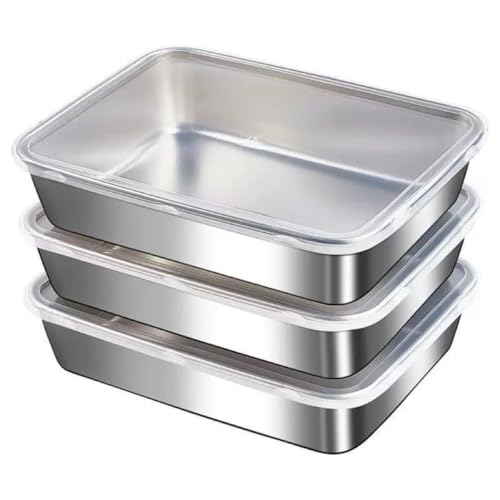
3 STACKABLE PANS WITH SNUG-FIT LIDS — Each pan measures 10.04 x 7.87 x 2.17 in (same size, set of 3); the pans stack to save cabinet space, with easy-on BPA-free PP lids.
How to Inspect Your Glass Lid Before Every Bake
To inspect your glass lid before every bake, follow these detailed steps. First, carefully examine the entire surface for cracks, chips, or deep scratches. These flaws weaken the glass and can cause shattering under oven heat. Running your fingers along the rim helps detect small chips or rough spots that may not be immediately visible but serve as stress points. Check the surface for uniform thickness; any thin spots suggest wear that risks breaking during use. Also, handle the lid carefully to avoid drops or knocks that can cause unseen damage.
Next, look for the oven-safe symbol or “Oven Safe” marking near the rim—usually rated up to 425°F. If you cannot find this label, verify whether the lid is made of tempered or borosilicate glass through the manufacturer’s website or original packaging. Confirm that the lid sits flat and is free of warping, which can affect sealing and safety during baking.
Always ensure the lid is at room temperature before placing it in a fully preheated oven; never start with a hot or cold lid to prevent thermal stress. If you find any damage such as cracks, chips, or warping, retire the lid immediately to prevent the risk of shattering during use. Regular inspection helps maintain safety and prolongs the life of your glass bakeware.


