Yes, you can vacuum seal seeds effectively for long-term storage when you combine the technique with proper preparation. You’ll need to dry seeds to 4-8% moisture content, use high-grade materials like mylar bags with oxygen absorbers and desiccants, and maintain cool temperatures between 32-45°F. This approach preserves seed viability for 5-10 years or longer by minimizing oxidative damage and metabolic activity. However, vacuum sealing alone isn’t sufficient—understanding the nuances of moisture control and storage conditions makes the difference.
How Vacuum Sealing Protects Seeds From Oxygen Damage
As seeds sit in storage, oxygen gradually degrades their DNA through a natural oxidation process that accumulates over time. You can mitigate this oxygen damage through vacuum sealing, which removes air from storage containers and creates a low-oxygen environment that slows seed deterioration. Residual oxygen remaining after vacuum sealing typically ranges from 0.3-3% within sealed packages.
Research from Wageningen University demonstrates that seeds survive exceptionally well without oxygen when maintained in a dry state, since respiration doesn’t occur in desiccated seeds. By combining desiccants with oxygen absorbers in vacuum-sealed mylar bags or mason jars, you achieve extended seed preservation compared to conventional storage methods. This hermetic sealing protects your seed’s genetic material from oxidative damage, considerably extending viability across extended storage periods.

【Clear Vacuum Bags】Our sealable vacuum bags are made of high quality materials can withstand high temperature, food save bags Boilsafe,Freezable and Reuseable.There will be an error of 1 inch between the product size and the actual working size.The real working size after sealing is 3 x 5 inches.Please choose carefully when purchasing.

Save 80% Space Effortlessly: Maximize storage efficiency with our vacuum bags! The electric pump removes air in 10-30 seconds, reducing bulky items like blankets, comforters, and seasonal clothes to 20% of their original size. Perfect for decluttering closets, organizing travel luggage, or discreet under-bed storage

Easy to Use with Cordless Rechargeable Pump: The mini wireless rechargeable pump is easy to carry when going out or traveling, and can be used without needing to be near a power outlet. Featuring a 1500mAh battery that lasts for up to 90 bags per charge, this powerful electric pump significantly reduces the effort compared to manual suction bags for storage. Simply press and seal, and the pump does the work in seconds.
The Critical Importance of Drying Seeds Before Sealing
While vacuum sealing creates a protective low-oxygen environment, you won’t achieve long-term seed viability without addressing what happens before the seal closes: proper seed drying.
You must reduce moisture content to 4-8% before sealing to prevent mold growth and seed deterioration. High moisture levels above 15-20% equilibrium relative humidity accelerate vigor loss and germination capacity decline. Without adequate drying, condensation forms inside sealed packets, promoting fungal contamination.
Employ gentle drying techniques: spread seeds thinly on non-absorbent surfaces in well-ventilated, low-humidity environments. Avoid heat-based methods that damage viability. Use moisture measurement tools to verify you’ve reached ideal levels for your specific seed type and storage temperature.
Proper drying guarantees seeds maintain germination rates for years when sealed correctly.
Best Materials and Packaging Options for Vacuum-Sealed Seeds
Selecting the right packaging material fundamentally determines how well your vacuum-sealed seeds survive long-term storage, so you’ll want to understand the performance characteristics of each option. Your best container options include glass jars with natural rubber seals, which provide chemical inertness and visibility, or tri-laminate foil bags, which excel at blocking moisture and oxygen. Additionally, employing techniques like using a vacuum can enhance the sealing process, improving overall protection. Mylar bags combined with oxygen absorbers and desiccants represent ideal sealing techniques for maximizing longevity. Vacuum-seal containers in high-grade plastic work effectively when paired with oxygen absorbers to eliminate residual air. Additionally, using effective sealing techniques, such as those found in Savory Dutch Oven Pot Roast, helps ensure optimal protection against external elements. Avoid thin plastic bags alone, as they’re vulnerable to punctures and seal failure. Regardless of material chosen, verify complete moisture removal before sealing to prevent mold development and seed degradation.

[SIZE & QUANTITY] . Pack of 30 mylar bags of 1 gallon for long term food storage - With 400cc oxygen absorbers (30) & Stickers (30) - Very thick 14,8 Mil layers made of PET & Mylar foil - Mylar bag of 10"x15" Inch

[YOU CAN GET]100 mylar food storage bags in 3 different sizes - 25 pcs of 1 Gallon mylar bags 9 Mil 10"x14", 35 pcs of mylar bags 9 Mil 6"x9", 40 pcs of mylar bags 9 Mil 4.3"x6.3", come with 100 PCS 300cc oxygen absorbers and 150 Sticker Labels for food storage, easily meet your food storage needs. The additional 10 bag sealing clips can assist you to seal the bag opening of the mylar bag, simple and convenient

HIGH QUALITY MATERIAL: Meet our top-notch Mylar bags for food storage with 4 sizes (10.2‘’ * 14'', 8.3'' x12.2'', 7.1'' *10.2'', 5.5‘’*7.5‘’) which are not only thick but also have a cool stand-up design. Perfect for keeping your food safe for long time! Our mylar food bags come with 400cc and 500cc oxygen absorbers to keep the air out and your food fresh. Plus, these 1 quart mylar bags with oxygen absorbers are airtight and you can seal them up tight with heat.
Moisture Control Strategies Inside Sealed Containers
Moisture control inside sealed containers represents the critical foundation for preserving seed viability during long-term storage, since even small amounts of residual moisture can trigger mold growth and accelerate metabolic deterioration. You’ll maintain internal relative humidity between 10% and 25% by incorporating desiccants like silica gel packets, which provide continuous moisture absorption and prevent condensation damage. Moreover, using precision tools like hygrometers will help you monitor your sealed containers regularly to ascertain humidity remains stable. You should allow containers to reach room temperature before opening to prevent moisture condensation caused by temperature differentials. This humidity control strategy directly reduces seed respiration-related moisture buildup in airtight conditions, maximizing longevity and germination rates across your stored seed collection. Additionally, the process of removing oxygen during vacuum sealing can further enhance the preservation of seed quality by minimizing oxidation.

Premium Quality & Reliable Performance Proudly produced with high-grade materials and strict quality standards, these silica gel packets deliver dependable moisture control in various environments. Perfect for home, vehicle, pantry, and filament storage bags, helping maintain a dry and clean space.

GOOD ADSORPTION CAPACITY: Silica gel desiccant is a highly active adsorption material, has good thermal properties and chemical stability, and does not react with other substances.

FAMILY-FRIENDLY MOISTURE CONTROL: Keep your snacks crispy and medications potent by keeping ambient moisture at bay; Crafted with premium, odorless silica gel and non-toxic fabric, Vbeijll Desiccants offer gentle yet effective protection for your home [Note: Packs ≤ 5g feature food safe wrapping for direct contact with food & medicine; Packs > 5g are recommended for placement alongside items rather than direct mixing, without affecting absorption]
Optimal Temperature and Storage Environment Conditions
Because temperature profoundly influences seed respiration rates and germination triggers, you’ll achieve ideal long-term viability by maintaining storage conditions between 32-45°F (0-7°C), where metabolic activity remains minimized and dormancy stays preserved. Temperature stability is critical—fluctuations mimic seasonal changes and prematurely cue germination or microbial decay. You’ll protect your seeds further by combining cool temperatures with dark storage, which reduces light-induced deterioration and metabolic activity while preventing daytime warming effects. Store containers in opaque packaging or closed, dark drawers away from windows, heaters, and thermal fluctuations. When retrieving seeds from refrigeration, allow containers to reach room temperature before opening to prevent condensation. This methodical approach—pairing temperature control with darkness—maximizes seed longevity and germination potential.
Expected Seed Viability Timelines and Longevity Results
While proper storage conditions preserve seed viability greatly, you’ll find that longevity varies greatly depending on seed type and storage methodology. Vegetable seeds remain viable for 3–6 years, while flower and herb seeds typically last only 1–3 years. Your seed type selection dramatically impacts long-term preservation outcomes.
Under ideal conditions—combining desiccation, vacuum sealing, darkness, and freezing—you can achieve remarkable results. Orthodox seeds frozen at –18°C maintained 58.4% germination after 35.7 years. Nordic crop seeds stored at –3.5°C with 3–5% moisture remained highly viable for over 20 years.
However, you must understand that seed endosperm gradually breaks down regardless of conditions. Viability declines progressively with age, making newly purchased seeds your most reliable option. Repeated temperature fluctuations and moisture reabsorption during retrieval considerably reduce longevity.
Combining Vacuum Sealing With Freezing for Extended Preservation
To maximize seed longevity beyond the typical 3–6 year window for vegetable seeds, you’ll need to combine vacuum sealing with freezing—a synergistic approach that addresses three critical degradation factors simultaneously. Freezer compatibility guarantees temperature consistency that prevents the condensation cycles occurring in room-temperature storage. When you vacuum seal seeds before freezing, you’re removing residual oxygen while your freezer’s stable cold environment slows metabolic activity within seeds, preserving internal starches and enzymes essential for germination potential. This method mirrors how vacuum sealing works to lock out air and moisture, thereby enhancing food quality. The vacuum-sealed seeds will also extend shelf life, ensuring that the seeds maintain their viability even after years of storage. You’ll achieve superior results by integrating vacuum sealing techniques with subfreezing temperatures rather than relying on either method alone. This combination maintains seed viability for decades, provided you allow sealed containers to reach room temperature before opening them, preventing moisture infiltration from temperature fluctuations.

ECONOMICAL & & TIME SAVING: Total 150 count Bonsenkitchen 20 Gallon 11" x 16"+ 80 Quart 8" x 12"+ 50 Pint 6" x 10" vacuum sealer bags are different sizes of packaging, meet your different usage needs. Vacuum bags are pre-cut and ready-to-use, saving you time whenever you’re preserving leftovers, preparing make-ahead meals, and portioning bulk items in the freezer.Just pull out and use, no need to cut, no need to seal one side before putting food in
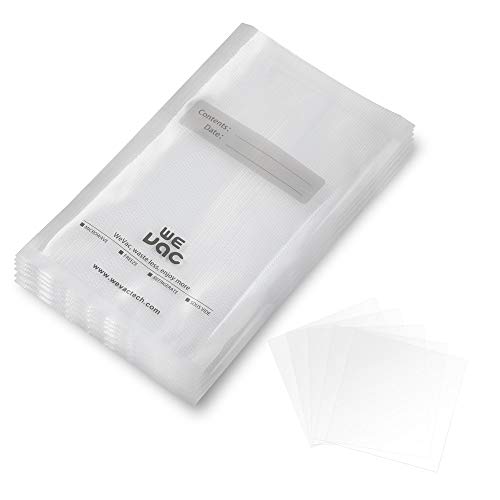
HEAVY DUTY AND PUNCTURE PREVENTION - 6x10 pre-cut pint bags with embossed channels increase suction, keep fresh without freezer burn or dehydration

Works with All Desktop Vacuum Sealers: These vacuum sealer bags are designed to work with all large desktop vacuum sealer machines. (Notice: The precut bags have no zipper or air valve and cannot be used with handheld vacuum sealers.)
Common Mistakes That Reduce Vacuum Sealing Effectiveness
Even meticulous vacuum sealing can fail if you’re not aware of the pitfalls that undermine its effectiveness. Common vacuum packing mistakes include using thin, low-quality bags prone to pinholes and leakage. You’ll compromise seed preservation techniques by neglecting desiccants or oxygen absorbers, allowing residual moisture and oxidation to degrade viability. Over-tightening vacuum seals crushes delicate seeds without rigid internal support, rupturing their coats irreversibly. Storing sealed packages in fluctuating environments or opening them repeatedly negates vacuum benefits. Additionally, you must avoid placing cold containers in warm spaces, which causes condensation inside. Selecting thick mylar or glass containers with proper gaskets, maintaining consistent cool temperatures, and minimizing package disturbance guarantee your vacuum sealing investment protects seeds effectively. vacuum sealing is especially effective for nuts and seeds, ensuring their crunch and flavor are maintained over time. Just as with Dutch Oven Cobbler recipes, the right approach ensures desired results—so attention to detail in storage matters just as much.

Space-Saving Stand-Up Design: Outer size: 3.5" x 5.1", usable inner size: 3" x 3.8"; Our unique self-standing gusseted bottom allows bags to stand upright on counters or shelves, keeping your space neatly organized while maximizing storage efficiency in tight spaces (Note: Curved bottom affects the usable space for square-cornered objects. Please check inner size before order)

Outer material is Kraft paper; inner material is aluminum foil

Set includes 43 lightly assorted Vegetable and Herb seeds!
When Vacuum Sealing May Not Be Sufficient for Your Seeds
Despite its widespread use, vacuum sealing alone doesn’t guarantee long-term seed viability because it addresses only one preservation variable—oxygen removal. You’ll encounter storage failures when you neglect moisture control, temperature regulation, or pest management alongside sealing. Certain seed types—particularly those with high oil content or sensitive internal chemistry—may experience metabolic stress in prolonged vacuum conditions without complementary desiccants. Freezing seeds in vacuum bags risks tissue damage if moisture hasn’t been adequately reduced beforehand. Additionally, residual moisture trapped inside sealed containers creates condensation environments where fungal growth thrives, undermining your preservation efforts. Glass jars with airtight seals and desiccants, or foil pouches, often outperform vacuum-sealed plastic for extended storage. You’ll achieve ideal results only by combining vacuum sealing with cool temperatures, darkness, and moisture absorbers—vacuum sealing alone remains insufficient. Investing in smoother finishes for storage containers can reduce the risk of condensation and ensure better protection for your seeds.