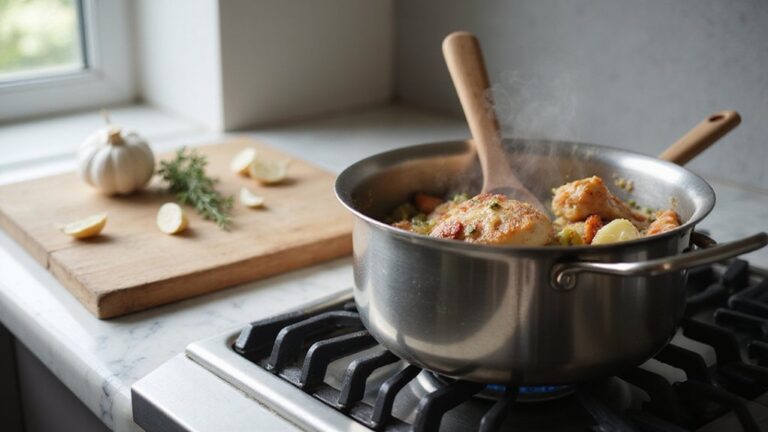
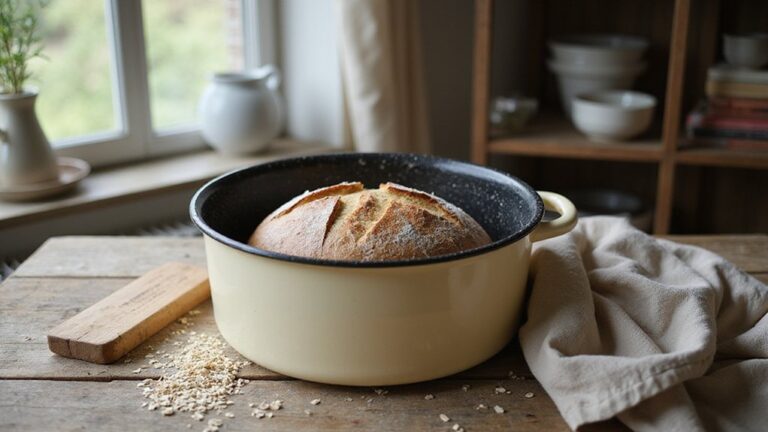
You’ll transform bone-in chicken thighs, carrots, celery, and potatoes into comforting richness using your Dutch oven. Start by searing seasoned chicken until golden, then deglaze with wine to build deep flavors. Sauté your mirepoix, layer in root vegetables with thyme and bay leaves, and simmer low and slow between 250–375°F. The result? Tender, juicy chicken enveloped in savory broth that’ll warm you from the inside out. Uncover the precise techniques that’ll elevate your stew game.
Ingredients You’ll Need
To make a satisfying Dutch oven chicken stew, you’ll want to gather bone-in, skin-on chicken thighs—they’re preferred for their superior flavor and moisture retention, though boneless, skinless breasts work if you’re after a leaner result. Plan for 1.5 to 2 pounds, roughly 6-8 pieces, to serve 4-6 people.
Next, prep your vegetable options: chunk carrots for sweetness, halve or dice onions for aromatic depth, cut celery into pieces, and quarter potatoes to absorb broth flavors. Mince garlic for pungency. Remember to avoid leaving cast iron cookware in persistent humidity as it can lead to rust.
For liquids, you’ll need chicken stock as your base. Gather all-purpose flour (3 tablespoons) as your thickener, plus butter for richness. Stock fresh and dried herbs like thyme and bay leaves, along with salt and pepper for seasoning adjustments. Additionally, ensure that you store any leftover flour in a vacuum-sealed bag to keep it fresh for your next cooking session.

This item has been rated by the Global Animal Partnership a Step 2 - Enriched Environment

One value pack tray of bone-in, skin-on chicken thighs weighing between 4 and 6 pounds

Meets standards for animal welfare, feed, and more, so you can know about what you're buying (and eating)
Essential Cooking Equipment
With your ingredients prepped and ready, you’ll need the right equipment to transform them into a stellar stew. A 12-inch cast-iron Dutch oven provides even heat distribution essential for braising chicken and vegetables. Invest in a quality lid lifter like CampMaid to safely remove the hot lid without burns. Heatproof leather gloves protect your hands during handling and food manipulation. Long metal tongs enable precise ingredient movement inside the oven while keeping hands away from intense heat. For charcoal management, use Kingsford briquettes with a chimney starter for consistent, controllable temperatures. A Dutch oven lid stand keeps your lid off ash and dirt. Heavy-duty foil lines the interior, preventing sticking and simplifying cleanup after your satisfying meal. Additionally, using the Dutch oven’s even heat distribution will help ensure your chicken stew cooks evenly, similar to the method for creating campfire desserts like peach cobbler. To guarantee successful cooking, make sure to allow your thermometer to acclimate to improve recipe accuracy and avoid miscalculations.

PRE-SEASONED CAST IRON: 7-quart heavy-duty dutch oven pot with lid and dual side handles for easy lifting and maneuvering

Heavy-Duty Camping Cookware: Designed for campfire coals, the Lodge Seasoned Cast Iron Camp Dutch Oven uses a flanged lid to distribute heat above and below for even cooking
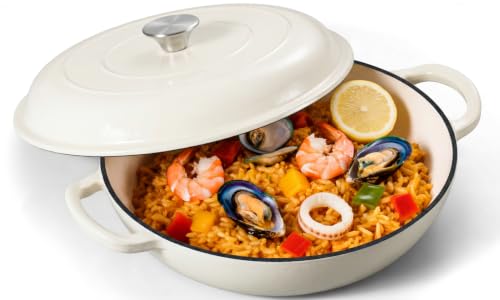
Premium Material, Leonyo’s enameled shallow Dutch Oven pot with lid is made of premium cast iron with a high-quality enameled coating on the interior and exterior with a glossy enamel, whether it is heated at high temperature or constantly stir-fried, it is not easy to damage the pot, which is durable and non-stick
Preparation and Searing
Once you’ve gathered your equipment, the foundation of an exceptional stew begins with properly preparing and searing your chicken. Start by patting bone-in, skin-on thighs dry, then season with salt, pepper, and herbs—this simple approach maximizes browning without masking natural flavors.
Heat two tablespoons of oil in your Dutch oven until it shimmers. Place chicken skin-side down first, employing skin crisping methods by maintaining consistent medium-high heat for 3–5 minutes. Resist moving the chicken; let it develop that golden crust before flipping. Searing the chicken not only enhances flavor but also adds texture to the stew.
Once both sides are browned, transfer the chicken to a plate. Deglaze your hot pot with white wine or broth, scraping fond from the bottom. This technique builds depth and prevents sticking, setting the stage for your stew’s rich flavor profile. Remember, achieving tender, juicy chicken involves key cooking techniques to avoid drying out the meat.

Even Heat Distribution Retention: This Umite Chef Dutch oven Made with heavy-duty enameled cast iron, ensures even heat distribution for perfect searing and slow cooking, locking in flavors. thickened walls lock in heat for slow braising, searing, and baking. Unlike thin pots that scorch food, this professional-grade Enameled cast iron potSuperior heat retention after preheating (allow 5-7 mins for even distribution). CRITICAL: Always cool naturally for 45+ mins before cleaning. Thermal shock (hot-to-cold contact) cracks enamel. USE TIP: Preheat 2-3 mins on medium-low only

【2-IN-1 DUTCH OVEN SET】This cookware and bakeware set includes 5 qt dutch oven with 2 qt lid, They are enough large to make a dish for 4 -5 people at least, Dutch oven pot is great for baking bread and roasting chicken in the oven, braising, stewing and simmering food on the multi stoves, such as electric, gas, ceramic, induction or halogen cooktop, The matching lid not only can be a cover but also can be a skillet for frying fish and making pancake, A ideal gift for family and friends

Even Heat Distribution Retention: This Umite Chef Dutch oven Made with heavy-duty enameled cast iron, ensures even heat distribution for perfect searing and slow cooking, locking in flavors. thickened walls lock in heat for slow braising, searing, and baking. Unlike thin pots that scorch food, this professional-grade Enameled cast iron potSuperior heat retention after preheating (allow 5-7 mins for even distribution). CRITICAL: Always cool naturally for 45+ mins before cleaning. Thermal shock (hot-to-cold contact) cracks enamel. USE TIP: Preheat 2-3 mins on medium-low only
Building Flavor With Vegetables
Now that your chicken’s resting on a plate, you’re ready to build your stew’s aromatic foundation with the classic mirepoix—onion, carrot, and celery. Sauté these vegetables in the same Dutch oven to release their natural sugars and develop caramelized notes that deepen your stew’s complexity. Onion provides umami, carrots contribute sweetness and color, while celery adds earthy aromatics. Add minced garlic to intensify savory flavors. This is similar to the dry rub used in slow braising beef brisket, which enhances the flavor profile of the dish.
Your vegetable combinations determine the stew’s character. Layer potatoes, additional carrots, and celery into the pot, reserving peas for later additions. This flavor layering technique guarantees even cooking and prevents overcooking delicate vegetables. Root vegetables like parsnips add heartiness, while their starches thicken your broth naturally as they break down, creating the rich, comforting consistency that defines exceptional Dutch oven chicken stew. Including savory aromatics such as thyme or bay leaves further enhances the depth of flavor in your stew.
Simmering to Perfection
As your aromatic foundation settles into the Dutch oven, you’ll deglaze the pot with wine to capture those browned, flavorful bits clinging to the bottom—this fond becomes the backbone of your sauce’s depth. Cover your Dutch oven and maintain a perfect temperature between 250°F and 375°F, depending on your desired simmer time. Dried hardwood like oak provides a steady flame for your Dutch oven cooking and is essential for enhancing the flavors. Lower temperatures require 4+ hours, yielding exceptionally tender chicken and concentrated flavors. Higher temperatures reduce cooking to 45 minutes to 1 hour 15 minutes. Position your chicken pieces on a vegetable bed, never touching the pot bottom, ensuring even heat distribution. Keep the lid sealed during initial simmering to trap steam and maintain consistent moisture. Skim surface impurities occasionally, and resist stirring excessively to preserve that developing, flavorful broth. Remember to avoid thermal shock by allowing your Dutch oven to preheat with the oven for best results.

BREAD BAKER'S DUTCH OVEN, 500°F OVEN-SAFE, SOURDOUGH-READY – one of the highest ratings in its class – delivering the sustained heat that sourdough, artisan bread, and pizza dough demand. Thick cast-iron walls trap and circulate heat like a brick oven, producing bakery-quality crusts at home. The tight-sealing lid features raised self-basting nodes that continuously recirculate steam: a perfect moisture chamber, every single bake.
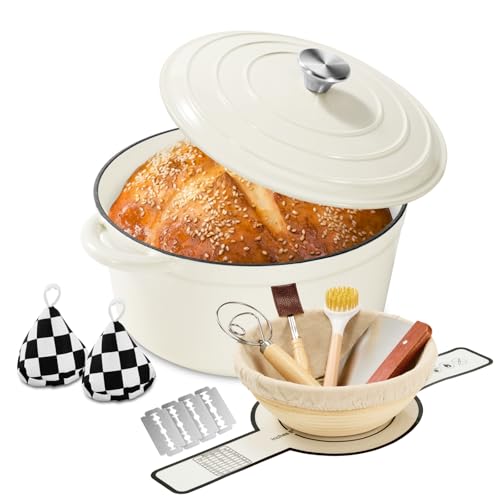
【For Effortless Cooking & Easy Cleaning 】Featuring a seven-layer design, this Dutch oven ensures even heat distribution and retention. The enamel coating resists sticking, and facilitates easy cleanup, saving you time and effort in the kitchen
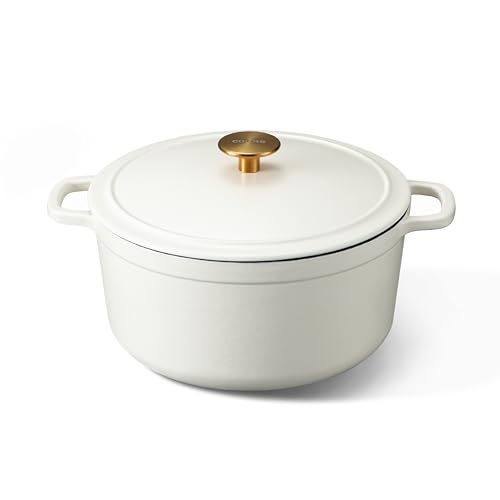
Superior Even Heat Control: One-piece thick cast iron delivers uniform heat with zero hot spots and excellent heat retention, ideal for searing, braising and crusty bread baking. Preheat on medium-low heat; cool naturally before washing to prevent enamel cracking.
Serving and Storage Tips
After hours of patient simmering, your Dutch oven chicken stew reaches its moment of glory—serve it hot in pre-warmed bowls to preserve the tender chicken’s texture and keep that rich, concentrated broth at its peak. Garnish with fresh parsley for aromatic appeal, and pair with crusty bread or mashed potatoes as ideal serving suggestions that complement the stew’s hearty richness. Additionally, consider incorporating juicy shredded chicken from your Dutch oven techniques for an added layer of flavor. The use of a machined cast iron skillet can enhance your cooking experience further, contributing to better heat retention and even cooking.
For storage techniques, cool your stew completely before transferring it to airtight containers. Refrigerate for up to five days, or freeze in portions for extended storage. When reheating, warm gently over low heat, stirring frequently and adding broth if needed to restore consistency. Avoid boiling, which toughens the chicken and breaks down vegetables, compromising the careful balance you’ve cultivated throughout cooking.