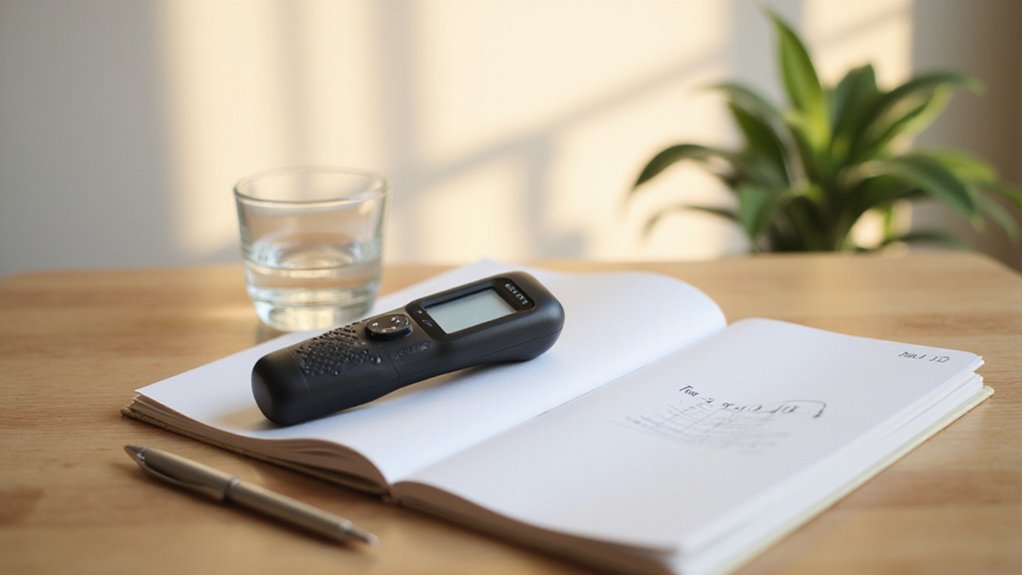
Ever wonder if you can fake a fever with an infrared thermometer? Many people try rubbing their forehead or using warm objects to boost surface temperature, but those tricks rarely work with modern devices.
Infrared thermometers are designed to read the body’s core temperature and can detect surface tricks immediately. Keep reading to learn why these methods usually don’t fool the thermometer and what really affects the readings.
Can You Really Fool an Infrared Thermometer?
You can temporarily fool an infrared thermometer into measuring an altered surface temperature, but not your actual core body temperature. Rubbing your forehead quickly increases skin surface heat by about 1°F due to friction, which the sensor detects as a higher temperature. Applying a warm washcloth or hand warmer can also produce a brief, false high reading, but the effect fades as heat dissipates. Conversely, cooling your skin with an ice cube creates a falsely low reading that can trick the device for a short period. Keep in mind that environmental factors like high humidity, direct sunlight, or not allowing the device to thermalize for 15 minutes can cause inconsistent readings. Holding the thermometer transfers your body heat onto it, leading to skewed results. These tricks only change the surface temperature that the infrared sensor detects; they do not influence your actual internal temperature. For instance, applying ice cubes directly to the forehead rapidly cools the skin, causing the thermometer to record an extremely low temperature that may be too cold to register. A similar principle applies to metal surfaces, where vinegar spray solution effectively removes rust but must not sit longer than 30 minutes to prevent pitting damage. Dutch ovens, known for excellent heat retention, can maintain consistent temperatures for cooking even when surface readings are manipulated. In contrast, measuring a dog’s temperature this way is unreliable, as studies confirm that infrared thermometers significantly underread a canine’s actual body temperature compared to rectal thermometers.

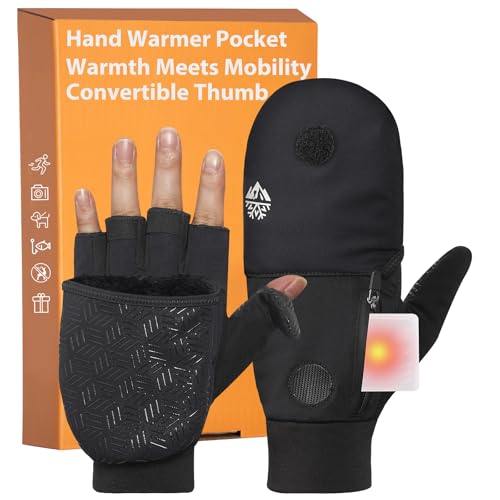
Duration: Up to 10 hours of consistent natural heat from HOTHANDS, America's trusted hand warmer brand for over 35 years, made in the USA using domestic and imported materials for reliable cold weather protection.

Duration: Up to 10 hours of natural heat from air-activated hand warmers, perfect for cold weather camping gear and outdoor sporting events when you need reliable warmth.
Why Surface Heating Methods Rarely Work
Surface heating methods rarely work because they only warm the skin’s outer layer, not your internal body temperature. When you rub your forehead or apply a warm cloth, you’re effectively heating just the superficial skin surface. Infrared thermometers then pick up this surface temperature, which can be misleading. If your skin is sweaty or oily, it reflects infrared energy away, causing the device to falsely read a lower temperature. Adjusting emissivity settings often fails because many thermometers reset to default values, resulting in inaccurate readings based on reflective surfaces. To improve accuracy, you could instead point the thermometer at a non-reflective surface that has equilibrated with ambient air. Thermal lag also plays a role: the heat you apply takes time to transfer and register, so the thermometer detects only an unstable surface spike rather than your true core temperature. This unreliability mirrors the fact that Infrared thermometers are less accurate for measuring internal temperatures of liquids like syrups. Similarly, the prank known as a Dutch oven traps heat under a blanket in a way that makes surface temperatures artificially register. Condensation, dust, or smudges on the lens further scatter the infrared signal, making corrections ineffective. Ultimately, surface heating tactics amount to wasting your time because the thermometer measures the surface, not your internal body temperature.
How Long Do Temperature Spikes Actually Last?
Temperature spikes from genuine infections typically last between three to four days. Minor fevers caused by minor irritations often resolve within a few hours. Infrared thermometers measure surface temperature, which can fluctuate quickly and often show shorter spikes than actual core body temperature during a fever. When trying to manipulate temperature readings, you’ll find it challenging because surface changes won’t match the sustained pattern of a real illness. For children over 2, a fever lasting more than 72 hours warrants medical evaluation. Adults should seek help if a fever persists beyond three days. Autoimmune conditions can produce evening temperature spikes that disappear by morning, but without actual immune involvement, surface readings attempting to mimic this pattern won’t hold. Such inconsistencies reveal deception as surface temperatures naturally fluctuate and can’t sustain fake spikes over the duration of a real core fever. This contrasts with how cast iron skillets hold heat steadily, making their surface temperature far more predictable and resistant to quick changes. For instance, a cast iron skillet preheated in a 475-500°F oven maintains a consistent crust temperature throughout the baking process, ensuring even browning. Achieving an even surface temperature is critical because proper preheating prevents eggs from sticking and promotes natural release during cooking.
Why Cold Tricks for Infrared Thermometers Get You Flagged
Infrared thermometers measure only surface temperature, so cold tricks like pressing an ice cube to your forehead nearly always get you flagged. When you attempt these tricks, the rapid temperature drop creates an unnatural spike detected by the device’s algorithms. Since you’re artificially cooling the surface, you’re disrupting the normal thermal conduction from deeper tissues, forming an impossible temperature gradient. These thermometers rely on the skin’s surface emissivity, which normally sits between 0.95 and 0.98, but cold tricks lower this value, confusing the sensor. This causes the device to interpret the sudden drop as a potential manipulation rather than an actual indication of health. To improve accuracy with such devices, adding oil or cooking spray to a surface can increase its emissivity and make readings more reliable.
Moisture from sweat or other liquids on the skin can reflect infrared signals, further skewing readings. If you’re standing too far from the thermometer, the device’s distance-to-spot ratio errors can cause it to measure surrounding cooler air instead of your forehead. When these anomalies occur, the device’s algorithms see them as deliberate attempts to manipulate readings, not legitimate signs of low temperature or illness. Ultimately, cold tricks create inconsistent, artificially low surface temperatures that the system is designed to detect and flag.

【Highly Accurate & Adjusts to Any Surface】Designed with the latest thermopile sensor technology, the infrared laser thermometer gun is accurate to +/-1.5%; Improve this pizza oven thermometer gun measurements by adjusting the emissivity from 0.1–1.0 to match the surface material being measured

【Rechargeable & Backlit】The rechargeable lithium battery is built into this upgraded temperature gun,could last 12 hours with backlight once fully charged,convenient and eco-friendly, save your time and money on replacing batteries.
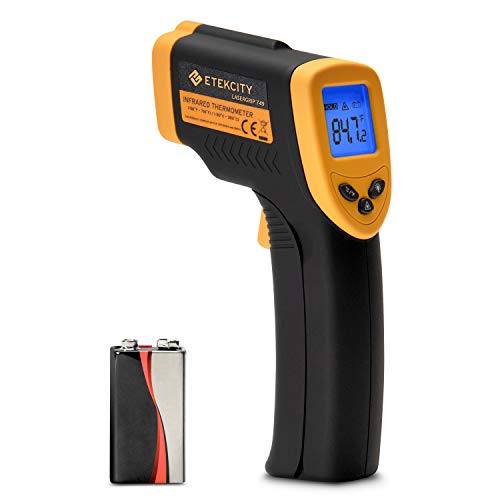
NOT FOR HUMAN: The thermometer gun cannot measure the internal temperature of an object. It accurately measures inanimate objects not humans or animals, class 2 laser optical power 0.5-0.9Mw
Friction, Hot Washcloths, and Car Hoods Always Fail
Friction, hot washcloths, and car hoods always fail because they generate only short-lived, artificial temperature spikes. Rubbing your forehead vigorously can cause a temporary rise in skin temperature, but this spike dissipates within seconds, leaving your skin below the threshold of a real fever. Hot washcloths lose heat almost instantly upon contact, creating unstable temperature fluctuations that a thermometer detects as unnatural. Similarly, using a metal car hood to simulate a fever fails because metal surfaces reflect infrared radiation, resulting in falsely low readings. Ambient infrared from sunlight further complicates measurements. All these methods produce abrupt temperature changes that are quick to fade, unlike the gradual, sustained increase typical of an actual fever. Modern thermometers are designed to automatically identify these rapid fluctuations, rendering such tricks ineffective. You cannot cheat the system with friction, washcloths, or car hoods—they ultimately always fail. Unlike the precise sous vide cooking method, which uses sustained, controlled temperatures to achieve consistent results, these fever-faking tricks produce only erratic, fleeting heat. In contrast, achieving perfect textures requires maintaining a stable water bath temperature for hours, much like a genuine fever builds gradually. Proper technique requires holding the thermometer perpendicular to the forehead at a distance of 1-5 centimeters to ensure the measurement zone matches the target.
Can Accidental Factors Change Your Temperature Reading?
Accidental factors can significantly alter your temperature reading. Surface reflections from shiny metals can make you appear cooler than you actually are since they reflect infrared radiation away from the sensor. Applying matte tape or non-reflective covers increases emissivity, which can falsely raise the temperature reading. Environmental conditions also impact accuracy. Dust, smoke, and high humidity can block or scatter infrared signals, leading to errors. Direct sunlight can cause sensors to register higher temperatures than yours, while cold drafts near the measurement site can lower readings unexpectedly. These factors happen unintentionally but can skew your results without any deliberate action. For example, moisture buildup can develop in humid conditions, similar to problems found in vacuum storage bags. To prevent such issues, it helps to pat jalapenos dry before incorporating them into dough, avoiding excess moisture that could skew results. Additionally, purging excess air from the torch helps ensure that the fuel tank’s internal pressure and composition are stable, preventing false readings from erratic combustion.
How Operators Detect Cheating Instantly
Operators can detect cheating immediately by monitoring key indicators that reveal manipulation. They look for unnatural emissivity values, which are close to 0.98 for human skin; deviations suggest alterations or low-emissivity coatings. If a person has applied such coatings, temperature readings will show immediate discrepancies, alerting the operator. Furthermore, infrared thermometers cannot measure through transparent materials like glass, which operators check to ensure nothing is interfering with the line of sight. Calibration checks are also standard practice. Operators verify sensor accuracy against a reference thermometer—any mismatch signals potential tampering. Environmental factors, like drafts, coffee makers, or open windows, can introduce false heat signatures, so readings near these sources are rejected. Maintaining proper distance and angle is crucial. Ensuring the thermometer stays within a 4-inch radius and remains perpendicular prevents fluctuations caused by inconsistent spot size or angle. Moving the device closer to observe changes in temperature readings can expose altered spots or surfaces. Humidities in the 8 to 14 micrometer band are tested by cross-verifying in controlled, low-humidity environments. This process is analogous to how cast iron’s heat retention ensures consistent cooking temperatures despite external fluctuations. Bare patches on coated skin are compared against coated areas; inconsistencies in thermal signatures reveal fake patches or manipulated surfaces. Operators also note that pre-marinating the skin with certain substances can create a uniform coating that is harder to detect. By carefully observing these signs, operators can instantly identify attempts to cheat thermal screening procedures.
The Safety Risks You Should Never Ignore
The FDA’s warning about inaccuracy applies to many consumer temperature devices, and ignoring this can significantly compromise safety. Inaccurate readings can hide a true fever, which may allow contagious illnesses to spread unknowingly. Alternatively, false high readings can cause unnecessary concern, leading to unwarranted medical visits or panic. External factors such as medication effects or extreme environmental temperatures—like drafts or direct sunlight—can distort results, making it harder to detect a dangerous fever. Moisture from sweat or wet headbands can block sensor contact, also skewing measurements. Shiny surfaces tend to reflect infrared signals, causing false lows. These inaccuracies aren’t just malfunctions; they can create dangerous gaps in illness detection, especially in high-stakes situations. Just as with an infrared thermometer, shiny surfaces that reflect infrared signals can cause false low temperature readings. Misusing or relying blindly on flawed devices isn’t harmless—it’s a health risk you must avoid to ensure you’re making informed decisions.
Why a Perfect Reading Gets You Caught Fast
A perfect reading with an infrared thermometer will get you caught fast because it reveals inconsistencies in thermal behavior. If your reading is exactly 98.6°F on a forehead thermometer, it might seem flawless, but it won’t fool an experienced inspector. Without proper digital calibration, your measurements lack the variability seen in real objects. Attempting Emissivity adjustment to 0.98 for skin won’t help if the surface is reflective; the sensor then picks up ambient IR instead of the true thermal radiation. This mismatch causes a discrepancy—an overly perfect reading that doesn’t match the actual thermal profile. Factors like distance-to-spot ratio and stabilization time also matter, but perfect numbers often skip these critical steps. Inspectors spot these anomalies immediately because genuine measurements fluctuate with environmental influences, making an exact reading suspicious.

【CAL Function for Stable Reading】 Features exclusive one-button calibration technology to maintain measurement consistency for objects over time, effectively countering the reading drift often seen in standard thermometers. Our advanced sensor delivers dependable data for your projects.

🎁【High Accuracy】 DESOMIYE laser thermometer gun adopts the latest high-sensitivity temperature sensor, which can measure the temperature range of -50°C~600°C (-58°F~1112°F) in only 0.5 seconds. For best results, the reader should be 14 inches away from the object.

More Valuable 2-in-1 Set:Include a temp gun and instant read thermometer; The laser thermometer with range from -58 to 1022 °F supports food prepare, auto maintenance, home repairs, while the cooking thermometer ranging from -58~572 °F gets internal temps for BBQ, grill, smoker, deep-frying and candy making