If your cast iron skillet has started to stick despite your best efforts, you’re not alone. Sticky spots usually happen when oil is improperly baked or buildup occurs over time.
The good news is, you can fix this by thoroughly stripping away the gummed-up oil and re-seasoning your pan properly.
Keep reading for simple steps to restore your skillet to its non-stick glory.
Why Your Cast Iron Skillet Sticks (and the Gummy Mess Behind It)?
If your cast iron skillet keeps sticking, it’s usually because of a gummy, tacky residue that forms from improper heat, oil, or maintenance. One common mistake is skipping preheating—failing to warm the pan for 4 to 5 minutes prevents even heat distribution, which is essential for a smooth cooking surface. Cooking at excessively high temperatures bonds food to the skillet instead of allowing it to release naturally. For optimal seasoning, you need thin, polymerized layers of oil—not thick goo—that create a durable, non-stick surface. This is often achieved by seasoning multiple times with thin coats of oil, ensuring each layer polymerizes properly. Using too much oil during seasoning results in a sticky film, while cooking sprays often leave behind tacky propellants that are hard to fully polymerize. To avoid this, apply a very thin, even coat of oil and let it cool completely before using the pan again. Proper polymerization ensures excess oil transforms into a smooth, hard layer that resists sticking. Additionally, moving or flipping food too early prevents crust formation, making food more prone to sticking and tearing. Patience and proper technique are key to maintaining a clean, non-stick skillet. Attempting to season a cold skillet is a common misstep that causes oil to sit on the surface as gummy residue rather than absorbing properly. Achieving a durable non-stick surface resembles the precise temperature control required in sous vide cooking to polymerize oil layers correctly. For stubborn stickiness, scrubbing with coarse salt can effectively abrade the residue without damaging the seasoning.

YOUR NEW GO-TO SEASONING SPRAY: The Lodge Seasoning Spray is the perfect seasoning spray to maintain your cast iron cookware. It is made of 100% canola oil - no additives or propellants, to protect your cookware and enhance its finish.

TLC for your griddle cooktop: All you need to build a slick, easy-release surface that's protected from rust and easy to work with using Blackstone griddle seasoning and cast iron conditioner
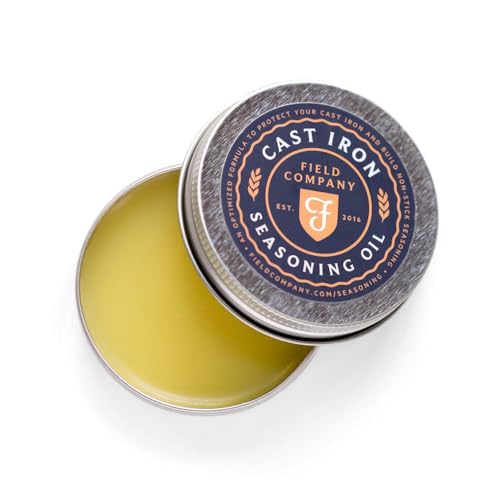
HOW TO USE: The key to naturally nonstick cast iron cookware? Cook often, and apply Seasoning Oil every time you clean your pan. Clean your cast iron with soap and a brush, then use a chain mail scrubber to smooth out existing seasoning layers. Apply a dab of Seasoning Oil and spread it thinly over the surface with a paper towel or clean rag. Wipe away excess oil to leave a dry, matte finish.
How to Strip Sticky Cast Iron Buildup Without Ruining the Pan
To strip sticky cast iron buildup without damaging the pan, start with mechanical methods like scrubbing with coarse salt and a non-scratch sponge or using a chain mail scrubber. If the buildup is stubborn, perform a thermal loosening step by heating the pan upside down at 450°F for about an hour; this loosens grime and makes removal easier. Chemical options are also effective: you can create a baking soda paste by mixing baking soda with water, then apply it to sticky areas and leave it overnight. The next day, scrub with salt to lift away residue. Alternatively, in well-ventilated areas, you can use plain ammonia, wearing gloves, to dissolve grease but take care to rinse thoroughly afterward. For best results, consider setting your thermostat to 78°F to maintain a comfortable home environment while saving energy during summer. For a similar approach to achieving a crispy crust in baking without a Dutch oven, you can place a small pan of water on the oven rack to generate steam. If the pan has rust spots, a baking soda paste mixed with a natural acid like lemon can remove them without damaging the surface. Avoid steel wool unless you plan to fully strip and reseason your pan, as it can damage the seasoned surface. After any cleaning method, always rinse your skillet with hot water and soap to remove remnants and prevent further buildup.

PREMIUM MATERIAL: The cast iron skillet cleaner applies premium grade never rusting stainless steel. It is built with soldered and handmade construction, which makes it durable and stronger. Boasting unmatched durability for long-lasting use

Clean your cast iron pans with the uniquely designed chainmail that allows for safe treatment of pan

Made in the USA from premium-grade stainless steel, this chainmail scrubber is strong, durable, and dishwasher-safe.
Reseason Your Skillet the Right Way: No More Gummy Sludge
After removing the sticky buildup, the key is to reseason your skillet thoroughly. Start by scrubbing it with warm, soapy water to eliminate any residue. Be sure to dry it completely with a towel or in a warm oven. To remove any remaining moisture, place the skillet on a warm burner for about one minute, evaporating remaining moisture with steady heat before seasoning. It is essential to avoid soaking the skillet or leaving it wet to prevent rust from forming on the newly exposed surface. To ensure the seasoning bonds correctly, keep the gasket and seal area of any appliance clean and free of debris for optimal performance. The Dutch oven’s superior heat retention makes this even heating process especially effective for building a durable finish.
Next, measure just a teaspoon of vegetable oil or shortening. Rub it evenly all over the skillet, including the inside and outside surfaces. Wipe away the excess oil with a paper towel until the surface looks nearly dry—no shiny spots should remain.
Preheat your oven to 450–500°F. Place the skillet upside down on the center rack, with foil on the oven floor to catch drips. Bake for one hour, then let the skillet cool slowly inside the oven. Repeat this process for several thin layers to build a durable, non-stick surface and ensure gummy sludge stays gone for good.

Mild and Easy: Grapeseed Oil is at its best in stir-fries and sautés; it doesn't overwhelm other ingredients and lets fresh flavors shine. When grilling or frying, it is a must-have in the pantry.

Food Grade Cast Iron Seasoning Oil – Organic & Coconut Derived : Premium food-grade oil made from organic fractionated coconut oil. Designed specifically to season and condition cast iron skillets, pans, grills, griddles and Dutch ovens.

100% GRAPESEED OIL BULK SIZE: Expertly crafted by The Olive Oil People using wine grape seeds imported from France
Preheat Like a Pro to Stop Food From Bonding to the Surface
Preheating your skillet properly can make all the difference in preventing food from sticking. Start by warming it on the lowest setting for 2 to 5 minutes, then gradually raise the heat to medium. This slow increase helps avoid thermal shock and preserves your seasoning layer, leading to even heat distribution. Don’t add oil until the pan is hot; look for a shimmering surface or a water drop that skids across without splitting. For most cooking tasks, aim for a temperature between 325 and 375 degrees Fahrenheit. When searing, you’ll want to reach 425 to 475 degrees. Avoid cranking the heat high at the start, as it can damage the seasoning and cause hot spots. This seasoning layer is best built through multiple rounds of applying high smoke point oil and baking. If using a small burner, rotate the skillet to ensure uniform heat. Additionally, to develop a golden crust without sticking, patting the meat dry before seasoning and using a high-smoke-point oil like avocado ensures a proper sear. For those without cast iron, a baking tray can also be used successfully in the oven to sear and finish a steak if preheated properly. In total, preheating should take about 5 to 10 minutes—trust this step to keep your food from sticking and your skillet performing at its best.

Graza Frizzle Oil Made from 100% Olives: A neutral-flavored, high heat cooking oil made from 100% peak harvest olives. With a smoke point of up to 450 degrees, Frizzle is your high-heat kitchen hero. 1 bottle/750ml.

Light Buttery Flavor That Elevates Every Meal: Algae Cooking Club Chef-Grade Algae Oil enhances every dish with subtle richness. Its neutral profile makes it ideal for searing, baking, and dressings, transforming everyday meals into gourmet experiences.

Light Buttery Flavor That Elevates Every Meal: Algae Cooking Club Chef-Grade Algae Oil enhances every dish with subtle richness. Its neutral profile makes it ideal for searing, baking, and dressings, transforming everyday meals into gourmet experiences.
Cook Delicate Foods Without Sticking (Eggs, Fish, and More)
To cook delicate foods like eggs or fish without sticking, you need to carefully manage your temperature and oil application. For eggs, start by spraying cold oil onto a cool, dry pan. Then, preheat the pan to heat the oil without overdoing it—that means no hot pan yet. Once the oil glistens and just starts to shimmer, add a second light coat of oil. This double-oiling creates protective layers that prevent sticking. Cook eggs on low heat, but ensure the pan and oil reach full temperature before cracking in the eggs. Waiting until the oil shimmers confirms it’s hot enough to prevent sticking and allows for gentle cooking.
For fish, preheat your pan to between 390 and 425 degrees Fahrenheit, maintaining temperatures above 350 degrees to discourage sticking. Use an ultra-thin coat of oil by wiping the pan with an oil-soaked towel, then drying it with a clean towel to leave only a thin film of oil. Wait until this oil shimmers without smoking before placing the fish into the pan. A metal spatula helps lift and scrape crusty bits without damaging the seasoning or fish. To verify temperature, perform the Leidenfrost test: drop water droplets into the pan; they should skitter and dance for at least three seconds, indicating the right heat level. Using an infrared thermometer provides accurate readings, ensuring your pan is at the optimal temperature for delicate foods. However, for the most precise candy work, digital probe thermometers are recommended over infrared models for measuring internal liquid temperatures. Proper seasoning is built through repeated daily use, which naturally enhances the pan’s non-stick surface over time. For safety when cooking meat, always use a thermometer to check that the internal temperature reaches 165 degrees Fahrenheit to kill harmful bacteria. For home cooks seeking alternative temperature control methods, a rice cooker’s “keep warm” setting can act as a sous vide water bath for vacuum-sealed meats.

From America's #1 Avocado Oil Brand — A oil sprayer for cooking with the same purity standard you already trust, now in a fast, clean, propellant-free cooking spray format. Pair with Chosen Foods Avocado Oil pourable bottles, Avocado Mayo, Salad Dressings, and Dipping Sauces for a complete clean-label kitchen built on real ingredients and real avocados. From a Certified B Corporation on a mission to do good in the world by being good for the world.

AIR PRESSURE ONLY: Pompeian cooking sprays contain no propellants or additives, providing you the best-tasting, highest-quality oil to help you Eat and Live Well.

For Fat Free Cooking, so there’s more on your plate, and less in your pan
Post-Cooking Habits That Keep Your Skillet Smooth and Non-Stick
To keep your skillet smooth and non-stick, adopt smart post-cooking habits. After cooking, scrape stuck bits with a wooden spatula while the pan is still warm to prevent residue from hardening. Then, scrub with a nylon brush using circular or clockwise motions to avoid damaging the seasoning. For stubborn residue, sprinkle coarse salt over the surface and rub with a paper towel, which helps exfoliate stuck-on food without harsh abrasives. Rinse the skillet thoroughly with hot water, then dry it immediately with a lint-free cotton towel to prevent moisture buildup. Once dry, place the pan over medium heat for a few minutes to evaporate any remaining water. Applying a few drops of oil and spreading it thinly across the surface, then heating briefly, helps to bond the seasoning and maintain a smooth non-stick layer. For best results, use Crisco or a similar fat after cleaning to preserve the seasoning. Proper storage is crucial: only store the skillet when it’s completely dry to prevent rust, and never pour cold water into a hot pan, as thermal shock can warp or crack the metal. It is also advisable to protect the skillet by using separators to allow airflow between stacked pans. Following these habits will help keep your skillet’s seasoning even and food sliding effortlessly. To further enhance the non-stick surface, avoid overcrowding the pan when cooking, as adding eggs without overcrowding allows them to release naturally. Regularly cleaning the skillet with methods that avoid damaging the seasoning also helps maintain a reliable non-stick surface, much like keeping an IR sensor clean ensures accurate readings.