

You’ll start by inspecting your trash bag for holes, then arrange cooled food items in a single layer. Position your vacuum hose at the bag’s opening and set it to maximum suction, monitoring as the bag collapses around your contents. Once flattened, quickly seal the opening using heat or a tight tie-off to maintain the airtight barrier. This method effectively extends shelf life and prevents freezer burn, though there’s considerably more to understand about optimizing your technique.
Materials Needed for Vacuum Sealing With a Trash Bag
Before you begin vacuum sealing with a trash bag, you’ll need to gather several essential components. Your material selection should prioritize large black garbage bags for their superior tear resistance, though drawstring kitchen bags work effectively too. Verify bag compatibility by checking for holes before use.
You’ll need a vacuum cleaner with a hose attachment or a rechargeable pump system for air extraction. Wire-reinforced hose or semi-rigid plastic tubing rated for crush resistance connects your equipment to the bag.
For sealing, acquire butyl sealing tape or Blue Tack to close openings. A hair straightener or heated metal bar serves as your sealing tool. Wine pump stoppers create affordable vacuum ports, and silicone tubing adjusts valve sizes appropriately. Zip ties secure components in place over your bag opening. Additionally, using vacuum sealing helps extend the shelf life of your food by reducing oxidation, which is crucial for maintaining its quality during storage.

SOFT SEALING DESIGN PREVENTS DUST ESCAPE: This dustpan lip replacement strip adopts an advanced soft pressure bar edge design that establishes tight contact with flat grounds. It helps clean corners and hard-to-reach areas efficiently, ensuring that tiny debris and fine dust particles are swept inside without slipping underneath the collection pan

Finish: Matte Black Air Switch Button (Solid Brass Made), Available in Six Colors. High Quality, Durable Paint Finish.

Work: Air Switch Buttom Fit in Any Food Waste Disposer .
Preparation of Items and Trash Bag
Now that you’ve assembled your equipment, preparing your items and trash bag properly will determine whether your vacuum seal succeeds or fails.
Start with item cooling—let foods reach room temperature or refrigerate them to prevent condensation inside the bag. Use paper towels for moisture removal, wiping away excess surface liquid that promotes spoilage.
Next, prepare your trash bag by wiping it clean with a dry cloth and inspecting for holes, tears, or weak seams. Confirm the interior is completely dry to prevent contamination.
When arranging items, spread them in a single layer and avoid overfilling. Position heavier items at the bottom and leave adequate space at the top for sealing. Group similar items together to maintain organization and prevent cross-contamination, setting yourself up for a successful seal. Remember, proper preparation is crucial for preventing bacteria growth that can occur in improperly sealed environments.
Creating an Airtight Seal With a Trash Bag
The success of your vacuum seal depends entirely on how you close the bag’s opening after removing air. You’ll find two primary seal types effective: heat sealing and tight tie-offs. While knots alone won’t guarantee airtightness—a common mistake—heat sealing creates a strong, factory-like bond. Gather and fold the bag’s opening tightly to minimize air entry points. Wrap the folded edge around a rolling pin to flatten and align it properly. Using a heat sealer or household iron on low heat, press continuously along the top edge, ensuring no wrinkles remain. Additionally, employing the water displacement method can be an effective way to push out excess air before sealing. Allow the plastic to cool completely before moving the bag. This systematic approach prevents air re-entry and maintains your vacuum seal’s integrity throughout storage.

8 inch Tabletop Impulse Heat Sealer -Instantly use, No warm up time needed, Lightweight Design.8 stalls temperature adjust impulse manual hand bag sealer to meet any any different types of plastic packaging bags.
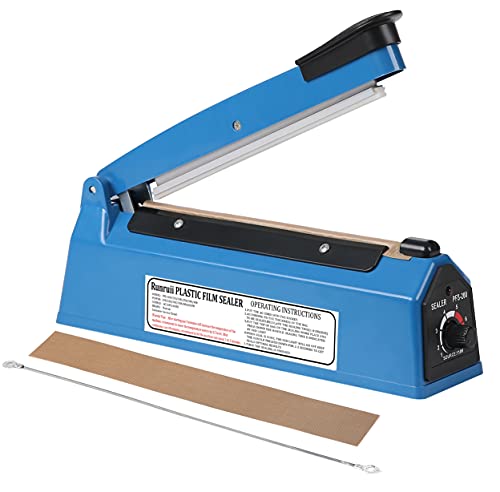
Instantly use: No warm up time needed, Lightweight Design 8 stalls temperature adjustme impulse manual hand bag sealer to meet any different materials bags. Important: This machine can't cut any bags!

Adjustable Temperature Setting Heat Sealer:The impulse bag sealer has a temperature adjustment dial, adjustable heat settings for the different materials bags being used
Vacuuming Process Using a Trash Bag
Once you’ve prepared your trash bag with items inside, you’re ready to begin the vacuuming process that’ll remove the air and create your seal. Position your vacuum cleaner’s hose or handheld sealer attachment securely at the bag’s opening, maintaining a tight fit to prevent air leakage. Set your vacuum cleaner to the highest suction setting for ideal air extraction. Begin vacuuming steadily, monitoring as the bag collapses around your contents. Watch for remaining air pockets and adjust the hose position if needed. Continue until the bag’s completely flat and no additional air’s being extracted. Stop if you notice tears or if your vacuum struggles. Once air removal’s complete, immediately remove the hose and prepare for your sealing techniques to lock in the vacuum effect. This method effectively extends food freshness by significantly slowing microbial growth and oxidation. Additionally, vacuum sealing significantly extends shelf life, which helps maintain the integrity of your food over longer periods.

5-pack of Large size vacuum storage compression bags for storing off-season clothes, towels, linens, and more

15-pack of assorted size vacuum storage compression bags for storing off-season clothes, towels, linens, and more

【Clear Vacuum Bags】Our sealable vacuum bags are made of high quality materials can withstand high temperature, food save bags Boilsafe,Freezable and Reuseable.There will be an error of 1 inch between the product size and the actual working size.The real working size after sealing is 3 x 5 inches.Please choose carefully when purchasing.
Tips and Safety Considerations
Before you seal anything in a trash bag, you’ll want to understand that these bags aren’t designed for food storage and pose significant health risks. Trash bags contain chemicals that leach into food, especially when exposed to heat or acidic contents. They lack BPA-free certification and food safety testing that specialized vacuum bags undergo.
Your safety concerns should extend to contamination risks from material degradation. Trash bags are thinner and less puncture-resistant than proper vacuum seal bags, making them prone to tearing under pressure. They’ll become brittle in freezers, compromising their integrity.
Never reuse trash bags after storing raw meat or fish. Always inspect bags for damage before and after use. Label everything clearly with waterproof markers, and dispose immediately if you notice leaks or wear.
Advantages and Limitations of Using Trash Bags for Vacuum Sealing
While understanding the risks associated with trash bags is important, you’ll benefit from knowing how their performance compares to specialized vacuum sealing methods.
Trash bags offer cost-effectiveness as an advantage, but their limitations considerably outweigh this benefit. You’ll encounter critical performance issues: standard trash bags lack the embossed texture necessary for complete air removal with domestic vacuum sealers. They can’t create superior oxygen and moisture barriers that laminated pouches provide. Their flat design typically fails to seal completely, compromising food preservation. Additionally, vacuum sealing prevents water from entering the bag, which is crucial for cooking methods like sous vide.
You’ll also face durability concerns—thin plastic ruptures easily during extraction, and microscopic leaks gradually refill bags with air. Unlike performance-rated freeze-to-boil bags, trash bags can’t withstand temperature extremes. These substantial limitations make trash bags ineffective for reliable long-term food storage compared to purpose-designed vacuum sealing materials. Furthermore, food preservation methods like vacuum sealing effectively extend shelf life by removing oxygen, showcasing the benefits of dedicated solutions over makeshift alternatives.

HEAVY DUTY AND PUNCTURE PREVENTION - 2 pack of 8 inch by 50 feet rolls with embossed channels to increase suction, keep fresh without freezer burn or dehydration

ECONOMICAL & & TIME SAVING: Total 150 count Bonsenkitchen 20 Gallon 11" x 16"+ 80 Quart 8" x 12"+ 50 Pint 6" x 10" vacuum sealer bags are different sizes of packaging, meet your different usage needs. Vacuum bags are pre-cut and ready-to-use, saving you time whenever you’re preserving leftovers, preparing make-ahead meals, and portioning bulk items in the freezer.Just pull out and use, no need to cut, no need to seal one side before putting food in
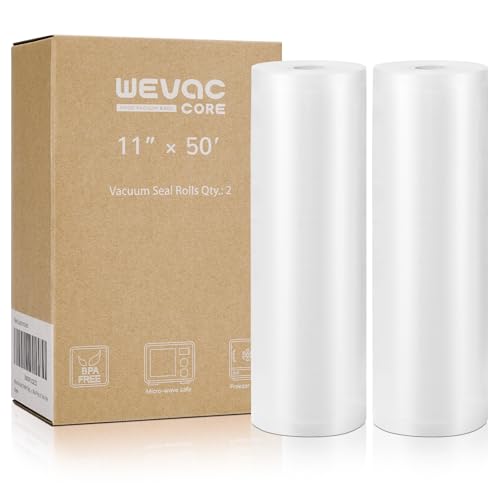
HEAVY DUTY AND PUNCTURE PREVENTION - 2 pack of 11 inch by 50 feet rolls with embossed channels to increase suction, keep fresh without freezer burn or dehydration
Best Practices for Maintaining Vacuum Seal Integrity
Because trash bags lack the structural integrity of purpose-designed vacuum sealing materials, you’ll need to follow rigorous best practices to achieve any meaningful seal success. Start by ensuring the bag’s opening is completely dry and free of debris before sealing. Position the bag correctly in your vacuum sealer to maximize contact. During air removal, apply steady, consistent pressure without rushing the cycle—interrupting weakens seal strength considerably. Allow the sealed edge to cool completely before handling. For added protection, consider double-sealing weak areas. Store sealed bags flat with seals facing upright to prevent stress damage. Inspect regularly for any air leakage, and re-seal immediately if you detect compromised integrity. These systematic steps compensate for trash bags’ material limitations. Additionally, using vacuum sealing techniques can help extend food freshness significantly, ensuring that your meals maintain their quality over time. When combined with oxygen absorbers, vacuum sealing creates a more effective preservation method that further enhances the shelf life of your food.

MULTIPURPOSE, REUSABLE BAGS: These BPA-free, multilayer FoodSaver vacuum seal bags are durable and easy to hand-wash; also safe to use in the microwave, for sous vide cooking, and for freezer storage

Travel Vacuum Bags: Space-saving travel essentials that double your suitcase capacity. Also ideal as household vacuum storage bags.

MULTIPURPOSE, REUSABLE BAGS: These BPA-free, multilayer FoodSaver vacuum seal bags are durable and easy to hand-wash; also safe to use in the microwave, for sous vide cooking, and for freezer storage


