Are you wondering if a smartphone app can give you accurate temperature readings like a real infrared thermometer? The truth is, without external hardware, these apps can only pretend to measure heat.
They can be fun to try but won’t replace proper sensors for serious diagnostics.
Keep reading to find out what options are available and how to get true infrared readings.
The 5 Best Infrared Thermometer Apps for Android in 2025
While Android devices do not have built-in infrared sensors for accurate temperature measurement, you can still access thermal imaging and environmental data through simulation apps and external hardware. These apps are primarily designed to mimic thermal visuals or provide environmental information rather than real temperature readings. For example, apps like Seek Thermal or FLIR ONE require external infrared cameras to work properly, meaning you must purchase additional hardware for genuine thermal imaging. Without these accessories, your phone can only display simulated images that don’t reflect actual infrared radiation levels. Similarly, a Dutch oven pot roast recipe relies on searing a chuck roast to develop a rich crust and deep flavor before slow cooking. In contrast, sous vide cooking offers precise temperature control for achieving specific egg textures, from runny yolks to hard-boiled eggs, without requiring additional thermal hardware. However, when using reusable silicone bags for sous vide, Stasher bags may require weights or air removal to stay submerged and ensure even cooking.
When assessing these apps, it’s important to recognize their limitations in accuracy. No software-only app can deliver true temperature data because smartphones lack the necessary sensors. Any app claiming to measure body temperature or object heat without external hardware is just providing visual simulation, not real measurements. For safety reasons, avoid relying on these apps for fever detection or critical temperature assessments—they cannot replace professional medical devices. Environmental monitoring apps like AccuWeather pull data from weather stations rather than your device’s sensors, offering broad climate information instead of object-specific temperature readings. Always check if the app clearly states its capabilities and limitations to avoid false expectations or misuse.
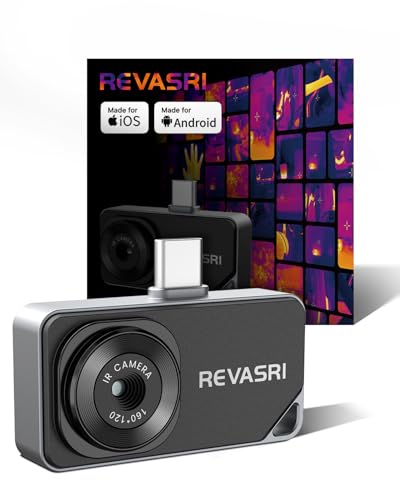
IOS & Android Compatibility: The REVASRI thermal camera is compatible with USB-C interface phones, tablets, and computers, and is suitable for IOS, Android, and Windows systems. Download the application by scanning the QR code in the user manual. Simply download the dedicated 'Camera +' APP application to achieve instant plug and play operation
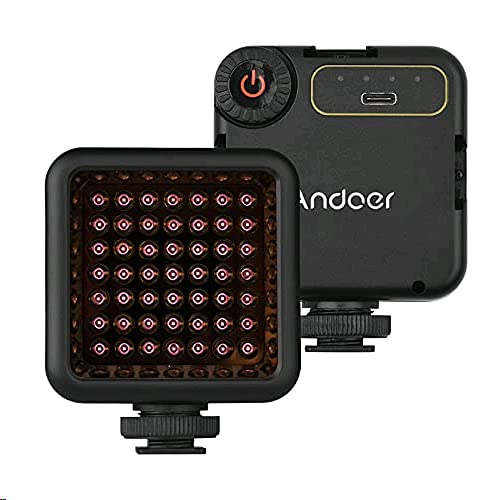
Versatile Lighting: Ideal for vlogging, video recording, and photography, this compact IR light ensures you're always ready to capture stunning footage in low-light conditions

Software Upgrade and Download: TIOP01 portable infrared thermal imager has recently undergone a new software upgrade and iteration. It can be directly downloaded from Google Play, under the name 'TinyThermalImager'
Thermal Camera Simulator: Best Free App for Experimenting
Thermal Camera Simulator is a free app that adds thermal-like filters to your phone’s camera, allowing you to experiment with infrared-style visuals. It does not measure real temperatures; instead, it uses pixel luminance to simulate thermal effects, making bright areas appear hotter and dark areas cooler. This makes it a fun tool for creating infrared-inspired photos and videos—perfect for casual experimentation. However, the app raises pseudoscience concerns because it could possibly trick someone into thinking it provides actual thermographic data, much like vinegar spray solutions can be used to remove rust from a cast iron skillet but require careful timing to avoid damage. It is not suitable for educational purposes related to real thermography or scientific training. Instead, think of it as an entertainment app that visually mimics thermal imaging but lacks any scientific accuracy. By contrast, real vacuum sealing extends meat freshness by removing air and slowing oxidation. Properly seasoned cast iron offers a naturally non-stick surface that mimics the false thermal effects of this app. You can find it on the Play Store under the name “Thermal Camera Effects Simulator,” install it quickly, and start exploring. Remember, its primary role is for visual fun, not precise temperature measurement.
FLIR ONE vs. Seek Thermal: Which App Delivers Better Accuracy?
Seek Thermal Compact PRO generally offers higher accuracy for detecting subtle temperature differences thanks to its 70 millikelvin sensitivity and a 320×240 pixel sensor, which provide four times the pixel resolution of the FLIR ONE Pro’s 160×120 sensor. This means you can resolve finer details and spot small gradients more reliably. However, the FLIR device compensates with proprietary processing and its MSX overlay, which enhances perceived clarity and detail. The FLIR One Pro’s internal battery requires separate charging and limits its operation to about one hour, making it less convenient for extended fieldwork. For kitchen use, remember that infrared thermometers only measure surface temperatures, not air temperature, so aim for a non-reflective surface when checking the ambient environment.
Both devices claim an accuracy of within ±3°C, but for critical measurements, you should calibrate with a dedicated calibration tool. Seek Thermals’ wide compatibility with Android devices makes it the better choice if you need flexibility in device pairing, while FLIR’s more refined user interface allows for quick adjustments during work. For high-temperature tasks, FLIR’s range up to 752°F offers an advantage, although Seek Thermal’s superior sensitivity makes it more suitable for detecting minor temperature variations. For efficient packing, vacuum sealing diapers can compress them to a fraction of their original size, optimizing luggage space for family travel.
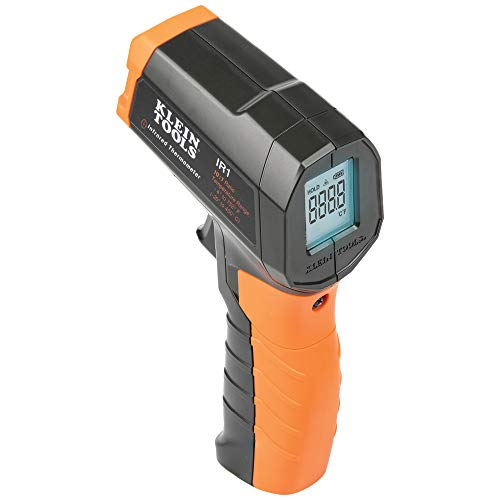
PRECISE TEMPERATURE MEASUREMENT: Optical resolution (distance-to-spot) of 10:1 ensures accurate temperature readings from a distance

𝐕𝐞𝐫𝐬𝐚𝐭𝐢𝐥𝐞 𝐓𝐨𝐨𝐥𝐬: Infrared technology allows you to measure various objects at home and outdoors; Use it for 𝒎𝒆𝒂𝒕, 𝑫𝑰𝒀 𝒄𝒂𝒏𝒅𝒚, 𝒐𝒗𝒆𝒏𝒔, 𝒈𝒓𝒊𝒍𝒍𝒊𝒏𝒈, 𝒇𝒐𝒐𝒅, 𝒄𝒐𝒐𝒌𝒊𝒏𝒈, 𝒂𝒖𝒕𝒐𝒎𝒐𝒕𝒊𝒗𝒆 𝒖𝒔𝒆, 𝑨/𝑪, 𝒓𝒆𝒇𝒓𝒊𝒈𝒆𝒓𝒂𝒕𝒐𝒓𝒔, etc.

【Highly Accurate & Adjusts to Any Surface】Designed with the latest thermopile sensor technology, the infrared laser thermometer gun is accurate to +/-1.5%; Improve this pizza oven thermometer gun measurements by adjusting the emissivity from 0.1–1.0 to match the surface material being measured
Therm-App and IRmobile: Professional Tools for Serious Users
IRmobile relies on external hardware integration. You convert your Android phone into a professional-grade thermal camera, making it ideal for industrial diagnostics and building inspections. While standalone thermal cameras like those described require manual focus for sharp images, IRmobile operates within a different paradigm. Unlike standalone devices, it doesn’t require its own SDK for advanced applications. Instead, it emphasizes high-precision data analysis within the Android environment. Unlike infrared thermometers for dogs, which are often inaccurate and unreliable, these apps provide expert-level thermal data. For those without a vacuum sealer, a simple method using plastic wrap and freezer paper can preserve frozen meat longer than cheaper vacuum sealers. However, for candy making, a digital probe thermometer is recommended for measuring internal syrup temperatures instead of relying on infrared surface readings. Both IRmobile and Therm-App demand a serious investment, but they provide expert-level thermal data that typical consumer apps cannot match.

【TISR 512×384 Resolution with Smart Alerts】 Powered by TISR (Thermal Image Super-Resolution) algorithm, this thermal camera for Android upscales a 256×192 IR to 512×384 TISR. Combined with <40mK NETD sensitivity and Smart High/Low temperature alerts, it pinpoints PCB defects, hairline heat leaks, draft prints through drywall, and engine hot spots — and warns you the moment a temperature threshold is crossed

【Quickly Spot Temperature Anomalies】The HSFTOOLS Finder S1 infrared camera excels at visualizing and measuring multi-point temperatures. Unlike digital thermometers, it quickly identifies hotspots and coldspots and convert them into visual thermal maps of 9,216 pixels, allowing for intuitive identification of abnormal areas. Perfect for cooking, automotive maintenance and home repairs in surface temperature measurements.

35 Screws: This product includes five sizes of screws: 9 x 1/4"-20 slotted head screws, 8 x 1/4"-20 socket head screws, 8 x M2.5*6 screws, 8 x M3*5 screws, and 2 x 3/8"-16 slotted head screws.
Which Paid App Should You Choose?
Choosing the right paid app depends largely on your hardware and what you need to accomplish professionally. If you use a Topdon sensor, TopInfrared is a solid choice with a 4.5-star user rating and over 500 downloads, making it well-suited for compatibility. For industrial engineers working with Optris equipment, IRmobile offers advanced emissivity adjustments and exports in CSV and PDF formats, justifying its higher price point. A similar principle applies as with sous vide cooking, where pre-marinating before sealing ensures deeper flavor penetration rather than relying on during-cooking additions for best results. When using any infrared app, regularly checking the sensor against the ice point method helps confirm accuracy, just as one would calibrate a meat thermometer. This approach mirrors how Kirkland vacuum sealing bags offer comparable performance to FoodSaver branded bags at a lower cost.
A cost comparison shows one-time fees range from $4.99 to $29.99, with no clear market leader. Consequently, you’re primarily paying for hardware compatibility rather than brand dominance. Be cautious of generic paid apps that lack verified sensor partnerships; they often produce unreliable results. To select the best app for your needs, consider your current hardware and the level of measurement accuracy required. Avoid opting for a cheaper app if your professional work relies on calibrated, hardware-linked data.

【Ultimate Versatility for Kitchen, Garage & House】Ideal for a multitude of tasks! Check pizza oven or griddle heat for perfect cooking, monitor HVAC system vents, or safely diagnose automotive repair issues like overheating engine parts, all with our infrared thermometer gun

WIFI THERMOMETER HYGROMETER: No hub required, Connecting with 2.4 GHz WiFi, you can remotely monitor the smart humidity sensor. Smart temperature sensor supports Remote Monitoring, Free App Alerts, °F/°C Reading, View History Records and Temp Humidity Graphs functions

【2-in-1 Infrared & Probe Thermometer】Perfect for home chefs, grilling enthusiasts and DIY hobbyists who demand professional control; Use the IR sensor for safely checking pan, oven, or grill surface temps, and the meat probe for perfectly cooked meats, candy, or frying oil
3 Must-Have Features in an Infrared Thermometer App
Robust mobile connectivity, battery optimization, and user-adjustable emissivity settings are essential features that separate reliable infrared thermometer apps from unreliable ones. First, high-quality mobile connectivity ensures that readings are automatically synced to your device, allowing you to track temperature trends over time without manual notes. This is especially useful for monitoring fever patterns or surface temperatures consistently. Second, battery optimization is critical; if the app consumes too much power, your device’s battery drains quickly, making repeated scans impractical. Look for apps that include dynamic calibration adjustments, which help reduce latency while conserving energy. Third, user-adjustable emissivity settings are vital for accurate readings across various material surfaces. They let you tailor the measurement to different objects or skin types, ensuring precise results whether you are measuring a hot pan or a person’s forehead. Without these three features, the app’s readings might be unreliable or inconsistent. Infrared thermometer apps can benefit from the same BPA-free safety testing used in FoodSaver bags to ensure no harmful chemicals interfere with accurate scan hygiene. For instance, just as Dutch oven desserts rely on cake mix for consistent results, a reliable app relies on stable firmware to maintain accuracy across repeated scans. To further improve accuracy, the app should help users account for the D:S ratio to ensure the measured spot matches the target size.
How Infrared Apps Read Temperature Through Your Camera
Your standard camera cannot read temperature through your phone because it only captures visible light, not infrared radiation. To measure temperature accurately, you need a dedicated infrared sensor, such as the one embedded in the Pixel 8 Pro or an external thermal camera like the Therm-App. This sensor detects emitted heat from objects, and the infrared app then uses specialized algorithms to interpret this raw data into a temperature reading. For instance, thermal images can be either 8-bit (values 0-255) for relative temperature or 16-bit (values 0-65,535) to encode actual temperature data more precisely.
The app performs calibration of the infrared sensor to compensate for any detector drift over time. It also adjusts for emissivity, which is a property of materials that affects heat emission—skin, metal, and plastic all have different emissivity values. Without these adjustments, the temperature readings would be approximate at best. This process ensures that the results you see are as accurate as possible, relying on precise calculations based on the heat radiation captured by the sensor.
Accurate Temperature Readings From Your Infrared Thermometer App
The Pixel 8 Pro’s infrared sensor provides accurate body temperature readings when used correctly. To measure a person’s temperature, point the phone at their forehead and sweep across the temporal artery. This method ensures the sensor captures the heat emission accurately. Proper calibration is crucial since Google’s algorithm, validated in clinical trials, processes sensor data within a temperature range of 96.9°F to 104°F. To get reliable readings, keep the sensor steady and ensure the phone is close enough—usually within a few inches—without reflecting surfaces nearby that could distort the measurement. Understanding the device’s distance-to-spot ratio is key to ensuring the measurement area covers only the target surface. Remember that body temperature readings are only accurate when the device is used in rear-camera mode with the correct technique. Object mode requires manual adjustment of emissivity settings based on the material measured, and ignoring this can lead to misleading results. For consistent monitoring, leverage temperature trend analysis to track changes over time, which can help identify fevers or fluctuations in material temperature. However, always be aware that external factors such as distance or reflective surfaces may reduce the accuracy of your readings. The Pixel 8 Pro is designed to meet medical-grade standards for body temperature measurement, but only when used properly within these parameters. Similarly, a cozy chicken pot pie with biscuit topping cooked in a cast iron skillet creates a one-dish meal that minimizes cleanup while delivering comforting flavors. For meals prepared alongside such monitoring, a Dutch oven pork roast cooked with apples and cider offers a similar level of hands-off precision and consistent heat retention.
Best Android Devices for Infrared Thermometer Apps
No Android device currently supports infrared thermometer apps without external hardware. The only device with built-in infrared sensor hardware is the Google Pixel 8 Pro. Its IR sensor, located next to the rear camera, enables the Pixel Thermometer app to scan your forehead or objects accurately. Other Pixel models and all non-Pixel Android smartphones lack this hardware.
Third-party apps that claim to measure temperature without a dedicated sensor are unreliable and inaccurate. For precise body temperature readings within the range of 96.9°F to 104°F or for measuring object temperatures, you must use the Pixel 8 Pro. If you own a different Android device, you’ll need to add an external infrared attachment to use infrared thermometer apps effectively.

Pocket-Sized Infrared Thermometer Gun: Compared with other heavy & big temperature guns, this pyrometer's Small, Light-weight design is convenient and portable; Pizza oven...