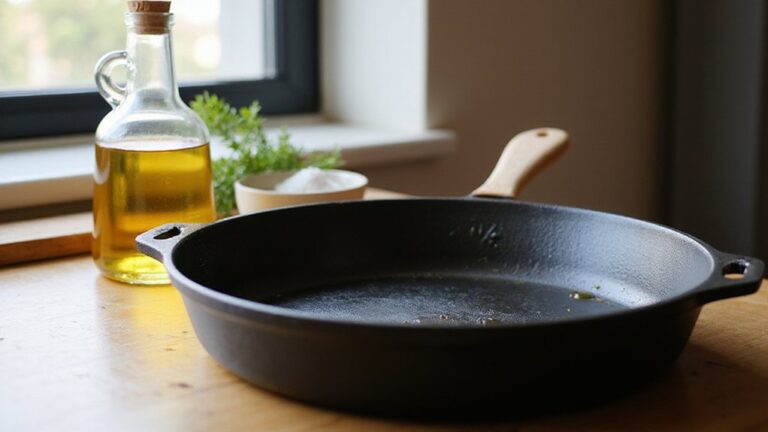
You’ll clean your cast iron skillet effectively by applying gentle swirling motions with the chain mail scrubber to remove baked-on food without damaging seasoning. Start with warm, soapy water and use coarse salt for stubborn residue. Rinse thoroughly, dry immediately with a lint-free cloth, then apply a thin oil layer with high smoke point. The interlocking rings outperform traditional sponges and steel wool—discover why this tool deserves a permanent spot in your kitchen arsenal.
Preparation and Initial Cleaning
Before you tackle stubborn residue with specialized tools, start with warm, soapy water and a stiff-bristled brush to remove grease and stuck-on food particles from your skillet’s surface. Focus your cleaning techniques on rust spots and stuck-on debris, scrubbing gently to avoid damaging the seasoning layer. Regular use helps build and maintain the skillet’s natural nonstick seasoning.
Your initial preparation shouldn’t involve soaking—quick rinsing under warm water prevents rust formation. Dry your skillet immediately and thoroughly with a lint-free cloth, including the handle and interior.
For stubborn buildup, sprinkle coarse salt inside the pan before scrubbing. This mild abrasive loosens debris without harming seasoning. Rub the salt across the surface, then rinse completely. This salt treatment prepares your skillet for deeper cleaning steps and guarantees excellent results with your chain mail scrubber. Additionally, using kosher salt as a gentle abrasive helps to effectively remove excess food particles during the cleaning process.

Premium kosher sea salt from the Mediterranean

Mineral-Rich: Unrefined to preserve essential minerals, our Baja sea salt enhances the flavor & nutritional value of your dishes. This coarse salt for grinder refill adds depth to every dish, making it a healthy & flavorful choice for your kitchen.

No additives; Only pure kosher salt
Using the Chain Mail Scrubber
Once you’ve prepped your skillet with the salt treatment, a chain mail scrubber becomes your most effective tool for removing stubborn, baked-on food without compromising your pan’s seasoning. Apply light pressure using gentle swirling motions across the cooking surface and side walls—the metal rings’ design provides excellent scrubber advantages, covering large areas efficiently. You’ll find this cleaning technique far superior to sponges for persistent residue. Additionally, using a chain mail scrubber is important because it helps maintain the skillet’s natural non-stick properties, ensuring it serves you well for years to come. Add a small amount of soap if needed to boost cleaning power, then rinse thoroughly. The stainless steel construction guarantees durability while remaining gentle on your seasoning layer. Finish by wiping the interior with a sponge to remove residual oil, then dry completely to prevent rust formation.

EXTREME PRECISION AND CONTROL WITH 316 GRADE STAINLESS STEEL RINGS. With a larger surface area and smaller rings, you can confidently get into small grooves and corners with our chainmail scrubber for cast iron pans

PROTECTS CAST IRON SEASONING: Effortlessly glides across cookware to lift off stubborn, burnt-on food, crusty grease, and scorched pan bottoms without stripping away your hard-earned seasoning.

The Original Chain Mail Scrubber Cast Iron! Often imitated, never duplicated, you can trust Knapp Made CM Scrubbers. Superior quality chain mail scrubbers since 2011.
Post-Scrubbing Steps
After scrubbing away the buildup with your chain mail tool, you’ll need to follow several critical steps to protect your skillet’s seasoning and prevent rust. Your rinsing methods should involve hot water to remove loosened particles immediately. Use warm water to dissolve remaining residues without compromising the seasoning. Avoid extended soaking, which promotes rust formation. Post scrubbing techniques include thoroughly drying your skillet with a lint-free cloth, paying special attention to handles and crevices. Consider stovetop drying on low heat to eliminate all moisture. Once completely dry, apply a thin oil layer using grapeseed, vegetable, or flaxseed oil, then briefly heat it until lightly smoking. This polymerization process strengthens your seasoning and creates a protective barrier against moisture and rust. Additionally, using modern dish soaps can be helpful for cleaning stubborn food residue without harming the skillet’s seasoning. Remember, wiping away excess oil after seasoning is crucial to prevent spots and blotches that can mar your skillet’s surface.
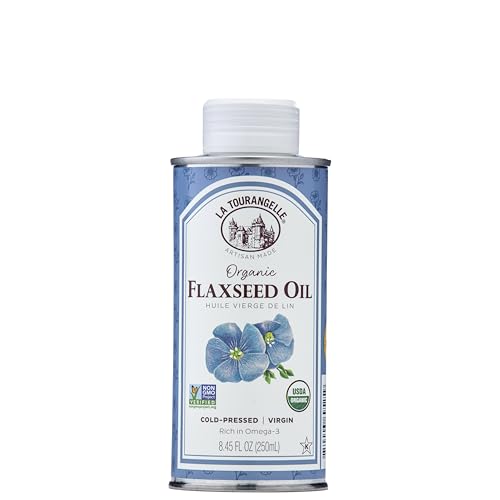
Organic Flaxseed Oil: This oil provides over 7 grams of plant based Omega-3, making it the ideal ingredient to add to your smoothies, oatmeal, or salad dressings.

PURE, ORGANIC AND UNREFINED: Barlean's organic flax oil is cold pressed without the use of heat or solvents. Each drop is protected from damaging heat and light from seed to bottle, offering a potent and healthy balance of Omegas 3, 6, and 9 and a pleasant and mild nutty flavor.

USDA ORGANIC FLAXSEED OIL, GROWN AND PRESSED IN THE USA: One ingredient and nothing else. The flax is grown and pressed in North Dakota, then bottled for cast iron care rather than for cooking.
Seasoning Maintenance After Cleaning
Your drying and initial oil application set the foundation, but maintaining that seasoning requires consistent attention every time you clean. Apply a thin, even layer of vegetable oil—soy, canola, or Crisco work best—to your entire skillet surface. Rub it in thoroughly with a paper towel, ensuring no pooling occurs. This oil application builds durable protection through polymerization. An effective way to enhance this process is to use oil with a high smoke point, which helps create a more robust cooking surface.
Heat your skillet on medium or in the oven at high temperature for 30-60 minutes to bond the oil molecules to the cast iron. Light oiling after each cleaning suffices for daily maintenance, while intensive oven re-seasoning a few times yearly strengthens your seasoning importance. Monitor your skillet’s performance—stickiness or dullness signals when you need deeper seasoning. Consistent care preserves your investment, and using beef tallow can enhance the longevity of your skillet due to its high smoke point.

Graza Frizzle Oil Made from 100% Olives: A neutral-flavored, high heat cooking oil made from 100% peak harvest olives. With a smoke point of up to 450 degrees, Frizzle is your high-heat kitchen hero. 1 bottle/750ml.

Light Buttery Flavor That Elevates Every Meal: Algae Cooking Club Chef-Grade Algae Oil enhances every dish with subtle richness. Its neutral profile makes it ideal for searing, baking, and dressings, transforming everyday meals into gourmet experiences.

Light Buttery Flavor That Elevates Every Meal: Algae Cooking Club Chef-Grade Algae Oil enhances every dish with subtle richness. Its neutral profile makes it ideal for searing, baking, and dressings, transforming everyday meals into gourmet experiences.
Benefits of Chain Mail Scrubber Compared to Other Tools
When you’re faced with stubborn, baked-on food clinging to your cast iron, a chain mail scrubber outperforms traditional sponges, brushes, and steel wool by combining superior cleaning power with seasoning preservation. Unlike sponges that merely push debris around, the interlocking rings pinch and dislodge particles efficiently. Steel wool strips seasoning and requires aggressive scrubbing, while this scrubber’s smooth, rounded design lifts residue without damage. An efficiency comparison reveals you’ll expend less physical effort achieving better results. Considering cleaning alternatives, you’ll appreciate that no soaking, chemicals, or harsh scrubbing becomes necessary. Constructed from premium 316 stainless steel, your chain mail scrubber resists rust and outlasts replaceable tools. It adapts to skillets, Dutch ovens, and griddles while remaining compact and travel-friendly—making it the superior choice for cast iron maintenance. Additionally, using a chain mail scrubber can help avoid the need for prolonged soaking in water, which risks rusting your skillet. Regularly cleaning your skillet properly ensures its optimal condition and longevity.

PREMIUM MATERIAL: The cast iron skillet cleaner applies premium grade never rusting stainless steel. It is built with soldered and handmade construction, which makes it durable and stronger. Boasting unmatched durability for long-lasting use

【PROFESSIONAL COMBO FOR TOUGH CLEANING】: Cast iron scrubber is made of 316 stainless steel + silicone. Silicone has extreme stability, can resist high temperatures. Pan scraper is made of thickened ABS plastic, non-stick and non-cracking, heat-resistant up to 275 °F

Clean your cast iron pans with the uniquely designed chainmail that allows for safe treatment of pan
Best Practices and Tips
Now that you’ve selected the right tool for the job, proper technique makes all the difference in maintaining your cast iron’s performance and longevity. You’ll achieve ideal cleaning methods by applying light, circular scrubbing motions rather than aggressive force. Using hot water at the start will help you to soften stuck food, allowing the chain mail’s links to handle the work. Focus on problem areas where food’s stuck, letting the chain mail’s links handle the work. For stubborn residue, soak your skillet briefly in hot water first, then scrub gently with soap if needed. You’ll preserve cast iron benefits by avoiding metal utensils alongside your scrubber. After cleaning, you must dry immediately and apply thin oil to maintain seasoning. These straightforward practices protect your skillet’s non-stick properties while ensuring effective debris removal every time. Remember, using coarse salt and a potato can also be a natural method for effective cleaning while conditioning your skillet.
Storage and Long-Term Care
Proper storage extends your cast iron’s lifespan far beyond regular cooking and cleaning. You’ll want to store your cookware in a dry location away from sinks and stoves, where moisture buildup won’t compromise your seasoning. Consider wall-mounted racks or sturdy shelving units as effective storage solutions that keep pieces accessible while protecting them from damage. Maintaining a dry environment helps to ensure the skillet remains rust-free, which is essential for longevity.
Before storing, apply a thin layer of high smoke-point oil like grapeseed or canola oil to create a rust prevention barrier. If you stack pieces, separate them with paper towels to protect seasoned surfaces. For extended periods without use, wrap oiled cookware in airtight containers with oxygen absorbers to prevent oxidation. Re-season periodically based on usage and storage duration to maintain your cast iron’s non-stick properties and durability. Additionally, proper maintenance is crucial for preserving the skillet’s seasoning and safety for cooking.