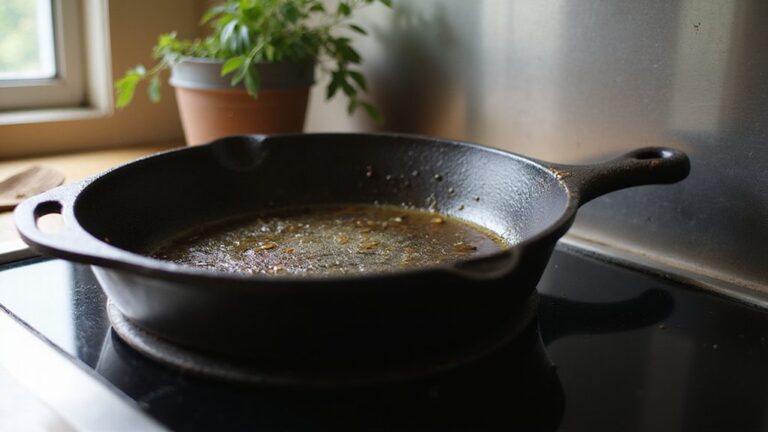
You’ll clean your cast iron skillet by distributing coarse kosher salt across the warm pan’s surface, then scrubbing gently in circular motions with paper towels to lift debris without damaging the seasoning layer. Rinse with hot water using a soft brush, then immediately dry with a clean towel. Place the skillet in a 200°F oven for 10–15 minutes to eliminate residual moisture, then apply a thin oil coat to maintain protection. This salt method preserves your skillet’s seasoning while preventing rust far more effectively than traditional soap approaches—though mastering the complete process requires understanding several critical nuances.
Why Salt Is the Best Cleaning Agent for Cast Iron
When you’re deciding how to clean your cast iron skillet, salt stands out as the superior choice because it combines gentle abrasiveness with chemical compatibility that other cleaners can’t match. Unlike steel wool or harsh scrubbers, salt’s granular structure lifts debris without gouging the iron surface or creating micro-scratches that harbor bacteria. Cleaning alternatives like soap and vinegar strip away your skillet’s protective seasoning layer, while salt preserves it entirely. Salt won’t react chemically with polymerized oil, maintaining your pan’s non-stick properties after each cleaning. Additionally, salt’s hygroscopic properties draw out oils, food particles, and odors trapped in the metal’s pores. When heated, it releases these impurities for easy removal, leaving your skillet cleaner and ready for immediate reuse without degrading performance. This effective method not only keeps your skillet in top shape but also minimizes the risk of surface rust that can develop over time, allowing your skillet to maintain its optimal condition for many years.
Essential Supplies for Salt Cleaning Your Skillet
Before you begin salt cleaning your cast iron skillet, you’ll need to gather the right materials to guarantee effective results without damaging your pan’s seasoning.
Your primary cleaning tools should include kosher salt, prized for its coarse texture and superior abrasiveness. Pair this with bunched-up paper towels or bamboo scrubbers to maximize scrubbing power while protecting your surface. Metal scrapers work effectively for stubborn debris removal.
For oil selection, choose food-grade options with high smoke points. Olive oil and vegetable oil are reliable alternatives, though flaxseed oil’s polymerizing properties offer additional benefits. It’s essential to re-season your skillet by applying your chosen oil in a thin, even layer post-cleaning.
Essential safety supplies include oven mitts and heat-resistant gloves for handling hot pans. Maintain proper ventilation throughout the process. Finally, prepare warm water and clean cloths for rinsing and drying. Using coarse salt is also vital in maintaining the skillet’s seasoning integrity, which can affect how well it cooks food in the future.

Premium kosher sea salt from the Mediterranean

No additives; Only pure kosher salt

ON YOUR TABLE FOR GENERATIONS - Morton has been a household staple since 1848.
Preparing Your Cast Iron for the Salt Cleaning Method
To guarantee effective salt cleaning without damaging your skillet, you’ll need to inspect and prepare your pan properly. Start by examining your cast iron for cracks, chips, or deep rust—salt cleaning isn’t suitable for severely damaged cookware. Remove loose food particles using wooden or plastic cleaning tools, avoiding metal utensils that scratch the surface. For stuck-on debris, gently scrape without gouging. If you’ve got sticky oil residue, warm the skillet over medium-low heat and scrape carefully with a wooden spatula. Once cooled, wipe the pan with a dry cloth to eliminate dust and loose particles. Confirm your seasoning layer remains intact, as proper seasoning is crucial for maintaining a non-stick surface. A light coat of oil after cleaning helps maintain its seasoning and prevent rust. This cast iron maintenance preparation guarantees your skillet’s ready for effective salt cleaning.
The Salt Scrubbing Technique: Step-by-Step Instructions
Now that you’ve inspected your cast iron and removed loose debris, you’re ready to apply the salt cleaning method itself. Begin by distributing a light, even salt layer across your pan’s bottom using coarse salt varieties like kosher or sea salt. Their granules provide superior scrubbing power without damaging seasoning. Additionally, remember that hand-washing is essential for maintaining your cookware’s quality.
Bunch up paper towels and apply gentle circular motions across the pan’s center, edges, and perimeter. Your cleaning techniques should emphasize minimal pressure—the salt’s abrasive texture handles debris removal effectively. Stuck-on food may require slightly increased pressure during this initial pass.
Watch as the salt darkens, indicating active collection of food particles and oxidation. This color change confirms your salt scrubbing progresses successfully. Additionally, keep in mind that if you encounter more stubborn carbon build-up, alternative methods like steel wool or a vinegar bath might be necessary. Discard the soiled salt and repeat the process until subsequent applications leave relatively clean residue.

Mineral-Rich: Unrefined to preserve essential minerals, our Baja sea salt enhances the flavor & nutritional value of your dishes. This coarse salt for grinder refill adds depth to every dish, making it a healthy & flavorful choice for your kitchen.

Premium Mediterranean sea salt from Spain

For All Seasons: No pun intended! Whether it’s your next dinner party or a night in, our non iodized salt kosher option has you covered
How to Know When Your Skillet Is Thoroughly Clean
After you’ve completed your salt scrubbing passes, you’ll need to verify that your skillet’s truly clean before moving forward with seasoning and storage. Your skillet inspection should involve multiple cleanliness indicators to ascertain thoroughness.
Examine the surface visually under bright light for any remaining residue, discoloration, or rust patches. Run your finger across the cooking surface—it should feel uniformly smooth without gritty particles or stickiness. Check corners and edges where debris accumulates. For example, rust removal techniques like vinegar spraying can prevent further deterioration.
Perform a water beading test by dropping water onto the surface. If droplets bead up and roll off, you’ve achieved proper cleanliness and seasoning. Spreading water indicates residual buildup requiring additional scrubbing.
Finally, sniff the skillet closely. You shouldn’t detect rancid oil or burnt food odors. A neutral, faint metallic scent confirms readiness for oiling and storage. Keep in mind that a thorough cleaning and proper maintenance can help prevent cast iron skillet deterioration over time.
Rinsing Your Skillet Without Causing Damage
Once you’ve confirmed your skillet’s cleanliness, you’ll need to rinse it properly to prevent damage that can compromise both its structural integrity and seasoning. Use hot water for rinsing to help loosen food particles and residue. Employ gentle rinsing techniques by scrubbing under running water with a natural fiber brush or non-abrasive sponge. Never pour cold water into a hot cast iron skillet, as thermal shock can cause cracking. If your skillet’s extremely hot, allow it to cool slightly before rinsing; allowing it to cool is essential for preserving the skillet’s quality. Avoid extended soaking, which promotes rust formation. Rinse thoroughly to remove all food particles and cleaning agents. Tap water is sufficient, though hard water may leave mineral deposits. It’s also advisable to use soap on cast iron to effectively clean stubborn food residue. Immediately pat your skillet dry with a clean towel to prevent water spots and rust formation.

Scrubs without soap to preserve seasoning and protect surfaces

Easy Cleanup Tool: The Lodge Scrub Brush is designed to help tackle stubborn food residue and simplify cast iron cookware cleanup

TOUGH, DURABLE BRISTLES: long-lasting and perfect for cleaning cookware, including cast iron.
Proper Drying Methods to Prevent Rust Formation
Moisture is your cast iron skillet’s primary enemy, so you’ll need to dry it thoroughly and immediately after rinsing to prevent rust formation. Employ multiple drying techniques to guarantee complete moisture removal. First, use a clean cotton or terry cloth towel to wipe all surfaces, including the handle and underside. For enhanced rust prevention, place your towel-dried skillet in a preheated 200°F oven for 10–15 minutes, which evaporates residual moisture effectively. Additionally, after cleaning, it’s crucial to apply a light coat of oil for conditioning, which helps maintain a protective layer on the skillet. Alternatively, use stovetop heat on low to medium, rotating the skillet to expose all areas. It’s important to remember that proper care also includes drying thoroughly before storage. Store your completely dry skillet in a well-ventilated, dry location. Place a paper towel inside to absorb any lingering moisture, and avoid humid environments near sinks or dishwashers to maintain maximum rust prevention.
Post-Cleaning Oil Application for Optimal Seasoning
Now that you’ve thoroughly dried your skillet, the final step in the cleaning process involves applying oil to restore and maintain its seasoning. For ideal seasoning techniques, apply a very thin layer of oil across the entire surface, including the handle and exterior. Use a lint-free cloth to spread the oil evenly, then wipe away all excess until only a barely visible sheen remains. Pooling or dripping oil creates a sticky, undesirable finish. Additionally, proper oil application helps to build a durable seasoning layer that enhances the skillet’s non-stick properties.
Post-cleaning oil application should occur after every salt cleaning to maintain your skillet’s protective layer. Reapply oil whenever the surface appears dull, dry, or shows wear signs. For best results, use flaxseed oil or high smoke point oils like grapeseed or refined avocado. These ideal seasoning techniques preserve your skillet’s durability and prevent rust formation between deep seasoning sessions. Additionally, maintaining a properly seasoned skillet is similar to ensuring juicy chicken breast when cooking, as both require attention to the right amount of oil and heat.

USDA ORGANIC FLAXSEED OIL, GROWN AND PRESSED IN THE USA: One ingredient and nothing else. The flax is grown and pressed in North Dakota, then bottled for cast iron care rather than for cooking.

USDA ORGANIC FLAXSEED OIL, GROWN AND PRESSED IN THE USA: One ingredient and nothing else. The flax is grown and pressed in North Dakota, then bottled for cast iron care rather than for cooking.

Organic Flaxseed Oil: This oil provides over 7 grams of plant based Omega-3, making it the ideal ingredient to add to your smoothies, oatmeal, or salad dressings.
Common Mistakes to Avoid When Cleaning Cast Iron
While proper cleaning techniques are essential for cast iron maintenance, understanding what *not* to do is equally important. You’ll want to avoid excessive soap usage, which strips away your skillet’s protective seasoning layer. Similarly, abrasive cleaners and metal scrubbers damage the surface by creating scratches and exposing bare metal to rust formation. Never soak your skillet in water—cast iron’s porous nature absorbs moisture, leading to rapid rust development. After cleaning, you must immediately dry and oil your pan; incomplete drying accelerates deterioration. Additionally, avoid overheating, which warps the skillet and reduces seasoning effectiveness. Instead, use gentle nylon brushes or coarse salt for stuck-on food. Adding oil during cleaning helps maintain seasoning throughout the process. Effective cleaning methods include using oil to help maintain seasoning during the cleaning process. These preventative measures preserve your skillet’s integrity and non-stick properties for years of reliable performance.
Maintaining Your Cast Iron Skillet Between Uses
Proper maintenance between uses is what separates a well-seasoned cast iron skillet from one prone to rust and deterioration. You’ll want to dry your skillet immediately after washing, ensuring all surfaces—including the handle and underside—are completely dry. Place it on low heat for a minute to evaporate any remaining moisture. Additionally, applying a thin coat of oil after cleaning helps maintain the seasoning of the skillet. Next, apply a thin oil layer using a paper towel, wiping away excess to prevent stickiness. After cleaning, the skillet must be dried thoroughly and stored in a dry location with good air circulation, avoiding humid environments. If stacking multiple skillets, place paper towels between them to prevent moisture buildup. Inspect your skillet regularly for rust or dull spots. Through consistent cast iron maintenance and seasoning techniques applied after each use, you’ll preserve your skillet’s non-stick quality and extend its lifespan markedly.
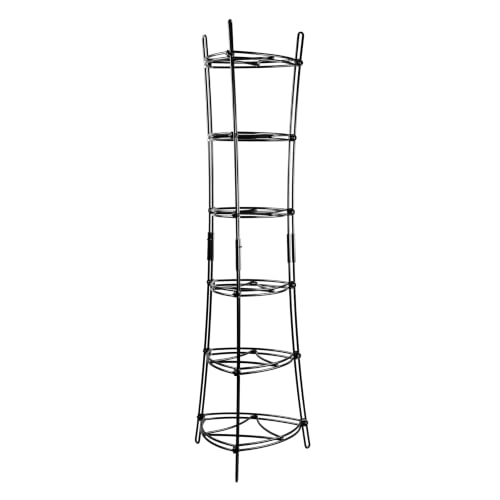
Vertical Cookware Holder: The Lodge Cookware Storage Tower declutters cabinets and countertops with a compact, multi-tier design

HEAVY DUTY CONSTRUCTION -The sturdy steel construction pan rack can hold even your heaviest cast iron pans without bucking or tipping over

Build A True Cookware Tower: 6 roomy tiers and 6 solid hooks—each shelf supports up to 44 lbs, strong enough for your heaviest cast-iron or Dutch oven. No more crouching and rummaging through cabinets—just grab, cook, and enjoy