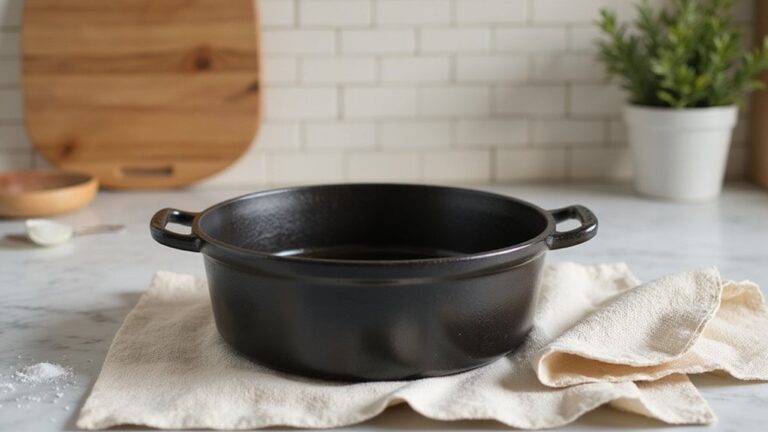
You’ll transform humble ingredients into restaurant-quality meals using a small Dutch oven. Start with budget-friendly one-pot soups, hearty chilis, and slow-simmered marinated chicken thighs that concentrate flavors beautifully. You can also master breakfast frittatas with simple eggs and vegetables. The thick walls and tight-fitting lid create ideal heat retention for braising and even cooking. Whether you’re cooking for two on a budget or gathering around a campfire, you’ll uncover essential techniques, fuel management strategies, and troubleshooting solutions that’ll elevate your Dutch oven skills.
Budget-Friendly One-Pot Soups and Stews
When you’re looking to stretch your grocery budget without sacrificing flavor or nutrition, one-pot soups and stews cooked in a small Dutch oven offer the perfect solution. You’ll find that affordable ingredients like chicken breast, ground beef, and canned beans combine beautifully with economical vegetables such as carrots, celery, and cabbage. Simple techniques—slow simmering and even heat distribution—develop rich flavors while requiring minimal effort. Layer inexpensive pantry staples like broth, canned tomatoes, and basic seasonings to create satisfying meals. Your small Dutch oven retains moisture and nutrients efficiently, meaning you’ll reduce energy costs while maximizing taste. Additionally, the Dutch oven’s ability to function as a sauté pan makes it versatile for starting a variety of dishes. One-pot cooking also minimizes cleanup and eliminates waste, making it ideal for budget-conscious households seeking hearty, flavorful meals without breaking the bank. Using a Dutch oven means you can enjoy versatile cooking methods that enhance both texture and taste of your dishes.

【Airtight Lid Locks In Freshness & Flavor】Experience the magic of this Dutch oven with lid, precision-engineered to create a tight seal. It locks in moisture and essential nutrients, delivering richer flavor and incredibly tender, juicy results in every dish—from slow-braised meats to hearty soups. Achieve a perfect, crispy crust on your artisan loaves—it's the ultimate Dutch oven for bread baking. The interior self-basting dots continuously redistribute condensation, ensuring your food stays perfectly moist, never dry or mushy

Even Heat Distribution Retention: This Umite Chef Dutch oven Made with heavy-duty enameled cast iron, ensures even heat distribution for perfect searing and slow cooking, locking in flavors. thickened walls lock in heat for slow braising, searing, and baking. Unlike thin pots that scorch food, this professional-grade Enameled cast iron potSuperior heat retention after preheating (allow 5-7 mins for even distribution). CRITICAL: Always cool naturally for 45+ mins before cleaning. Thermal shock (hot-to-cold contact) cracks enamel. USE TIP: Preheat 2-3 mins on medium-low only

Hearty Chili Dishes for Two
Because a small Dutch oven concentrates flavors while requiring minimal ingredients, you’ll find that crafting a deeply satisfying chili for two doesn’t demand hours of labor or a sprawling grocery list. Start by sautéing onions, garlic, and peppers, then brown 0.5 to 1 pound of ground beef before adding your liquids and beans. Simmer covered for 20 minutes to 2 hours, allowing flavors to meld beautifully, which aligns with the method of layering flavors used in various Dutch oven recipes. Additionally, these recipes are designed for busy families seeking simple, hearty dinners that are quick and easy to prepare. You can easily customize spice variations using chili powder, cumin, and paprika, or intensify heat with cayenne and jalapeños. Consider ingredient substitutions like swapping kidney beans for pinto beans or adding fire-roasted tomatoes for smokiness. Top with cheese, sour cream, and cilantro for texture and brightness.

Perfect Size for 1–2 People: This 1.8 quart enameled cast iron dutch oven is ideal for singles, couples, apartments, and RV kitchens. Perfect for rice, beans, sauces, side dishes, and small everyday meals.

𝐃𝐨𝐦𝐞 𝐃𝐞𝐬𝐢𝐠𝐧: Perfect for Crusty Sourdough The AHJ pre-seasoned Dutch oven is ideal for sourdough baking. When used with the lid in the oven, it locks in steam—ensuring condensation drips down the lid walls without soggying the bread—for an ultra-crisp crust and soft, fluffy interior. The 5-quart large capacity easily accommodates big sourdough loaves, perfect for sharing with the whole family.

【One Pot for Multiple Use 】This 2.5 quart cast iron dutch oven is great for beginners or pros. It is resistant to acidic and alkaline substances, and you can use it to marinate food before cooking (prepare, cook, and serve food in the same pot). Safe for braising, simmering, baking, broiling, and roasting on gas, electric, ceramic, glass top, and induction stoves (not including microwave ovens); oven safe to 500°F.
Slow-Simmered Marinated Chicken Thighs
Transforming chicken thighs into fork-tender, deeply flavored comfort food is remarkably straightforward in a Dutch oven. You’ll pat your thighs dry, then season them generously with salt, pepper, paprika, garlic powder, and herbs like thyme or rosemary. Marinade variations expand your flavor profiles—try lemon juice with garlic, or white wine with sage for distinct tastes. One-pot meals are also popular, as they simplify preparation and cleanup.
Sear your chicken on medium-high heat until golden and crispy, about 4-8 minutes total. This Maillard reaction locks in richness. Next, deglaze the pan with your chosen liquid—chicken broth, white wine, or lemon mixtures—and add aromatics like onions and bay leaves.
Cover your Dutch oven and braise at 350-400°F for 30-60 minutes until the internal temperature reaches 165°F. Note that it’s important to never heat an empty enameled Dutch oven as it can damage the pot. The result? Succulent, melt-in-your-mouth chicken infused with complex, melded flavors.

BREAD BAKER'S DUTCH OVEN, 500°F OVEN-SAFE, SOURDOUGH-READY – one of the highest ratings in its class – delivering the sustained heat that sourdough, artisan bread, and pizza dough demand. Thick cast-iron walls trap and circulate heat like a brick oven, producing bakery-quality crusts at home. The tight-sealing lid features raised self-basting nodes that continuously recirculate steam: a perfect moisture chamber, every single bake.
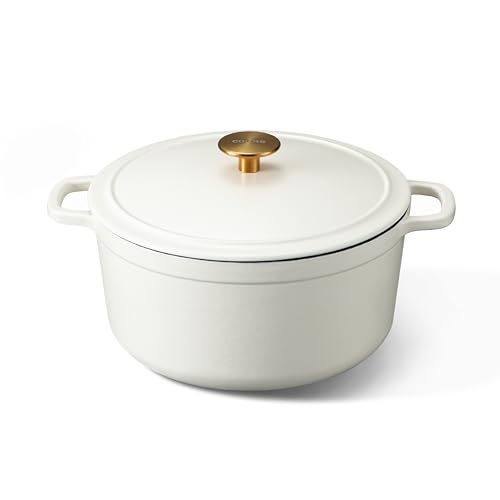
Superior Even Heat Control: One-piece thick cast iron delivers uniform heat with zero hot spots and excellent heat retention, ideal for searing, braising and crusty bread baking. Preheat on medium-low heat; cool naturally before washing to prevent enamel cracking.

【Airtight Lid Locks In Freshness & Flavor】Experience the magic of this Dutch oven with lid, precision-engineered to create a tight seal. It locks in moisture and essential nutrients, delivering richer flavor and incredibly tender, juicy results in every dish—from slow-braised meats to hearty soups. Achieve a perfect, crispy crust on your artisan loaves—it's the ultimate Dutch oven for bread baking. The interior self-basting dots continuously redistribute condensation, ensuring your food stays perfectly moist, never dry or mushy
Breakfast Frittatas and Baked Eggs
After mastering savory braises, you’ll reveal that Dutch ovens shine equally well at breakfast, transforming simple eggs into golden, custardy masterpieces that feed a crowd with minimal fuss. Your ingredient combinations range from classic BLT-style with bacon and tomatoes to veggie-forward options like roasted red peppers with spinach or mushrooms with tarragon. Start by sautéing proteins and vegetables directly in your Dutch oven using butter or olive oil, building foundational flavor before pouring beaten eggs mixed with cream and cheese over top. Additionally, proper seasoning of the cast iron ensures optimal non-stick performance for your frittatas. Bake at 350°F to 400°F for 15 to 30 minutes until set. These cooking techniques deliver even heat distribution, whether you’re using your home oven or campfire coals. Fresh herbs and quality cheese elevate every bite, while vegetables boost nutrition without excess calories.

PFAS-FREE & NON-TOXIC COOKWARE: ATTENTION: If your manual mentions "enamel" or "low-medium heat only", it is incorrect. This is 100% pure cast iron cookware! Not Enamel-Coated: Safe for High-Heat Cooking! Metal utensils OK (avoid sharp edges) Every Umite Chef cast iron pot has been burned with 100% natural, food-grade vegetable oils—absolutely zero PFAS, PFOA, PTFE, synthetic coatings, or toxic chemicals. Our seasoning naturally builds with use, developing a superior non-stick surface over time while ensuring oven-to-table safety

【10QT CAMPING DUTCH OVEN】 The Velaze 10 Quart camping dutch oven is made of cast iron with a high-quality design and excellent thermal conductivity and heat retention. The flanged lid holds hot coals and inverts for use as a griddle. The extra stand support allows the oven to sit perfectly over the table.

【CAST IRON DUTCH OVEN】 Velaze enamel cast iron dutch oven pot with lid is solid and durable, can be used for multiple cooking methods such a cooking, baking, stewing etc. Large capacity dutch oven is great for beginners or pros and almost meet all the needs of family gatherings. Please always use oven gloves or a pot rack when handling the pot. The handle will be very hot!
Essential Cooking Techniques for Small Dutch Ovens
Mastering your small Dutch oven means understanding how its unique construction—thick walls, tight-fitting lid, and superior heat retention—transforms basic cooking methods into restaurant-quality results. You’ll find that sautéing techniques require preheating to medium-high heat before adding fat, allowing you to brown ingredients perfectly in just minutes. The sand-colored enamel lets you monitor this vital step closely. Once browned, you’ll shift seamlessly into braising methods, where the self-basting design locks in moisture and flavors during extended low-heat cooking. Your tight-fitting lid guarantees even heat distribution throughout the process, tenderizing tough cuts beautifully. Additionally, a 3-quart Dutch oven can be effective for certain recipes, particularly if you adjust ingredient quantities accordingly. These essential techniques—from initial searing to slow braising—work synergistically with your small Dutch oven’s superior engineering to elevate everyday ingredients into extraordinary dishes. Additionally, proper Dutch oven care is crucial for ensuring that your cookware remains in prime condition for all these cooking techniques.

Quality Enameled Dutch Oven: The Lodge Essential Enamel Cast Iron Dutch Oven gives you all the benefits of cast iron cooking, great heat retention and durability, without fear of rust; it's also PFAS free

Moisture-Locking Lid: The Lodge Essential Enamel Cast Iron Dutch Oven features a moisture-locking design ideal for roasting, braising, and slow cooking pot meals

Quality Enameled Dutch Oven: The Lodge Essential Enamel Cast Iron Dutch Oven gives you all the benefits of cast iron cooking, great heat retention and durability, without fear of rust; it's also PFAS free
Pantry Staples and Flavor-Building Ingredients
Now that you’ve developed the foundational cooking techniques, you’re ready to stock your pantry with the ingredients that’ll transform those methods into remarkable dishes.
Your aromatic foundations—onions, garlic, and shallots—create the flavor base for every successful braise. Layer these with quality stocks, wine, and bone broth to build rich, complex liquids that prevent drying and coat your proteins evenly. Using a cast iron grill pan with a smooth bottom is advisable to avoid scratches when cooking on a glass top stove.
For flavor enhancements, keep dried herbs like thyme, bay leaves, and rosemary on hand alongside peppercorns, paprika, and cumin. These dried ingredients maintain potency when stored properly in airtight containers.
Balance your dishes by mastering salt, fat, and acid: kosher salt for seasoning adjustment, quality cooking fats for richness, and vinegar or lemon juice for brightness that counters heavy braised proteins. Additionally, incorporating a quality steak rub can enhance the flavor profile of your meats during cooking.
Campfire Cooking and Outdoor Preparation
Once you’ve mastered your Dutch oven basics indoors, you’re ready to take your cast iron to the campfire—where the real adventure begins. Campfire safety demands you set your oven on flat, stable ground away from foot traffic. Keep a water bucket nearby for emergencies and coal management. Long-handled tongs become your essential outdoor utensils, letting you arrange briquettes safely without risking burn injuries. Avoid bare-handed contact with hot equipment at all costs. Rotate your Dutch oven’s lid and body every fifteen minutes to combat hot spots and guarantee even cooking. Parchment paper lines the interior, simplifying cleanup between recipes. With proper fuel preparation and coal placement technique, you’ll transform simple ingredients into memorable campfire meals that taste like you’ve been doing this for years. However, if you’re considering using a glass Dutch oven for baking, ensure it is oven-safe and preheated to reduce the risk of breakage.
Troubleshooting Common Dutch Oven Challenges
Even with solid campfire fundamentals, you’ll occasionally encounter cooking mishaps that can derail your outdoor meal plans. Food sticking to the bottom? Lower your heat to medium and guarantee you’ve coated the pan base with adequate oil before heating, as applying a thin, even layer of oil can help prevent stickiness. If you’re dealing with burnt exteriors and raw interiors, reduce heat and extend cooking time for gradual heat penetration. Watery dishes result from excessive liquid and closed lids—remove the lid during final cooking stages to allow evaporation. Uneven cooking happens when you overcrowd ingredients or use high heat incompatible with Dutch oven heat retention. Space items properly and maintain medium heat. Finally, protect your enamel by using wooden utensils, avoiding temperature extremes, and cleaning gently with soft sponges. Additionally, always remember to avoid thermal shock by ensuring your Dutch oven has been preheated gradually.