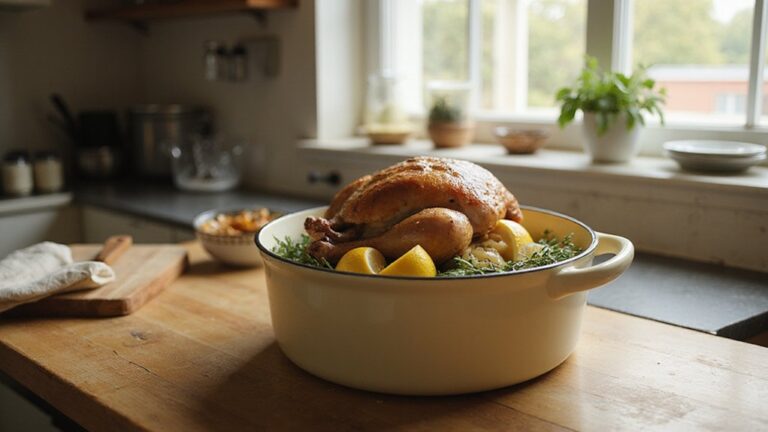
Wondering whether a Dutch oven or a bread oven is best for your sourdough baking? The choice really comes down to how often you bake and what results matter most—crust, rise, or ease of use.
A Dutch oven delivers bakery-quality crusts with less effort.
While a lighter bread oven can make weekly baking quicker and simpler.
Keep reading to find out which option fits your kitchen best.
Does a Dutch Oven Really Trap More Steam?
A Dutch oven traps more steam than standard cookware thanks to its heavy, tight-fitting lid and cast iron construction. The lid’s self-basting rim creates a superior seal, preventing vapor from leaking at the edges. Its weight stabilizes the seal and enhances condensation, while the thick cast iron offers 4.7 times greater thermal mass than aluminum. This allows the oven to retain heat for about 28 minutes after removal, fostering a consistent micro-environment. When preheated with the lid on, it avoids thermal shock, ensuring initial steam formation is optimal. The convex lid creates micro-pressure of approximately 0.08–0.12 psi, lowering the boiling point of water by 1.2–1.8°C. This subtle pressure increase improves steam condensation, mimicking the humid conditions of professional bakery ovens and encouraging a crusty, well-risen bread. Inside, the dough’s own moisture generates enough vapor to sustain this humid environment without external water, making the Dutch oven highly effective for bread baking and slow cooking. For an even better crust, you can apply a steak rub technique during the final stages of cooking, just as you would when using a cast iron skillet. To further ensure moisture is properly managed, some bakers also use a pressing setup to remove excess liquid from ingredients, similar to how a cast iron skillet can press tofu. This process parallels the seasoning technique used for cast iron, where a thin, even layer of oil is baked on to create a durable, non-stick surface.

Even Heat Distribution Retention: This Umite Chef Dutch oven Made with heavy-duty enameled cast iron, ensures even heat distribution for perfect searing and slow cooking, locking in flavors. thickened walls lock in heat for slow braising, searing, and baking. Unlike thin pots that scorch food, this professional-grade Enameled cast iron potSuperior heat retention after preheating (allow 5-7 mins for even distribution). CRITICAL: Always cool naturally for 45+ mins before cleaning. Thermal shock (hot-to-cold contact) cracks enamel. USE TIP: Preheat 2-3 mins on medium-low only

BREAD BAKER'S DUTCH OVEN, 500°F OVEN-SAFE, SOURDOUGH-READY – one of the highest ratings in its class – delivering the sustained heat that sourdough, artisan bread, and pizza dough demand. Thick cast-iron walls trap and circulate heat like a brick oven, producing bakery-quality crusts at home. The tight-sealing lid features raised self-basting nodes that continuously recirculate steam: a perfect moisture chamber, every single bake.

【10QT CAMPING DUTCH OVEN】 The Velaze 10 Quart camping dutch oven is made of cast iron with a high-quality design and excellent thermal conductivity and heat retention. The flanged lid holds hot coals and inverts for use as a griddle. The extra stand support allows the oven to sit perfectly over the table.
Is a Bread Baker Actually Easier to Handle?
A dedicated bread baker is much easier to handle than a Dutch oven. Its lightweight aluminum construction drastically reduces physical effort, making the process more comfortable. In contrast, a Dutch oven’s heavy cast iron body requires thick oven mitts and careful maneuvering when hot. With a bread baker, you can easily load delicate dough into a shallow base, avoiding awkward transfers into a scorching hot, deep pot. Its streamlined design removes the Dutch oven’s steep learning curve, which is especially helpful for beginners. Instead of wrestling with heavy cookware, you can focus more on the baking process itself. This precise control over temperature is similar to how sous vide cooking allows you to customize egg doneness with exact timing. Even traditional cast iron Dutch ovens like the ones used at Rose Red Homestead produce excellent artisan bread from only flour, water, salt, yeast. However, when selecting cast iron, checking for evenness and surface condition helps avoid warping or cracks that can hinder cooking performance. If rust does develop, you can restore the skillet using a vinegar spray solution to remove the corrosion before reseasoning.

STANDARD SIZE--- Pans Dimensions: 8.5”L x 4.5” W x 2.5”H,Great for holding bread, cookie and cake batters, fruit and veggie salads, quiches, and beyond.

STANDARD SIZE--- Pans Dimensions: 8.5”L x 4.5” W x 2.5”H,Great for holding bread, cookie and cake batters, fruit and veggie salads, quiches

PURE UNCOATED ALUMINUM & SUPERIOR HEAT CONDUCTION: Crafted from 100% bare aluminum with NO chemical coatings – guarantees safe, toxin-free cooking. Engineered for lightning-fast, even heat distribution (up to 30% faster than steel!) for perfectly crispy cookies, golden roasted veggies, and juicy meats every time. The aluminum baking pans are made of thick and heavy aluminum, with a heavy rolled edge making this truly "commercial-grade"that provides maximized scratch resistance
Proofing in the Baking Vessel: The Workflow Winner
Proofing and baking in the same vessel simplifies your process by eliminating the need to transfer delicate dough into a separate preheated Dutch oven. You shape your dough directly in the baking vessel, allow it to rise, then cover and bake—all without moving it. This approach reduces the risk of deflating your carefully proofed dough and streamlines your workflow.
You also benefit from better temperature control during the final proof. The baker’s lightweight aluminum material heats evenly and retains heat well, unlike a Dutch oven that requires lengthy preheating. Monitoring the dough is easier since you can see how it’s rising without lifting a heavy lid. Plus, handling a lighter vessel minimizes the risk of burns on a hot pot. Overall, switching from proofing to baking in the same vessel makes your process more efficient and less stressful.
Crust and Blistering: Which Pot Wins?
The bread oven wins for blistering and crust quality. It produces more uniform blisters and faster browning without needing ice cubes, thanks to its shallower base that accelerates caramelization and reduces bake time by about five minutes. The oven’s design helps maintain the dough’s outer structure, resulting in a more consistent, pitted crust. While the Dutch oven’s cast iron offers even heat distribution, it often requires removing the lid early to prevent over-darkening, which can disturb the crust’s formation. Additionally, its heavier weight makes transferring the loaf trickier, risking disruption of the blistering pattern. For optimal results, ensure the dough is dry and folded before placing it in the oven, leaving space for an airtight closure to preserve steam. Unlike infrared thermometers, which are less reliable for measuring the internal temperature of liquids like candy syrups, digital probe thermometers ensure the dough reaches the correct internal temperature for ideal crust development. Properly maintaining your cast iron cookware with coarse kosher salt and oil prevents rust and preserves its non-stick surface. Overall, the dedicated bread oven delivers superior crust development, making it the better choice for achieving that ideal blistered, crackly surface.
Pot Size for a Standard Loaf
A 5-quart Dutch oven is ideal for a 500g flour sourdough loaf. It provides enough volume and depth to allow proper oven spring and vertical rise without restriction. Aim for a pot with at least 4 to 5 inches of depth so the dough has room to expand during baking. The volume should roughly double the dough’s size, accommodating the bread’s expansion from hydration and oven heat. A 5-quart round vessel comfortably holds a boule made with 500g of flour, while an oval shape suits bâtards better. If your banneton fits with about an inch of space around the edges, a 5-quart size is perfect. Avoid going larger than 6 quarts, as bigger pots can hinder controlled expansion and become unwieldy for standard loaves. Unlike a bread oven, a Dutch oven can also be used to make a hearty dish combining sliced potatoes, bacon, onions, and cheese. This same pot excels at slow braising brisket to break down connective tissue for melt-in-your-mouth tenderness. For precise heat management, you can check the surface temperature with an infrared thermometer, using a simple spray of cooking oil to ensure proper emissivity for accurate readings.
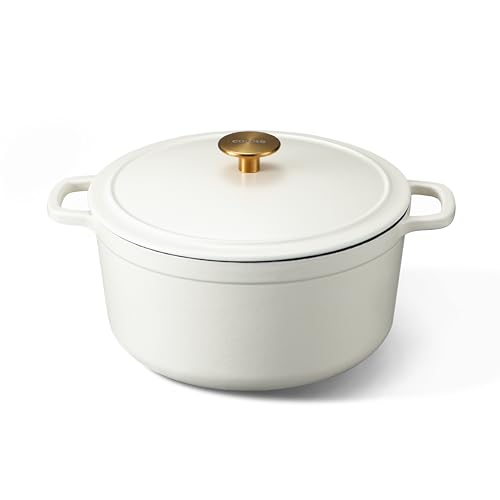
Superior Even Heat Control: One-piece thick cast iron delivers uniform heat with zero hot spots and excellent heat retention, ideal for searing, braising and crusty bread baking. Preheat on medium-low heat; cool naturally before washing to prevent enamel cracking.

Exceptional Heat Retention: Elevate your culinary skills with the Overmont Dutch oven. This heavy-duty cast iron Dutch oven ensures even heat distribution and exceptional heat retention, making it ideal for slow-cooked meals, stews, and braised dishes. Its ability to maintain consistent heat helps cook food evenly, enhancing flavor and texture for perfect results every time. We also include a cookbook with 10 classic recipes to inspire your cooking. 𝐍𝐎𝐓𝐄: 𝐅𝐨𝐫 𝐛𝐞𝐬𝐭 𝐫𝐞𝐬𝐮𝐥𝐭𝐬 𝐨𝐧 𝐭𝐡𝐞 𝐬𝐭𝐨𝐯𝐞𝐭𝐨𝐩, 𝐮𝐬𝐞 𝐦𝐞𝐝𝐢𝐮𝐦 𝐭𝐨 𝐥𝐨𝐰 𝐡𝐞𝐚𝐭 𝐭𝐨 𝐩𝐫𝐞𝐯𝐞𝐧𝐭 𝐟𝐨𝐨𝐝 𝐟𝐫𝐨𝐦 𝐬𝐭𝐢𝐜𝐤𝐢𝐧𝐠 𝐝𝐮𝐫𝐢𝐧𝐠 𝐮𝐬𝐞.

𝐃𝐨𝐦𝐞 𝐃𝐞𝐬𝐢𝐠𝐧: Perfect for Crusty Sourdough The AHJ pre-seasoned Dutch oven is ideal for sourdough baking. When used with the lid in the oven, it locks in steam—ensuring condensation drips down the lid walls without soggying the bread—for an ultra-crisp crust and soft, fluffy interior. The 5-quart large capacity easily accommodates big sourdough loaves, perfect for sharing with the whole family.
How Preheating Time Affects Your Baking Routine
Preheating your Dutch oven for at least 30 minutes at 450°F ensures the cast iron reaches a consistent, high temperature that quickly transforms moisture into steam when you place your cold sourdough inside. This duration is crucial because it affects your baking schedule and the quality of your bread. If you’re pressed for time, you can reduce the preheat to 25 minutes—the minimum needed for adequate oven spring—but expect a less dramatic rise. For reliable, consistent results, aim for a 40-minute preheat window. This extra time allows you to finish shaping and scoring your dough while the oven temperature stabilizes. Planning your routine around this wait will help you achieve optimal baking conditions. Keep in mind, a super-hot oven isn’t strictly necessary; 450°F provides enough heat, as long as the Dutch oven’s walls are thoroughly heated and saturated, ready to create that initial burst of steam for perfect crust development. Unlike traditional cast iron, enameled cast iron resists rust and requires no seasoning, which simplifies long-term maintenance for regular baking. This technique is similar to how pork roast with sauerkraut recipes use a preheated Dutch oven to sear and tenderize the meat.
When a Bread Baker Costs Less Than a Dutch Oven
A dedicated bread baker like the Aldi model costs just $40, making it significantly more affordable than a Dutch oven, which can range from $25 up to over $800. This budget option delivers surprisingly comparable performance in sourdough tests, producing excellent crust quality without the hefty price tag. If your sole focus is bread baking, choosing a cheap, specialized tool saves you money compared to investing in a more expensive Dutch oven. However, most bread ovens are single-purpose and don’t serve other cooking needs, limiting their versatility. The Aldi option shows that affordable, dedicated equipment can sometimes outperform pricier, multi-use alternatives, but you’ll sacrifice the flexibility that comes with a more versatile purchase. For straightforward bread baking, this $40 baker offers outstanding value and quality without overspending. For perfect crust development, patting the meat dry before searing is a key technique borrowed from cast iron steak cooking that also applies to creating a dry dough surface for a crisp bread crust.

Longer Handle Design: Smartinest upgrades the classic bread sling with extended handles sized 7.2" × 3.2" and a secure lifting loop for safe, stable, and precise dough transfer, helping you avoid burns and protect your hands when removing hot bread from a Dutch oven.

Superior Cast Iron Craftsmanship, Designed for Dutch Oven for Bread Baking This 6-quart dome-shaped cast iron bread pot ensures even heat distribution, perfectly suited for dutch oven for bread baking, allowing you to effortlessly bake bread with a crispy exterior and soft interior

The Ultimate 9-in-1 Pro Bread Baking Kit – From Beginner to Artisan. This complete set is engineered for perfect homemade bread, covering the entire workflow: a 5QT Enameled Cast Iron Sourdough Bread Oven (with lid), 10inch Rattan Proofing Banneton, Stainless Steel Dough Scraper, Bread Sling, Dough Whisk, Bread Scoring Lame, Cleaning Brush, and Heat-Resistant Gloves. No need for extra purchases. Ideal for sourdough, no-knead, rustic bread, and even meatloaf.
Dutch Oven vs. Bread Baker: Choose by Baking Frequency
Your baking frequency determines whether a Dutch oven or a dedicated bread baker is the better choice. If you bake weekly, a bread baker can streamline your process with faster preheating times. Its lightweight aluminum design heats quickly, removing the usual 30 to 45 minutes needed for traditional cast iron. This allows you to proof and bake in the same vessel, eliminating the need to transfer dough, which can be tricky with high-hydration loaves. Reduced handling also minimizes burn risks and errors, making consistent results easier to achieve without a steep learning curve.
On the other hand, if you bake infrequently, a Dutch oven is more practical. Its versatility justifies the higher upfront cost since it doesn’t just make bread but also doubles as a pot for stews, soups, and roasts. While it requires longer preheating and is heavier to handle, these factors are less inconvenient when baking isn’t your daily routine. For occasional bakers, its lower price and multi-purpose use provide greater value, so you can enjoy both bread and everyday cooking without extra gadgets accumulating in your kitchen.

PRE-SEASONED CAST IRON: 7-quart heavy-duty dutch oven pot with lid and dual side handles for easy lifting and maneuvering

FEAST & BATCH COOKING - Designed for large families, holiday gatherings, and weekend meal prep, this 7QT Dutch oven comfortably serves 5–8 people. Its generous capacity easily handles family-size soups, large-batch stews, pot roasts, and whole chickens without overcrowding ingredients. Perfect for Thanksgiving recipes, holiday entertaining, and batch cooking with fewer rounds in the kitchen.

PREMIUM ENAMELED CAST IRON DUTCH OVEN WITH LID - Made from heavy-duty enameled cast iron, this Dutch oven with lid delivers even heat distribution and excellent heat retention for reliably cooking meals evenly and keeping them warm for longer. Use for soups, braising meats, roasting, simmering, and slow cooking without hot spots or scorching.
Which Option Gives Beginners Better Oven Spring?
Using a preheated Dutch oven at 450°F for 30 to 45 minutes gives you the best oven spring for beginners. The high temperature creates a hot environment that promotes rapid gas expansion and dough rise. Adding a few ice cubes just before sealing the lid produces steam, which prevents the dough from drying out and encourages a better oven spring. This sudden steam injection, combined with the hot, tight environment inside the Dutch oven, traps gases and boosts the loaf’s rise. Ensure you don’t place the dough into a cold pot or skip preheating, as that will result in minimal or no oven spring. For best results, always preheat the Dutch oven thoroughly, add steam, and then bake. A 5.5-quart capacity Dutch oven is the ideal investment for most home bakers, offering enough space for the dough to rise without spreading excessively. Adding aromatic herbs like rosemary or thyme to the dough can also enhance the flavor through fat-soluble flavors that develop during baking. This method also leads to larger air pockets and a more open crumb structure. Before starting, it is important to purge excess air from the fuel tank of any butane torch used for caramelizing the crust.
Can a Dutch Oven Match a Bread Baker’s Convenience?
Storage considerations favor the Dutch oven over a bread baker because a Dutch oven is a multi-purpose piece of cookware used for stews, roasts, and other dishes. In contrast, a bread baker is a dedicated unitasker designed solely for baking bread. If you have limited space or budget, the versatile Dutch oven might be the more practical choice despite the extra steps involved in bread baking. While you may need to spend more time on preparation and cleanup, you won’t have to sacrifice the quality of your bread’s crust, which is often the main goal for bakers. To get the best results, always start on low or medium heat to avoid damaging the cookware on your stovetop. Proper Dutch oven care ensures these heirloom pieces remain functional and attractive for years.