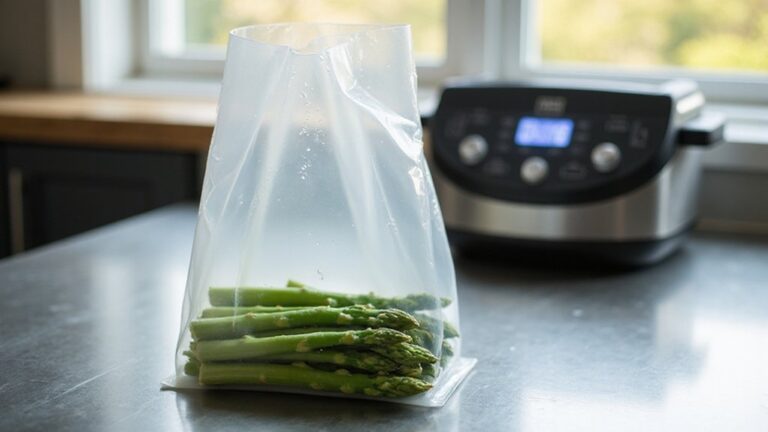
You’ll need a large stockpot, calibrated digital thermometer, and freezer-safe Ziploc bags to execute sous vide cooking. Preheat your water bath 2°C above target temperature, then use the water displacement method to seal seasoned ingredients in individual bags. Monitor temperature constantly, making manual adjustments with ice or hot water as needed. Maintain precise heat control throughout cooking—even 1°F variations greatly impact results. The specific temperatures and timing for different proteins require careful attention to food safety standards.
Essential Equipment You Already Have at Home
You don’t need specialized sous vide equipment to execute this precise cooking method—most home kitchens contain the necessary vessels and monitoring tools. A large stockpot or cooler serves as your primary sous vide container, providing adequate insulation for temperature stability throughout your cooking duration. You’ll need a reliable digital thermometer to monitor water bath temperatures with precision, maintaining consistency within 1-2 degrees of your target setting. Freezer-safe Ziploc bags made from BPA-free polyethylene work perfectly for sealing your ingredients without vacuum-sealing equipment. This method of using Ziploc bags enables you to utilize the water displacement method to effectively remove air and create a near-vacuum seal. A slotted spatula, chip clips, or floral wire help position bags correctly, maintaining one inch of clearance from the pot bottom. These fundamental components enable you to execute sous vide cooking with professional results using items already in your kitchen. Additionally, proper seasoning of your cast iron cookware can enhance the flavor of the dishes you prepare using this method.
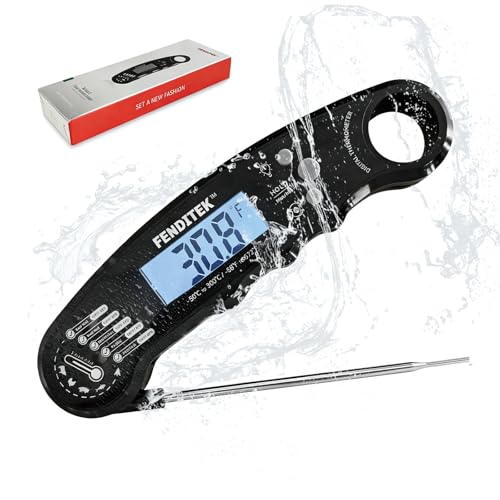
With a precision sensor, this Digital meat thermometer reads temperature in 3 seconds and is accurate within 1 °F . Supporting Celsius and Fahrenheit display from -58°F to 572°F (-50°C to 300°C).

【Fast & Accurate】Our meat thermometer digital delivers accurate readings within ±1°F in just 1–2 seconds, with a wide temperature range of -58°F to 572°F (-50°C to 300°C). No more waiting over the heat - know your food's exact temperature instantly.

Instant Read Meat Thermometer | Our instant read thermometer features a temperature probe and advanced, highly accurate technology with a 1-2 second response time. Our instant read food thermometer comes pre-calibrated with instructions and a meat temperature chart, plus a recalibration feature if needed.
Mastering Water Bath Temperature Control
While your kitchen’s basic equipment provides the foundation for sous vide cooking, maintaining precise water bath temperature is what separates mediocre results from professional-quality outcomes. You’ll need a calibrated digital thermometer to monitor your water temperature accurately, checking multiple locations in your bath to identify the lowest point. Manual adjustment demands constant vigilance—you can’t simply set it and forget it. Plan on frequent observations and minor tweaks throughout cooking. For longer sessions, this becomes tedious. Start by preheating your water 2°C above target temperature, then make incremental adjustments as needed. A fitted lid minimizes evaporation and temperature fluctuations. Remember: even 1°F variations dramatically impact cooking times and food safety, particularly when preparing poultry or red meat at lower temperatures.
Preparing and Sealing Your Food Properly
Since precision in sealing directly impacts heat transfer and food safety, selecting the right bag is your first critical decision. You’ll want freezer-safe Ziploc bags labeled microwave-safe to withstand sous vide temperatures (120°F–160°F). Avoid regular plastic bags that aren’t engineered for heat contact. Proper vacuum sealing is essential for even cooking and maintaining flavor during the sous vide process.
Before sealing, season or marinate your food to maximize flavor infusion during slow cooking. Arrange pieces in a single flat layer—never stack them, as this causes uneven cooking. Use the water displacement method: submerge your open bag gradually until air evacuates completely, then seal tightly while keeping the opening above the waterline. Remove all air pockets to prevent floating and oxidation. For multiple items, seal individual bags separately to maintain precise temperature control throughout your cook time. Additionally, ensure you are using bags that can withstand heat exposure instead of regular plastic bags, which are not suitable for proper sealing in sous vide cooking.
Cooking Times and Temperature Guidelines by Food Type
Once your food’s sealed and submerged in your water bath, temperature and timing become your primary controls for achieving the desired doneness and texture. Your cooking times and temperature guidelines vary considerably by protein type. Beef and lamb reach medium-rare at 129°F (54°C) with a minimum of 1 hour 30 minutes cooking. A vacuum sealer can enhance the quality of your sous vide cooking by ensuring a reliable seal and even heat distribution. Chicken breast requires 145°F (63°C) for 1–3 hours 30 minutes for food safety. Fish fillets cook tender at 124°F (51°C) for 30 minutes to 1 hour, while shellfish like shrimp finish at 50°C in just 25 minutes. Vegetables demand higher temperatures—84°C for green varieties (15–40 minutes) and root vegetables (1–3 hours). Thicker cuts extend cooking proportionally: approximately 1 hour per centimeter thickness. Essential maintenance techniques for your cookware, such as seasoning, can also enhance the flavor profiles of sous vide dishes. Balance time and temperature carefully to pasteurize while preserving texture quality.

Fully Automatic Operation: Fresko fully automatic vacuum sealer, includes 10 pre-cut bags, 140W power, dry & moist modes and bag-mouth clamp (prevent bag from moving for a better seal). The food sealer machine is Ideal for meal prep, food storage, and sous vide cooking

【42 PCS Food Vacuum Sealer Set, Use for Home /Restaurant /SuperMarket】Kosbon 42 PCS Sous Vide Vacuum Sealer Set - 30 Reusable Bags, 5 Clips and Sealing Clips for Anova, Joule Cookers.

4 Modes : 'Vac & Seal' - one-touch automatic vacuum and seal, perfect for food that does not deform easily, such as meat, nuts, and vegetables; 'Pulse Vac' - manually control the vacuum process, suitable for soft food or moist food, such as bread or food with soup; 'Seal' - only seal, for potato chip bags; 'Accessory' - designed for vacuuming jars or sous vide bags
Budget-Friendly Techniques for DIY Sous Vide
You don’t need specialized equipment to achieve sous vide’s precise temperature control and tender results—a large stockpot, reliable food-safe thermometer, and freezer-grade zip-top bags form the foundation of an effective home setup. Employ the water displacement method to seal bags without a vacuum sealer, ensuring proper air expulsion before submersion. Safe refilling methods also emphasize proper handling to ensure optimal results, particularly if using tools like butane torches. Use kitchen clips or weights to maintain bag positioning without pot contact.
For temperature management, heat water over medium-low and monitor consistently with your thermometer. Add ice or cool water to prevent overshooting your target range. Consider insulated coolers as bath vessels to reduce energy consumption and temperature fluctuation during sous vide experimentation. This approach addresses common cooking challenges while eliminating equipment costs. Patience and attentiveness replace precision machinery, making DIY sous vide accessible and economical. Keep in mind that using a reliable thermometer can help you ensure temperatures are within safe ranges for your food.
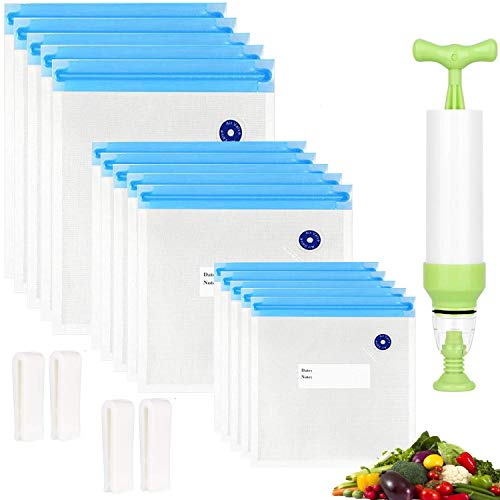
High-Quality Material: Crafted from food-grade materials to ensure safety and durability during sous vide cooking.

SILICONE-COATED SOUS VIDE MAGNETIC WEIGHTS - Keep your food bags from floating up as your sous vide. Full submersion is essential for efficient, full, and even cooking, especially on short sous vide. With a strong magnet core, these compact weights can keep the cooking bags submerged, providing a more compact and flexible alternative to sous vide clips, racks, and weights.

Fast & Accurate: Get precise readings in just 1 second with ±0.9°F accuracy. NSF Certified for trusted food safety, this digital food thermometer features a 4.3 inches food-grade stainless steel meat probe, perfect for grilling, frying, baking, making candy and more