

You’ll achieve restaurant-quality results by setting your Anova Precision Cooker to your desired doneness—129°F to 134°F for medium-rare—then vacuum-sealing your 1.5 to 2-inch steak with seasonings and herbs. Cook for one to four hours, ensuring proper water circulation. Pat the steak dry, then sear it on high heat for 45–90 seconds per side to develop a caramelized crust while preserving the perfectly cooked interior. The extensive techniques for mastering this method await your exploration.
Understanding Sous Vide Temperature and Doneness Levels
Understanding your temperature guide is essential. Rare steaks require 120°F to 128°F, remaining exceptionally soft with red throughout. Medium-rare ranges from 129°F to 134°F, delivering tenderness with a warm red center. Medium steaks cook between 135°F and 144°F, developing firmness with pink centers. Medium-well spans 145°F to 155°F, becoming noticeably firmer with slight pink hues. Well-done steaks exceed 156°F, resulting in firm, gray meat throughout.
It’s important to remember that achieving perfect doneness can be easily influenced by cooking techniques like sous vide, which ensures precise temperature control throughout the cooking process. Myoglobin breakdown accelerates considerably above 140°F, causing rapid color loss. At 158°F, your steak appears mostly gray. By selecting your target temperature within these precise ranges, you’ll consistently achieve your preferred doneness level with predictable results. Additionally, using an infrared thermometer can help ensure accurate temperature monitoring throughout the process, providing non-contact temperature measurement that enhances cooking precision.
Selecting the Right Steak Thickness and Cooking Duration
Because sous vide cooking relies on precise heat penetration to achieve uniform doneness, your steak’s thickness fundamentally determines both your cooking duration and final texture. You’ll achieve ideal results with steaks between 1.5 to 2 inches thick, which balance interior and exterior cooking. Thinner cuts demand abbreviated steak thickness considerations—steaks under 1 inch require only 30 to 40 minutes to prevent overcooking and moisture loss. For 1.5-2 inch steaks, your cooking time ranges from 1 to 4 hours depending on desired doneness. Medium doneness requires 1 to 4 hours, while well-done steaks cook in 1 to 3 hours. It’s important to maintain precise temperature ranges to ensure that you get the best results in terms of texture and juiciness. Remember that exceeding recommended cooking times degrades texture despite maintained safety, transforming your steak into an undesirably mushy result rather than the buttery-soft consistency you’re pursuing. Additionally, keep in mind that cooking temperature plays a crucial role in achieving the perfect steak texture.

Perfect results every time: Never over or under cook your food again. The Anova Precision Cooker Nano circulates water at the exact temperature required for perfectly cooked meals, no matter what's on your menu..Temperature : 0˚-92˚C (32˚-197˚F) | +/- 0.1˚C (0.2˚F) accuracy.

✔[Good Performance Sous Vide] Wancle newly released 1100W high-performance sous vide cooker with as high as 1100W power and 18% more utilization rate of electricity. The unique 3D water circulation heating can reach the set temperature faster with high efficiency. All functional modules of the latest Wancle sous vide precision cooker have been optimized with 40% less in size, better portability and easy storage compared with other competitive products.

Pros have been doing it for years, and now you can too. Sous vide (pronounced sue-veed) is a cooking technique that utilizes highly precise temperature control in a circulating bath of water to deliver consistent, edge-to-edge perfect results, with virtually no risk of overcooking your food.
Preparing Your Steak: Seasoning and Bagging Techniques
Once you’ve selected your ideal steak thickness and determined your cooking duration, you’ll need to properly season and seal your meat to maximize flavor development during the sous vide process. Pat your steak dry with paper towels to enhance seasoning adherence, then apply salt at approximately 1% of the steak’s weight and pepper at 0.1%. These bagging techniques leverage the vacuum-sealed environment where flavors concentrate intensely—requiring substantially reduced quantities compared to traditional cooking methods.
Incorporate fresh herbs like rosemary, thyme, minced garlic, or shallots directly into the pouch for aromatic complexity. Your seasoning variations should reflect steak type preferences; cilantro complements t-bone cuts while garlic salt suits New York strips. Additionally, steaks benefit from a vacuum-sealed environment that helps retain moisture and flavor during cooking. Interestingly, a Dutch oven can also be used to sear your steak after sous vide cooking for a beautifully browned crust. Seal your bag completely airtight using either vacuum sealers or the water displacement method, ensuring hermetic closure before immersion cooking begins.

✔️【Wide Range of Use】Made of PE/PA food grade material, FIRAWER sous vide cooking bags are reusable up to 10 times, can keeps fresh for meat, seafood, vegetables, fruits, grains, nuts snacks and sandwiches, ect. Suitable for kitchen, camping, spring outing, travel and other scenes.
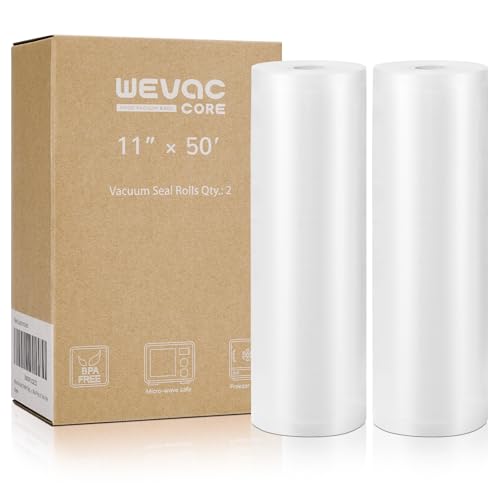
HEAVY DUTY AND PUNCTURE PREVENTION - 2 pack of 11 inch by 50 feet rolls with embossed channels to increase suction, keep fresh without freezer burn or dehydration

【BPA FREE】Bonsenkitchen food sealer roll bags can be microwaved, frozen, re-used, washed, boiled and dishwasher safe. Allows you to precisely control your cooking temperature to achieve perfect results. You can cook sous vide in Bonsenkitchen bags by placing them in water at any temperature up to 195°F/90°C.
Setting Up Your Anova Precision Cooker
How you’ll transform your sous vide cooking experience depends entirely on properly configuring your Anova Precision Cooker—a process requiring methodical attention to both hardware assembly and software integration.
Begin your Anova setup by securing the clamp firmly against your pot’s rim, then adjust the cooker’s vertical position using the side screw for ideal water circulation. Once hardware positioning’s complete, plug the device into a dedicated electrical outlet and navigate the display interface to establish your target temperature and cooking duration. Additionally, consider using vacuum seal bags to extend the freshness of your ingredients, which helps ensure that your steak maintains its optimal flavor and texture during the sous vide process. For serious enthusiasts, investing in a vacuum sealer can significantly enhance the quality of your cooking.
For enhanced functionality, download the Anova Culinary Wi-Fi App and enable your smartphone’s connectivity features. Connect your phone to your preferred network, then follow the application’s setup protocol to establish cooker communication. This cooker adjustment phase guarantees seamless temperature monitoring and remote control capabilities throughout your cooking session.
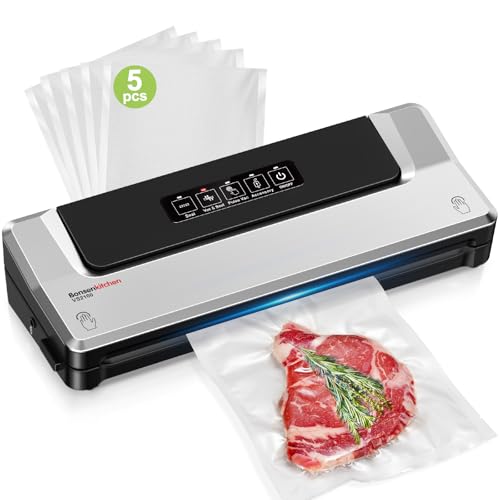
4 Modes : 'Vac & Seal' - one-touch automatic vacuum and seal, perfect for food that does not deform easily, such as meat, nuts, and vegetables; 'Pulse Vac' - manually control the vacuum process, suitable for soft food or moist food, such as bread or food with soup; 'Seal' - only seal, for potato chip bags; 'Accessory' - designed for vacuuming jars or sous vide bags

Fully Automatic Operation: Fresko fully automatic vacuum sealer, includes 10 pre-cut bags, 140W power, dry & moist modes and bag-mouth clamp (prevent bag from moving for a better seal). The food sealer machine is Ideal for meal prep, food storage, and sous vide cooking

Dollar Saver: Preserve food up to 3 years in the freezer, maintaining its freshness and taste
Mastering the Art of Searing
After your steak’s emerged from the sous vide bath, you’ll need to execute a precise searing technique to develop the flavorful crust that distinguishes an exceptional steak from a merely adequate one. Begin by thoroughly patting your steak dry with paper towels—moisture inhibits the Maillard reaction essential for achieving crust development. Preheat your skillet on high heat for five minutes until it’s screaming hot; a water droplet should evaporate instantly. Apply a thin film of high smoke-point oil like avocado or canola. Place your steak gently and leave it undisturbed for 45–90 seconds per side, then flip once. Sear the edges with tongs for complete caramelization. This concentrated searing technique preserves your sous vide doneness while maximizing flavor complexity, as the cast iron skillet’s ability to retain heat enhances the searing process, resulting in a superior crust. Remember that a good sear is crucial for both texture and flavor, leading to an irresistible steak experience.

Graza Frizzle Oil Made from 100% Olives: A neutral-flavored, high heat cooking oil made from 100% peak harvest olives. With a smoke point of up to 450 degrees, Frizzle is your high-heat kitchen hero. 1 bottle/750ml.

Light Buttery Flavor That Elevates Every Meal: Algae Cooking Club Chef-Grade Algae Oil enhances every dish with subtle richness. Its neutral profile makes it ideal for searing, baking, and dressings, transforming everyday meals into gourmet experiences.
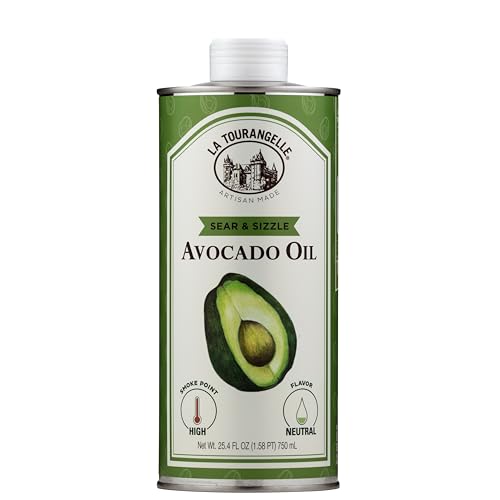
Healthy High Heat Oil: Expeller-pressed from fresh avocados and protected in our iconic light-blocking tin, this smooth, neutral oil preserves freshness and flavor. Fire up the grill, sear the perfect steak, or master a golden, crispy fry — all without losing the natural taste of your ingredients. With a high smoke point and everyday versatility, Sear & Sizzle should be every kitchen’s secret weapon.
Essential Equipment for Sous Vide Success
While searing delivers the flavorful crust, the equipment you choose for the sous vide process itself determines whether you’ll achieve genuinely consistent results or merely adequate ones. Your Anova circulator’s precision temperature control—accurate within ±0.1°C—demands complementary sous vide accessories for ideal performance. Polycarbonate containers with insulated lids minimize heat loss while accommodating your circulator’s clamp. High-quality, food-grade vacuum bags prevent water infiltration, preserving your steak’s texture throughout extended cooking. It’s crucial to use vacuum sealer bags specifically designed for this purpose to ensure optimal sealing. Moreover, using vacuum sealing techniques prevents spoilage by inhibiting microbial growth, ensuring a fresher steak experience. Rack systems organize bagged steaks, ensuring uniform water circulation and eliminating floating that compromises evenness. Food-safe clips secure bags to container sides, maximizing space efficiency. Integrated timers prevent overcooking, while measurement markers monitor water levels. These coordinated components transform your Anova into a precision instrument, elevating your steaks from competent to exceptional.

Effortless and Precise Cutting: The 11-inch x 150-feet vacuum sealer rolls include a cutter for maximum convenience. Simply mount the cutter onto the box, pull a portion of the roll through the top opening, and easily customize the size you need. This can ensure smooth, even and straight cuts, significantly faster and more accurate than using scissors, making the process simpler and saving your time.

VACUUM SEALER BAGS ROLLS: 8"x20' 3rolls+11"x20' 3rolls, XinBaoLong Food Saver Bags Rolls, Commercial Grade, Heavy Duty, BPA Free for Vac Storage, Kitchen Gadgets, Kitchen Accessories
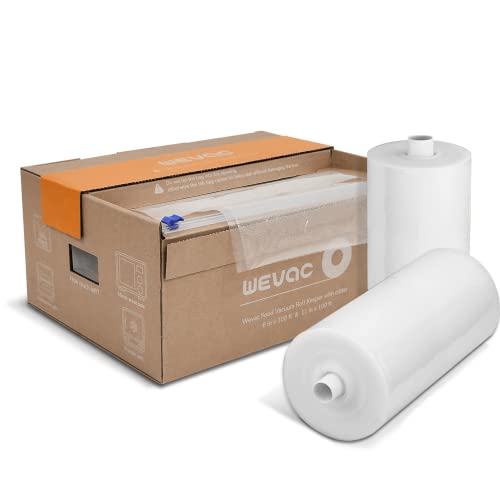
HEAVY DUTY AND PUNCTURE PREVENTION - 8 inch and 11 inch by 100 feet rolls with embossed channels to increase suction, with a cutter box for cutting and storage, keep fresh without freezer burn or dehydration.
Finishing Touches: Resting and Serving Your Steak
Because sous vide cooking distributes heat uniformly throughout the steak, you’ll bypass the resting requirement that traditional methods demand. Your meat reaches edge-to-center temperature equilibrium during the water bath process, eliminating the need for post-cooking equalization. This method ensures that the steak maintains its ideal juiciness similar to the moisture retention of sous vide cooking.
You can sear immediately after removing your steak, as resting techniques become unnecessary with sous vide preparation. This approach preserves ideal texture and temperature while maintaining juiciness—muscle fibers contract evenly, minimizing moisture loss throughout cooking.
For serving suggestions, consider brief chilling before searing if you prefer enhanced crust development without overcooking the interior. Otherwise, proceed directly to your searing vessel. Your steak emerges from sous vide already stabilized and ready for consumption, delivering consistent doneness and exceptional tenderness without compromise. Additionally, ensure you have a properly preheated skillet to achieve that perfect sear right after sous vide cooking.
Troubleshooting Common Sous Vide Mistakes
Even with sous vide‘s reputation for consistency, you’ll encounter pitfalls that compromise your results if you’re not deliberate about technique and timing. The most prevalent sous vide mistakes stem from incorrect temperature selection—deviating from 129–131°F for medium-rare steak invites bacterial growth or overcooking. Common pitfalls also include excessive searing, which elevates internal temperature despite precise water bath control. Overpacking your water bath restricts circulation, generating uneven cooking throughout steaks. Additionally, combining ingredients with disparate temperature requirements—such as garlic and steak—produces inconsistent doneness across components. You’ll optimize outcomes by maintaining vigilant adherence to temperature protocols, limiting sear duration to 30–45 seconds per side, spacing steaks appropriately, and isolating ingredients by their specific thermal requirements. Restoring rusty pans can also enhance flavor without leaching harmful chemicals that may compromise your meal’s safety. Precision eliminates guesswork.


