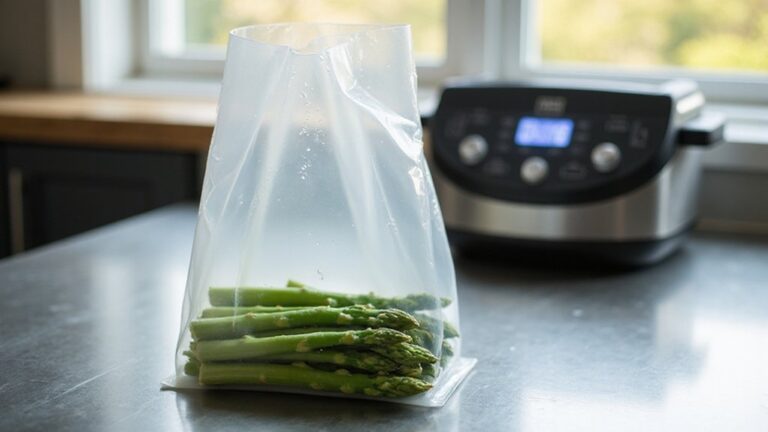
You’ll seal bags effectively by matching your method to your food type. The water displacement technique works well for dry foods using standard freezer bags. For liquids and delicate items, chamber vacuum sealers prevent spillage and oxidation. Ziploc bags offer budget-friendly alternatives, while silicone reusable bags provide eco-conscious durability. You’ll want to inspect seals carefully for gaps or weak spots before cooking. Understanding these distinctions guarantees peak results and prevents water infiltration during your sous vide process.
Water Displacement Method: A Simple and Effective Technique
The water displacement method is a straightforward technique that doesn’t require specialized equipment—you’ll only need a large container, water, and freezer-grade zipper bags. You’ll place your food inside the bag, leaving the zipper partially open. Gradually submerge the bag into cool water, allowing water pressure to push air out through the opening. As you lower the bag, the increasing pressure forces air toward the unsealed edge. Just before the opening dips below the waterline, you’ll seal the zipper completely, trapping minimal air inside. This air removal process creates an almost air-free environment that enhances heat transfer for even cooking. The method prevents bags from floating, ensuring full submersion and uniform temperature distribution throughout your meal. Additionally, using a vacuum sealing method, such as trash bag vacuum sealing, can further improve the efficiency of removing air and preserving food quality. For those looking to enjoy delicious desserts in the great outdoors, exploring Dutch oven recipes can provide an excellent way to satisfy your sweet tooth while camping.
Vacuum Sealer Bags and Machines for Professional Results
While the water displacement method offers simplicity and accessibility, vacuum sealer machines deliver superior air removal and seal reliability for serious sous vide practitioners. You’ll find vacuum sealer comparisons reveal distinct advantages: chamber sealers excel with wet foods, while external models offer compact affordability. Precision vacuum sealers, engineered specifically for sous vide, provide high sealing efficiency and wet-food compatibility. Vacuum seal bags are essential for preventing freezer burn, which can occur during prolonged cooking. Double seal bars strengthen reliability during prolonged cooking. You should select food-grade, BPA-free bags designed for heat resistance and moisture protection. Vacuum sealer rolls let you customize bag sizes, minimizing waste while accommodating various portions. Leading brands like Anova Precision and VacMaster offer commercial-grade performance for consistent results. Alternative cooking methods guarantee your meals remain perfectly sealed throughout the entire sous vide process. Investing in quality machines and bags guarantees your meals remain perfectly sealed throughout the entire sous vide process.
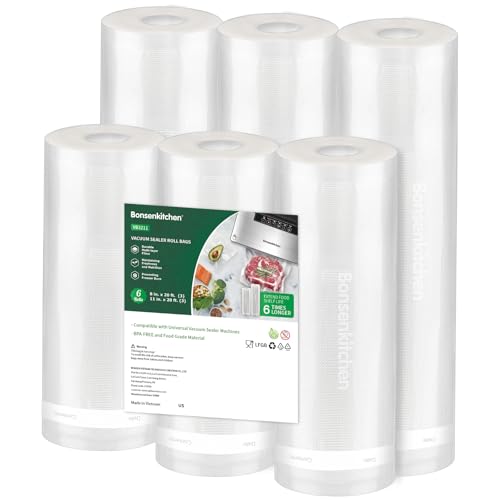
BPA FREE: Bonsenkitchen vacuum food sealer roll bags can be microwaved, frozen, re-used, washed, boiled and dishwasher safe. Allows you to precisely control your cooking temperature to achieve perfect results. You can cook sous vide in Bonsenkitchen bags by placing them in water at any temperature up to 230°F/110°C

ECONOMICAL & & TIME SAVING: Total 150 count Bonsenkitchen 20 Gallon 11" x 16"+ 80 Quart 8" x 12"+ 50 Pint 6" x 10" vacuum sealer bags are different sizes of packaging, meet your different usage needs. Vacuum bags are pre-cut and ready-to-use, saving you time whenever you’re preserving leftovers, preparing make-ahead meals, and portioning bulk items in the freezer.Just pull out and use, no need to cut, no need to seal one side before putting food in
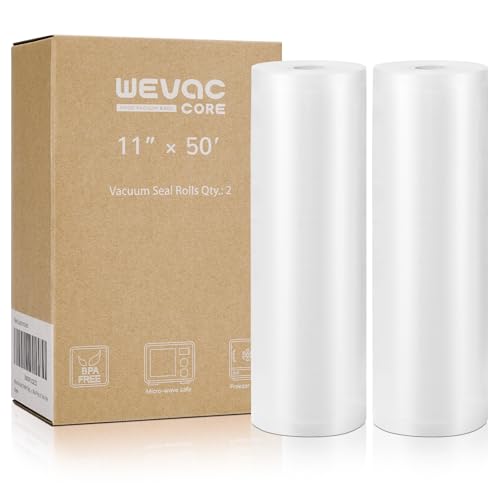
HEAVY DUTY AND PUNCTURE PREVENTION - 2 pack of 11 inch by 50 feet rolls with embossed channels to increase suction, keep fresh without freezer burn or dehydration
Using Ziploc and Freezer Bags for Sous Vide
If you’re seeking an economical alternative to vacuum sealers, Ziploc freezer bags deliver reliable performance for sous vide cooking when you apply proper sealing techniques. These bags feature food-grade polyethylene construction and BPA-free composition, guaranteeing sous vide safety at standard temperatures (50-80°C). Their superior bag durability compared to regular Ziploc bags minimizes tearing and leaking risks during extended cooking sessions.
Use the water displacement method: slowly submerge your partially sealed bag into water to evacuate air before closing completely. Confirm the seal is thoroughly checked, as even minor leaks compromise your cook. Avoid overfilling and direct contact with heat sources. For cooks exceeding 36-48 hours, monitor seals continuously. New bags for each session further reduce contamination risk while maintaining food quality and flavor infusion. Additionally, removing air is crucial for better heat circulation, leading to improved cooking results. Utilizing food-safe plastic bags specifically designed for sous vide ensures safety from harmful additives during the cooking process.

Compatible with All Desktop Vacuum Sealers: These vacuum sealer bags are designed to work with all traditional desktop vacuum sealer machines. Simple to operate and convenient to use. (Note: These bags do not feature an air valve and are not compatible with handheld vacuum sealers.)

✔️【Wide Range of Use】Made of PE/PA food grade material, FIRAWER sous vide cooking bags are reusable up to 10 times, can keeps fresh for meat, seafood, vegetables, fruits, grains, nuts snacks and sandwiches, ect. Suitable for kitchen, camping, spring outing, travel and other scenes.

VACUUM SEALER BAGS ROLLS: 8"x20' 3rolls+11"x20' 3rolls, XinBaoLong Food Saver Bags Rolls, Commercial Grade, Heavy Duty, BPA Free for Vac Storage, Kitchen Gadgets, Kitchen Accessories
Silicone and Reusable Bags: An Eco-Friendly Option
How can you dramatically reduce your environmental footprint without compromising sous vide performance? Reusable silicone bags offer a compelling solution for eco-conscious cooking. You’ll eliminate single-use plastic waste by leveraging silicone longevity—Anova bags withstand approximately 3,000 uses. These BPA-free, food-grade bags seal airtight through hand-rolling and pinch-lock mechanisms, requiring no vacuum equipment. Their temperature range (-40°C to 230°C) guarantees reliable performance across cooking methods. You’ll expel residual air using a straw technique for maximum heat transfer. Dedicated cooking torches can help enhance your culinary efforts by providing precise heat for searing and adding char. Though initial costs run higher than disposables, long-term savings offset expenses substantially. Dishwasher-safe construction simplifies cleaning, supporting sustainability. While silicone recycling remains limited, responsible reuse maximizes environmental benefits, making these bags essential for conscientious home cooks prioritizing both performance and planetary impact. Additionally, while a vacuum sealer is not absolutely necessary, it provides significant advantages such as better flavor retention and even cooking.
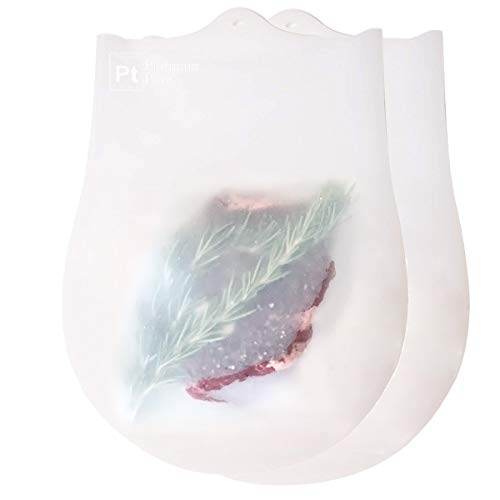
NOT ALL SILICONE IS CREATED EQUAL: 100% Platinum Pure LFGB silicone with No FILLERS – Surpasses minimums, the silicone in our sous vide bags is certified to the much more stringent European LFGB standards. Our platinum pure curing process ensures there are no by-products, BPA, BPS, PVC, or Phthalates. Our silicone bags are completely odorless and will not affect food odor or flavor.

【100% SILICONE - MICROPLASTIC FREE】Tired of disposable ziplock plastic bags? Switch to silicone! Made from 100% food-grade silicone, Annaklin reusable ziplock bags are free of PVC, lead, chlorine, phthalates, BPA, and microplastics. Non-toxic and odorless, they keep your family’s food safe and healthy. The perfect alternative to single-use plastic bags—help reduce waste and protect our planet

Works with any Sous Vide Machine — Compatible with Anova, Joule, Instant Pot, and ChefSteps circulators. No vacuum sealer needed — just zip, seal, and cook perfect steak, chicken, or fish every time
Sealing Juicy and Liquid-Rich Foods Without Losing Flavor
Sealing juicy and liquid-rich foods demands specialized equipment and technique to preserve both flavor and structural integrity. You’ll achieve ideal results using a chamber vacuum sealer, which handles sealing liquids without spillage. If you’re using an external sealer, pre-freeze your marinades for 15–30 minutes to prevent spills. Activate the “Moist” setting to adjust suction appropriately, then monitor the pouch as it collapses. Should liquid climb toward the chamber, immediately press “Seal Only” to stop the process. Proper vacuum sealing provides additional leak protection. This methodology locks in natural juices while enhancing spice and herb penetration, ensuring your sous vide preparation retains maximum flavor. Vacuum sealing also prevents oxidation, preserving nutrient content and taste throughout storage. Implementing a comprehensive HACCP plan helps ensure the safety of your vacuum-sealed foods by identifying potential hazards and controlling risks effectively.

【𝐃𝐮𝐚𝐥 𝐕𝐚𝐜𝐮𝐮𝐦 𝐙𝐨𝐧𝐞𝐬 & 𝟔 𝐋 𝐂𝐡𝐚𝐦𝐛𝐞𝐫】Seal liquids, soups, and powders in the roomy upper chamber (approx. 6 L / 300 × 260 × 80 mm). The upper chamber is bag-friendly, working with smooth chamber bags and textured or embossed rolls—from small pouches to larger bags that fit inside—so it isn’t picky about bag types. For bags that can’t fit in the chamber, the independent lower work area handles out-of-chamber sealing with compatible rolls.
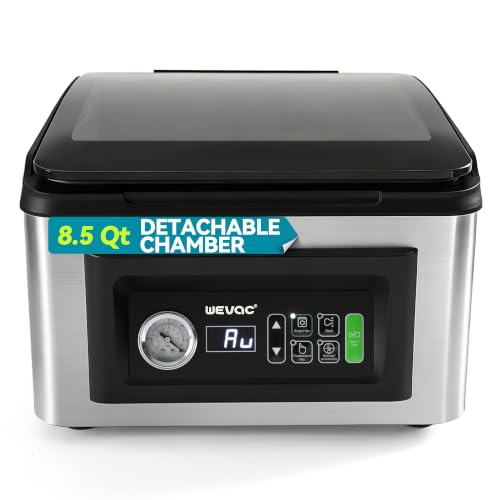
No Guesswork with Auto Vacuum Time: Manual timers often lead to under- or over-vacuuming. This chamber sealer automatically senses the food volume and sets the optimal vacuum cycle for you. One touch is all it takes to achieve a perfect, airtight seal—every time

Lock In Freshness Up To 8x Longer — The InstaSeal vacuum sealer pulls a powerful 60 kPa] airtight seal that stops freezer burn and slows spoilage, so meat, produce, and leftovers stay fresh for weeks instead of days — ideal for meal preppers, hunters, and families buying in bulk.
Essential Best Practices for Proper Bag Sealing
Proper bag preparation forms the foundation of successful sous vide sealing, and you’ll want to start by selecting heavy-duty, food-safe plastic bags rated for your cooking temperatures. Inspect each bag for punctures or weak spots before filling. Position food in a single layer, leaving 1–2 inches of space at the top to prevent overfilling—a common bag mistake that compromises sealing.
Essential sealing techniques require you to fold back the bag opening, keeping the sealing area clean and free from moisture, food particles, or debris. Follow your vacuum sealer’s manufacturer instructions precisely, selecting the appropriate mode for your food type. Press the lid firmly until it locks, initiating the vacuum and seal process. After vacuuming, inspect the entire seal for gaps, bubbles, or weak spots. Never force a faulty seal; reposition and retry instead. It’s important to keep in mind that different materials used in cooking, such as factors related to oven-safe temperature limits, can affect the overall cooking results in sous vide methods. Additionally, utilizing techniques perfected in Dutch oven cooking can further enhance your sous vide experience.
Choosing the Right Sealing Method for Your Needs
Once you’ve mastered the mechanics of sealing, you’ll find that your success depends heavily on matching the right method to your specific situation. Your choice impacts both sealing efficiency and food preservation outcomes.
Consider your food type first: delicate items and liquids demand chamber vacuum sealers, while dry foods suit external suction models. Additionally, vacuum sealing can prevent freezer burn and extend the shelf life of various items. Evaluate your cooking temperature requirements—ensure bags withstand your sous vide heat levels. Assess batch size and frequency; heat sealers excel at high-volume production, reaching eight meals per minute, while handheld vacuum sealers serve small batches more economically.
Factor in cost-effectiveness: vacuum bags cost more than heat seal films per unit, though pre-cut bags exceed roll prices. Environmental priorities matter too—weigh single-use plastic against reusable silicone options or compostable alternatives. Importantly, proper sealing methods can improve the quality and longevity of your food, enhancing your overall cooking experience. Balance these variables systematically to select your best method.
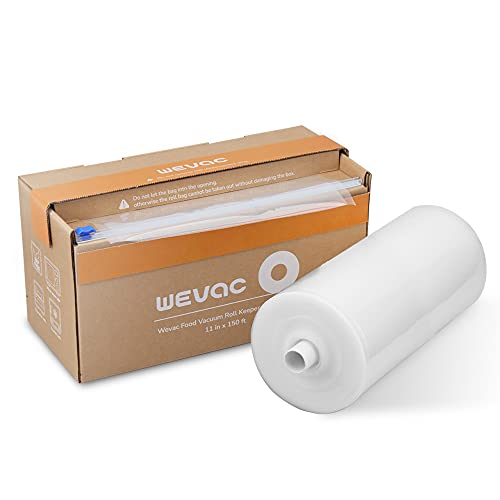
HEAVY DUTY AND PUNCTURE PREVENTION - 1 pack of 11 inch by 150 feet roll with embossed channels to increase suction, with a cutter box for cutting and storage, keep fresh without freezer burn or dehydration

HEAVY DUTY AND PUNCTURE PREVENTION - 11x16 pre-cut Gallon bags with embossed channels increase suction, keep fresh without freezer burn or dehydration

HEAVY DUTY AND PUNCTURE PREVENTION - 2 pack of 8 inch by 50 feet rolls with embossed channels to increase suction, keep fresh without freezer burn or dehydration