You’ll achieve the best results with a 5 to 8-quart Dutch oven, sized according to your chicken’s weight. For birds under 4 pounds, a 5 to 6-quart capacity works well. Chickens around 5 pounds need 7 to 8 quarts for proper heat circulation. Oval designs excel at flat-laying chickens with enhanced airflow, while round models offer versatility and affordability. Cast iron with enameled coating guarantees even heating and moisture retention. Your lid must fit tightly to trap steam effectively. Understanding the nuances of pot selection and cooking technique reveals why proper sizing matters tremendously.
Understanding Dutch Oven Capacity for Whole Chicken Roasting
You’ll want to select a Dutch oven between 6 and 8 quarts to roast most whole chickens effectively. A 7 to 8-quart capacity accommodates typical 5-pound birds comfortably, while smaller 5 to 6-quart Dutch oven styles work for 3 to 4-pound chickens. Larger ovens exceeding 8 quarts suit bigger birds but become unwieldy.
Size directly impacts your cooking techniques and results. The capacity must allow the lid to fit securely, trapping moisture during roasting. You’ll achieve even cooking when adequate space exists between the chicken and pot walls, enabling proper heat circulation. Tight packing forces you to extend cooking times and compromises skin browning. Selecting the correct capacity guarantees you trap sufficient steam while maintaining airflow for ideal moisture retention and crispy skin development throughout the roasting process. Moreover, a size that matches your needs complements the cooking performance by ensuring the Dutch oven’s lid is able to effectively retain heat.
Additionally, using a Dutch oven for roasting can enhance the flavor of your chicken, thanks to its ability to retain and distribute heat effectively throughout the cooking process.
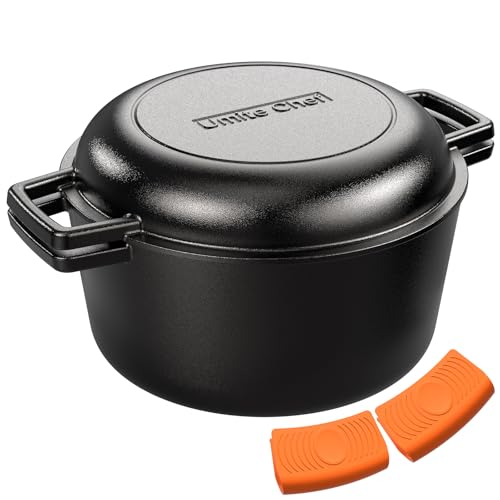
PFAS-FREE & NON-TOXIC COOKWARE: ATTENTION: If your manual mentions "enamel" or "low-medium heat only", it is incorrect. This is 100% pure cast iron cookware! Not Enamel-Coated: Safe for High-Heat Cooking! Every Umite Chef cast iron pot has been burned with 100% natural, food-grade vegetable oils—absolutely zero PFAS, PFOA, PTFE, synthetic coatings, or toxic chemicals. Our seasoning naturally builds with use, developing a superior non-stick surface over time while ensuring oven-to-table safety

Crock Pot Artisan Round Enameled Cast Iron Dutch Oven, 7-Quart, Sapphire Blue w/Lid

Even Heat Distribution Retention: This Dutch oven Made with heavy-duty enameled cast iron, ensures even heat distribution for perfect searing and slow cooking, locking in flavors. thickened walls lock in heat for slow braising, searing, and baking. Unlike thin pots that scorch food, this professional-grade Enameled cast iron pot maintains steady temperatures
Matching Chicken Weight to the Right Pot Size
Now that you understand how capacity affects heat circulation and moisture retention, it’s time to match your bird’s weight to the appropriate Dutch oven. For chicken varieties weighing 3-5 pounds, a 5-7 quart Dutch oven works well with round or oval shapes. However, if you’re roasting larger birds around 5 pounds, you’ll want 7-8 quarts to maintain the necessary 1-2 inches of clearance. Birds exceeding 6 pounds require 8 quarts or larger. Your cooking techniques depend on proper sizing; overcrowded pots lengthen cooking times and create uneven heat distribution. It’s essential to remember that a tight-fitting lid helps trap moisture for even cooking. Match capacity to weight, account for vegetables or aromatics underneath, and verify your lid closes tightly without touching the chicken for best results. Additionally, using a Dutch oven chicken recipe can help guide you on the appropriate cooking methods and seasoning to enhance your meal.
Why Oval Dutch Ovens Excel at Chicken Roasting
Because whole chickens naturally elongate lengthwise, oval Dutch ovens provide a distinctly superior cooking vessel compared to their round counterparts. You’ll benefit from the oval shape advantages that allow your bird to lie flat without awkward repositioning or crowding of legs and wings. In addition, Le Creuset Dutch Ovens are renowned for their exceptional heat retention, which enhances your cooking experience.
The elongated design maximizes air circulation benefits throughout your cookware, ensuring uniform heat distribution around all sides of the chicken. This even heating reduces dry spots and undercooked areas, while the heavy cast iron construction traps steam for ideal juiciness.
You’ll also gain increased cooking surface area for vegetables and aromatics surrounding your bird. The shape’s compatibility with oven roasting makes it ideal for stovetop browning followed by even oven cooking—delivering tender, flavorful results consistently. In fact, many outdoor cooks enjoy using Dutch oven desserts as a tasty way to round off their meals while camping.

【CAST IRON DUTCH OVEN】 Velaze enamel cast iron dutch oven pot with lid is solid and durable, can be used for multiple cooking methods such a cooking, baking, stewing etc. Large capacity dutch oven is great for beginners or pros and almost meet all the needs of family gatherings. Please always use oven gloves or a pot rack when handling the pot. The handle will be very hot!
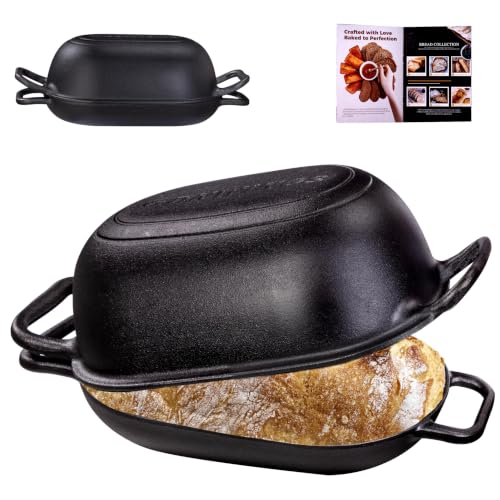
Elevate your sourdough bread baking with a 5QT 12 x 8 inch oval Dutch oven designed to recreate the conditions of a professional bakery. The oval shape promotes even heat circulation and excellent steam retention, helping you create rustic artisan loaves with a crisp, golden crust and beautifully developed crumb.

Cast Iron Bread Oven: Specifically designed for sourdough bread or sandwich bread. Its deep base accommodates dough easily. The oval shape and arched lid trap aromatic steam to circulate within the pan,ensures even heat distribution, locks in moisture and flavor, and creates a crispy crust with a soft interior
Round Dutch Ovens: A Viable Alternative Option
While oval Dutch ovens offer distinct advantages for whole chicken roasting, round Dutch ovens remain a practical and widely-available alternative that shouldn’t be dismissed. You’ll find round oven benefits particularly valuable for their even heat distribution, which promotes uniform cooking and consistent browning around your bird. A 6 to 8-quart capacity adequately accommodates chickens up to 6 pounds with vegetables, though careful positioning helps prevent overcrowding. Additionally, understanding emissivity measures can further enhance your cooking precision by ensuring your infrared thermometer readings are accurate.
Round Dutch ovens excel at versatile cooking beyond roasting—you can braise, stew, and bake with the same vessel. They’re generally more affordable than oval counterparts and stack easily for storage. Their widespread availability in enameled and unenameled varieties makes them accessible for most home cooks. For beginners and experienced cooks alike, round Dutch ovens deliver reliable performance without compromise. Additionally, their superior heat retention properties enhance cooking outcomes by keeping your food warm longer, preserving nutrients effectively.

Even Heat Distribution Retention: This Dutch oven Made with heavy-duty enameled cast iron, ensures even heat distribution for perfect searing and slow cooking, locking in flavors. thickened walls lock in heat for slow braising, searing, and baking. Unlike thin pots that scorch food, this professional-grade Enameled cast iron pot maintains steady temperatures

PRE-SEASONED CAST IRON: 7-quart heavy-duty dutch oven pot with lid and dual side handles for easy lifting and maneuvering

Quality Enameled Dutch Oven: The Lodge Essential Enamel Cast Iron Dutch Oven gives you all the benefits of cast iron cooking, great heat retention and durability, without fear of rust; it's also PFAS free
The Role of Lid Fit and Heat Circulation
A properly fitting lid fundamentally determines how successfully you’ll cook a whole chicken in your Dutch oven. When you place your lid securely, you trap steam circulation inside, creating a moist environment that tenderizes meat and prevents drying. The flat, heavy lid design supports even heat distribution across the chicken’s surface, while self-basting spikes redirect condensation downward, bathing your bird uniformly with moisture. Additionally, cooking techniques such as one-pot ground beef stroganoff demonstrate the importance of lid fit in achieving optimal results in Dutch oven meals.
Size compatibility matters critically here. An ill-fitting lid allows steam to escape, compromising internal temperature stability and creating uneven cooking zones. You’ll experience better heat retention with heavier materials like cast iron, which maintain steady temperatures essential for whole poultry roasting. Using your Dutch oven’s original manufacturer lid guarantees ideal seal integrity and cooking performance. Additionally, using products like Evapo-Rust is safe for cooking supplies, making it easier to maintain your cookware without harmful chemicals.

Even Heat Distribution Retention: This Umite Chef Dutch oven Made with heavy-duty enameled cast iron, ensures even heat distribution for perfect searing and slow cooking, locking in flavors. thickened walls lock in heat for slow braising, searing, and baking. Unlike thin pots that scorch food, this professional-grade Enameled cast iron potSuperior heat retention after preheating (allow 5-7 mins for even distribution). CRITICAL: Always cool naturally for 45+ mins before cleaning. Thermal shock (hot-to-cold contact) cracks enamel. USE TIP: Preheat 2-3 mins on medium-low only

𝐃𝐨𝐦𝐞 𝐃𝐞𝐬𝐢𝐠𝐧: Perfect for Crusty Sourdough The AHJ pre-seasoned Dutch oven is ideal for sourdough baking. When used with the lid in the oven, it locks in steam—ensuring condensation drips down the lid walls without soggying the bread—for an ultra-crisp crust and soft, fluffy interior. The 5-quart large capacity easily accommodates big sourdough loaves, perfect for sharing with the whole family.

BREAD BAKER'S DUTCH OVEN, 500°F OVEN-SAFE, SOURDOUGH-READY – one of the highest ratings in its class – delivering the sustained heat that sourdough, artisan bread, and pizza dough demand. Thick cast-iron walls trap and circulate heat like a brick oven, producing bakery-quality crusts at home. The tight-sealing lid features raised self-basting nodes that continuously recirculate steam: a perfect moisture chamber, every single bake.
Covered Versus Uncovered Cooking Methods
The success of your whole chicken depends largely on when and how you use your Dutch oven’s lid. Covered cooking traps steam, retaining moisture and ensuring even heat distribution throughout the bird’s interior. You’ll typically keep the lid on for 50–85 minutes at 375–425°F, depending on your chicken’s size.
During the final 30 minutes, you’ll remove the lid for exposed cooking. This exposes the skin to dry heat, allowing the Maillard reaction to occur and creating that desirable golden-brown crispness. The uncovered phase concentrates roasted flavors while moisture escapes from the surface. Notably, the Dutch oven beef stew method similarly benefits from stages of cooking to enhance flavor and texture.
This two-stage approach—covered then exposed—balances juiciness with textural contrast. You’ll achieve a thoroughly cooked interior reaching 165°F while developing flavorful, crispy skin that elevates your entire dish. A perfectly cooked chicken shares similarities with the classic pot roast method, maximizing flavor and moisture retention through careful cooking techniques.
Essential Material and Design Features
Selecting the right Dutch oven for roasting whole chicken hinges on three critical factors: capacity, material composition, and structural design. You’ll want cast iron for superior heat retention and even distribution, which prevents hotspots that cause uneven cooking. An enameled coating offers the same thermal benefits while eliminating the need for seasoning and providing a non-reactive surface that resists sticking from basting liquids. This cast iron cookware is renowned for its ability to enhance flavor while retaining moisture. Choose a model with a tight-fitting lid to trap moisture effectively, keeping your chicken juicy throughout cooking. Verify the oven-safe temperature rating reaches at least 450°F to allow proper browning. Opt for oval-shaped designs with sturdy handles and sufficient depth to accommodate vegetables beneath the bird, facilitating ideal flavor infusion and even heat circulation around your chicken. Using a Dutch oven for this task can also enhance the overall baking environment as it creates a steam-rich atmosphere, similar to its benefits in artisan bread baking.

【Airtight Lid Locks In Freshness & Flavor】Experience the magic of this Dutch oven with lid, precision-engineered to create a tight seal. It locks in moisture and essential nutrients, delivering richer flavor and incredibly tender, juicy results in every dish—from slow-braised meats to hearty soups. Achieve a perfect, crispy crust on your artisan loaves—it's the ultimate Dutch oven for bread baking. The interior self-basting dots continuously redistribute condensation, ensuring your food stays perfectly moist, never dry or mushy

【Airtight Lid Locks In Freshness & Flavor】Experience the magic of this Dutch oven with lid, precision-engineered to create a tight seal. It locks in moisture and essential nutrients, delivering richer flavor and incredibly tender, juicy results in every dish—from slow-braised meats to hearty soups. Achieve a perfect, crispy crust on your artisan loaves—it's the ultimate Dutch oven for bread baking. The interior self-basting dots continuously redistribute condensation, ensuring your food stays perfectly moist, never dry or mushy

Even Heat Distribution Retention: Crafted from heavy-duty enameled cast iron, the Wildone Dutch Oven ensures superior even heat distribution for flawless searing and slow cooking, locking in flavors. Thick cast-iron walls trap and circulate heat like a brick oven, producing bakery-quality crusts at home. Whether you're a beginner or a seasoned baker, consistent results are now within reach
Optimal Temperature Settings and Cooking Times
Once you’ve selected your Dutch oven, mastering temperature control becomes essential for achieving perfectly roasted chicken with crispy skin and moist meat. You’ll find that ideal cooking techniques rely on strategic temperature variations. Start at 425°F as your baseline, though some recipes begin higher—450°F to 500°F—for initial browning, then reduce to 350°F for even cooking. This two-stage approach prevents skin burning while ensuring thorough heat penetration. For a standard 4-pound chicken, plan 50 minutes covered at 425°F, then 30 minutes exposed for crisping. Larger birds require proportionally longer cooking times. Always use a meat thermometer to verify doneness at 165°F, adjusting times as needed. Juicy chicken benefits significantly from the proper cooking method, ensuring that the meat remains tender and flavorful throughout the process. Temperature variations directly impact your final result’s quality and consistency. Additionally, ensuring your butane torch is properly maintained can help achieve optimal cooking results, especially if you’re using it for finishing touches like crisping the skin.
Testing for Doneness and Resting Your Chicken
All chicken must reach an internal temperature of 165°F (74°C) to be safely consumed, making accurate temperature verification your most reliable doneness indicator. Insert an instant-read thermometer into the thickest part, avoiding bone, and slowly withdraw it to find the lowest reading. Remember to insert the probe at least up to the notch for accurate measurements.
Beyond thermometer use, you’ll recognize doneness through visual cues: white meat throughout, golden-brown skin, and clear juices when pierced. The flesh should feel firm with slight springiness, not rubbery or mushy.
After cooking, chicken resting is essential. Let your bird rest for 10–15 minutes under loose foil. During this period, internal temperature rises 5–10°F while juices redistribute throughout the meat, dramatically improving moisture and texture. This step guarantees even doneness and prevents dryness when you carve. For an amazing flavor boost during cooking, consider adding vegetables such as carrots, celery, and potatoes, as they absorb the drippings and enhance the overall dish.