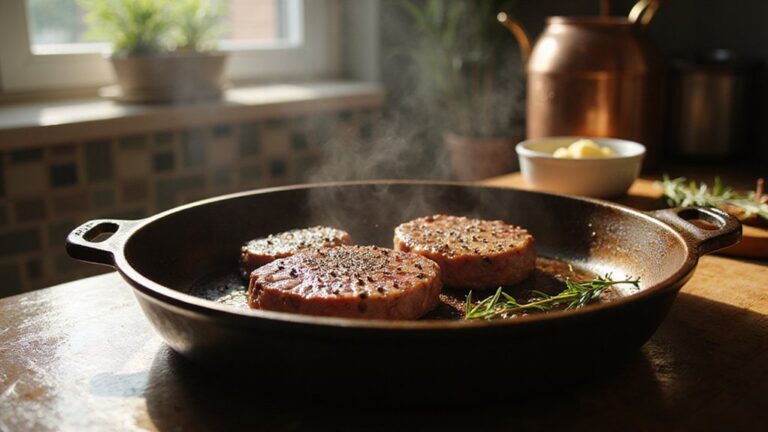
You’ll create exceptional cornbread by using a well-seasoned cast iron skillet preheated with melted butter at 400°F. Combine room-temperature buttermilk and eggs with whisked dry ingredients, then quickly pour your batter into the sizzling skillet. Bake for 20-25 minutes until golden brown with crispy, caramelized edges. The cast iron’s superior heat retention and distribution guarantee an impossibly tender, fluffy interior paired with that coveted crunchy crust. There’s plenty more technique to perfect this Southern classic.
Why Cast Iron Skillet Is Perfect for Cornbread
When you’re baking cornbread, you’ll want a pan that does more than just hold your batter—you’ll want one that actively improves your final product. Cast iron skillets deliver exactly that. Their exceptional heat retention guarantees even baking throughout, while uniform heat distribution eliminates hot spots that create inconsistent results. You’ll achieve crispy edges that caramelize beautifully, giving your cornbread that desirable golden crust and satisfying crunch. Additionally, using a cast iron skillet allows for better temperature measurements during baking, ensuring that your cornbread is cooked perfectly every time.
The nonstick surface develops naturally over time with proper seasoning, so your cornbread releases effortlessly without sticking or breaking apart. Beyond texture, cast iron’s unique properties enhance flavor. The skillet imparts subtle savory depth, intensifying browning reactions that create richer, more complex taste. Your cornbread simply tastes better baked in cast iron. Additionally, cooking with cast iron can increase iron content in food, providing a potential health benefit for those with specific dietary needs.
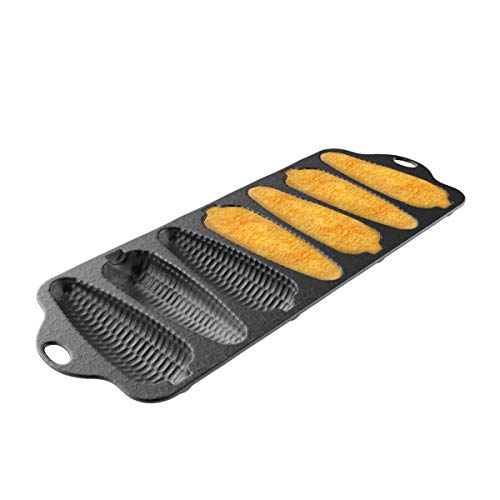
CAST IRON - Conveniently pre-seasoned and constructed from sturdy and durable cast iron this even-cooking cornbread pan will survive tough wear and tear lasting for many years to come!

8 IMPRESSION WEDGE PAN: Whether you like sweet or savory, this pan will help you make treats to share.

Homemade Favorites: The Lodge Seasoned Cast Iron Baker’s Skillet is designed for rolls, cobblers, breads, and everyday recipes fresh from the oven
Preparing Your Skillet and Ingredients
Before you pour a single drop of batter, you’ll want to set yourself up for success by properly preparing both your cast iron and your ingredients. Start your skillet preparation by selecting a well-seasoned 9-inch cast iron skillet and placing it in your oven during preheating. As your oven reaches 400°F, add 6 tablespoons to 1 stick of butter to the skillet, allowing it to melt and brown completely over the 10-15 minute preheating period.
Meanwhile, make certain your ingredient temperature aligns for peak results. Remove your buttermilk and eggs from the refrigerator and let them reach room temperature. This consistency matters—cold ingredients disrupt batter structure and compromise texture. Room temperature ingredients combine more effectively, promoting uniform batter consistency and proper chemical reactions that yield superior cornbread. Regular use and proper maintenance of the skillet helps build and preserve its seasoning, which is essential for optimal cooking performance. Properly seasoning your skillet ensures a durable non-stick surface that enhances the cooking process and the flavor of your cornbread.
Mixing and Batter Preparation
Now that your skillet’s melting butter and your ingredients are warming up, it’s time to build your batter—and this step’s where precision really pays off.
Start with dry ingredient techniques: whisk together your flour, cornmeal, baking powder, baking soda, sugar, and salt in a large bowl. Whisking prevents clumping and creates that light texture you’re after. Keep your leavening agents separate until you’re ready to mix—this preserves their rising power.
For wet ingredient integration, combine buttermilk, milk, and room-temperature eggs until smooth. Stir in your warm browned butter gently, breaking up any solidified bits without overmixing. Remember, cast iron skillets can perform best when preheated properly, enhancing your cornbread’s baking.
Now add your wet mixture to the dry ingredients, stirring just until combined. Lumps are actually preferred here—they prevent toughness. Work quickly; immediately pour into your hot skillet to maximize that essential leavening reaction. Additionally, be sure to store any leftover cornbread using vacuum sealing techniques to maintain freshness and flavor.
Baking Your Cornbread to Golden Perfection
Your skillet’s been waiting in the oven, and that’s exactly what you want—a preheated cast iron pan sitting at 400°F for the full 10-15 minutes creates the magic that separates mediocre cornbread from the crispy-edged masterpiece you’re after. Pour your batter into that sizzling skillet, and you’ll hear it immediately—that glorious sizzle signals ideal crust formation is underway. Bake for 20-25 minutes until golden brown, then insert a toothpick in the center; it should emerge clean. The cast iron’s superior heat retention guarantees even cooking throughout, delivering that prized contrast: a crunchy, toasted exterior with a tender, fluffy cornbread texture inside. Your finished masterpiece will have that perfect nutty flavor developed exclusively from high-heat exposure. Additionally, by using cast iron, you benefit from natural non-stick surface that enhances both cooking and health. Remember to avoid thermal shock by placing a cold pot directly into a preheated oven, ensuring both heat up gradually together for best results.

Durable Cast Iron Construction: Made from cast iron for long-lasting use and even heat distribution.

Quality Cast Iron Frying Pan: The Lodge Seasoned Cast Iron Skillet is loved for its great heat retention, incredible durability, and ability to make almost any recipe you dream up

5.5-inch square skillet for grilled cheese or ham & cheese sandwiches
Serving and Storage Tips
The moment that golden cornbread emerges from your preheated cast iron skillet, the real payoff begins—but patience pays off here. Let it rest for 15 minutes before cutting; this allows the crumb to set properly and prevents crumbling.
For ideal serving suggestions, slice your cornbread into wedges or squares and serve it warm alongside chili, barbecue, or soup. Brush the top with melted butter or drizzle honey for extra richness.
Regarding storage methods, wrap leftovers tightly in plastic wrap or foil to prevent dryness. Refrigerate for up to five days, or freeze for longer storage. Reheat wrapped cornbread in a 325°F oven for 10-15 minutes to restore its tender texture and moisture. Regular maintenance keeps your cornbread fresh and delicious.