You’ll achieve juicy cast iron pork chops by selecting bone-in cuts between ¾ and 1 inch thick, then searing them in high smoke-point oil at medium-high heat without moving them. Once they’ve developed a golden crust, introduce butter, garlic, and fresh herbs for basting. Cook to an internal temperature of 145°F, then rest for three to ten minutes to redistribute juices. The combination of proper searing, temperature control, and butter basting creates restaurant-quality results that’ll transform your skillet technique entirely.
Selecting and Preparing the Pork Chops
To achieve juicy, evenly cooked pork chops in cast iron, you’ll want to start by selecting cuts between ¾ and 1 inch thick—this thickness allows the interior to cook through without drying while the exterior develops a proper sear. Opt for bone-in rib or center-cut loin chops, which offer superior flavor protection and resist overcooking better than boneless varieties.
Examine your pork chop selection carefully: seek bright pink flesh with modest marbling and white fat, avoiding dull or brownish discoloration indicating age. Check packaging for minimal liquid pooling, which suggests lost juices. In addition, choose cuts that have a little fat content as this will help to keep the meat moist during cooking.
Before cooking, temper chops to near room temperature for even heat distribution. Pat them dry thoroughly to promote ideal browning. Consider light brining or simple marinade options—salt and pepper work excellently—to enhance juiciness and flavor penetration without overpowering the meat’s natural character. Utilizing a cast iron skillet can help achieve a superior sear due to its ability to retain and evenly distribute heat.

One bone-in pork loin center-cut chops weighing 0.45 and 1 pound

Meets standards for animal welfare, feed, and more, so you can know about what you're buying (and eating)
Meets standards for animal welfare, feed, and more, so you can know about what you're buying (and eating)
Choosing the Right Oil and Skillet
Since cast iron demands high-heat searing to develop that coveted golden crust on your pork chops, you’ll need an oil with a smoke point well above your cooking temperature. Avocado oil (350–520°F) and grapeseed oil (421°F) excel for oil selection due to their superior heat tolerance and oxidative stability. Grapeseed oil’s neutral flavor won’t interfere with your pork’s taste profile, while avocado oil’s antioxidants protect against oil breakdown during cooking. Additionally, regular oven seasoning can help enhance your oil’s performance during high-heat cooking.
Your cast iron skillet’s thermal properties—even heat distribution and retention—require an oil capable of sustaining high temperatures without smoking excessively. Apply a thin layer before cooking; this prevents sticking while promoting seasoning development through polymerization. It’s also crucial to note that proper seasoning is key to ensuring your cast iron skillet heats evenly and performs optimally. Avoid low smoke-point oils like flaxseed, which burn easily and impart off-flavors that compromise your dish’s quality.

Graza Frizzle Oil Made from 100% Olives: A neutral-flavored, high heat cooking oil made from 100% peak harvest olives. With a smoke point of up to 450 degrees, Frizzle is your high-heat kitchen hero. 1 bottle/750ml.

Light Buttery Flavor That Elevates Every Meal: Algae Cooking Club Chef-Grade Algae Oil enhances every dish with subtle richness. Its neutral profile makes it ideal for searing, baking, and dressings, transforming everyday meals into gourmet experiences.

Light Buttery Flavor That Elevates Every Meal: Algae Cooking Club Chef-Grade Algae Oil enhances every dish with subtle richness. Its neutral profile makes it ideal for searing, baking, and dressings, transforming everyday meals into gourmet experiences.
Preheating Your Cast Iron for Success
Three critical steps—gradual warming, temperature progression, and verification—separate mediocre pork chops from restaurant-quality results when you’re working with cast iron.
Start on medium heat for several minutes, allowing the skillet to warm uniformly across its surface. This gradual approach prevents hot spots that cause uneven cooking and burned areas. Cast iron’s exceptional heat retention means you don’t need high temperatures initially. Additionally, ensure your skillet is well-seasoned to enhance its non-stick capabilities, facilitating the cooking process.
After this foundation phase, increase to medium-high and wait approximately ten minutes. This extended preheating builds thermal mass within the skillet, ensuring sustained cooking heat when cold pork chops contact the surface.
Verify readiness using the water-droplet test: droplets should dance and bead across the surface, indicating the Leidenfrost effect. This simple method confirms proper temperature without guesswork, guaranteeing consistent browning and even internal temperature development throughout your meat, as proper preheating techniques are essential for successful cast iron cooking.

5.5-inch square skillet for grilled cheese or ham & cheese sandwiches

Durable Cast Iron Construction: Made from cast iron for long-lasting use and even heat distribution.

Quality Cast Iron Frying Pan: The Lodge Seasoned Cast Iron Skillet is loved for its great heat retention, incredible durability, and ability to make almost any recipe you dream up
Mastering the Searing Technique
Your preheated cast iron skillet’s thermal foundation means nothing without proper execution at the stovetop—and that execution begins with selecting the right fat. Use high smoke point oils like vegetable or canola for initial searing, then add butter for enhanced flavor and basting.
Position your pork chops in a single layer, maintaining medium-high to high heat throughout. Resist the urge to move them frequently; allow each side to develop an undisturbed golden crust before flipping. This searing technique guarantees proper crust formation and ideal browning. Flip only when the first side releases easily, using a metal spatula to minimize tearing.
After achieving that coveted golden exterior, introduce butter and herbs for basting. This final step distributes flavor while keeping your chops moist. Baking methods can also benefit from understanding the importance of steam, which can enhance the final texture of your meats.

YOUR NEW GO-TO SEASONING SPRAY: The Lodge Seasoning Spray is the perfect seasoning spray to maintain your cast iron cookware. It is made of 100% canola oil - no additives or propellants, to protect your cookware and enhance its finish.

Compact Wok Design: The Lodge Cast Iron Mini Wok combines durable cast iron with a compact design for stir fry favorites, sides, and everyday cooking versatility
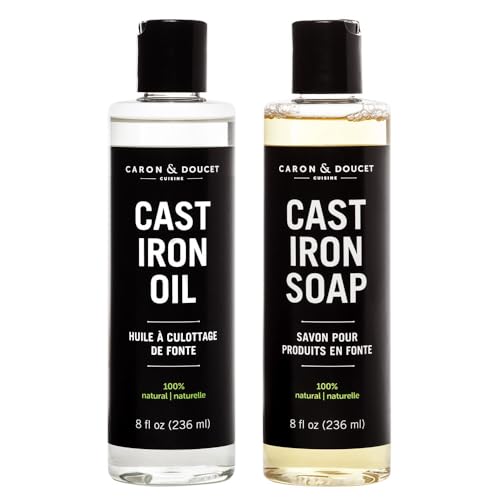
CLEANS CAST IRON | Includes our Cast Iron Soap unlike detergent based soaps, this soap is formulated with 100% natural plant-based oils & free of sulfates, phosphates, parabens & petrochemicals! Gentil on cast iron seasoning & on your hands!
Timing Your Cook to Perfection
Once you’ve achieved that golden crust through proper searing, the real precision work begins—and it’s here that thickness becomes your most critical variable. Your timing basics depend entirely on chop dimensions: quarter-inch boneless chops need just 1-2 minutes per side, while 1-inch bone-in cuts demand 4-6 minutes each.
Cast iron skillets’ ability to provide even heat distribution ensures that your pork chops will cook evenly and develop a rich crust.
Reduce heat to medium after searing to prevent burning while ensuring even heat penetration. During the finishing phase, implement strategic flipping frequency—rotate every minute to maintain consistent temperature gradients throughout the meat. This approach prevents dry exterior while the interior reaches proper doneness.
Remove chops at 140-143°F internal temperature, allowing residual heat during a 5-minute rest to reach your target 145°F. Resting redistributes juices, preserving tenderness and flavor that you’ve carefully developed through precise timing and technique. To further enhance your cooking, consider the impact of vacuum-sealed ham on maintaining consistent flavor and texture in your dish.
Monitoring Internal Temperature
While strategic flipping keeps your chops’ exteriors evenly browned, what happens inside determines whether you’ve nailed both safety and succulence. Insert your internal thermometer into the thickest section of the chop, avoiding bone contact for accurate readings. When using a meat thermometer, make sure to insert the probe into the meat sufficiently to ensure accurate results.
Follow USDA temperature guidelines: cook pork chops to 145°F (63°C) with a three-minute rest period. This achieves medium-rare doneness with peak juiciness. Digital instant-read thermometers provide fastest verification, essential for cast iron cooking’s residual heat. Oven-safe probe thermometers are designed to remain in the meat during cooking, providing continuous temperature monitoring for optimal results.
Account for carryover cooking by pulling your chops at 140°F—they’ll climb those final degrees during resting. Tent them loosely with foil to maintain temperature stabilization while juices redistribute throughout the meat, guaranteeing tender, succulent results every time.
Butter Basting for Enhanced Flavor
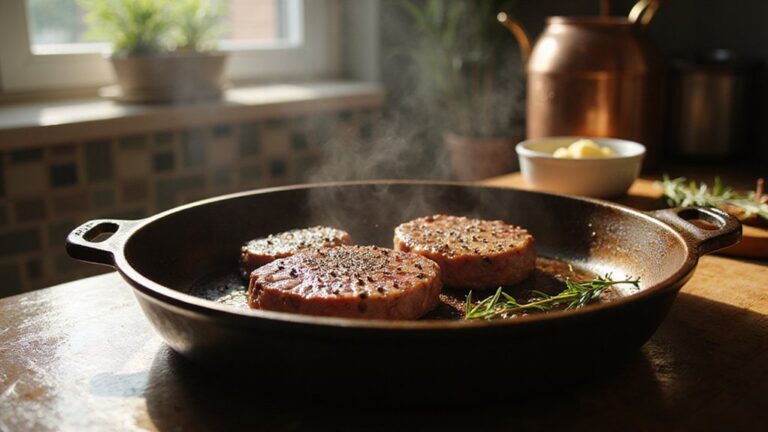
After you’ve achieved a golden crust on both sides, butter basting transforms your cast iron skillet into an aromatic flavor delivery system. You’ll reduce heat to medium and add unsalted butter infused with fresh rosemary, thyme, and smashed garlic cloves to the tilted skillet. This herb infusion creates a compound butter that continuously bathes your pork chops, enhancing moisture retention and developing complex flavors. It’s essential to ensure that the skillet is very hot before adding oil to achieve that perfect sear, as preheating the cast iron skillet ensures even heat distribution for optimal cooking results.
The basting process typically requires 2 to 4 minutes, during which you’ll spoon the fragrant liquid over the meat while monitoring temperature carefully. This flavor layering technique allows the fond—those browned bits clinging to the skillet—to enrich your basting liquid substantially. Flip your chops occasionally to guarantee even coating and distribution. The resulting pan sauce becomes an elegant accompaniment to your perfectly cooked pork chops.

Brought to you by Whole Foods Market

365 by Whole Foods Market products give you that dance-down-the-aisles feeling, virtual aisles too! Our huge range of choices with premium ingredients at prices you can get down with makes grocery shopping so much more than tossing the basics in your cart.

Unsalted for Precise Flavor Control: Gives bakers exact control over salt in cookies, cakes and pie crust
Resting and Serving Your Pork Chops
As your pork chops finish their butter-basting phase, removing them from heat signals the critical resting stage—one that’ll determine whether your meat stays juicy or turns disappointing dry. Tent your chops loosely with foil on a warm plate for 3–10 minutes, allowing surface juices to redistribute throughout the meat. This resting techniques approach preserves moisture while residual heat completes cooking gently. Ensuring a proper cooking technique during this phase further enhances the juiciness by allowing the meat fibers to relax. Interestingly, much like cast iron’s thermal mass benefits sourdough bread baking, the resting phase provides a similar advantage for your pork chops.
For serving presentation, verify your internal temperature reaches 145°F using a meat thermometer before plating. Slice against the grain to maximize tenderness, or serve whole for rustic appeal. Either way, add pan sauce immediately after resting to enhance flavor. Your golden-seared exterior combined with a juicy, tender interior delivers the ultimate cast iron pork chop experience.