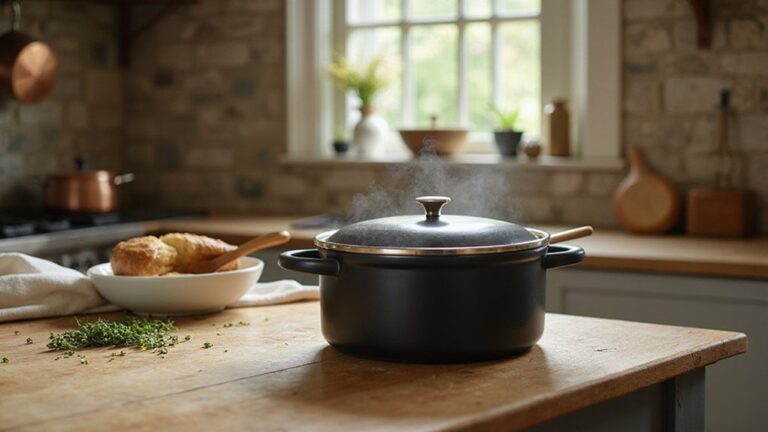
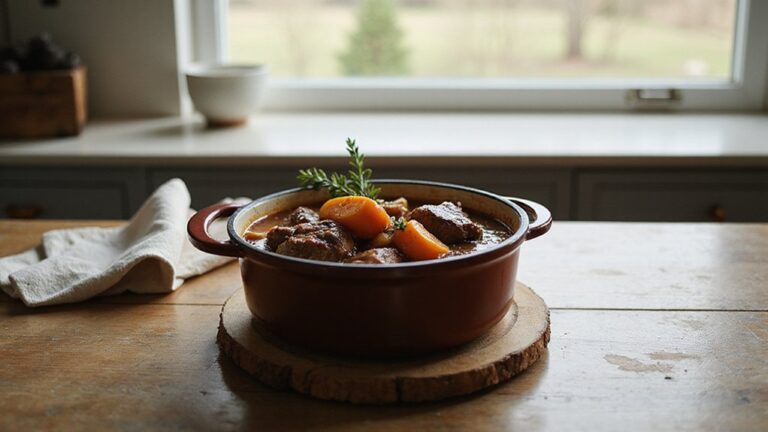
You’ll master this 2-quart Dutch oven with lemon orzo chicken, creamy tomato bisque, and hearty beef stews—recipes that exploit its superior heat retention and even temperature distribution. Sear proteins skin-side down to trigger the Maillard reaction, then layer aromatics with seasonal root vegetables and spice combinations like cumin and turmeric. Toast Arborio rice for risotto or score artisan breads at 450°F for best crust development. Finish dishes with fresh herbs and acidity to brighten flavors. You’ll uncover precision techniques that transform this vessel into your most versatile kitchen tool.
Versatile Soup Recipes for 2 Quart Dutch Oven
A 2-quart Dutch oven’s compact capacity doesn’t limit your soup repertoire—it’s actually ideal for crafting perfectly portioned, flavorful broths that you’d typically scale down from larger recipes. You’ll find quick soup preparations work exceptionally well in this vessel, whether you’re simmering lemon orzo chicken or creamy tomato bisque.
Seasonal vegetable soups shine here. Potato leek, butternut squash, and white bean kale soups fit naturally within your pot’s dimensions. You’ll sauté aromatics—onion, garlic, celery—establishing your flavor foundation before introducing 1–2 cups broth. Cast iron’s unique heat retention properties ensure that your soup cooks evenly and develops rich flavors over the gentle heat.
The key to success lies in ingredient proportion. Chop vegetables smaller for even cooking. Use 1/2–1 cup meat and 1/4–1/2 cup dried legumes. Maintain gentle simmering to prevent boiling over, stirring frequently to avoid sticking. This approach guarantees you’re maximizing flavor while respecting your Dutch oven’s efficient capacity. By incorporating vacuum sealing techniques, you can efficiently prepare and store soup portions in advance, ensuring long-lasting freshness and minimized waste.

A BOX INCLUDES: One 2.65-quart enameled cast iron Dutch oven with lid
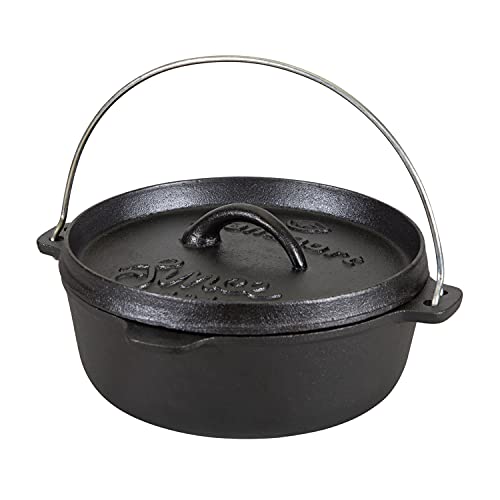
DURABLE CAST IRON CONSTRUCTION - Our cast iron dutch oven with lid is made to last. Crafted with high-quality cast iron, this dutch oven can withstand high heat and is perfect for cooking a variety of dishes.

【Airtight Lid Locks In Freshness & Flavor】Experience the magic of this Dutch oven with lid, precision-engineered to create a tight seal. It locks in moisture and essential nutrients, delivering richer flavor and incredibly tender, juicy results in every dish—from slow-braised meats to hearty soups. Achieve a perfect, crispy crust on your artisan loaves—it's the ultimate Dutch oven for bread baking. The interior self-basting dots continuously redistribute condensation, ensuring your food stays perfectly moist, never dry or mushy
Hearty Stews and Curries for Intimate Meals
Your 2-quart Dutch oven transforms into an ideal braising vessel for deeply flavored stews and curries that’ll feed two to four people without waste or scaling complications. You’ll sear 1.5 to 2 pounds of beef chuck in oil, then deglaze with wine to concentrate umami. Layer aromatics—onion, garlic, thyme, rosemary—before adding 3 to 4 cups broth. Incorporate seasonal ingredients like root vegetables partway through the 2-hour braise at 350°F to prevent overcooking. For added richness, consider deglazing with beef stock to lift flavorful bits from the bottom of the pot, creating a savory cooking liquid that enhances the dish’s overall taste.
For curries, you’ll adjust spice combinations based on heat preference: cumin, coriander, turmeric, and chili powder create complexity without overpowering. Finish both applications with fresh herbs and acid—balsamic vinegar or Dijon mustard—to brighten the long-cooked flavors and achieve proper seasoning balance.
Bread and Risotto Specialties
Because your 2-quart Dutch oven excels at trapping steam and distributing heat evenly, it’s equally suited to producing crusty artisan breads and creamy risottos—two seemingly disparate techniques that actually share the vessel’s core strengths. For best bread techniques, score dough 1/2-inch deep, then bake covered at 450°F for 30 minutes before revealing to develop crust. Adjust baking timings based on dough hydration levels (60-75% ratio) and flour selection—bread flour yields superior structure. Incorporate flavor enhancements like honey or apple cider vinegar for complexity. The Dutch oven’s ability to trap steam is essential for achieving an authentic crust. For risotto variations, toast Arborio rice briefly, gradually add warm broth while stirring frequently, and finish with butter and Parmesan for richness. Both applications demand precise temperature control and ingredient substitutions tailored to your texture control preferences. To ensure a perfect crust on your artisan bread, manage charcoal heat placement during baking for optimal results.

Perfect Size for 1–2 People: This 1.8 quart enameled cast iron dutch oven is ideal for singles, couples, apartments, and RV kitchens. Perfect for rice, beans, sauces, side dishes, and small everyday meals.
Perfect for 2–4 People: This 2.8 quart enameled cast iron dutch oven is ideal for small families and everyday meals. Great for soups, stews, chili, pasta, rice, and artisan bread baking.

BAKE TO A CRISPY CRUST FOR YOU: TeamFar loaf pan with lid measures 9" x 5.5", Featuring solid cast iron construction with self-basting lid, Cast iron bread pan ensures excellent heat retention and even heat distribution, Help you to bake homemade sourdough bread with crispy crust and soft interior, achieve optimal results every time
Budget-Friendly One-Pot Meals for Two
While bread and risotto showcase your Dutch oven’s heat-distribution prowess, the vessel’s true versatility shines when you’re crafting satisfying meals on a modest budget for two. You’ll maximize this compact cooker by layering affordable proteins—lentils, beans, and ground poultry—with pantry staples like canned tomatoes and frozen vegetables. Lentil tacos, white chicken chili, and minestrone soup deliver complete nutrition under $1.50 per serving. Your meal prepping strategy involves halving standard recipes to accommodate the 2-quart capacity while minimizing waste. Stock your pantry with dry beans, pasta, and economical aromatics like onions and carrots. These foundational ingredients transform into diverse one-pot compositions—stews, chilis, and rice dishes—through strategic seasoning and minimal active cooking, enabling efficient weeknight preparation. The Dutch oven’s ability to retain and distribute heat also allows for even cooking, which is key for achieving flavorful dishes. Proper seasoning techniques for cast iron can further enhance the flavor and ensure durability in your cooking vessel.

Works On Most Slotted Lids

【COOK WITH LOVE & STYLE】The Overmont 2 Quart Heart-Shaped Enameled Cast Iron Dutch Oven is perfect for 𝟏 𝐨𝐫 𝟐 𝐩𝐞𝐨𝐩𝐥𝐞, ideal for cozy dinners or 𝐬𝐦𝐚𝐥𝐥-𝐛𝐚𝐭𝐜𝐡 meals. Its adorable heart-shaped body in hot red enamel and sleek silver knob make it a beautiful kitchen accessory. Bring warmth, elegance, and love into your kitchen with this delightful pot.

YOUR NEW GO-TO LID LIFTER: The Lodge Camp Dutch Oven Lid Lifter keeps outdoor cooking safe and fun. It allows you to easily lift hot lids off your dutch oven as well as transport your dutch oven from an open flame to your table.
Cooking Tips and Techniques for 2 Quart Dutch Oven
Mastering heat management is fundamental to revealing what a 2-quart Dutch oven can deliver—precision heat control through briquette placement directly determines whether you’ll achieve evenly cooked braised meats, properly risen cobblers, or scorched bottoms. You’ll maintain 325°F using approximately 16 briquettes total, adjusting two-briquette increments for 25°F shifts. Baking demands 2/3 top, 1/3 bottom heat; simmering requires balanced 1/2–1/2 distribution. Rotate your lid quarterly every 15 minutes for uniform cooking. Your seasoning techniques establish non-stick properties—apply thin shortening layers, bake upside down at 450–500°F hourly. A well-seasoned cast iron surface prevents sticky residue that can ruin your culinary creations. Post-cooking maintenance preserves seasoning; rinse with hot water, dry thoroughly, and lightly oil before storing with ventilation. For cooking times exceeding 45 minutes, refresh briquettes midway to sustain steady temperature and guarantee food safety. Additionally, employing one-pot meal options can simplify preparations while ensuring hearty meals.
Popular Ingredients and Flavor Profiles
A 2-quart Dutch oven’s success hinges on understanding the ingredient hierarchy that builds foundational flavor before you even apply heat. You’ll establish your aromatic base with carrots, onions, and celery, then layer proteins—whether chicken, ground beef, or plant-based beans—for substance and richness. To achieve the perfect texture and moisture, consider using Dutch oven techniques that emphasize searing and simmering.
Your ingredient versatility expands through strategic seasoning: rosemary, thyme, and garlic provide herbal depth, while chili powder and cumin deliver warmth. You’ll achieve flavor balance by incorporating acid through white wine vinegar and umami via fire-roasted tomatoes or vegetable broth.
Root vegetables like potatoes and butternut squash contribute heartiness and natural sweetness. To maintain the integrity of the pot, it’s important to understand proper maintenance for cast iron cookware in order to ensure longevity. Finish with texture contrasts using leafy greens or cream cheese for body. This calibrated approach guarantees your Dutch oven dishes develop complexity and satisfaction.
Heat Retention and Even Cooking Benefits
Because your 2-quart Dutch oven’s thick cast iron walls and heavy lid create superior thermal mass, you’ll achieve consistent heat distribution that eliminates hot spots and guarantees even cooking across the vessel’s entire surface. This heat retention capability maintains stable temperatures between 185°F and 195°F, optimizing moisture retention and tenderness in braises without requiring constant temperature adjustments. You’ll benefit from prolonged simmering for stocks and stews, where the pot’s thermal properties prevent scorching while promoting gradual flavor development. The excellent heat retention provided by the Dutch oven is key to maximizing the flavors of your dishes, as this heat retention capability is essential for maintaining the seasoning of cast iron cookware. The even cooking surface supports high-heat searing followed seamlessly by low-temperature braising within the same vessel. Rotating the lid periodically during baking further prevents uneven heat zones, allowing you to achieve crusty breads and complex, melded flavors with minimal supervision.
Layering Flavors for Maximum Depth and Taste
While your 2-quart Dutch oven‘s superior heat retention guarantees even cooking, you’ll release deeper, more complex flavors by strategically layering ingredients throughout the cooking process. Begin with fat integration—sear proteins skin-side down to develop the Maillard Reaction‘s savory depth, much like achieving a golden-brown sear on chicken in a skillet. Next, employ aromatic layering by sweating onions and garlic before adding remaining components. This ingredient sequencing establishes foundational taste profiles where flavors complement rather than compete.
Time herb additions strategically across cooking stages to prevent dissipation while ensuring sufficient infusion. Manipulate temperature control by alternating high-heat browning with reduced 250-275°F simmering to maximize flavor compound concentration and texture contrast, particularly useful for proper temperature control. Root vegetables added mid-cook sustain longer cooking without overcooking, while delicate greens protect robust flavors from scorching. This disciplined approach to cooking stages transforms simple ingredients into harmoniously layered dishes with exceptional depth.