You’ll successfully freeze green beans without blanching by thoroughly drying them and vacuum sealing immediately to remove oxygen and prevent freezer burn. While you’ll sacrifice long-term storage—trading two to three years for approximately one year at 0°F—you’ll retain superior texture and nutrients. Success requires flawless sealing, consistent freezer temperatures, and immediate processing. Understanding the specific techniques that maximize your results reveals critical details worth exploring.
Preparation and Packing Steps
Because moisture promotes ice crystal formation and freezer burn, you’ll want to start by washing your green beans thoroughly under cool water to remove dirt and impurities, then draining them completely in a strainer or colander. Dry your beans entirely using a lint-free towel or air-dry them on a towel-lined baking sheet for 30 to 60 minutes.
Next, trim both ends to eliminate stems and blemishes, then cut beans into 1 to 1.5-inch pieces for uniform freezing and convenient cooking. Proper preparing beans guarantees ideal texture retention and prevents tougher stem parts from compromising quality. Additionally, ensuring the beans are thoroughly dry before packing can help prevent flash rust and promote a better freezing process.
For packing techniques, use quart-sized freezer-grade vacuum seal bags. Distribute beans densely without crushing, then remove excess air through vacuum sealing or manual methods. Press bags flat to facilitate quick, uniform freezing and efficient storage organization.
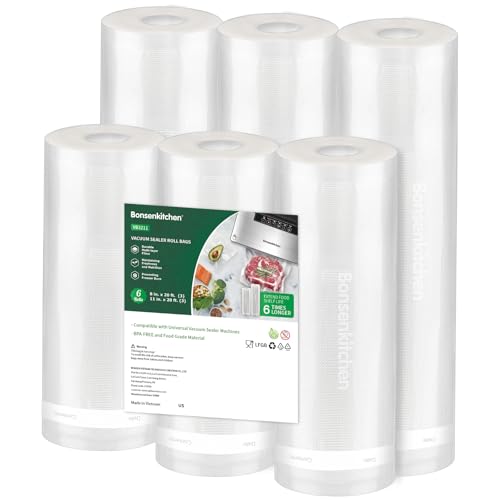
BPA FREE: Bonsenkitchen vacuum food sealer roll bags can be microwaved, frozen, re-used, washed, boiled and dishwasher safe. Allows you to precisely control your cooking temperature to achieve perfect results. You can cook sous vide in Bonsenkitchen bags by placing them in water at any temperature up to 230°F/110°C

VACUUM SEALER BAGS ROLLS: 8"x20' 3rolls+11"x20' 3rolls, XinBaoLong Food Saver Bags Rolls, Commercial Grade, Heavy Duty, BPA Free for Vac Storage, Kitchen Gadgets, Kitchen Accessories
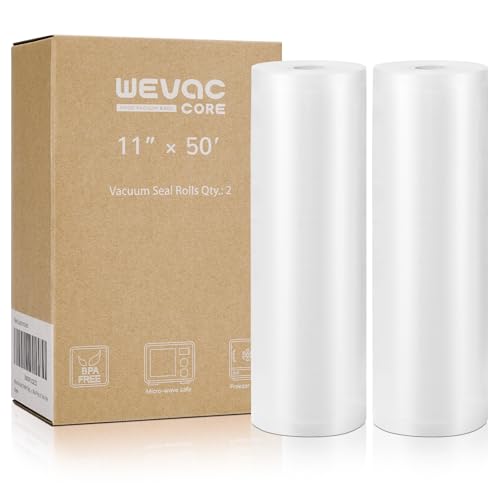
HEAVY DUTY AND PUNCTURE PREVENTION - 2 pack of 11 inch by 50 feet rolls with embossed channels to increase suction, keep fresh without freezer burn or dehydration
Benefits and Drawbacks of Skipping Blanching
While you’ll save considerable time and effort by forgoing the blanching step, skipping this traditional preparation method presents a trade-off between short-term quality gains and long-term storage performance. You’ll preserve superior texture and nutrient retention, particularly water-soluble vitamins that blanching typically leaches away. However, you’ll accept shorter freezer shelf life—approximately one year versus two to three years with blanching.
Without blanching, enzyme activity continues degrading flavor, color, and texture during storage. Your vacuum-sealed beans risk faster quality deterioration, color fading, and increased freezer burn if sealing isn’t perfectly airtight. You must dry beans thoroughly beforehand and maintain stable freezer temperatures to mitigate these drawbacks. Your success depends on immediate freezing and flawless vacuum sealing technique. Notably, the method of cooking with moisture can help retain flavors when preparing cooked items later.
Air Removal Techniques for Optimal Sealing
Successful vacuum sealing of unblanched green beans depends critically on removing oxygen from your storage package, as residual air accelerates enzyme activity and enables freezer burn. You’ll achieve ideal air extraction by patting beans dry beforehand, which prevents moisture from interfering with vacuum efficiency. If using a manual approach, squeeze out air manually, then employ a straw technique to remove remaining oxygen before sealing. For vacuum sealers, select “moist” or “pulse” modes specifically designed for moisture-containing vegetables. Pre-freezing beans slightly solidifies surface moisture, further enhancing suction capability. Pre-freezing liquids is a recommended technique that helps maintain the quality of food during vacuum sealing, as it prevents freezer burn and preserves texture. Arrange beans evenly to promote uniform air removal throughout the bag. After sealing, conduct a gentle squeeze test—airtight packages shouldn’t inflate or show bag puffiness, indicating successful air extraction and preservation potential.

【Clear Vacuum Bags】Our sealable vacuum bags are made of high quality materials can withstand high temperature, food save bags Boilsafe,Freezable and Reuseable.There will be an error of 1 inch between the product size and the actual working size.The real working size after sealing is 3 x 5 inches.Please choose carefully when purchasing.

【BPA FREE】Bonsenkitchen food sealer pint 6" x 10" bags can be microwaved, frozen, re-used, washed, boiled and dishwasher safe. Allows you to precisely control your cooking temperature to achieve perfect results. You can cook sous vide in Bonsenkitchen bags by placing them in water at any temperature up to 195°F/90°C

Effortless and Precise Cutting: The 11-inch x 150-feet vacuum sealer rolls include a cutter for maximum convenience. Simply mount the cutter onto the box, pull a portion of the roll through the top opening, and easily customize the size you need. This can ensure smooth, even and straight cuts, significantly faster and more accurate than using scissors, making the process simpler and saving your time.
Storage Duration and Quality Expectations
Once you’ve perfected your vacuum sealing technique and confirmed bag integrity through the squeeze test, you’ll want to understand how long your green beans will remain viable and what quality changes to expect. Your vacuum-sealed, non-blanched green beans will last approximately one year when stored at 0°F (-18°C) or below, considerably longer than the one-week unfrozen shelf life. Storage duration depends critically on maintaining consistent freezer temperatures and inspecting seals regularly for air leaks. Quality expectations include minor texture softening and potential flavor changes, though nutritional stability remains relatively intact. Vacuum sealing reduces oxidation and moisture loss, preserving color longer than refrigeration alone. Additionally, proper vacuum sealing creates an airtight environment that minimizes freezer burn, further extending your green beans’ viability. Blanching is recommended for other vegetables to preserve color and flavor, but your beans will remain safe and edible throughout the year if you’ve maintained proper conditions, and you might notice slight degradation over time.
Equipment and Materials You’ll Need
The foundation of successful vacuum sealing relies on selecting the right machinery and materials for your specific needs. You’ll need a vacuum sealer machine with adequate pump capacity—oil pumps offer quieter operation, while piston pumps provide greater strength. Your machine selection should consider sealing speed and moisture management capabilities.
For sealing materials, invest in specialized heat-seal bags designed for vacuum use; regular plastic bags will damage machines and fail to seal. Choose thick bags that withstand pressure without puncturing. You’ll also need labeling materials for inventory management, protective gloves for sharp tools, cleaning supplies for machine maintenance, and cutting tools for bean preparation. Additionally, gather storage containers, desiccants or oxygen absorbers for enhanced preservation, and the manufacturer’s user manual to guarantee proper operation. This process will help extend food freshness by significantly slowing microbial growth and oxidation, ensuring air-tight seal to keep food safe from spoilage.

Made in USA: Proudly manufactured in the United States

Sealing Method: The open filling bag can be vacuum sealed as well as heat sealing the open top

Customizable Length: Cut the roll to suit your specific storage needs