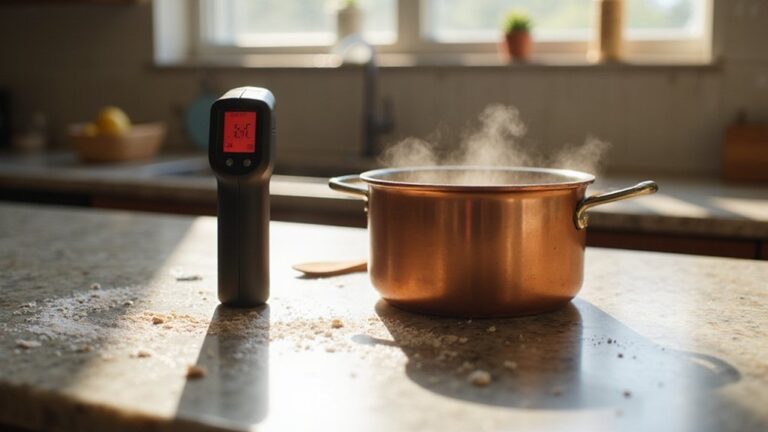
Ever wonder how infrared thermometers can give you a quick body temperature reading without touching your skin? They work by detecting the heat your body naturally emits as infrared radiation.
Understanding how they translate this energy into a number can help you get more accurate results each time. The details might seem tricky, but once you know the basics, it’s much easier to use them correctly.
What Is Black-Body Radiation and Why It Matters for Infrared Thermometers
A black body is an idealized object that absorbs all incident electromagnetic radiation, regardless of frequency or angle. It re-emits energy at the maximum intensity possible for its temperature, following the principles of black-body radiation. This concept matters because real objects approximate black bodies to varying degrees, making black-body radiation a fundamental reference point. Infrared thermometers rely on understanding this radiation to accurately measure temperature by detecting the emitted infrared energy. Since a perfect black body emits the highest possible radiation at a given temperature, knowing its behavior helps you calibrate and interpret thermal measurements across different materials. This is because a blackbody emits radiation proportional to T⁴, described by the Stefan-Boltzmann law, which serves as the theoretical foundation for how these instruments calculate temperature from detected radiation. For instance, adjusting a home thermostat by even 1-2 degrees can significantly impact energy consumption without sacrificing comfort, demonstrating how small temperature changes affect thermal radiation and energy use. Similar to cleaning a rusty skillet, proper maintenance of a surface’s emissivity properties ensures accurate infrared readings. Travelers can also apply this principle of precise measurement by using vacuum seal bags to compress clothing by up to 75%, maximizing limited suitcase space.

【CAL Function for Stable Reading】 Features exclusive one-button calibration technology to maintain measurement consistency for objects over time, effectively countering the reading drift often seen in standard thermometers. Our advanced sensor delivers dependable data for your projects.

【Highly Accurate & Adjusts to Any Surface】Designed with the latest thermopile sensor technology, the infrared laser thermometer gun is accurate to +/-1.5%; Improve this pizza oven thermometer gun measurements by adjusting the emissivity from 0.1–1.0 to match the surface material being measured

【LIGHTNING-FAST & ACCURATE】Get instant readings in just 0.5s with ±1% accuracy. The 12:1 distance-to-spot ratio lets this laser temperature gun safely measure hot surfaces from 14 inches away—no need to get close to heat or danger.
How an Infrared Thermometer Turns Heat Into a Voltage Reading
The tiny voltage produced by an infrared sensor is too weak to be directly interpreted, so it must be amplified. An amplifier increases this small electrical signal to a level that the microprocessor can process accurately. The microprocessor then applies a calibration equation based on Planck’s Law, which corrects for environmental factors such as ambient temperature and emissivity of the target surface. This step ensures the measurement accounts for variances in conditions that could skew the temperature reading. The device’s lens focuses the collected infrared photons onto the thermopile sensor, which converts their thermal energy into a measurable voltage. Subsequently, digital signal processing refines the data, converting it into a clear, numerical temperature value displayed on the device. A related analogy is how a Dutch oven’s stovetop performance relies on gradual heating to avoid thermal shock and damage. Without this precise chain of conversion—from voltage to calibrated temperature—the thermometer wouldn’t be able to reliably turn heat into an accurate, readable number. However, when used on dogs, these devices often underread actual body temperature significantly, making digital rectal thermometers the preferred choice for accuracy. Unlike infrared thermometers, digital probe thermometers measure internal temperature directly, ensuring greater accuracy for precise tasks.
Why the Forehead or Inner Eye-Canthus Is the Best Measurement Spot
You should point the infrared thermometer at the forehead or inner eye-canthus because these areas provide the most accurate readings. The temporal artery beneath the skin in this region reflects core body temperature accurately because it connects to the carotid artery. This spot offers excellent skin conductivity, allowing the infrared sensor to pick up temperature changes effectively without interference from hair or clothing. To get the best results, target the area between your eyebrow and hairline, ensuring the probe captures the artery fully. Keep the area clean and dry, as sweat, hats, or direct sunlight can distort the reading. While not as precise as rectal or oral measurements, taking readings here minimizes external interference and provides a quick, reliable estimate of your core temperature. For maximum accuracy, you should hold the thermometer perpendicular to the forehead at the proper distance. Vacuum sealing, which removes oxygen to slow bacterial growth, similarly protects food from external contaminants and moisture, making it ideal for preserving camping meals. Similar principles apply when using a Dutch oven to maintain consistent heat for slow-cooked meals.
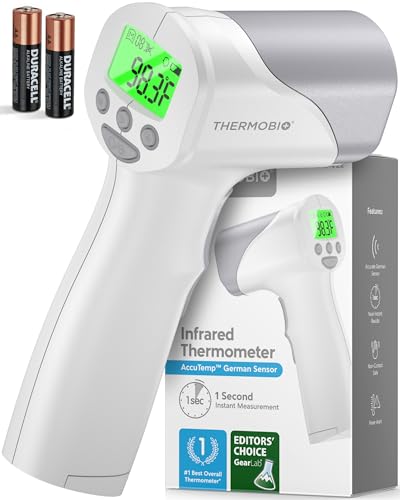
Advanced Technology: Superior performance delivered by the latest smart chip utilizing an optimized algorithm to ensure the 3 ultra sensitive sensors precisely measure your temperature to hygienically deliver accurate results, faster, safer, and more reliably.

✅FAST & ACCURATE - Discover the precision of Viproud digital thermometer. Engineered to deliver highly accurate temperature measurements, our professional-grade device offers a user-friendly experience. With a non-contact design, it ensures hygienic usage and provides fast results within seconds. Suitable for all ages, it is a must-have for households and medical professionals alike. Rely on our brand's commitment to accuracy and obtain the peace of mind you deserve.

Accurate, No-Touch Temperature Measurement: Designed with ultra-sensitive sensors and high-precision iHealth technology, this forehead thermometer captures over 100 data points per second, delivering reliable readings within 1.18 inches of the forehead. Ideal for quick, hygienic checks with non-contact.
How to Hold the Thermometer for an Accurate Reading
To ensure an accurate reading, hold the thermometer perpendicular to the forehead at a right angle—never tilted—and keep a steady hand until it beeps. Angled positions can skew the measurement, so maintaining a parallel alignment throughout the process is essential. Press the measurement button firmly and ask the person to stay still, making sure the test area is clear of hair, sweat, or hats. Environmental factors such as drafts, direct sunlight, or reflective surfaces near the sensor can also affect the result. For optimal accuracy, always measure in a controlled environment that matches the device’s specified ambient temperature range, free from air drafts and radiant heat sources. Check your device’s manual to confirm the proper distance from the forehead, which is typically between 1 and 3 centimeters. Proper calibration of the sensor is crucial for reliability, so ensure your thermometer is correctly calibrated before use. Low battery power can compromise accuracy, so replace batteries regularly. Always hold the thermometer steady and perpendicular for the most consistent and precise temperature readings. Consistent results depend on managing charcoal heat for even baking environments. Additionally, matte surfaces yield more reliable readings than shiny ones, which can cause optical errors. Infrared thermometers also offer adjustable emissivity settings to account for different surface types, improving measurement accuracy.

✨Swift Results in Just 1 Second: Experience the efficiency of ANMEATE thermometer for adults with its remarkable 1-second read capability. Obtain accurate temperature readings swiftly, providing you with timely and dependable results.
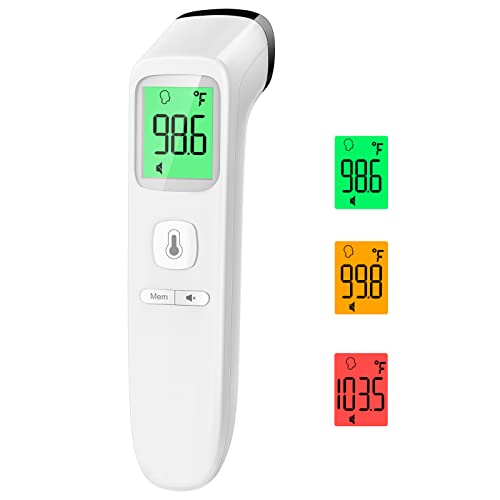
Reliable & Accurate: Goodbaby Forehead Thermometer has been clinically tested and found to be a fast and absolutely reliable gadget to use. It is ideal for forehead readings.

A century of powerful relief: At Vicks, we believe everyone deserves a touch of care, and our digital thermometer for adults, digital thermometer for kids, and baby thermometer for infants provide quick, accurate results when you need them most
How Far to Hold the Device: Understanding Distance-to-Spot Ratio
Your infrared thermometer’s distance-to-spot ratio (D:S ratio) is crucial for accurate readings. For example, a 12:1 ratio means you’ll measure a 1-inch target spot when holding the device 12 inches away. To ensure precision, your target should be at least twice the diameter of this spot; otherwise, background temperatures may skew your results. Keep the device perpendicular to the surface to get the tightest field of view. Get as close as safely possible—if proximity is limited, opt for a model with a higher D:S ratio. A larger distance increases the measurement spot size proportionally, so understanding your device’s ratio helps avoid averaged readings. Similarly, a butane torch’s flame control is crucial for precise soldering, as improper adjustment can overheat the workpiece. For best results, mimic the even cooking achieved by tucking chicken wings and tying legs when roasting a whole bird in a Dutch oven.
Don’t rely solely on the laser guide; always check your manual for the exact ratio since laser points can be misleading. Regularly calibrate your device and maintain battery health to keep readings consistent. Clean the lens and ensure the device is properly powered, as these factors influence accuracy and repeatability. Similarly, for precise temperature checks while cooking, such as for Dutch oven chicken recipes, following the distance guidelines ensures accurate surface readings.

Wide Temperature Range: Measures temperatures from -58℉ to 1112℉ (-50℃ to 600℃), making it perfect for a variety of applications, including cooking, pool maintenance, oven temperature checks, and candy making
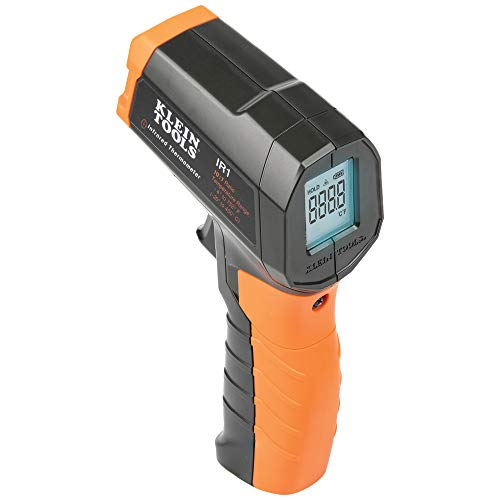
PRECISE TEMPERATURE MEASUREMENT: Optical resolution (distance-to-spot) of 10:1 ensures accurate temperature readings from a distance

TG54-2 Measures Temperatures ranging from -30°C to 850°C (-22°F to 1562°F) from safe distance using infrared technology with a 20:1 laser spot ratio
Why Must You Wait 15 Minutes and 15 Seconds Between Readings?
Taking a temperature reading requires two waiting periods: 15 seconds between each measurement and 15 minutes for the device and patient to stabilize. The 15-second pause prevents your sensor from overheating after repeated use. Rapid activations generate thermal noise and drift, which can compromise data accuracy. Humidity effects are also reduced during this interval, as the lens cools and moisture evaporates, maintaining measurement integrity. Manufacturers calibrate their devices assuming these cool-down periods; skipping them can lead to inaccurate results. This is similar to how FoodSaver bags are designed with five layers of multilayer plastic to withstand precise temperature control without degrading. Proper use of heavy-duty skillets like carbon steel or heavy anodized nonstick pans similarly relies on consistent heat management to avoid performance degradation. For infrared thermometers, ensuring the emissivity setting is close to 0.95–0.98 is also critical for accurate skin temperature readings.
The 15-minute wait serves two purposes. First, the thermometer needs time to warm up internally. Circuitry stabilizes to ambient temperature after being stored in a cold or warm environment. Second, your patient’s forehead must reach thermal equilibrium with their surroundings, especially if they have recently been exposed to heat or cold. Both waiting times are essential for ensuring reliable and accurate temperature measurements.
What Your Temperature Readings Mean: 35°C, 37.5°C, and 38°C
A temperature reading of 35°C indicates hypothermia, a serious medical emergency. When your body temperature drops below 35°C (95°F), core functions such as brain activity and organ performance begin to fail. Immediate medical intervention is crucial to prevent life-threatening complications like cardiac arrest, as the risk increases rapidly at this level. This precision is similar to the temperature and timing guidelines used in sous vide cooking to achieve desired egg textures. For travelers, it is helpful to note that cast iron cookware is prohibited in carry-on bags due to safety concerns, though this does not apply to medical devices like thermometers.
A measurement of 37.5°C suggests a pre-fever stage. Your body may be starting to fight an infection, though you’re not yet sick. Normal core body temperature generally hovers around 37°C with a margin of plus or minus 0.5°C. Fluctuations within this range are typical, but staying at or beyond 37.5°C warrants attention for potential illness symptoms.
At 38°C, you have a confirmed fever. For adults, this temperature indicates an active infection or illness that requires monitoring. Keep track of associated symptoms such as chills, fatigue, or body aches to better understand your health status.
Measurement accuracy is important because normal body temperature varies with age. Children often have slightly cooler baseline temperatures, while older adults tend to run lower than 37°C. Always consider your personal baseline and the normal daily fluctuation of up to 0.5°C before making health decisions.
Common Mistakes That Sabotage Your Reading: Hair, Sweat, and Glasses
Hair obstruction is the leading cause of inaccurate readings. Even a single strand of hair across your forehead can block infrared signals, causing your thermometer to measure hair temperature instead of skin. To avoid this, push all hair back completely or remove hats and headbands before taking your temperature. Partial coverage means the sensor may interpret hair as skin, resulting in a false reading.
Sweat on your forehead can also skew results. Moisture creates a cooling effect, artificially lowering your temperature reading by disrupting thermal signals. Make sure to wipe your forehead dry with a clean cloth prior to measurement. Avoid taking readings immediately after exercise or showering, as sweat can lead to a false low temperature reading.
Your glasses, especially those with metal frames, can interfere as well. Metal frames can trap heat or create cold spots around the test area, affecting the sensor’s accuracy. Remove your glasses before measuring to ensure the sensor targets skin directly without interference. Being mindful of these simple mistakes helps ensure your thermometer provides accurate results.

No-Contact Thermometer: GoodBaby touchless thermometer provides contactless accurate temperature reading that helps you avoid cross infections. No need to clean the thermometer after every use

Non-Contact Thermometers: Berrcom Forehead Thermometer features durable ABS housing; ergonomically designed for measuring forehead, indoor temperature, or food; offers 32-memory storage, one-touch mute, °F/°C switching, and 30-second auto shut-off for family use
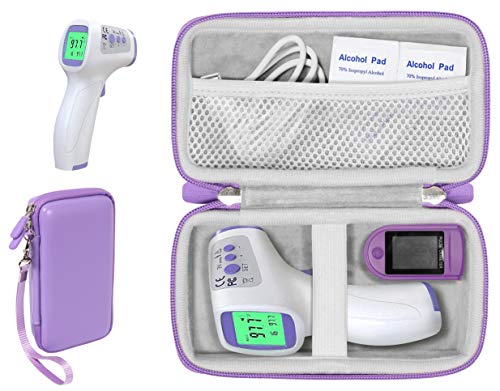
Perfectly for Forehead Thermometer.Featured handy case: all in one case for Forehead Thermometer case for Non-Contact Infrared Digital Thermometer Like Vibeey, eZthings, HALIDODO, HIGBRE, ALLIRIER, AFARELY, ROYADVE, REDESS, iCode, SUNNYPLUS, BrillianceHair, drtulz, easy carrying with excellent protectioner like Non-Contact Infrared Digital Thermometer Like Vibeey, eZthings, HALIDODO, HIGBRE, ALLIRIER, AFARELY, ROYADVE, REDESS, iCode, SUNNYPLUS, BrillianceHair, drtulz
How the Thermometer’s Microprocessor Calculates Your Temperature
Once your infrared energy is detected, the device’s microprocessor begins complex calculations. It first converts the analog signal into a digital format, then applies Planck’s law to determine your absolute temperature from the infrared radiation. To ensure accuracy, it also performs infrared calibration, compensating for heat generated by the device itself and ambient temperature fluctuations that could distort the reading. Afterward, the processor adjusts for emissivity since human skin does not emit radiation exactly like a perfect black body. This correction accounts for skin properties to refine the measurement. Furthermore, the microprocessor processes the analog signal by converting the detected infrared radiated power into proportional electrical signals for calculation. Finally, it adds a physiological site offset—estimating your core temperature based on your forehead reading. The final number displayed is a precise, algorithmically derived temperature, not just a raw sensor output.
Why Can’t Wrist Measurements Reliably Screen for Fever?
Wrist measurements cannot reliably screen for fever because they are highly operator-dependent and influenced by external factors. The aiming distance and angle of the infrared device significantly impact the accuracy of the reading, making consistent measurements difficult. Clinical studies strongly indicate poor agreement between wrist temperature readings and core body temperatures, with some infrared wrist devices detecting fever in only about 13% of actual cases. Due to these inherent limitations, wrist scans cannot provide the reliable, precise core temperature readings required for effective fever screening.