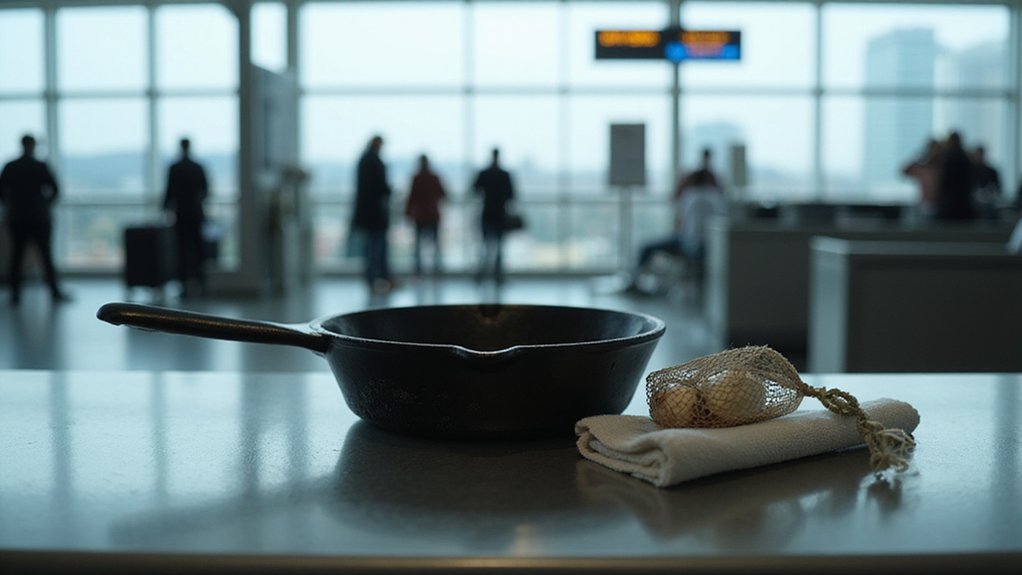
Wondering if you can take your cast iron skillet on a plane? The short answer is no for carry-on, since TSA considers it a potential weapon due to its weight.
However, you can pack it in checked luggage if you wrap it well to prevent damage. Stay with me to learn the full rules and tips for getting yours through security smoothly.
Why Cast Iron Skillets Are Banned From Carry-On Bags
TSA bans cast iron skillets from carry-on bags because they are classified as potential bludgeons. Their heavy weight and dense iron composition make them suitable for knocking someone out, similar to items like baseball bats and bowling balls. This heavy density creates a security concern, as it could be weaponized. Although cookware made from aluminum or stainless steel usually passes through security without issue, cast iron’s weight makes it a red flag. TSA authorities have the discretion to flag or confiscate such items, so it’s safest to pack your skillet in checked luggage. The official rule is clear: cast iron skillets are prohibited in carry-on bags due to safety risks posed by their mass. For precise candy work, digital probe thermometers are recommended for accurate internal temperature readings. Unlike rusty cookware that can be restored with vinegar spray solution and multiple seasoning rounds, the dense mass of a well-maintained skillet remains a security hazard. In contrast, a Dutch Oven Pot Roast relies on heavy cookware to sear meat and slowly braise vegetables to tender perfection.

5.5-inch square skillet for grilled cheese or ham & cheese sandwiches

Seasoned with oil for a natural, easy-release finish that improves with use
How to Pack a Cast Iron Skillet in Your Checked Luggage
Weight considerations are crucial because cast iron is heavy. Make sure your suitcase remains within your airline’s weight limit to avoid extra fees. To lightening the load, remove detachable handles or lids and pack them separately, wrapping each piece in your clothing for added protection. Request a “fragile” tag at check-in to encourage careful handling by staff. Avoid sharp edges exposing the pan, and aim for a secure, balanced load that protects both the skillet and your luggage, minimizing the risk of damage during transit. For example, achieving the perfect texture requires precise temperature control ranging from 145°F to 195°F, similar to how sous vide cooking customizes egg doneness. By seasoning the skillet before travel, you leverage its natural non-stick properties to make wiping it clean after each use simpler.

Water-Resistant: This 600D skilet bag is made of water-resistant Oxford cloth, ensuring maximum protection for your 8/10/12-inch skillets during outdoor camping and daily life.Recommend comparing the actual size of the pot with the image

【REVOLUTIONIZE YOUR KITCHEN & GEAR ORGANIZATION】Hang it on any standard kitchen rail to free up cabinet space! This form-fitting cast iron pan storage bag neatly stores 10-11.8" skillets, and the 2-pack setlets you organize multiple pans or share one with a friend. Perfect for decluttering.

【STURDY & DURABLE】The skillet storage bag is Made of tear-resistant and scratch-resistant sturdy oxford fabric that won't tear easily and will last a long time, perfect for carrying your cookware when camping outdoors
Can You Get Through Security if You Ask a TSA Agent Nicely?
Asking a TSA agent nicely won’t get your cast iron skillet through security. The rules prohibit certain items, including cast iron cookware, regardless of your politeness or tone. When you approach security with a request to carry the skillet onto the plane, the agent’s hands are tied by regulation. They will flag the skillet immediately and instruct you to either discard it or go back to check it in. Trying to skip this step isn’t an option; the rules are clear, and passenger discretion doesn’t override them.
Because of its weight and material, a cast iron skillet is considered a potential weapon, which makes approval unlikely. No matter how friendly or persuasive you are, the prohibition remains firm. Supporting a positive attitude won’t change the outcome—you simply can’t get around a rule that bans such items at security checkpoints. It’s best to plan ahead to avoid delays or the loss of your cookware. Ultimately, TSA agents can say no to items that are prohibited, and asking nicely doesn’t change that fact.
What the TSA Says About Cast Iron vs. Regular Pots and Pans
The TSA prohibits cast iron skillets from being in your carry-on luggage, but allows regular pots and pans. The main reason is the material safety concern: cast iron’s dense and heavy nature makes it a potential weapon, similar in threat level to a baseball bat. During baggage screening, TSA agents view cast iron skillets as a security risk and will likely require you to check them in. In contrast, other cookware materials like aluminum, stainless steel, or ceramic are considered safer because they are lighter and less capable of causing harm. While large or heavy pans may trigger extra screening, they are not outright banned—only cast iron is. The core issue isn’t flammability but physical danger.

Made of food-grade 18/8 stainless steel, this stainless steel cookware set won’t warp or deform. Free of PFAS, PFOA, and PFOS for healthy cooking. Oven safe to 600°F and works on all cooktops, including induction. Built to last a lifetime.

Fully Clad Tri-Ply Stainless Steel Cookware Set. Tri-ply fully clad construction delivers fast, even heating from base to rim, helping reduce hot spots for better searing, steadier simmering, and more consistent cooking results.

SET INCLUDES: The 3 Ply 11 Piece Stainless Steel Cooking Set comes with tempered glass lids with wide rims that fit both the pots and the pans. It includes: 1.5-Quart saucepan, 2.2-Quart saucepan, 3-Quart saute pan with lid, 9.5" skillet, 10" skillet, 6-Quart stockpot and steamer insert.
What Happens if You Accidentally Pack a Cast Iron Skillet in Your Carry-On?
If you accidentally pack a cast iron skillet in your carry-on, you will be flagged at security for carrying a prohibited item. Security agents see the heavy pan as a potential weapon and will deny you passage without hesitation. You’ll need to decide quickly whether to place it in a checked bag, buy a bag to check it, or surrender it to TSA without compensation. Since the skillet is explicitly forbidden, trusting agent discretion doesn’t help. If you don’t have checked luggage, you risk leaving security to find a checked bag, which can jeopardize your flight or cause delays. This mistake wastes time, costs money, and underscores the importance of reviewing packing rules before you travel.
Other Cast Iron Cookware That Surprises Travelers at Security
Flat, thin cast iron items like griddles often pass through TSA security because their lightweight and flat shape resemble non-threatening metal tools. Heavier items such as Dutch ovens and woks are more likely to be flagged or confiscated due to their dense, bulky nature. Specialty pans like corn pie makers and muffin molds also tend to be taken away—your security screening system considers their weight and material as potential safety risks. In contrast, lightweight and tool-like items such as thin spider skimmers may slip through if they aren’t too heavy or bulky. However, if you plan to restore a flagged skillet after travel, the oven cleaner method is an effective way to strip built-up organic solids. Always verify TSA’s specific rules for your cast iron ware before packing to avoid surprises at the security checkpoint. For example, Dutch oven chicken pot pie recipes often require cooking at 425 degrees Fahrenheit, which contrasts with the dense, bulky nature that makes these cookware items more likely to be flagged at security. Unlike thicker items, thinner cookware can achieve consistent doneness without overcooking when using precise temperature control.

【2-in-1 Reversible Grill & Griddle】: Unlock a world of recipes with a single reversible griddle pan. One ribbed side creates perfect sear marks on steaks, chops, fish, chicken, and veggies; flip to the smooth side for pancakes, eggs, bacon, burgers, tortillas, and more. Ideal for indoor stovetop or outdoor BBQ

Double Burner Configuration: The Lodge Double Play Reversible Cast Iron Grill/Griddle covers two burners, offering a generous breakfast grill plate for family breakfasts or meal prep with ease

Comfortable Everyday Cooking: The Lodge Seasoned Cast Iron Griddle includes a red silicone handle holder designed to provide a safer, more comfortable grip
Why the TSA Treats Cast Iron Skillets Like Baseball Bats
A cast iron skillet is treated exactly like a baseball bat at airport security because both are considered potential physical threats due to their weight and solid construction. Unlike lighter cookware made of aluminum or non-stick materials, a cast iron skillet’s significant mass makes it capable of causing harm if swung with force. To achieve the perfect steak at home, cooks should focus on a very hot skillet to create a caramelized crust through proper searing. This is why proper seasoning technique is essential to avoid a sticky residue that could otherwise ruin your cookware. TSA agents are required to treat both items the same: they must be packed in your checked luggage, with no exceptions for carry-on placement. This rule exists because the risk posed by their physical characteristics overrides any consideration of their intended use as cooking tools. In contrast, ceramic or stoneware Dutch ovens are not designed for direct stovetop heat and can crack if used improperly.
Quick Checklist for Flying With Cast Iron Skillets
Ensure your cast iron skillet is packed according to airline policies. You must place it in checked luggage, not in your carry-on bag. Wrap the skillet securely with durable materials to prevent injuries to handlers during baggage handling. Check your airline’s baggage weight restrictions because cast iron is heavy, and your skillet could push your luggage over the limit, resulting in extra fees. If you’re packing any sharp utensils or accessories with the skillet, secure them to avoid damage or injury. Be aware that if your baggage triggers alarms during security scans, it may be subject to inspection. For long-lasting use, periodically reseason your skillet by applying a thin layer of oil and baking it in an oven, which maintains its non-stick surface. A similar slow-braising technique can be used to tenderize meats in a cast iron Dutch oven, yielding fall-apart results. When cooking with cast iron, always use a meat thermometer to ensure chicken reaches 165 degrees Fahrenheit to kill harmful bacteria. Following these steps helps prevent confiscation or delays, keeping your travel smooth. Always stick to checked luggage and stay within your airline’s weight limits.

YOUR NEW GO-TO PAN: Lodge cast iron cookware is the perfect kitchen tool for beginners, home cooks and chefs. Cast iron can handle any kitchen cooktop, oven, grill, and open flame. Crafted in America with iron and oil, its naturally seasoned cooking surface creates an easy-release and improves with use.

ICONIC HEART DESIGN: This 10-inch cast iron skillet brings major main character energy with its heart-shaped silhouette—perfect for stovetop-to-table moments that turn heads.

Made in partnership with John Deere