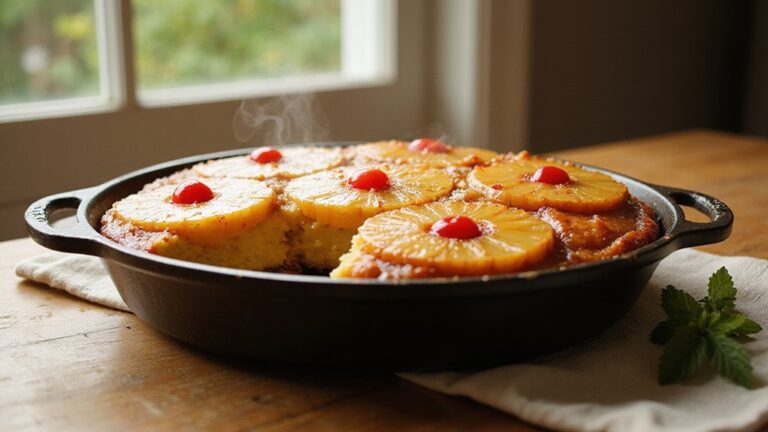
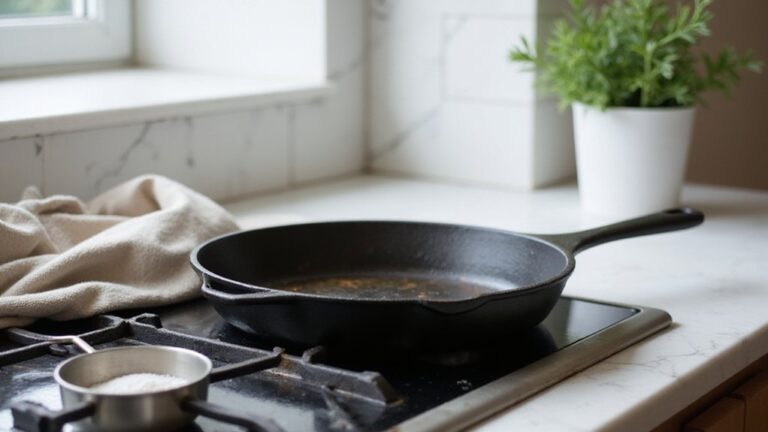
You’ll get a pre-seasoned, polished cooking surface engineered for immediate non-stick performance and superior heat distribution across all cooktop types. CNC manufacturing controls spindle speed, feed rate, and cutting depth to minimize surface roughness, delivering dimensional accuracy and consistent quality. The machined finish weighs 4-4.5 pounds, resists metal utensil damage, and suits delicate foods exceptionally well. While you’ll need consistent maintenance and occasional re-seasoning, the long-term performance advantages become increasingly apparent with proper care protocols and regular use.
What Is a Machined Surface Cast Iron Skillet?
What Is a Machined Surface Cast Iron Skillet?
Precision machining—that’s what distinguishes modern cast iron skillets from their rough-textured counterparts. You’re looking at a skillet featuring a polished cooking surface that mimics the prized vintage Griswold cookware from cast iron history. Manufacturers have revived this smooth-finish production after decades of rough surface dominance, calibrating processes to achieve peak smoothness while retaining slight texture for seasoning retention. This enhanced surface allows for varied culinary uses, including baking with precision.
The machined surface benefits you’ll experience include immediate non-stick properties without extensive seasoning buildup. Your skillet arrives pre-seasoned with natural grapeseed oil, ready for cooking. The polished finish enables superior heat transfer and even cooking across all cooktop types—glass, ceramic, and induction included. Additionally, like a Dutch oven, the machined surface skillet can efficiently trap heat and moisture, enhancing the flavors of your dishes.
Construction incorporates thinner sidewalls, reducing weight to approximately 4 to 4.5 pounds while maintaining exceptional heat retention and durability. Helper handles and large pour spouts enhance functionality and safety during daily use.
The Manufacturing Process Behind Machined Surfaces
Creating a machined cast iron skillet surface demands rigorous control over CNC parameters that directly determine your final cooking experience. You’ll find that spindle speed, feed rate, and cutting depth calibration minimize surface roughness during CNC machining operations. Shallow cutting depths and slower feed speeds produce smoother finishes compared to deeper cuts and faster speeds, yielding Ra values between 0.8–3.2 µm for precision applications. Real-time parameter adjustment prevents defects and maintains dimensional accuracy within ±0.01–0.05 mm tolerances throughout production. Tool wear monitoring guarantees consistent surface roughness quality across your entire production run. Equipment capability ranges determine achievable surface roughness values, so you’ll select CNC milling specifically for cast iron’s machinability characteristics. This precision manufacturing approach transforms raw castings into cooking surfaces engineered for peak performance.
Key Advantages of Choosing a Machined Skillet
While rough cast iron requires extensive seasoning buildup—roughly 1/16th inch of oil accumulation to achieve adequate smoothness—machined surfaces dramatically accelerate this process through their engineered geometry. You’ll develop reliable non-stick properties faster because seasoning oil bonds uniformly across the flat plane. This advantage makes them especially useful for preparing delicious Dutch oven desserts, ensuring your sweet treats do not stick to the cooking surface.
This advantage directly impacts your cooking techniques. Machined surfaces excel with delicate foods like eggs and fish, where rough textures cause frustrating sticking. You’ll experience superior heat distribution on flat cooktops, enhancing induction compatibility through maintained magnetic contact. Additionally, cooking on a cast iron skillet allows for better browning and searing, critical for achieving a delicious crust on meats.
Regarding durability factors, smooth finishes resist degradation from metal utensils better than rough cast iron. You’ll encounter fewer microscopic crevices where rust initiates, and cleanup demands minimal aggressive scrubbing. Your investment yields a versatile, single-pan solution handling virtually every cooking application with consistent, long-term performance.
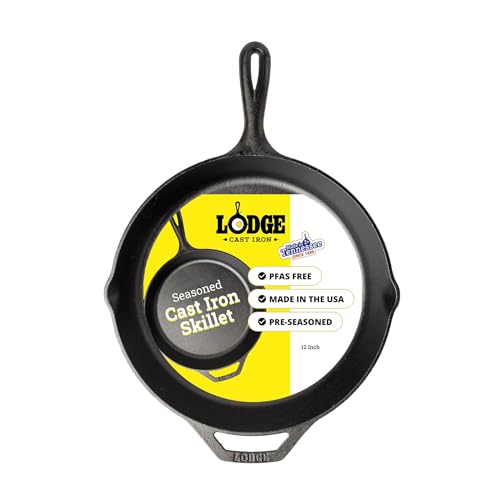
Quality Cast Iron Frying Pan: The Lodge Seasoned Cast Iron Skillet is loved for its great heat retention, incredible durability, and ability to make almost any recipe you dream up

Complete 5-Piece Cooking Set: The Lodge Cast Iron Set includes an 8-inch cast iron skillet, 10.25-inch cast iron skillet, 10.5-inch cast iron griddle, and 5-quart cast iron dutch oven with lid

Versatile Cooking Skillet: The Lodge Cast Iron Skillet is a multipurpose, everyday cooking pan that excels at searing, sautéing, baking, frying, and campfire meals
Potential Drawbacks to Consider
Despite machined cast iron’s superior cooking performance, you’ll need to commit to consistent maintenance to preserve its advantages. Your primary concern involves rust susceptibility—the seasoning layer deteriorates quickly with moisture exposure, requiring immediate drying after every wash. You can’t use dishwashers or prolonged soaking without risking corrosion. Additionally, regular re-seasoning as an ongoing maintenance task will help to sustain the skillet’s protective layer and performance.
Heat response presents another challenge. Cast iron’s poor thermal conductivity means slow temperature changes, complicating precise heat control. You’ll experience delayed reactions when adjusting burner settings, and uneven heating across larger pans creates cooking inconsistencies where food cooks faster centrally than at edges.
Additionally, you must avoid metal utensils and abrasive scrubbers that scratch the machined surface. Deep scratches compromise seasoning integrity and accelerate rust formation. Hand-washing with gentle techniques and frequent re-oiling become non-negotiable maintenance requirements. Moreover, it’s important to remember that cast iron requires proper seasoning to maintain its effectiveness and prevent food from sticking.
How Machined Surfaces Compare to Rough Cast Iron
To understand why cast iron skillets perform differently, you’ll need to recognize that surface texture fundamentally determines how seasoning adheres and how food interacts with your pan. Machined surfaces offer superior light reflection and a refined aesthetic, but they demand extended seasoning development—often requiring several days versus rough texture pans that season in hours. Your rough texture pan builds seasoning layers faster due to increased surface area, creating durability that withstands repeated use. Furthermore, using a cast iron skillet can increase iron content in your food, making it beneficial for those with higher iron needs. Conversely, machined surfaces show wear visibly and require more frequent re-seasoning cycles. Cooking performance hinges primarily on seasoning quality rather than texture type. However, rough texture provides practical advantages: easier restoration after damage, superior seasoning retention, and masked minor surface imperfections during maintenance. Additionally, cast iron skillet pizza demonstrates how the effectiveness of seasoning directly influences cooking results.

Smooth and Flat Non-Stick Cooking Surface: This cast iron skillet is crafted with fine polishing and precision CNC machining, making it smoother and flatter than traditional cast iron. Even heat distribution allows the seasoning to adhere more evenly, forming a more durable natural non-stick coating that’s easier to clean and maintain. Use it for crispy Southern cornbread, juicy steak, seared burgers, skillet-fried chicken, crispy delights, skillet pizza, and fluffy pancakes—enjoy cooking to the fullest.

Quality Cast Iron Frying Pan: The Lodge Seasoned Cast Iron Skillet is loved for its great heat retention, incredible durability, and ability to make almost any recipe you dream up

CAST IRON SKILLET is 10.25 inches in diameter and includes red silicone hot handle holder. An improvement on the original: the Lodge Cast Iron Skillet, featuring an assist handle. This will be your go-to pan for generations to come
Seasoning Your Machined Cast Iron Skillet
Now that you’ve recognized rough texture’s seasoning advantages, machined surfaces demand a more deliberate approach to build comparable durability. Your seasoning techniques must prioritize meticulous surface preparation—remove all machining oils with acetone or lacquer thinner, then scrub thoroughly with a brass brush. Guarantee complete dryness before proceeding.
For oil choices, select neutral fats like grapeseed or canola oil, applying thin, even layers buffed nearly dry. Preheat your skillet on high heat for 5–10 minutes, then oil and heat until smoking (400–450°F). Maintain temperature for 30 minutes minimum to enable proper polymerization. Repeat this cycle 3–4 times for best results. This process is essential for creating a durable, non-stick surface that improves with use. The careful seasoning process ensures it can withstand high cooking temperatures over time.
Cool completely between cycles, inspecting for sticky spots or uneven coverage. This deliberate approach builds a durable, functional seasoning layer comparable to naturally textured cast iron.

Mild and Easy: Grapeseed Oil is at its best in stir-fries and sautés; it doesn't overwhelm other ingredients and lets fresh flavors shine. When grilling or frying, it is a must-have in the pantry.

YOUR NEW GO-TO SEASONING SPRAY: The Lodge Seasoning Spray is the perfect seasoning spray to maintain your cast iron cookware. It is made of 100% canola oil - no additives or propellants, to protect your cookware and enhance its finish.

Use on cast iron skillets, dutch ovens, and carbon steel cookware to build seasoning and protect from rust
Maintenance Tips for Long-Lasting Performance
Your seasoning investment requires consistent maintenance to preserve the protective patina you’ve built through deliberate seasoning cycles. You’ll maintain peak performance through strategic cleaning techniques and proactive rust management. After each use, you must dry your skillet thoroughly with paper towels and apply heat to eliminate residual moisture—this single step prevents rust formation more effectively than any other protocol. For cleaning techniques, employ salt and oil scrubbing or chainmail scrubbers to remove food residue while preserving seasoning layers. You should avoid prolonged water exposure entirely, as soaking causes rust development. Regular high-temperature cooking maintains your seasoning layer’s integrity and prevents deterioration. Moreover, after cooking, it’s crucial to thoroughly dry the skillet, as this helps prevent rust formation. A HACCP plan is essential for ensuring safe food handling practices, so consider implementing one in your kitchen. Store your skillet in a dry location with a light oil coating. Consistent usage and immediate drying guarantee your machined surface performs reliably across generations.
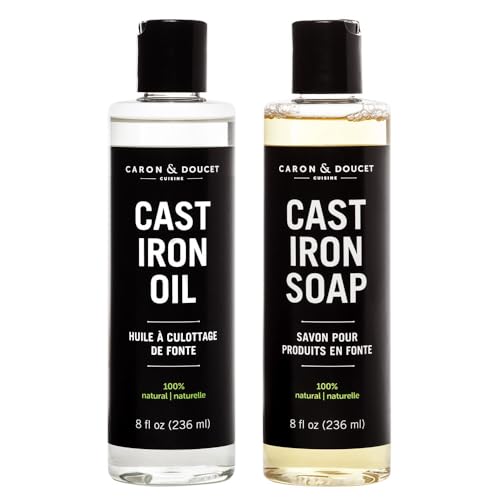
CLEANS CAST IRON | Includes our Cast Iron Soap unlike detergent based soaps, this soap is formulated with 100% natural plant-based oils & free of sulfates, phosphates, parabens & petrochemicals! Gentil on cast iron seasoning & on your hands!
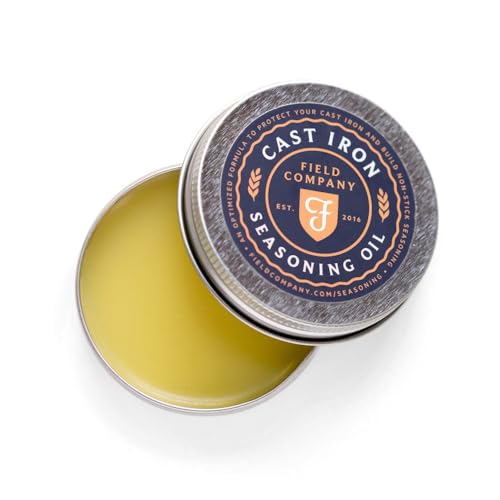
HOW TO USE: The key to naturally nonstick cast iron cookware? Cook often, and apply Seasoning Oil every time you clean your pan. Clean your cast iron with soap and a brush, then use a chain mail scrubber to smooth out existing seasoning layers. Apply a dab of Seasoning Oil and spread it thinly over the surface with a paper towel or clean rag. Wipe away excess oil to leave a dry, matte finish.

Lint-free cotton for cast iron care – Thin, tightly woven 100% cotton cloths designed for low-lint wiping so your cast iron skillet, pan and Dutch oven stay clean without loose fibers on the surface.
Real User Experiences and Expert Recommendations
While meticulous maintenance preserves your skillet’s performance, real-world usage reveals how machined cast iron skillets actually perform in everyday kitchens. User testimonials consistently rate machined models like Stargazer at 4.9 out of 5 stars, praising their non-stick superiority over traditional rough cast iron. You’ll find that expert opinions align with consumer feedback, highlighting the versatility these skillets deliver—from searing steaks to cooking delicate eggs without sticking. Users specifically appreciate the easier cleaning process and reduced food residue compared to conventional cast iron. Additionally, cooking with fats while using these skillets enhances the pre-seasoning, further improving their non-stick properties over time. Expert recommendations emphasize that machined surfaces excel across diverse cooking applications while maintaining cast iron’s superior heat retention. Furthermore, users benefit from the small amount of dietary iron leached into food, which may help reduce iron deficiency. These testimonials demonstrate that machined skillets successfully bridge traditional durability with modern cooking convenience, making them practical investments for everyday kitchen use.

Made For The Switch: For cooks who love the convenience of nonstick and ceramic cookware but want a pan they'll keep for years, this skillet delivers a familiar cooking experience with the staying power of cast iron.

Durable Cast Iron Construction: Made from cast iron for long-lasting use and even heat distribution.

EXPERIENCE EFFORTLESS COOKING: Our braiser features a superior smooth cooking surface that's as user-friendly as it gets. Say goodbye to frustrating food sticking and hello to seamless cooking and cleanup. With heat evenly distributed across the surface, you can kiss unevenly cooked or burnt dishes goodbye. Plus, enjoy perfectly browned and caramelized flavors that elevate every bite. It's cooking made simple and delicious.