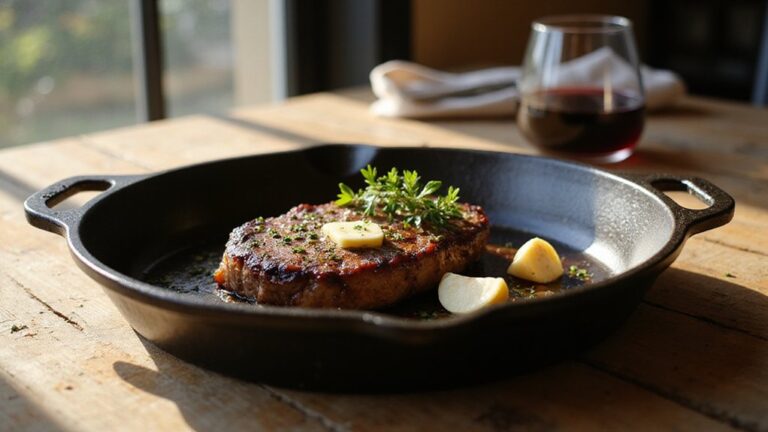
You’ll achieve restaurant-quality results by patting your ribeye dry, seasoning generously with sea salt and pepper, then letting it rest at room temperature for an hour. Preheat your cast iron skillet gradually, sear the steak for 30-90 seconds per side, then finish in a 415-500°F oven. Introduce butter with garlic and fresh herbs when the steak’s 20-30°F below target doneness, basting continuously. Rest for five minutes per inch of thickness before serving. The technique’s nuances deserve deeper exploration.
Preparation Steps
Before you cook, you’ll want to master the fundamentals that distinguish a restaurant-quality ribeye from an ordinary steak. Start by patting your steak dry with paper towels to guarantee ideal crust formation. Apply coarse sea salt and freshly ground black pepper liberally on all sides, pressing the seasoning gently into the meat. Allow the steak to rest at room temperature for 45 minutes to an hour—this meat temperature adjustment promotes even cooking and prevents the exterior from overcooking before the interior reaches your target doneness.
Meanwhile, prepare your aromatics: mince garlic cloves and gather fresh rosemary and thyme. Have unsalted butter ready for basting. A well-seasoned cast iron skillet** ensures optimal heat retention and distribution, which are key for achieving the perfect sear. Arrange your workspace efficiently to maintain focus on timing and temperature control. These seasoning techniques and proper meat temperature preparation establish the foundation for exceptional results in your cast iron skillet. Utilizing a cast iron skillet will not only enhance the heat retention and distribution** but also help achieve that savory crust due to the Maillard reaction.
Skillet and Heat
With your steak properly seasoned and rested, you’ll now turn your attention to the cooking vessel itself—the cast iron skillet‘s performance hinges on proper selection and heat management.
Choose a skillet size matching your burner diameter to prevent hot spots and guarantee uniform heat distribution. Cast iron’s superior heat retention requires gradual preheating at medium heat for 5–10 minutes, avoiding thermal shock that causes warping or cracking. Additionally, it’s best not to store food in cast iron as it damages the seasoning.
Position your heat sources strategically; using two burners set identically accommodates larger skillets. Cast iron conducts heat poorly compared to aluminum or copper, so rotate the pan periodically to redistribute thermal energy and minimize hot spots. Additionally, the skillet’s natural non-stick properties improve over time, enhancing the cooking experience.
Adjust temperature gradually during cooking since cast iron responds slowly to changes. This deliberate approach yields consistent, even searing across your ribeye’s surface, making it important to handle acidic foods appropriately to maintain the skillet’s seasoning.
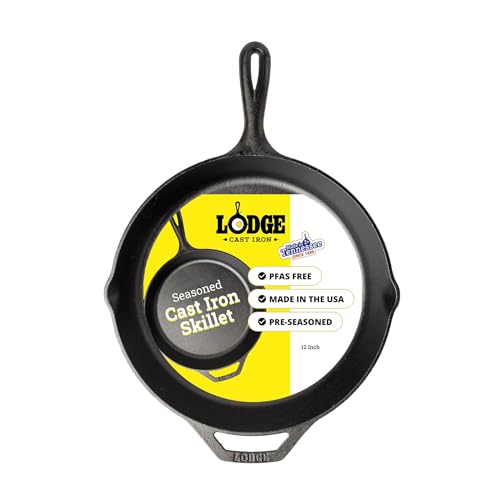
Quality Cast Iron Frying Pan: The Lodge Seasoned Cast Iron Skillet is loved for its great heat retention, incredible durability, and ability to make almost any recipe you dream up

Versatile Cooking Skillet: The Lodge Cast Iron Skillet is a multipurpose, everyday cooking pan that excels at searing, sautéing, baking, frying, and campfire meals

Secure Dual Assist Handle: The Lodge Seasoned Cast Iron Dual Handle Pan features dual assist handles for a secure grip when moving this cast iron skillet
Searing and Cooking
Once your cast iron skillet‘s surface approaches a light smoke, you’re ready to sear your ribeye. Place the steak directly onto the hot surface—you’ll hear immediate sizzling sounds that signal proper heat contact. Let it sit undisturbed for 30 seconds before moving it slightly to prevent sticking, then maintain contact for another 30–90 seconds to develop crust formation.
Flip and repeat on the opposite side using identical timing. For best browning, sear the edges vertically for 30 seconds each. Your total stovetop sear time should reach 4–8 minutes depending on thickness. This initial searing creates the Maillard reaction, establishing a flavorful, caramelized exterior. Remember to pat the steak dry to ensure a good sear before placing it in the skillet. A well-seared ribeye should have a rich crust that enhances its natural flavors, contributing to that steakhouse-quality result you’re aiming for. You’ll then transfer your skillet to a preheated 415°F–500°F oven to finish cooking through, ensuring even doneness without overcooking the exterior.

Durable Cast Iron Construction: Made from cast iron for long-lasting use and even heat distribution.

Quality Cast Iron Frying Pan: The Lodge Seasoned Cast Iron Skillet is loved for its great heat retention, incredible durability, and ability to make almost any recipe you dream up

5.5-inch square skillet for grilled cheese or ham & cheese sandwiches
Butter Basting and Flavor
Now that you’ve developed a golden crust through searing, you’ll introduce butter to elevate both flavor and texture—but timing’s essential. Add butter when your ribeye reaches approximately 20–30°F below target doneness, preventing burning while maximizing flavor enhancement. *Choosing a suitable vessel, such as a cast iron skillet, enhances heat retention and distribution, essential for the perfect steak sear.*
Incorporate bruised garlic cloves and fresh rosemary or thyme sprigs simultaneously with butter. These aromatics release their oils into the foaming fat, creating a potent butter infusion that coats your steak repeatedly through basting.
Tilt your cast iron skillet to pool this herb-enriched butter, spooning it continuously over the meat’s surface. The milk solids undergo the Maillard reaction, building complex, nutty notes while the constant basting seals juices and develops an exceptionally crispy exterior. Continue until your steak reaches approximately 5°F below final temperature, ensuring ideal crust development without overcooking. Achieving a fork-tender texture is crucial for the ultimate dining experience, much like the perfect sirloin tip roast.

Upgrade Your Barbecuing: Elevate your outdoor cooking game with our BBQ basting set! Featuring a mini cast iron pot, 18” brush and brush, this set makes it easy to add flavor and moisture to your food while creating a deliciously crispy exterior. Perfect for any grill master looking to up their barbecuing game.

Quality Craftsmanship: Our pre-seasoned cast iron pots and pans are crafted with the highest quality materials and are meant to be enjoyed for a lifetime. Enjoy the durability of this mini cast iron pot and pass it down for generations to come!

🥔【Professional Even Heating】Small cast iron sauce pan construction ensures uniform heat distribution, preventing scorching while perfecting BBQ sauces, butter melting pot applications, and slow-simmered stews - ideal for grill pot enthusiasts.
Resting and Serving
Your ribeye’s journey doesn’t end when you pull it from heat—the critical resting phase determines whether all your technique yields a juicy, perfectly cooked steak. Rest your steak for 5 minutes per inch of thickness, allowing carryover cooking to raise internal temperature 3–6°F to your target doneness. Lightly tent with foil to retain warmth without softening the crust. The ideal temperature for finishing in the oven typically hovers around 400–450°F, which helps achieve the perfect doneness. Cooking in a cast iron skillet not only enhances flavor but also promotes improved iron levels, contributing to overall health.
The resting benefits extend beyond temperature stabilization; they redistribute juices throughout the meat, ensuring moistness with every bite. During this resting period, muscle fibers relax and allow the juices that were pushed toward the center during cooking to reabsorb evenly throughout the steak. After resting, employ proper serving techniques by slicing against the grain with a sharp knife. Serve immediately to maximize juiciness and texture. Optional light seasoning enhances flavor without compromising moisture retention. Pair with complementary sauces promptly for a balanced sensory experience.