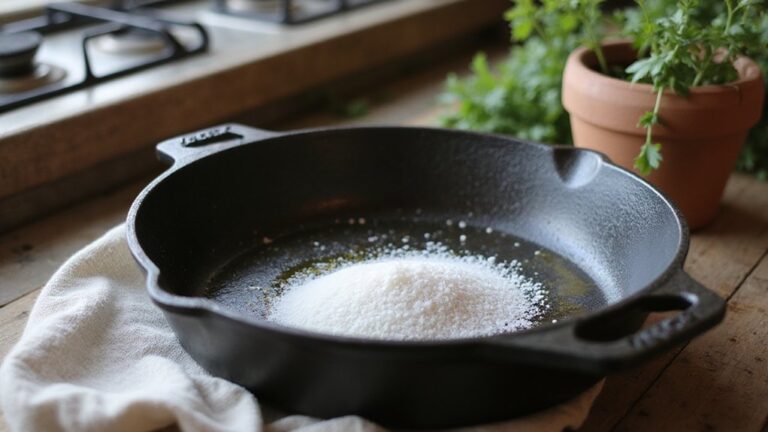
You can safely wash your cast iron skillet with modern soap without damaging the seasoning layer. Today’s gentle formulations won’t degrade the hardened, polymerized coating that protects your pan. Use warm soapy water with a soft sponge, then dry thoroughly with a lint-free cloth to prevent rust. For stubborn residues, try coarse salt as a gentle abrasive. Re-oil your skillet after washing to maintain seasoning integrity. Understanding proper cleaning techniques guarantees your cookware remains durable and nonstick for years.
The Truth About Modern Soap and Cast Iron
Why has the myth of soap ruining cast iron persisted for so long? The answer lies in outdated information. Decades ago, traditional soaps contained harsh lye and vinegar that stripped seasoning by breaking down polymerized oil layers. Modern soap formulations, however, differ dramatically. Today’s dish soaps are gentle, non-abrasive degreasers that remove surface grease without degrading your pan’s seasoning. Additionally, many manufacturers recommend avoiding abrasive cleaning methods to maintain the integrity of your cookware.
Your cast iron’s seasoning isn’t raw oil—it’s a plastic-like polymerized layer heat-bonded to the metal. Modern soap’s mild surfactants can’t penetrate this bonded layer. You can safely wash your cast iron with modern soap, then dry it thoroughly and apply light oil. This approach effectively removes stubborn residues while preserving your pan’s non-stick properties and rust resistance. In fact, just as a well-seasoned cast iron skillet is essential for cooking, similarly, a delicious Dutch oven dish can highlight the benefits of using well-maintained cookware.

SOAP FOR CLEANING CAST IRON | Made using traditional soap making methods and free of sulfates, phosphates, parabens & petrochemicals! Gently cleans and maintains the natural seasoning on cast iron skillets, pans, woks and grills.
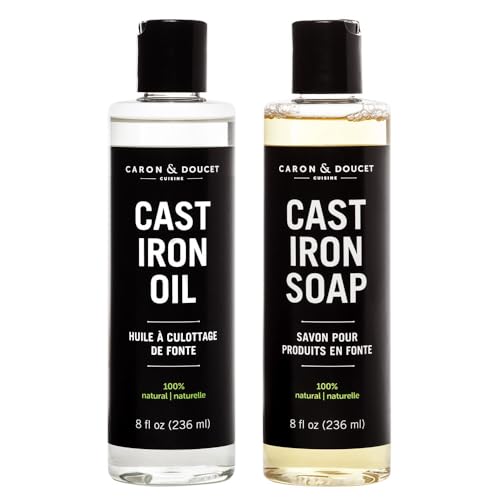
CLEANS CAST IRON | Includes our Cast Iron Soap unlike detergent based soaps, this soap is formulated with 100% natural plant-based oils & free of sulfates, phosphates, parabens & petrochemicals! Gentil on cast iron seasoning & on your hands!

RESTORES & RESEASONS | Includes our Cast Iron Scrub designed to restore & remove stubborn rust spots. Helps to remove burnt & stuck on food spots that develop over time. Made with high quality coconut oil to help season & enhanced with essential oils to eliminate odours.
Understanding Your Pan’s Seasoning Layer
Before you can appreciate why modern soap won’t damage your cast iron, you’ll need to understand what you’re actually protecting. Your pan’s seasoning layer is a hardened, polymerized coating that forms when oil bonds together under heat. This isn’t just surface oil—it’s a durable film that adheres directly to the iron. Proper seasoning techniques are essential to create and maintain this layer.
The polymerization process builds multiple thin layers over time, each bonding to the previous one. You’ll recognize a healthy seasoning by its dark, smooth appearance with a slight sheen. This layer’s seasoning importance can’t be overstated: it prevents rust, enhances nonstick properties, and protects your iron from moisture and oxidation. In fact, just like the slow-cooking benefits of a well-seasoned Dutch oven, this protective barrier is crucial for maintaining the quality and performance of your cast iron skillet.
Regular use and proper maintenance keep this protective barrier intact and increasingly effective throughout your pan’s lifetime.
How Traditional Cleaning Methods Work
Now that you understand your seasoning layer’s structure and durability, you’re ready to learn how to clean your cast iron without compromising it. Traditional scrubbing techniques using warm, soapy water with a soft sponge or nylon pad effectively remove food residue while preserving your pan’s protective coating. Modern dish soaps won’t strip seasoning as older formulations did. For stubborn particles, coarse salt’s usefulness becomes evident when combined with a kitchen towel—it acts as a gentle abrasive that lifts debris without damaging the surface. Chain mail scrubbers offer another reliable option for tough residue. Always scrub with circular motions to avoid excessive abrasion. Following these traditional methods maintains your cast iron’s integrity while ensuring thorough cleanliness for your next cooking session. Additionally, using coarse kosher salt during the cleaning process is an effective way to prevent rust and maintain your skillet’s non-stick properties, as oil must be heated to their smoke point to create the natural seasoned finish.
When Soap Use Makes Sense
Though the traditional rule discourages soap on cast iron, there’s actually a practical middle ground where you’ll want to reach for it. Initial cleaning of new cookware demands soap to strip factory oils and residues that prevent proper seasoning development. Similarly, storage cleaning requires soap to remove accumulated dust and contaminants after periods of disuse. Modern dish soaps function as effective degreasers, cutting through stubborn, stuck-on food particles and strong-flavored residues that water alone can’t address. When your skillet retains unpleasant odors or excess oil buildup beyond the protective seasoning layer, soap becomes a practical restoration tool. Additionally, using soap in this context can help ensure your cast iron is as pristine as sous vide cookware, optimizing your cooking experience. The key distinction: use soap strategically for these specific situations rather than routine maintenance, then immediately dry and re-oil your skillet to maintain its seasoning integrity. Additionally, it’s important to note that occasional use of natural salt scrubs can help tackle tougher residue or rust, further preserving the skillet’s non-stick surface.

EXCEPTIONAL QUALITY – Culina Cast Iron Cleanser is ideal for naturally cleaning all of your cast iron cookware, maintaining the non-stick surface and eliminating stubborn odors.

COMPLETE RESTORE, CLEAN & SEASON SYSTEM: Culina Cast Iron Care Kit is a complete solution to restore, clean, and season cookware. Includes a durable rust remover scrub to remove rust and stuck-on residue, a natural soap for cleaning, and a premium oil to enhance seasoning, protect surfaces, and extend the life of cast iron cookware.

SAFELY CLEAN CAST IRON: Clean your cast iron skillets and pots with ease and peace of mind. This natural soap efficiently cleans and restores your cast iron cookware with none of the risk that comes with traditional soaps.
Proper Techniques for Soap Cleaning
Once you’ve determined that soap use makes sense for your situation, understanding the proper technique becomes critical to protecting your skillet’s seasoning. Your soap application should involve only a small amount of mild dish soap mixed with warm water. Limit vigorous scrubbing to areas with stuck-on food rather than attacking the entire surface. Rinse thoroughly with hot water to eliminate all soap residues, then dry immediately and completely to prevent rusting. Proper care includes preventing rust by drying thoroughly before storage, ensuring that your skillet remains in top condition. Additionally, always ensure you remove large food particles first with a pan scraper before using soap to maintain the skillet’s integrity.
Regarding cleaning frequency, you’ll want to reserve soap washing for when necessary rather than making it routine. Between soap cleanings, use water and gentle scrubbing to maintain your pan. After each wash—regardless of cleaning method—apply a thin oil coating while the skillet is still warm to preserve seasoning integrity and prevent deterioration.

High Quality - The rustic soap dish is made of quality cast iron material, it't solid and sturdy, and heavy enough to stay in place and no worries about it breaking if it is dropped.

Made of heavy duty cast iron with antique green finish,chic,charming and durable for years.
Vintage Cast Iron Soap Dish for Classic Farmhouse Style Made of durable cast iron with a distressed vintage finish, adding a rustic charm to any space.
Alternative Cleaning Approaches Without Soap
If you’d rather skip soap altogether, you’ll find that mechanical and heat-based cleaning methods effectively remove food residue while preserving your skillet’s seasoning. Salt scrubbing with kosher salt acts as a natural abrasive, physically lifting stuck-on debris without damaging the protective layer. You can combine this with a spatula or plastic scraper for stubborn particles. It’s important to remember that seasoning maintenance is crucial for the longevity of your cast iron skillet, so regular oiling after cleaning cannot be overlooked.
Heat cleaning complements salt scrubbing by loosening food particles. Pour water into your warm skillet and bring it to a boil, then scrape away the loosened residue. Rinse thoroughly with hot water and immediately dry your pan by heating it on the stove. Finally, apply a light coat of cooking oil to restore seasoning and prevent rust, ensuring your skillet remains in prime condition. Additionally, regular use helps build and maintain the skillet’s natural nonstick seasoning.

【PROFESSIONAL COMBO FOR TOUGH CLEANING】: Cast iron scrubber is made of 316 stainless steel + silicone. Silicone has extreme stability, can resist high temperatures. Pan scraper is made of thickened ABS plastic, non-stick and non-cracking, heat-resistant up to 275 °F

KEEP YOUR CAST IRON PANS HEALTHY - It is essential to properly clean and oil cast iron after use. Our cast iron scrub brush will be a lifesaver as it easily and quickly helps to remove food and grime
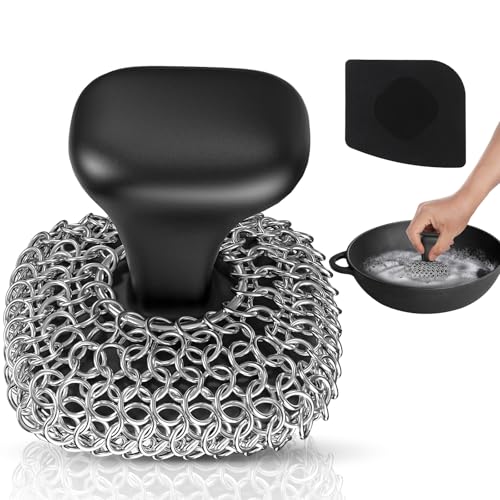
【PROFESSIONAL COMBO FOR TOUGH CLEANING】: Cast iron scrubber is made of 316 stainless steel + silicone. Silicone has extreme stability, can resist high temperatures. Pan scraper is made of thickened ABS plastic, non-stick and non-cracking, heat-resistant up to 275 °F
Maintaining Your Cast Iron After Each Use
Whether you’ve chosen soap or salt scrubbing, what you do immediately after cleaning determines your skillet’s longevity and performance. You must dry your skillet completely using lint-free cloths or paper towels—air drying invites rust formation. Many users heat their pans briefly on the stove to evaporate residual moisture thoroughly. Additionally, regular maintenance—including proper cleaning—is crucial to ensure your skillet remains a durable, reliable tool for generations. Intensive cleaning methods are important for stuck-on food, ensuring that your skillet stays in optimal condition.
Seasoning maintenance demands regular attention after each use. Apply a light oil coat to your warm skillet, ensuring even coverage across the entire surface. Heat the pan slightly to polymerize the oil, reinforcing your seasoning layer. This post-wash oil application prevents rust while strengthening the protective coating that defines your skillet’s nonstick properties and durability. Don’t skip this essential step; consistent maintenance extends your cookware’s lifespan appreciably.

YOUR NEW GO-TO SEASONING SPRAY: The Lodge Seasoning Spray is the perfect seasoning spray to maintain your cast iron cookware. It is made of 100% canola oil - no additives or propellants, to protect your cookware and enhance its finish.
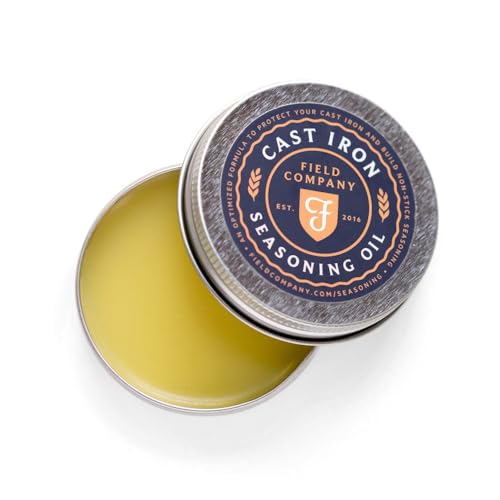
HOW TO USE: The key to naturally nonstick cast iron cookware? Cook often, and apply Seasoning Oil every time you clean your pan. Clean your cast iron with soap and a brush, then use a chain mail scrubber to smooth out existing seasoning layers. Apply a dab of Seasoning Oil and spread it thinly over the surface with a paper towel or clean rag. Wipe away excess oil to leave a dry, matte finish.

Mild and Easy: Grapeseed Oil is at its best in stir-fries and sautés; it doesn't overwhelm other ingredients and lets fresh flavors shine. When grilling or frying, it is a must-have in the pantry.