You can’t truly can flour with a vacuum sealer because canning requires heat processing to kill pathogens and create sterility, while vacuum sealing merely removes air to slow oxidation. Vacuum-sealed flour stays fresh one to two years at room temperature or three years when frozen, but it won’t achieve canning’s shelf stability. You’ll need proper equipment, clean jars, and oxygen absorbers for best results. Understanding the distinctions between these methods will help you choose the right preservation strategy.
Understanding Vacuum Sealing Versus Canning
While vacuum sealing and canning both preserve food, they’re fundamentally different processes with distinct mechanisms and limitations. Vacuum sealing removes air from packaging to slow oxidation and aerobic bacterial growth, but it doesn’t sterilize or kill existing microorganisms. Canning, conversely, uses heat processing to destroy pathogens and create sterile, shelf-stable products.
You’ll find vacuum sealing benefits include speed, simplicity, and minimal equipment requirements. However, this method doesn’t prevent mold development or botulism in low-acid foods stored at room temperature. Canning disadvantages include labor intensity, complexity, and strict safety protocols you must follow meticulously. Additionally, cobbler recipes made with fresh ingredients highlight the importance of using proper preservation techniques to maintain flavor and texture.
For flour specifically, vacuum sealing offers practical advantages for short-term storage, lasting one to two years. Canned flour provides superior long-term protection, lasting two to five years or longer with complete pathogen elimination. Additionally, vacuum sealing can significantly extend shelf life by protecting flour from spoilage and moisture.
Essential Equipment for Vacuum Sealing Flour
To vacuum seal flour effectively, you’ll need a vacuum sealer machine designed for dry goods, BPA-free jar sealers compatible with standard or wide-mouth canning jars, and specialized accessories that prevent flour dust from entering the machine.
Your essential tools include hose attachments and compatible sealing lids that create airtight environments. Before sealing, clean jar rims thoroughly to remove powder residue that compromises vacuum integrity. Place paper towels or porous barriers atop flour inside jars—this critical technique prevents dust from being drawn into your machine.
Consider adding oxygen absorbers to extend shelf life. Keep replacement lids stockpiled for large-quantity storage projects. Maintain your equipment by hand-washing hoses and inspecting seals regularly to prevent air leaks that reduce vacuum quality during the sealing techniques you employ.

【Suitable for two types of Mason jars】The electric Mason jar vacuum sealer contains two sizes of mouth seals for your daily use. To get the standard mouth seal jar, simply insert the red arrow on the standard mouth seal converter, align it with the unlock symbol on the main unit and then insert it inside the silicone ring in the wide mouth seal area and tighten it clockwise, at this point the arrow is aligned with the lock symbol, which indicates a successful installation.

✅【Widely Compatibly】Our upgraded vacuum jar sealer kit with 3 different hose connectors compatible with all Foodsaver's models. The tip connector is compatible with FoodSavers VS and FM series, the round connector is fit for FoodSavers V and VAC series. We also have a round hose connector for vacuum sealers with an external vacuum suction port(0.22inch ≤ diameter ≤ 0.24inch), so it is also suitable for other brands of vacuum sealer. Note: Our jar sealer attachment do not fit the NESCO VS series, please check your model before purchasing.

Dollar Saver: Preserve food up to 3 years in the freezer, maintaining its freshness and taste
Preparing Flour and Jars for Vacuum Sealing
Because flour’s susceptibility to moisture and pest contamination directly impacts seal effectiveness, you’ll want to start by making sure your flour is completely dry and free from clumps before transferring it to jars. Sift your flour to break up any compacted areas, then use clean, dry utensils for handling.
For jar preparation, select wide-mouth mason jars and inspect them thoroughly for cracks or chips that compromise airtight sealing. Confirm lids are compatible with your vacuum sealer’s attachment and that both jar and lid are completely dry before use.
Wipe jar rims meticulously to remove flour dust, which interferes with seal formation. Avoid overfilling—leave adequate headspace for proper air extraction. Label each jar with the date and contents before sealing to maintain accurate freshness tracking.


【POPULAR KITCHEN INNOVATION】Attikbiz 2026's newest Mason Jar Vacuum Sealer Kit has quickly become a favorite among home cooks and food lovers looking for smarter food storage solutions
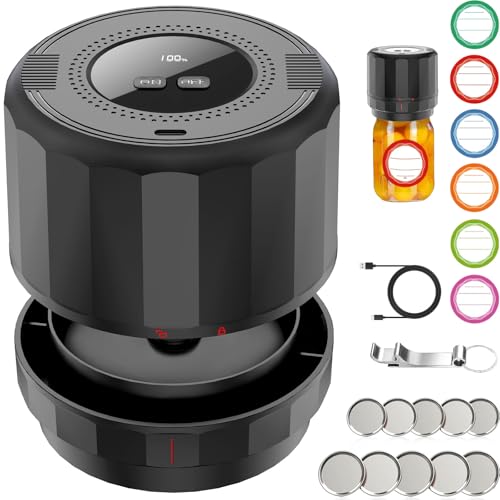
Help Reduce Food Waste & Keep Food Fresh Longer - This mason jar vacuum sealer removes air to create an airtight vacuum seal, helping keep dry goods, coffee, nuts, and leftovers fresh for longer—ideal for food storage, meal prep, and everyday kitchen use, helping extend shelf life, preserve food freshness, and support everyday food storage needs.
Step-by-Step Vacuum Sealing Process
Now that you’ve prepared your flour and jars, you’re ready to execute the vacuum sealing process with precision. Begin by aligning your bag properly in the machine’s clamp, making sure of uniform sealing without wrinkles. Seal the bag edges first without vacuuming to create a partial seal, preventing flour dust from reaching the sealing strip. Then proceed with full vacuum and final seal cycles. These vacuum sealing tips minimize clogging risks considerably.
For flour preservation techniques, allow the complete cycle to finish before opening—wait approximately 30 seconds post-cycle for proper airtight sealing. Interestingly, using a vacuum sealer can help ensure better flavor retention, which is also beneficial for various food storage methods, including sous vide cooking. Check for air pockets; well-sealed bags appear tight around contents with minimal air remaining. If vacuum sealing jars, use manufacturer-approved attachments and verify lids are clean and dry beforehand. This methodical approach assures ideal preservation and machine longevity. Additionally, using proper vacuum sealer bags can help extend shelf life by reducing oxidation and inhibiting bacterial growth.

Made in USA: Proudly manufactured in the United States

Compatible with All Desktop Vacuum Sealers: These vacuum sealer bags are designed to work with all traditional desktop vacuum sealer machines. Simple to operate and convenient to use. (Note: These bags do not feature an air valve and are not compatible with handheld vacuum sealers.)

Safe Materials and Versatile Cooking Options: BPA Free - Sous Vide - Boil in the bag - Microwave friendly **ALWAYS PUNCTURE BAG BEFORE USING IN THE MICROWAVE** - Made of Food Grade PA/PE - BPA and Phthalate Free
Verifying and Testing Your Seals
Once you’ve completed the vacuum sealing process, you’ll need to verify that your flour packages are properly sealed before storing them long-term. Start with visual inspection, examining the heat-sealed edges for continuity, gaps, wrinkles, or cracking that compromises seal integrity. Confirm the seal width meets your vacuum sealer’s specifications.
For robust testing procedures, conduct a vacuum bubble leak test by submerging packages in water under vacuum to detect escaping air bubbles. Alternatively, use a dye ingress test—submerge sealed packages in dyed liquid within a vacuum chamber, pull vacuum for 30 seconds to five minutes, then inspect for dye penetration through seal breaks.
For critical applications requiring micro-leak detection, helium leak testing using mass spectrometry offers superior sensitivity, though it requires specialized equipment. These methodical approaches guarantee your flour maintains quality throughout storage. Additionally, vacuum sealing can extend shelf life by removing oxygen, which is crucial for preserving flour’s freshness.
Optimal Storage Conditions for Vacuum Sealed Flour
While vacuum sealing effectively removes air and prevents moisture ingress, your flour’s longevity depends equally on maintaining proper environmental conditions after sealing. Store your vacuum-sealed flour in a cool, dry pantry away from direct sunlight, maintaining temperature stability to prevent oxidation and rancidity. Room temperature conditions preserve quality for one to two years, while freezing extends shelf life to three years—particularly beneficial for whole grain and bread flours with higher oil content. Using proper torch maintenance can also ensure that cooking tools remain in optimal condition, which may indirectly assist in meal preparation involving flour. Prioritize moisture control by avoiding humid storage environments that compromise seal integrity. Don’t open vacuum-sealed bags in damp conditions; condensation risks flour degradation. In humid climates, consider moisture-impermeable bags for enhanced protection. These environmental factors work synergistically with your vacuum-sealing efforts to maximize flour storage longevity and maintain nutritional integrity. Additionally, proper cleaning and storage methods for your storage containers can prolong the freshness of your flour.

Keep Dry Foods Fresh: Airtight, stackable, space-efficient and completely dishwasher safe, OXO POP food storage containers keep dry foods fresh and kitchens organized. With a variety of sizes, you can customize OXO POP Containers to fit your needs

Contains (1) PrepSolutions Flour Keeper

12-Cup Capacity: Ample storage for all your pantry staples
Shelf Life Expectations and Freshness Duration
Understanding your flour’s remaining shelf life requires tracking both storage duration and environmental conditions, since the vacuum seal itself represents only part of the preservation equation. You’ll find that pantry storage yields one to two years of viability, while freezer storage extends this to three years or beyond. Several freshness factors influence longevity: temperature consistency, moisture exposure, and seal integrity all matter greatly. Your vacuum-sealed flour may lose potency after two years despite remaining safe to use. For best baking results, consume flour within this window. Beyond two years, inspect regularly for spoilage indicators—off odors, mold, or clumping—before use. Proper storage conditions can extend shelf life considerably, potentially reaching ten to fifteen years with airtight containers and stable environments. Additionally, flash-freezing your flour can help maintain its quality before vacuum sealing, particularly if you plan on storing it long-term.
Common Mistakes to Avoid
Successfully vacuum-sealing flour requires vigilance against five primary error categories that can undermine your storage efforts. First, flour’s fine particles clog vacuum sealers; use barrier bags and maintain 3–5 inches of headspace to mitigate this. Second, improper sealing techniques—overfilling bags, sealing immediately without settling, or ignoring moisture—compromise effectiveness. Third, inadequate post-sealing storage conditions degrade quality; avoid warm, humid, or sunlit environments. Just like when roasting marshmallows indoors, unsuitable flour types like whole grain varieties spoil quickly without freezing despite sealing. Finally, equipment neglect reduces performance; maintain your machine’s sealing strip, use appropriate pressure settings, and replace defective bags. Understanding these mistakes avoidance strategies guarantees your sealing techniques preserve flour quality effectively and extend shelf life considerably. To enhance your flour storage, consider utilizing techniques akin to restoring cast iron cookware, as they can similarly extend the life of your products.
Alternative Preservation Methods for Flour
Although vacuum sealing stands as a highly effective preservation method, you’ll find several alternative techniques that can extend flour’s shelf life when circumstances make vacuum sealing impractical or when you’re seeking complementary storage strategies. Flour freezing in airtight containers slows enzyme activity and pest infestation effectively for months. You can also employ oxygen absorbers placed in sealed bags or containers to reduce oxygen levels and inhibit spoilage without specialized equipment. Sealed mason jars or half-gallon glass containers provide reliable airtight protection, though they won’t preserve flour as long as vacuum sealing. For bulk storage, sealed metal cans with oxygen barriers offer durable long-term solutions. Additionally, vacuum sealing with oxygen absorbers increases the overall longevity of flour storage. In humid climates, refrigeration in sealed containers provides short-term protection. Each method requires cool, dry, dark storage conditions for ideal results, and proper seasoning for food releasability can enhance the effectiveness of some storage techniques.

PRODUCT SIZE: 10.5inch high and 6.5inch wide, our air tight pantry is suit for tea, honey, coffee beans,Spice,Cereal,Egg,Flour.

Modular Design: Rubbermaid Storage Containers are compact and stackable, optimizing your kitchen storage space.

AIR TIGHT DRY FOOD STORAGE: This 4-quart capacity flour storage container features a silicone seal & stainless steel hinges for air-tight storage & measurement markings that clearly display contents.