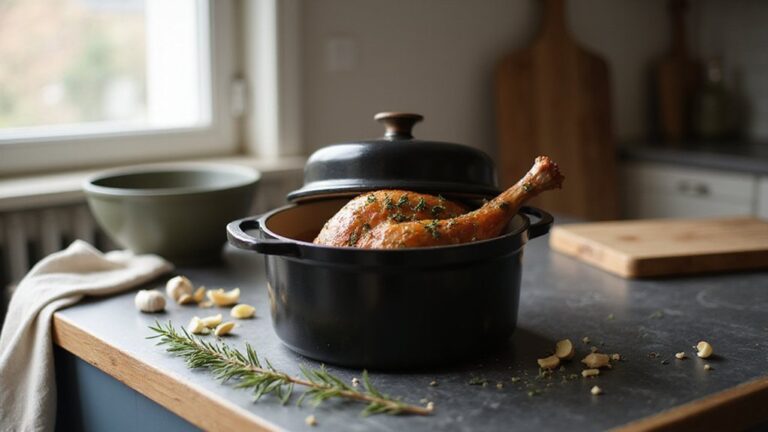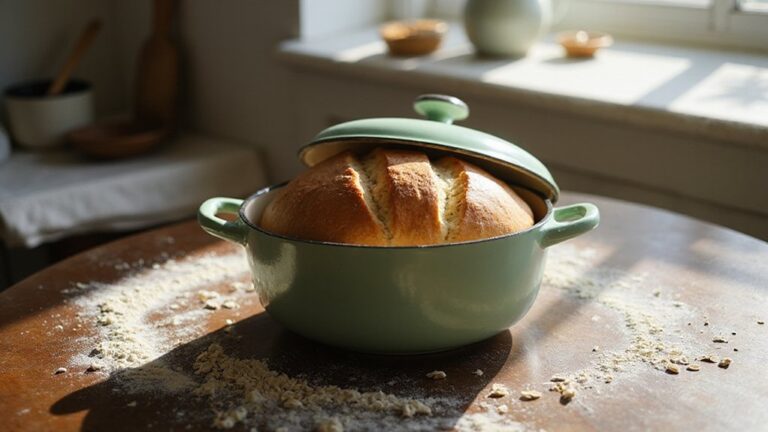
Yes, you can safely use a Dutch oven on your glass stovetop if you handle it properly. Enameled cast iron is preferable to bare cast iron because its smooth coating reduces scratching and sticking risks. Always lift rather than slide the pan, match the burner size to your Dutch oven’s base, and inspect both surfaces for debris before cooking. Preheat on medium heat to prevent thermal shock. Following these precautions protects your investment and guarantees peak performance.
Yes, Dutch Ovens Can Be Used on Glass Stovetops
Although Dutch ovens are traditionally associated with gas and electric coil stoves, you can safely use cast iron and enameled cast iron Dutch ovens on glass cooktops if you follow proper handling procedures. Enameled cast iron is particularly well-suited for glass tops because its smooth, non-porous coating reduces scratching and sticking risks. Cast iron’s exceptional heat retention makes it ideal for the slow cooking techniques that define Dutch oven use. Additionally, the durable glass-like coating of enameled cast iron adds extra protection against damage during cooking. The key to successful heat distribution on glass stovetops is ensuring your Dutch oven has a flat, even base that makes complete contact with the cooktop surface. This stable foundation promotes consistent, uniform heating throughout your cookware, allowing you to execute precise cooking techniques without thermal stress or uneven temperature zones compromising your results. Many recipes cooked in a Dutch oven, such as casseroles and stews, benefit from this effective heat management, making it a versatile choice for various dishes.

Even Heat Distribution Retention: This Umite Chef Dutch oven Made with heavy-duty enameled cast iron, ensures even heat distribution for perfect searing and slow cooking, locking in flavors. thickened walls lock in heat for slow braising, searing, and baking. Unlike thin pots that scorch food, this professional-grade Enameled cast iron potSuperior heat retention after preheating (allow 5-7 mins for even distribution). CRITICAL: Always cool naturally for 45+ mins before cleaning. Thermal shock (hot-to-cold contact) cracks enamel. USE TIP: Preheat 2-3 mins on medium-low only

BREAD BAKER'S DUTCH OVEN, 500°F OVEN-SAFE, SOURDOUGH-READY – one of the highest ratings in its class – delivering the sustained heat that sourdough, artisan bread, and pizza dough demand. Thick cast-iron walls trap and circulate heat like a brick oven, producing bakery-quality crusts at home. The tight-sealing lid features raised self-basting nodes that continuously recirculate steam: a perfect moisture chamber, every single bake.

【Airtight Lid Locks In Freshness & Flavor】Experience the magic of this Dutch oven with lid, precision-engineered to create a tight seal. It locks in moisture and essential nutrients, delivering richer flavor and incredibly tender, juicy results in every dish—from slow-braised meats to hearty soups. Achieve a perfect, crispy crust on your artisan loaves—it's the ultimate Dutch oven for bread baking. The interior self-basting dots continuously redistribute condensation, ensuring your food stays perfectly moist, never dry or mushy
Preparation and Setup Requirements
Now that you’ve confirmed a Dutch oven works on glass stovetops, you’ll want to prepare your cookware and stove properly to prevent damage and maintain peak performance. Your pre-cooking checklist should include inspecting the Dutch oven’s bottom for smoothness and checking the stovetop for cracks or debris. Clean both surfaces thoroughly to remove dirt, grit, and sticky residue that’ll scratch glass. Verify your burner matches the Dutch oven’s base diameter for uniform heat distribution. Preheat the burner on medium heat before placing your cookware down—this stabilizes heat transfer and prevents thermal shock. The Dutch oven’s excellent heat retention confirms its effectiveness for slow cooking methods, making it ideal for various recipes. Confirm induction compatibility if applicable. Keep the cooktop dry throughout preparation. These surface preparation steps establish a safe foundation for cooking while protecting both your Dutch oven and glass stovetop from preventable damage. Additionally, be mindful that Dutch ovens, like cast iron skillets, can be oven safe at high temperatures, which can help in achieving optimal cooking results.

YOUR GO-TO DUTCH OVEN: A flawless pairing of form and function that doesn't quit. The Lodge Dutch Oven not only makes your kitchen look good but is an enameled cast iron classic great for preparing and serving memorable meals. Broil, braise, bake or roast your favorite meals in the oven up to 500 Degree F.

Perfect for 2–4 People: This 2.8 quart enameled cast iron dutch oven is ideal for small families and everyday meals. Great for soups, stews, chili, pasta, rice, and artisan bread baking.

FROM THE ORIGINAL FAMILY OF SLOW COOKERS: This 7-quart enameled cast iron Dutch oven with a glass lid comes from the original line of Crock-Pot slow cookers, which have graced home kitchens for over 40 years. The Artisan Studio collection adapts the best features of the Artisan Enameled Cast Iron Dutch ovens and enhances them with innovative borosilicate glass lids. Glazed and coated with a beautiful enamel finish, each pan is a great addition to the kitchen and a stunning centerpiece for any table spread.
Proper Handling Techniques
Proper handling of your Dutch oven on a glass stovetop requires three core practices: gentle placement, deliberate movement, and constant awareness of how your actions affect both surfaces. Always lift your cookware rather than sliding it across the glass, which prevents scratches and damage. When stirring, hold the pan steady to avoid shifting that compromises surface protection. Additionally, using well-seasoned cast iron cookware can enhance your cooking experience due to its ability to leach dietary iron, benefiting your health. Match your Dutch oven’s size to your burner size for even heat distribution and stability. These handling techniques minimize contact friction and stress on the glass. Never shake the Dutch oven during cooking, as sudden movements risk cracking the stovetop. By prioritizing controlled, intentional actions, you protect both your cookware and cooking surface from preventable damage. Additionally, ensuring that the Dutch oven is not heated on an empty pot is crucial to maintaining the integrity of your glass stovetop.
Compatibility With Different Stovetop Types
Since Dutch ovens come in various materials and constructions, their performance varies across different stovetop types. On gas stovetops, you’ll find that both cast iron and enameled Dutch ovens excel due to even heat distribution and precise flame control. Glass cooktops require gentler handling—place your Dutch oven carefully to avoid scratches, and maintain medium or low heat settings. Ceramic Dutch ovens may not retain heat as effectively as cast iron’s thermal mass during cooking. Electric coil stovetops work effectively with Dutch ovens, leveraging their superior heat retention properties. Induction compatibility depends on ferromagnetic properties; cast iron Dutch ovens work universally on induction, while stainless steel requires a magnet test. Regardless of your stovetop materials, check manufacturer labels for specific temperature recommendations. Most quality Dutch ovens perform reliably across all stovetop types when handled appropriately. It’s crucial to ensure that flame adjustment for any cooking source is optimal, as properly adjusting the torch flame can lead to better cooking results.

Moisture-Locking Cast Iron Cover: The Lodge Seasoned Cast Iron Lid features a tight-fitting design that seals in moisture and supports even, consistent cooking

Suitable for 6-7 people: The 5.5 quart enamel Dutch oven is the choice for cooking food and desserts. Its design makes your food look more delicious

Moisture-Locking Cast Iron Cover: The Lodge Seasoned Cast Iron Lid features a tight-fitting design that seals in moisture and supports even, consistent cooking
Material Considerations and Limitations
When you’re using a Dutch oven on a glass stovetop, the material composition of your cookware becomes critically important to both performance and safety. Cast iron conducts heat slowly but retains it well, while stainless steel with aluminum or copper cores distributes heat evenly and rapidly. Enameled cast iron offers a smoother bottom surface that minimizes scratching risk compared to bare cast iron. Additionally, seasoning cast iron can improve its durability and non-stick properties, enhancing its performance on glass surfaces.
Weight limitations matter considerably. Heavier cookware concentrates pressure on smaller glass areas, increasing crack risk. Manufacturers typically recommend specific weight thresholds for your stovetop model. Always place your Dutch oven gently rather than sliding or dropping it. Uneven heating from certain material types can also stress the glass through differential expansion, so prioritize cookware with consistent thermal properties and smooth, flat bottoms designed for delicate glass surfaces. Additionally, using a cast iron skillet for steak can showcase the versatility of cast iron while considering compatibility with your stovetop.

【Airtight Lid Locks In Freshness & Flavor】Experience the magic of this Dutch oven with lid, precision-engineered to create a tight seal. It locks in moisture and essential nutrients, delivering richer flavor and incredibly tender, juicy results in every dish—from slow-braised meats to hearty soups. Achieve a perfect, crispy crust on your artisan loaves—it's the ultimate Dutch oven for bread baking. The interior self-basting dots continuously redistribute condensation, ensuring your food stays perfectly moist, never dry or mushy

Quality Enameled Dutch Oven: The Lodge Essential Enamel Cast Iron Dutch Oven gives you all the benefits of cast iron cooking, great heat retention and durability, without fear of rust; it's also PFAS free

Quality Enameled Dutch Oven: The Lodge Essential Enamel Cast Iron Dutch Oven gives you all the benefits of cast iron cooking, great heat retention and durability, without fear of rust; it's also PFAS free
Safety Warnings and Performance Issues
Although Dutch ovens are prized for their cooking versatility, they present genuine risks to glass stovetops due to their substantial weight and thermal characteristics. You’ll encounter two primary concerns: physical damage and performance limitations.
The weight of cast iron and enameled Dutch ovens can crack glass if dropped or placed forcefully. Sliding them across the surface causes scratches and micro-fractures that progressively weaken your cooktop. Thermal shock—placing a hot Dutch oven on a cold glass top—creates stress that leads to glass cracking.
Heat distribution remains problematic. Cast iron heats slowly, requiring extended cooking times on glass surfaces. Glass tops themselves distribute heat unevenly, creating hotspots beneath heavy cookware. You’ll achieve better results using medium to low heat settings, which simultaneously protect both your Dutch oven’s enamel and your stovetop’s integrity.
Best Practices for Cast Iron Dutch Ovens
Understanding the risks associated with Dutch ovens on glass stovetops is only half the battle—the other half involves implementing strategies that let you actually use them safely and effectively. Cast iron benefits include superior heat retention and durability, but you’ll need to employ careful techniques to protect your cooktop. Preheat your Dutch oven gradually to prevent thermal shock to the glass surface. Always lift it fully when repositioning rather than sliding or dragging. Clean and dry the bottom thoroughly before use to eliminate burnt-on residues that damage glass, and consider applying a light layer of oil seasoning to maintain its nonstick qualities. After cooking, avoid leaving it cooling directly on the hot surface, which creates permanent marks. Use gentle stirring motions inside the pot instead of aggressive movements on the stovetop itself. Additionally, if your Dutch oven requires deep cleaning, consider using oven cleaner products which can effectively dissolve built-up residues without scrubbing.

Product Content: You will receive 12 pieces of dutch oven lid protective clips, durable and with sufficient quantity to meet your needs of usage and replacement.

Secure Lid Fastening : our clips create a tight seal between Dutch oven lid and body, preventing spills, heat loss, and lid slippage during cooking, carrying, or storage. No more messy accidents in the kitchen or on the go.

PROTECT YOUR COOKWARE INVESTMENT Prevent scratches, chips, and moisture buildup by keeping lids slightly elevated during storage. Ideal for preserving both enameled and bare cast iron surfaces.
Maintenance Tips for Glass Cooktops
Your glass cooktop’s longevity depends entirely on how you maintain it after each use. Establish a consistent cleaning frequency—wipe your cooktop daily with a soft cloth and mild dish detergent to prevent buildup. For surface protection, avoid sliding cookware and never place wet pots directly on the glass, as moisture causes sticking and residue formation. Use only recommended cleaners like CeramaBryte; harsh chemicals damage the surface irreparably. When removing burned-on residue, employ a 45º-angled razor scraper with a sharp blade, then buff dry with a microfiber towel. Inspect your scraper regularly and replace dull blades promptly to prevent gouging. These maintenance practices preserve your cooktop’s integrity and appearance while ensuring safe, reliable performance. Treating your cooktop with care ensures it withstands the heat from Dutch oven desserts and enhances its lifespan.