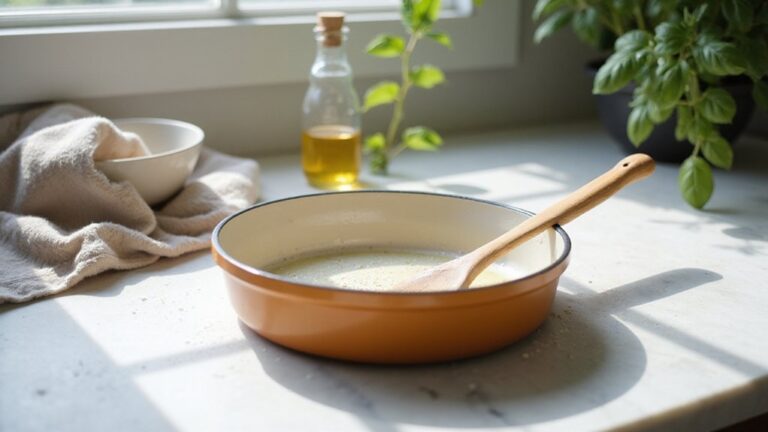
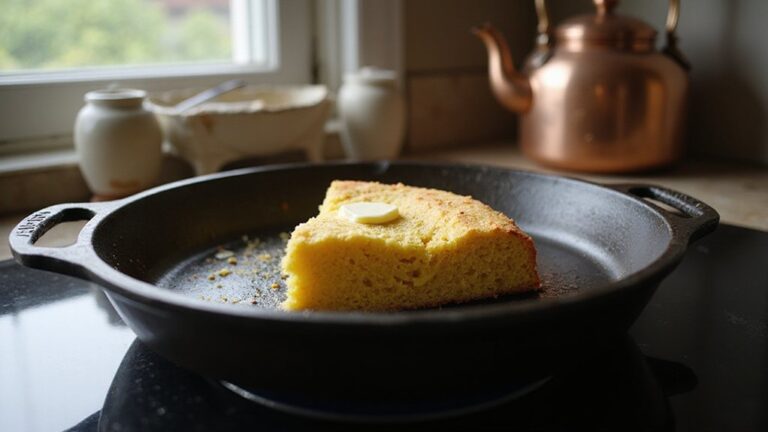
You’ll restore rust-spotted cast iron by sprinkling coarse salt on affected areas, then scrubbing with a halved raw potato using circular motions. The potato’s oxalic acid chelates iron ions while salt catalyzes rust dissolution through electrolyte action. Rinse thoroughly with warm water, then towel-dry immediately. Heat the skillet until it slightly smokes to guarantee complete moisture evaporation. Apply a thin oil layer for protection. These fundamentals establish your foundation, but ideal longevity requires additional protective measures.
Gathering Your Supplies and Preparing Your Workspace
Before you begin scrubbing your cast iron, you’ll need to gather a handful of supplies and set up a workspace that keeps your cleaning efficient and contained. Your supply checklist includes coarse salt, a raw potato, cooking oil, paper towels or clean cloths, and warm water. Optionally, add a scrub brush for stubborn debris and gloves if you prefer hand protection.
For workspace organization, designate a stable, flat surface near a water source. Place protective mats or covers on your countertop to prevent mess. Arrange your supplies within arm’s reach: salt and potato nearby, oil and towels ready for the post-cleaning phase. Guarantee adequate ventilation if you’ll heat the pan after oiling. This methodical setup minimizes interruptions and maintains control throughout the cleaning process. Remember, drying completely and oiling after every cleaning is crucial to keeping the skillet in optimal condition, as this process contributes to the development of a resilient, non-stick layer.

Premium Mediterranean sea salt from Spain

CLEANS & RESTORE CAST IRON | Best used for removing rust & burnt on food spots while helping to build & fortify the natural seasoning of cast iron cookware. A great solution for cleaning & restoring cast iron skillets, pots, pans, dutch ovens and grills.

RESTORES & RESEASONS | Includes our Cast Iron Scrub designed to restore & remove stubborn rust spots. Helps to remove burnt & stuck on food spots that develop over time. Made with high quality coconut oil to help season & enhanced with essential oils to eliminate odours.
Applying Salt and Potato to Remove Rust
Now that your workspace is organized and supplies are ready, you’ll employ coarse salt and a raw potato as your primary rust-removal tools. Your application technique begins by sprinkling generous amounts of coarse salt directly over rusted areas. Cut a raw potato in half and use the cut side to scrub the salt firmly into rust spots using circular motions. The potato’s moisture activates the salt, creating a paste-like texture that enhances rust abrasion. As you scrub, maintaining a hot and humid environment can also help achieve good results in other kitchen projects. Continue scrubbing and reapplying salt as needed until rust visibly diminishes. The soft potato prevents surface damage while the salt granules create friction that effectively loosens rust particles. Rinse your pan thoroughly with water immediately after scrubbing to remove salt residue and loosened rust debris. This method is effective because the salt acts as a mild abrasive, similar to how baking soda can remove stubborn residue from cast iron.

Cast Iron Rust Remover: The Lodge Rust Eraser is a compact, abrasive rust eraser that restores cookware and other cast iron pieces with precision rust removal

Rust removal, Brushed Metal Finish, Deburring.

RESTORES & SEASONS CAST IRON COOKWARE: Culina Cast Iron Scrub is designed to restore cookware by removing stubborn rust spots, burnt residue, and stuck-on food that builds up over time. Infused with high-quality coconut oil, it also helps season cast iron surfaces while essential oils help eliminate unwanted odors.
Understanding the Chemical Process Behind Rust Removal
While the salt-and-potato method appears simple, its effectiveness relies on a sophisticated chemical interaction between rust’s iron oxide compounds and the cleaning agents you’re applying. Potatoes contain oxalic acid, an organic acid that chelates iron ions, converting insoluble iron oxides into soluble complexes. This process weakens rust’s adherence to your cast iron surface. Salt acts as a catalyst, creating an electrolyte solution that enhances electrical conductivity and destabilizes the iron oxide layer. Together, these agents lower the activation energy required for rust dissolution. The oxalic acid protonates the iron oxide, forming iron oxalate complexes that you can physically remove through scrubbing. Additionally, this method can be seen as a mechanical action that systematically breaks down rust’s crystalline matrix, restoring your cookware’s functionality. After rust removal, it’s essential to season the cast iron multiple times to ensure long-term usability and prevent flash rust formation.
Rinsing and Drying Your Cast Iron Skillet
After you’ve successfully removed rust using the salt-and-potato method, the next critical phase involves thoroughly rinsing and drying your skillet to prevent immediate re-oxidation. Your rinsing techniques should employ warm water to eliminate salt residues and loosened particles from all surfaces. Avoid soaking, which promotes rust formation.
For drying methods, towel-dry immediately, then place the skillet on low heat until it slightly smokes—this guarantees complete moisture evaporation from pores and crevices. Heat drying is essential because cast iron rusts rapidly when stored damp. Additionally, using soap while cleaning can be helpful for removing manufacturing residues or stubborn food residue.
Once cool, apply a thin oil layer to create a moisture barrier. Proper drying coupled with immediate oiling maintains your skillet’s seasoning and prevents rust between uses.

YOUR NEW GO-TO SEASONING SPRAY: The Lodge Seasoning Spray is the perfect seasoning spray to maintain your cast iron cookware. It is made of 100% canola oil - no additives or propellants, to protect your cookware and enhance its finish.
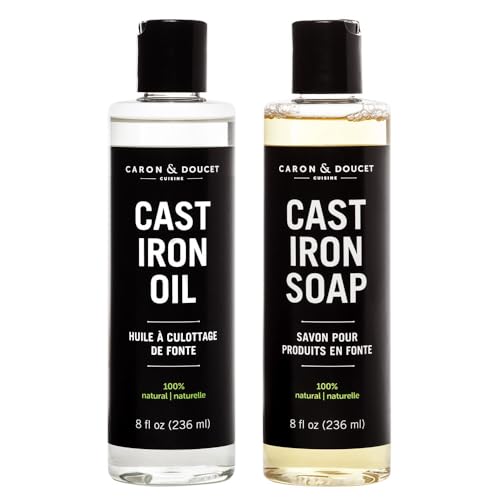
CLEANS CAST IRON | Includes our Cast Iron Soap unlike detergent based soaps, this soap is formulated with 100% natural plant-based oils & free of sulfates, phosphates, parabens & petrochemicals! Gentil on cast iron seasoning & on your hands!
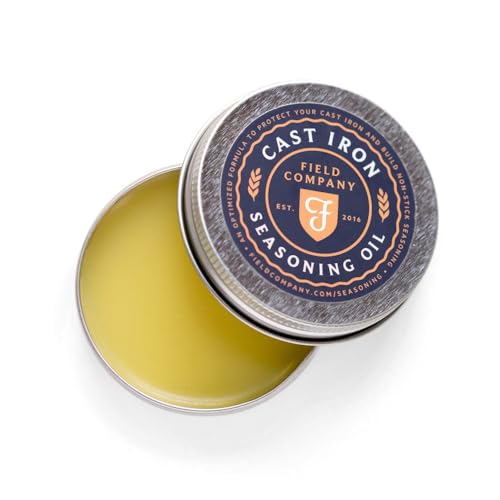
HOW TO USE: The key to naturally nonstick cast iron cookware? Cook often, and apply Seasoning Oil every time you clean your pan. Clean your cast iron with soap and a brush, then use a chain mail scrubber to smooth out existing seasoning layers. Apply a dab of Seasoning Oil and spread it thinly over the surface with a paper towel or clean rag. Wipe away excess oil to leave a dry, matte finish.
Seasoning Your Skillet for Protection and Longevity
Once you’ve thoroughly dried your skillet, seasoning becomes the cornerstone of cast iron maintenance—it’s what transforms a bare pan into a naturally nonstick cooking surface with lasting rust protection. Start with proper oil selection: choose high smoke point oils like avocado oil or Crisco shortening. Apply a thin, even layer across all surfaces, then wipe away excess with a lint-free cloth. Effective seasoning techniques involve heating your skillet to 200°F before oil application, allowing cast iron pores to open for better absorption. Regular use helps build and maintain the skillet’s natural nonstick seasoning as well. Bake upside down at 450–500°F for one to two hours, repeating this cycle at least six times. Cool gradually inside the oven to guarantee layers adhere properly and harden completely, building a durable, protective patina. It’s important to note that proper seasoning not only enhances nonstick properties but also helps prevent iron from leaching into food during cooking.

Mild and Easy: Grapeseed Oil is at its best in stir-fries and sautés; it doesn't overwhelm other ingredients and lets fresh flavors shine. When grilling or frying, it is a must-have in the pantry.

Light Buttery Flavor That Elevates Every Meal: Algae Cooking Club Chef-Grade Algae Oil enhances every dish with subtle richness. Its neutral profile makes it ideal for searing, baking, and dressings, transforming everyday meals into gourmet experiences.
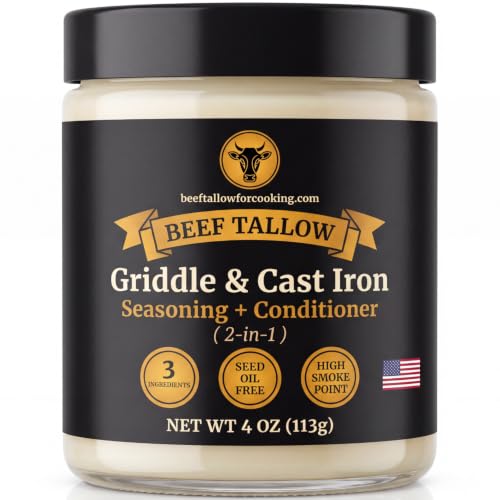
THE SEED OIL FREE FORMULA — Golden Render is the world's first seed oil free, tallow-based griddle seasoning & cast iron conditioner. While others use soy, shortening, grapeseed, sunflower or canola, we use just 3 clean ingredients: beef tallow, avocado oil & beeswax.