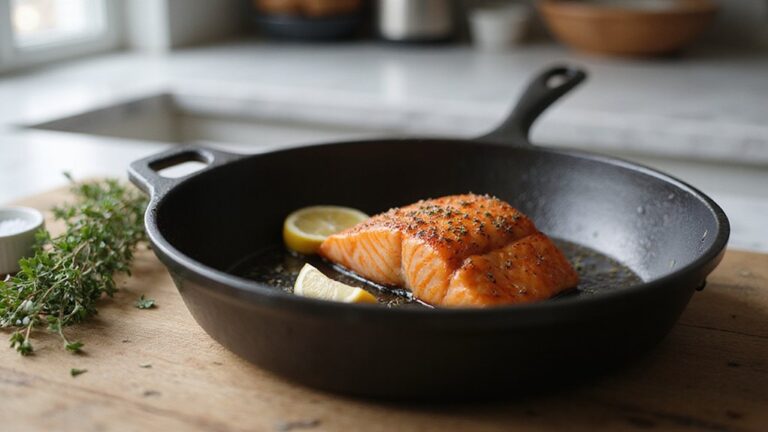
You can spray cast iron with PAM occasionally, but frequent use creates sticky residue buildup that compromises your pan’s seasoning and non-stick properties. PAM’s emulsifiers and propellants prevent proper oil polymerization, unlike pure oils that bond durably to cast iron. The spray’s uneven distribution and chemical additives interfere with authentic seasoning development. While light misting between deep cleanings works for maintenance, you’ll uncover why pure oils deliver superior long-term results for your skillet’s performance.
Is PAM Safe to Use on Cast Iron?
How safe is PAM for cast iron cooking? You can safely use PAM on your cast iron pan during regular cooking. The FDA has determined that PAM’s ingredients are safe for consumption, and the chemical additives won’t corrode or degrade your cookware. Occasional use won’t harm you or the pan.
However, PAM’s effects become problematic with frequent application. The propellants and emulsifiers can interfere with seasoning quality and create sticky residue buildup. While cooking convenience is undeniable, you’ll sacrifice long-term maintenance benefits.
The key distinction: occasional cooking use is acceptable, but don’t rely on PAM for seasoning or maintenance. For best results and minimal buildup, consider pure oils like grapeseed or canola instead. Regular use helps build and maintain the skillet’s seasoning and avoids potential issues with PAM.
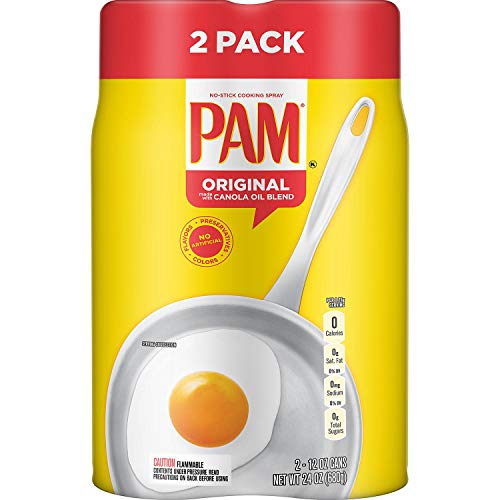
Pack of 2, 12 ounce cans (total of 24 ounces)


One 5 oz can of PAM Non Stick Olive Oil Cooking Spray
How Emulsifiers Build Up on Your Pan
When you spray PAM on cast iron, you’re introducing soy lecithin and other emulsifiers that don’t exist in pure oils. These additives bond with the oil and polymerize onto your pan’s surface during cooking. Unlike regular oil, emulsifiers don’t burn off completely, creating a sticky, yellowish-brown layer that accumulates with repeated use.
This emulsifier interaction produces residue that’s harder to remove than standard oil buildup. You’ll notice the tacky coating feels rough and uneven, especially in heavily sprayed areas. The layer masks your seasoning and interferes with non-stick performance, potentially transferring to your food. Additionally, using pure oil can enhance the non-stick performance of your cast iron, making it a better choice for cooking. Regular cleaning with warm water and a brush is crucial to maintain your skillet’s integrity and prevent buildup.
Residue removal requires more aggressive intervention than normal washing. You may need high heat, chemical stripping, or physical scraping for severe buildup. Regular use of pure oil prevents this problem entirely.
Why PAM Isn’t Ideal for Initial Seasoning
PAM’s chemical additives fundamentally disrupt the polymerization process that creates durable cast iron seasoning. When you apply PAM for initial seasoning, emulsifiers and anti-foaming agents prevent oils from bonding properly to your pan’s surface. Unlike ideal oils such as flaxseed or grapeseed, PAM’s canola oil base lacks sufficient drying properties to form resilient seasoning layers. The spray format also prevents controlled application and precise heat treatment—both essential for peak polymerization. You’ll struggle to achieve the thick, hardened protective layer that pure oils deliver. Additionally, PAM’s additives create uneven seasoning patches that flake or accumulate as sticky residue. For initial seasoning, you’ll get superior results applying pure oils directly, heating above the smoke point to maximize bonding and durability. While PAM may be convenient, it doesn’t provide the same temperature-controlled water bath environment necessary for optimal seasoning development.
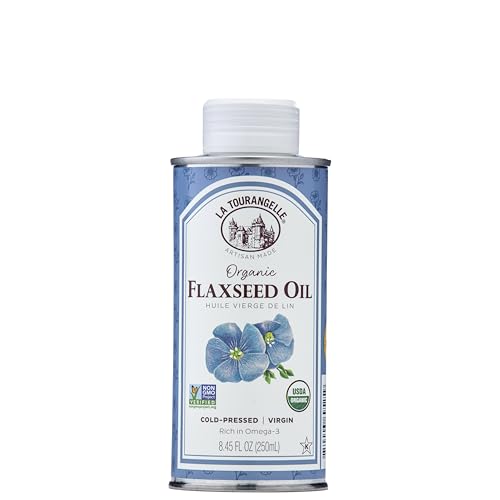
Organic Flaxseed Oil: This oil provides over 7 grams of plant based Omega-3, making it the ideal ingredient to add to your smoothies, oatmeal, or salad dressings.

PURE, ORGANIC AND UNREFINED: Barlean's organic flax oil is cold pressed without the use of heat or solvents. Each drop is protected from damaging heat and light from seed to bottle, offering a potent and healthy balance of Omegas 3, 6, and 9 and a pleasant and mild nutty flavor.

TLC for your griddle cooktop: All you need to build a slick, easy-release surface that's protected from rust and easy to work with using Blackstone griddle seasoning and cast iron conditioner
The Role of Dimethyl Silicone in Cast Iron Care
While PAM’s chemical additives create problems during initial seasoning, dimethyl silicone—a key component in the spray—actually offers practical benefits for cast iron maintenance and daily cooking. This silicone oil penetrates microscopic pores in your cast iron, creating a slick, durable layer that enhances non-stick performance without compromising your seasoning. Unlike thicker cooking oils, dimethyl silicone won’t degrade under high heat or break down from repeated washing with detergent. You’ll notice food releases more easily and cleanup requires less scrubbing. Using a meat thermometer benefits extend to cast iron longevity: it resists rust promotion, remains stable through temperature fluctuations, and reinforces existing seasoning rather than interfering with it. For maintenance cooking—not initial seasoning—this component delivers genuine advantages. Additionally, using well-seasoned cast iron can help to maintain its integrity and effectiveness in cooking.
Best Practices for Applying PAM to Cast Iron
The key to maximizing PAM’s benefits while minimizing residue buildup lies in application restraint and proper technique. You’ll achieve peak results by using light misting rather than heavy coating. Apply minimal spray amounts directly before cooking to enhance non-stick properties and simplify cleanup without accumulating sticky residue.
Your application techniques should include spreading the spray evenly across the pan’s bottom, sides, and handle using paper towels or clean rags. Immediately wipe away excess coating before storage to prevent buildup that compromises performance. Pre-cooking application reduces food adhesion effectively while maintaining your cast iron’s seasoning integrity, which is essential for optimal cooking results. Additionally, proper care of your skillet, including routine cleaning and seasoning, supports its longevity and performance.
For storage maintenance, apply light spray amounts and wipe thoroughly. This consistent routine reinforces existing seasoning layers between deep seasoning cycles, extending your cookware’s lifespan.
Understanding Residue and Surface Degradation
Why does cooking spray leave stubborn residue on cast iron despite your best cleaning efforts? The answer lies in understanding the residue types and surface degradation patterns you’ll encounter.
Soy lecithin, an emulsifier in PAM, accumulates on your pan’s surface, creating yellowish-brown buildup that persists after washing. This sticky residue actually worsens food sticking rather than improving it. Meanwhile, chemical additives interfere with proper oil polymerization, preventing the seasoning layer from bonding securely with iron.
Over time, you’ll notice larger flakes or grayish-black specks on your towels during cleaning. These indicate improper seasoning application where excess oil creates gummy layers prone to peeling. Acidic recipes accelerate this degradation, loosening residue further. Raw iron becomes exposed beneath flaking seasoning, creating gray spots that compromise your pan’s protection and non-stick properties. Additionally, proper seasoning techniques are essential for maintaining the skillet’s non-stick properties and preventing residue accumulation.
Pure Oils vs. Cooking Spray Formulations
Several critical differences separate pure oils from aerosol cooking sprays like PAM, and these distinctions directly impact cast iron seasoning. While pure oils contain solely fat, PAM’s oil composition includes soy lecithin, dimethyl silicone, and propellant gases that fundamentally alter how the product behaves on cast iron surfaces.
You’ll notice pure oils bond directly to seasoning layers through polymerization, creating durable protective coatings. Conversely, PAM’s additives compromise this bonding process. The anti-foaming agent and emulsifiers prevent proper adhesion, while propellants create uneven distribution patterns that don’t establish consistent seasoning. Additionally, spray versatility comes at a cost—those additives can accumulate on cast iron, producing sticky residue rather than seasoned surfaces. For cast iron maintenance, pure oils deliver superior results because their straightforward composition supports authentic seasoning development without interference from chemical additives. Using pure oils is beneficial as they can contribute to enhancing the iron content of food, aligning with the health benefits associated with cast iron cookware.
Moreover, using pure oils allows for more effective Dutch oven desserts and better enhances the flavors of your outdoor cooking adventures.

100% GRAPESEED OIL BULK SIZE: Expertly crafted by The Olive Oil People using wine grape seeds imported from France

Mild and Easy: Grapeseed Oil is at its best in stir-fries and sautés; it doesn't overwhelm other ingredients and lets fresh flavors shine. When grilling or frying, it is a must-have in the pantry.

From America's #1 Avocado Oil Brand — A oil sprayer for cooking with the same purity standard you already trust, now in a fast, clean, propellant-free cooking spray format. Pair with Chosen Foods Avocado Oil pourable bottles, Avocado Mayo, Salad Dressings, and Dipping Sauces for a complete clean-label kitchen built on real ingredients and real avocados. From a Certified B Corporation on a mission to do good in the world by being good for the world.
Alternative Products for Better Seasoning Results
Since PAM and similar commercial sprays fall short for cast iron seasoning, you’ll find superior alternatives in products specifically formulated with wax additives or pure oils. BuzzyWaxx and Crisbee combine beeswax with grapeseed or canola oil, enhancing polymerization for darker, more durable seasoning layers. For budget-conscious approaches, Crisco delivers comparable performance at lower cost.
Among alternative oils, flaxseed oil creates exceptionally hard finishes through superior polymerization, though its low smoke point demands careful heating. Proper seasoning involves heating the oil to its smoke point so it bonds chemically with the cast iron, forming a durable protective layer. Organic canola oil balances high smoke point with neutral flavor, ideal for maintenance seasoning. Grapeseed oil offers versatility with high smoke point and healthful unsaturated fats. Vegetable and sunflower oils provide convenient, readily available seasoning alternatives with adequate smoke points for everyday use. Additionally, using beef tallow for seasoning provides a natural, heat-stable option that helps create a robust non-stick surface.

High-Heat Cooking Oil: Organic flax seed oil for medium-high heat cooking up to 400°F; great for frying, stir-frying, roasting, sautéing, and baking with a mild, pleasantly nutty flavor.

PURPOSE-BUILT FORMULATION FOR CAST IRON & CARBON STEEL - Specifically formulated for cast iron and carbon steel cookware—not a general cooking oil. Made with refined flaxseed oil, traditionally favored for seasoning applications, designed to help build a durable, well-bonded seasoning layer with proper use.

Maintenance Seasoning vs. Building a Strong Base Layer
The fundamental distinction between maintenance seasoning and building a base layer determines whether PAM is appropriate for your cast iron care routine. You can use PAM for maintenance between deep cleanings, as it helps preserve your existing seasoning layer without significant risk. However, you shouldn’t use PAM for initial base layer seasoning. Chemical additives in PAM interfere with oil polymerization, creating weak, flaky seasoning bonds that compromise seasoning longevity.
When you apply PAM repeatedly, maintenance challenges emerge. Emulsifiers and dimethyl silicone accumulate, requiring more frequent aggressive cleaning to remove sticky residue. Meanwhile, pure oils like grapeseed or canola establish durable foundations through proper polymerization. Use PAM strategically for touch-ups only, never for foundational work. Additionally, maintaining a tight-fitting lid on your Dutch oven can enhance cooking effectiveness and flavor retention, similar to how strong seasoning layers improve the performance of your cast iron.