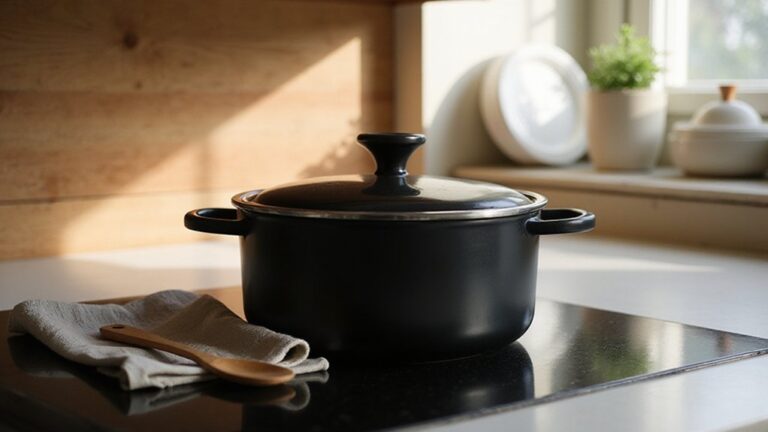
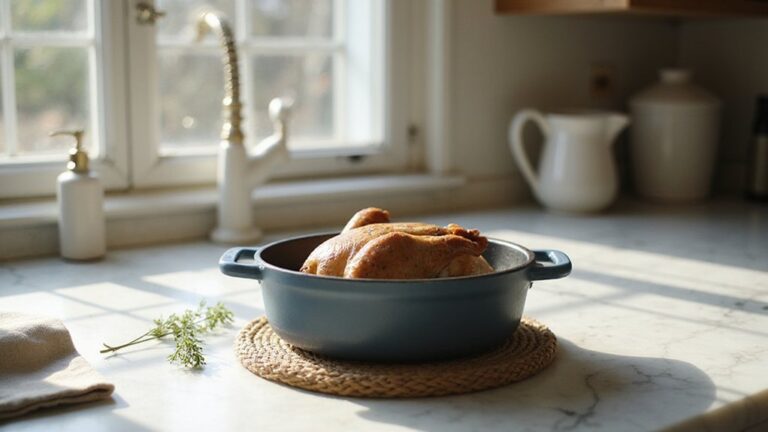
You’ll transform a tough top round roast into tender perfection by dry-brining it 24–48 hours, then generously seasoning with kosher salt, pepper, and herbs. Sear all sides in a preheated Dutch oven until deeply browned. Braise at 275°F–300°F for 3.5–4 hours, monitoring internal temperature to 140°F. Rest for 15–20 minutes before slicing to retain moisture. The technique’s nuances—from deglazing to gravy-making—determine your final results.
Preparing Your Top Round Roast
Five key steps‘ll set you up for success before you ever turn on the oven. First, select a top round roast weighing three to five pounds with good marbling for ideal tenderness. Remove it from refrigeration thirty minutes prior to cooking, allowing it to reach near room temperature for even cooking throughout.
Pat your roast dry thoroughly with paper towels to promote effective seasoning adhesion and superior browning during searing. Trimming any excessive fat or silver skin from the surface to prevent chewy texture and guarantee uniform heat penetration is vital, just as using specialized thermometers is important for precise cooking temperatures.
Finally, apply kosher salt generously—approximately one teaspoon per pound—twenty-four to forty-eight hours before cooking. This dry brining technique penetrates the meat deeply, enhancing flavor and moisture retention while the roast rests uncovered in your refrigerator. Proper heat distribution is important for achieving an evenly cooked roast, just as it is with chicken in a cast iron skillet.

ON YOUR TABLE FOR GENERATIONS - Morton has been a household staple since 1848.

No additives; Only pure kosher salt

For All Seasons: No pun intended! Whether it’s your next dinner party or a night in, our non iodized salt kosher option has you covered
Seasoning for Maximum Flavor
Once you’ve prepared and dry-brined your roast, it’s time to build layers of flavor through strategic seasoning. Start with kosher salt and freshly ground black pepper as your foundation, applying them liberally across the entire surface. Combine garlic powder, onion powder, and dried herbs like rosemary and thyme to establish robust herb combinations that enhance aromatic enhancements. For deeper umami depth, incorporate mustard powder into your spice blends. The best method to ensure the ideal crust is to season your roast in a hot skillet, as this can help in achieving the perfect browning effect.
Hand-rub your seasoning mixture thoroughly, pressing it firmly into the meat to guarantee ideal crust development. Allow the roast to rest at room temperature for up to 90 minutes, enabling salt absorption and flavor penetration. Binding your rub with olive oil improves adherence and browning potential. This methodical approach to seasoning ratios and rub applications creates complex flavor profiles that’ll define your final dish. Additionally, using a culinary torch can help achieve a beautifully caramelized crust on the outside of the roast.
The Art of Searing
Before you sear your seasoned roast, you’ll need to prepare your Dutch oven with meticulous care. Preheat it for 5-10 minutes, then add oil or butter to protect the enamel. When a water droplet dances across the surface, you’re ready to begin.
Pat your roast dry to eliminate excess moisture that inhibits browning. Sear each side for 2-4 minutes over medium-high heat, developing a rich crust without overcooking the interior. Avoid moving the meat excessively; allow proper crust formation before flipping. Searing your roast properly can enhance the flavor profile similar to how one would restore a cast iron pan to ensure optimal cooking.
Don’t overcrowd the pan. Space matters for adequate heat circulation and ideal Maillard reaction. After searing all sides thoroughly, remove the roast and deglaze the Dutch oven with broth or wine, scraping up fond buildup. This concentrated fond enriches your final dish, layering complex flavors throughout your braise. Remember, the term “Dutch oven” also refers to a popular humorous prank involving a humorous prank that has gained online popularity.

2-in-1 Versatile Cookware Design: The Lodge Cast Iron Double Dutch Oven is a Dutch oven and dual-handle skillet in one smart design, expanding your options for searing, baking, frying, and more

Pre-Seasoned Combo Cooker - The 10.25" cast iron cookware comes coated with oil and ready for cooking right out of the box. The seasoning helps create a smoother cooking surface that improves with every use while enhancing flavor.

2-in-1 Versatile Cookware Design: The Lodge Cast Iron Double Dutch Oven is a Dutch oven and dual-handle skillet in one smart design, expanding your options for searing, baking, frying, and more
Choosing the Right Oven Temperature
Now that you’ve built a flavorful fond in your Dutch oven, selecting the right oven temperature becomes your next critical decision—it’ll ultimately determine whether your roast emerges fork-tender or sliceable and firm.
Your temperature selection hinges on your desired outcome. For fall-apart tenderness, choose 275°F–300°F and plan 3.5 to 4 hours of slow braising. This low-temperature cooking method gradually breaks down collagen while minimizing moisture loss, essential for lean top round. Additionally, the Dutch oven’s moisture-trapping capabilities enhance the overall cooking process, ensuring flavorful results.
Alternatively, moderate temperatures of 325°F–350°F balance cooking time and tenderness, requiring 2.5 to 5 hours depending on roast size. This method suits cooks wanting pronounced crust development with tender results.
For rare or medium-rare doneness, use 375°F and expect 30–45 minutes—though this cooking method sacrifices tenderness for speed. Always monitor internal temperature with a meat thermometer for precision. Additionally, be cautious to allow the fuel and components to stabilize before igniting your torch, as this ensures a safe cooking experience.

Temperature Range: 140° to 190°F / 60° to 87°C. Probe Length: 4.75-inches Dial Diameter: 2.375-inches
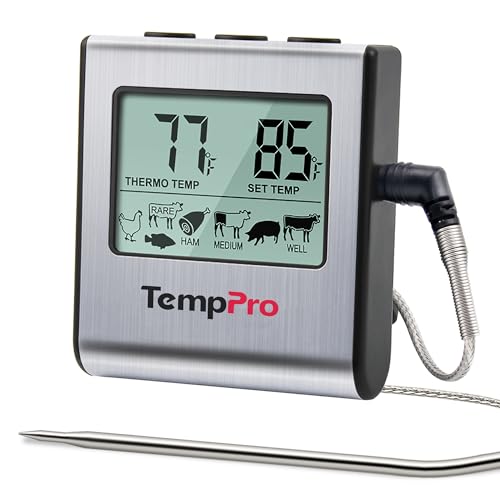
Cook mode with USDA preset temperature settings: TempPro cooking thermometer ideal for meat, oven, smoker or stove top; Programmable alert with preset temperatures for specific foods recommended by USDA; All of the preset temps can be reset to your desired tastes

【8X Faster + 4X More Precise】: Upgraded with an industrial-leading professional thermocouple sensor, Themomonster meat thermometer digital with NIST certified ±0.5℉ precision provides you the accurate temperature of your food in just 0.5 Seconds.
Mastering the Braising Process
The foundation of exceptional braised top round rests on your choice of vessel and technique. You’ll need a heavy, oven-safe Dutch oven that distributes heat evenly and retains moisture throughout cooking. For optimal results, incorporate slow-cooking methods as part of your technique.
Begin by patting your meat dry and seasoning generously with salt and pepper. Sear it over medium-high heat until you develop a rich, brown crust. Next, sauté your aromatics—onions, garlic, and vegetables—until softened and lightly browned. Deglaze the pot with stock or wine, scraping up all fond from the bottom.
Return your seared meat to the pot and add enough liquid to reach halfway up its sides. This braising technique prevents boiling while maintaining concentrated sauce. Bring to a gentle simmer, cover, and transfer to the oven. A careful approach to seasoning and adding aromatics ensures peak flavor infusion throughout the roast.

Even Heat Distribution Retention: This Umite Chef Dutch oven Made with heavy-duty enameled cast iron, ensures even heat distribution for perfect searing and slow cooking, locking in flavors. thickened walls lock in heat for slow braising, searing, and baking. Unlike thin pots that scorch food, this professional-grade Enameled cast iron potSuperior heat retention after preheating (allow 5-7 mins for even distribution). CRITICAL: Always cool naturally for 45+ mins before cleaning. Thermal shock (hot-to-cold contact) cracks enamel. USE TIP: Preheat 2-3 mins on medium-low only

BREAD BAKER'S DUTCH OVEN, 500°F OVEN-SAFE, SOURDOUGH-READY – one of the highest ratings in its class – delivering the sustained heat that sourdough, artisan bread, and pizza dough demand. Thick cast-iron walls trap and circulate heat like a brick oven, producing bakery-quality crusts at home. The tight-sealing lid features raised self-basting nodes that continuously recirculate steam: a perfect moisture chamber, every single bake.

PFAS-FREE & NON-TOXIC COOKWARE: ATTENTION: If your manual mentions "enamel" or "low-medium heat only", it is incorrect. This is 100% pure cast iron cookware! Not Enamel-Coated: Safe for High-Heat Cooking! Metal utensils OK (avoid sharp edges) Every Umite Chef cast iron pot has been burned with 100% natural, food-grade vegetable oils—absolutely zero PFAS, PFOA, PTFE, synthetic coatings, or toxic chemicals. Our seasoning naturally builds with use, developing a superior non-stick surface over time while ensuring oven-to-table safety
When and How to Add Vegetables
Once you’ve established your braising liquid and brought it to a gentle simmer, timing becomes critical for achieving the ideal vegetable texture. Your timing considerations should reflect each vegetable’s density: add hardy root vegetables like potatoes and carrots after 1.5–2 hours of braising, while tender varieties like asparagus go in during the final 15–20 minutes. The cooking liquid plays a crucial role in enhancing the flavors of your vegetables as they braise.
For proper vegetable preparation, cut everything into uniform sizes to guarantee even cooking. Toss your vegetables with oil, salt, pepper, and herbs before placing them around—never directly under—your roast. This positioning allows them to absorb braising liquid flavors while cooking properly. Monitor liquid levels throughout, adding broth if necessary. You’ll achieve fork-tender root vegetables and crisp-tender delicate ones by respecting these timing distinctions. Additionally, ensure that any vegetables you’re adding are properly sealed in a vacuum to maintain their freshness and flavor while stored.
Monitoring Doneness With a Meat Thermometer
Accurate temperature monitoring is essential for achieving your desired doneness level while preserving the roast’s tenderness and juiciness. You’ll want to invest in a digital thermometer offering accuracy within ±1°F for consistent results. Remember to check the thermometer’s oven-safe status to ensure safe use during cooking.
For proper probe placement, insert the thermometer into the thickest part of your roast centrally, avoiding fat and bone, which conduct heat differently and produce false readings. If you’re using a leave-in probe, you can monitor continuously without lifting the Dutch oven’s lid and losing heat.
Before cooking, verify temperature calibration by checking your thermometer’s accuracy. A properly calibrated food thermometer is crucial for ensuring your meat reaches safe temperatures during the cooking process. Pull your roast at 140°F to account for carryover cooking during the mandatory 3-minute rest. The USDA recommends reaching 145°F for safe medium doneness.
The Importance of Resting Your Roast
Now that you’ve pulled your roast from the oven at the precise temperature we’ve discussed, you’ll need to resist the temptation to slice immediately. Resting your roast is critical for achieving ideal results.
During cooking, muscle fibers contract and push juices toward the meat’s center. Cutting immediately causes these juices to escape onto your cutting board. Instead, allow your roast to rest for 15-20 minutes, enabling fibers to relax and reabsorb moisture through juices redistribution.
This resting period accomplishes multiple objectives. Carryover cooking continues gradually, stabilizing internal temperature while further relaxing muscle fibers. Simultaneously, connective tissue converts to gelatin, rehydrating the meat and enhancing its tender meat quality. Additionally, correctly timing the oven finish can prevent overcooking and ensure a succulent roast.
Your patience yields noticeably superior results: considerably retained moisture, improved texture, and fully developed flavor complexity throughout each slice.
Creating Pan Gravy From Braising Liquids
Your rested roast’s flavorful drippings are now ready to transform into luxurious pan gravy. Pour the liquid through a fine mesh sieve into a measuring glass, removing solids and impurities. Skim the fat layer for clarity.
Melt butter over medium heat and whisk in flour, stirring constantly until it achieves a light golden color. Slowly pour your strained braising liquid while whisking continuously to prevent lumps. Add liquid incrementally for best incorporation. This technique helps to ensure a smooth consistency, resulting in a savory cooking liquid that enhances your dish.
Bring the mixture to a rolling boil for 3-5 minutes, then reduce heat to medium. Stir frequently as it simmers, thickening to your desired consistency. Explore gravy variations by incorporating red wine or cream during final stages, as deep flavor from these ingredients can enhance your gravy experience. Season with salt and pepper after reaching proper thickness. Serve immediately to prevent skin formation.

TWO packages of gluten free country gravy


Usda Certified Organic and Kosher
Pro Tips for Perfect Results Every Time
Since mastering a top round roast depends on understanding each step’s purpose, you’ll want to focus on the fundamentals that distinguish exceptional results from mediocre ones. Invest in a quality meat thermometer—it’s your most reliable tool for preventing overcooking. Don’t skip the resting period; those 10–15 minutes allow carryover cooking and juice redistribution, ensuring moistness throughout. Using the correct equipment, such as a cast iron Dutch oven, can also enhance moisture retention for your roast.
Consider marinating techniques for tougher cuts, though top round’s leanness requires careful timing to avoid drying. If you’re exploring roast alternatives, chuck provides more marbling but demands longer cooking times.
Finally, maintain consistent oven temperature and avoid lifting the lid during braising. Each interruption drops internal heat and extends cooking time. Regular calibration of your thermometer is crucial for accuracy to guarantee fork-tender results consistently.