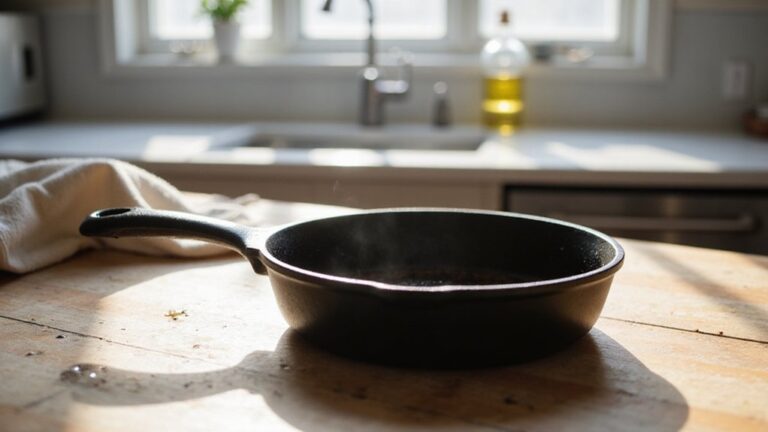
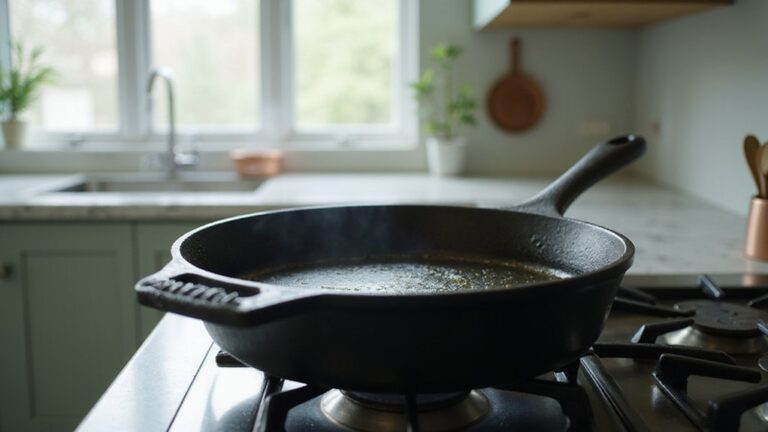
You’ll season your cast iron skillet by applying thin flaxseed oil layers and heating them to 500°F for polymerization. Start with proper cleaning using warm soapy water and steel wool to remove contaminants. Apply one tablespoon of oil per cycle, removing excess to prevent stickiness. Repeat this six-layer process across multiple sessions, allowing 30-60 minutes per layer. This methodical approach creates a durable, rust-resistant finish. Understanding the complete timeline and maintenance protocols will optimize your seasoning results.
The Science Behind Flaxseed Oil Seasoning
When you heat flaxseed oil on cast iron, you’re initiating a chemical transformation that distinguishes it from other cooking oils. Flaxseed oil contains alpha-linolenic acid (ALA), a polyunsaturated fat that offers unique polyunsaturated benefits for seasoning applications. During heating, oil polymerization occurs as the oil’s double bonds break and reattach to other molecules, forming stable long-chain polymers.
You’ll notice smoke rising from the pan—this isn’t evaporation but rather the chemical degradation and oxidation necessary for seasoning formation. Proper seasoning techniques are essential for achieving the best results, as free radicals form during this process, bonding with monomer molecules to create hardened layers. Unlike bacon fat or grapeseed oil, flaxseed oil’s low smoke point makes it exceptionally reactive to heat and oxygen exposure, producing durable, chemically-bonded protection that resists rust and wear effectively. Additionally, properly seasoning your cast iron skillet involves heating the oil to its smoke point so it bonds chemically with the cast iron, forming a durable protective layer.
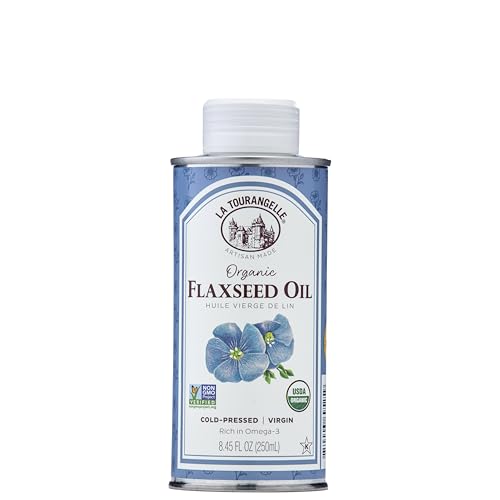
Organic Flaxseed Oil: This oil provides over 7 grams of plant based Omega-3, making it the ideal ingredient to add to your smoothies, oatmeal, or salad dressings.

PURE, ORGANIC AND UNREFINED: Barlean's organic flax oil is cold pressed without the use of heat or solvents. Each drop is protected from damaging heat and light from seed to bottle, offering a potent and healthy balance of Omegas 3, 6, and 9 and a pleasant and mild nutty flavor.

TLC for your griddle cooktop: All you need to build a slick, easy-release surface that's protected from rust and easy to work with using Blackstone griddle seasoning and cast iron conditioner
Pre-Seasoning Preparation Steps
Three critical preparation steps’ll determine whether your flaxseed oil seasoning adheres properly and creates that durable protective layer: you’ll need to remove all contaminants, eliminate any existing rust or deteriorated seasoning, and make sure the skillet’s completely dry before applying oil.
Start by scrubbing with warm soapy water and a non-abrasive sponge, then rinse thoroughly. For rust spots or flaky seasoning, use steel wool or a wire brush to strip the surface completely. Address stubborn rust with a vinegar-water soak (1:1 ratio) for up to one hour. Proper cleaning techniques such as avoiding soap also enhance the effectiveness of your seasoning process.
Heat the skillet on low for five to ten minutes to evaporate remaining moisture. This methodical approach to skillet maintenance guarantees ideal rust prevention and establishes the perfect foundation for flaxseed oil seasoning success.
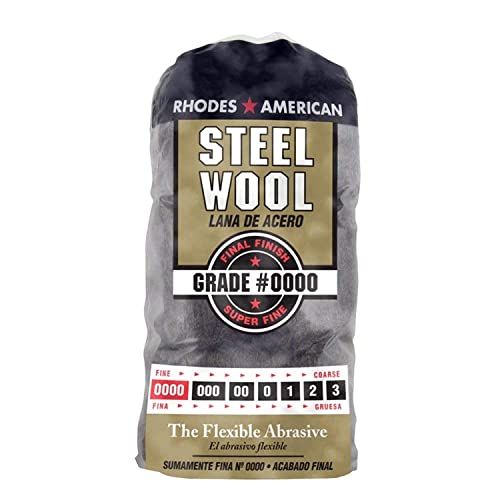
Steel wool super fine grade #0000 used in cleaning, polishing, buffing and refinishing

Steel wool coarse grade #3 used in cleaning, polishing, buffing and refinishing

𝗦𝗨𝗣𝗘𝗥 𝗙𝗜𝗡𝗘 𝗖𝗟𝗘𝗔𝗡𝗜𝗡𝗚 𝗣𝗢𝗪𝗘𝗥:Achieve flawless cleaning and buffing results with SIMBA Steel Wool Grade #0000. As the finest grade available, our pack of 16 pads ensures precise, superior performance every time. This 0000 steel wool works perfectly as a steel wool scrubber and steel wool pads, making it ideal for detailed cleaning, polishing, and 0000 steel wool for cleaning tasks.
Oil Application and Initial Coating
Your cast iron’s success depends on applying flaxseed oil with precision—a single tablespoon per seasoning cycle, distributed as a thin, nearly translucent layer across every surface. Pour the oil directly onto your warm pan, then use a paper towel or cloth to rub it thoroughly into all areas, including sides and handles. Shake your flaxseed oil bottle beforehand to guarantee proper oil consistency. Using tongs to hold your towel reduces direct hand contact while facilitating uniform spreading. Repeat the rubbing process with fresh towels to further thin the layer. Remove all excess oil completely—pooling residue causes sticky, uneven seasoning. Your application technique determines whether you achieve a durable nonstick finish or compromise your skillet’s seasoning quality. Notably, flaxseed oil possesses a high degree of polymerization that contributes to a robust non-stick surface when used correctly. To enhance your seasoning results, ensure the pan reaches high smoke point temperatures during the heating process, as this is crucial for effective polymerization.

High-Heat Cooking Oil: Organic flax seed oil for medium-high heat cooking up to 400°F; great for frying, stir-frying, roasting, sautéing, and baking with a mild, pleasantly nutty flavor.

Kuche Chef Cast Iron Oil is made from flaxseed oil that is grown and pressed pure in the USA - North Dakota. It is 100% organic flaxseed oil that contains a high concentration of Omega-3 fatty acids

Velona USDA Certified Organic Flaxseed Oil: 100% Pure and Natural Carrier Oil. Unrefined. Cold Pressed. Not Diluted, Non-GMO, No Additives, No Fragrance, Alcohol Free.
Oven Heating and Temperature Protocol
Once you’ve applied your thin oil coating with precision, the oven’s heat becomes the critical factor that transforms flaxseed oil into a durable, polymerized seasoning layer. You’ll want to preheat your oven to 500°F (260°C)—the ideal oven temperature for flaxseed oil seasoning. If your oven maxes out lower, use the highest available setting, maintaining a minimum of 450°F (232°C). This temperature must exceed flaxseed oil’s smoke point of approximately 225–230°F (107–110°C). Higher temperatures accelerate polymerization, creating a harder, more resilient finish. Additionally, preheating the skillet ensures even heat distribution, which is vital for effective seasoning. Place your pan upside down on the center rack with aluminum foil positioned below to catch drips. Allow the pan to preheat fully with the oven before beginning your one-hour baking cycle. Remember that proper seasoning techniques are essential for achieving optimal cooking performance with your cast iron skillet.

PURPOSE-BUILT FORMULATION FOR CAST IRON & CARBON STEEL - Specifically formulated for cast iron and carbon steel cookware—not a general cooking oil. Made with refined flaxseed oil, traditionally favored for seasoning applications, designed to help build a durable, well-bonded seasoning layer with proper use.

Important information about the spray applicator: The optional spray top (the product may be applied without spraying) has an off/on button on the neck of the trigger sprayer, some do not realize this and think the sprayer doesn't work. It works well but you need to make sure the button is in position that allows it to spray and you pump vigorously a few times at first to initialize the sprayer.
Kuche Chef Cast Iron Oil is made from flaxseed oil that is grown and pressed pure in the USA - North Dakota. It is 100% organic flaxseed oil that contains a high concentration of Omega-3 fatty acids
Repetition Schedule and Timeline
Now that you’ve mastered the oven heating protocol, understanding the repetition schedule determines how effectively you’ll build your seasoning layers. You’ll apply six layers efficiently, with each cycle requiring thirty to sixty minutes depending on your temperature settings. Plan for forty-five to ninety minutes per layer when accounting for cooling periods between applications. Adding a delicious glaze during the final layers can help enhance the flavor of your seasoning.
Your total project demands six to nine hours for complete seasoning. However, timeline adjustments accommodate your availability—you can extend the process across multiple sessions without compromising results. Batch processing multiple pans simultaneously maximizes efficiency during extended oven usage.
Additionally, applying a thin layer of olive oil while the pan is warm can enhance the non-stick surface, ensuring better seasoning. Repetition intervals remain flexible based on your patience and schedule. Whether you complete the project in one day or spread it across weekends, consistency in timing across all layers produces uniform seasoning results that’ll serve you reliably for months ahead.
Performance Characteristics and Limitations
While flaxseed oil delivers superior seasoning results, understanding its performance characteristics and limitations helps you make informed decisions about your cast iron maintenance. Your performance advantages include exceptional durability, a hard polymerized finish, and superior nonstick properties that withstand extensive cooking. Additionally, using seasoning oils like flaxseed oil can enhance the overall cooking experience in your cast iron skillet. However, you’ll encounter significant odor challenges during the seasoning process—the oil’s low smoke point of 225°F causes rapid polymerization and pronounced smell emission, necessitating proper ventilation. Temperature management becomes critical; you must carefully control oven heat to prevent excessive darkening. While the resulting dark patina indicates successful polymerization, the pungent odor intensity may prove inconvenient. Despite these limitations, the durable, long-lasting molecular bond between polymerized flaxseed oil and your cast iron surface justifies the temporary sensory tradeoff. Regular seasoning maintenance is essential to keep your skillet functioning optimally and prevent rust.