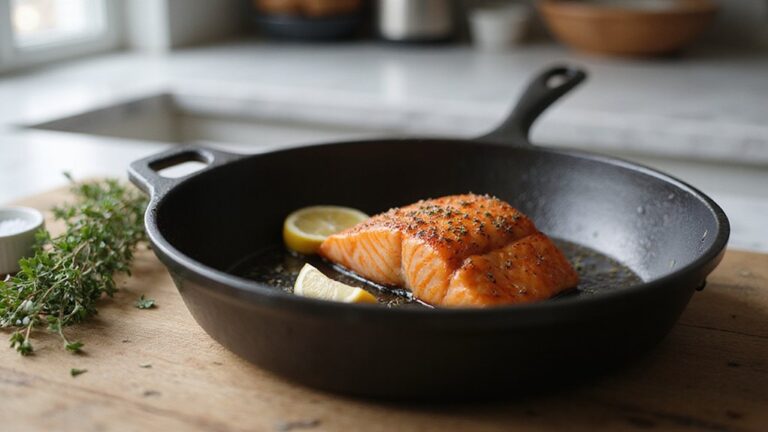
You’ll transform store-bought dough into crispy, golden pizza by preheating your cast iron skillet with olive oil, then pressing the room-temperature dough into it. Pre-bake the crust for two minutes before adding your sauce and toppings—this creates that perfectly firm foundation. Bake at 450°F on the bottom rack for eighteen to twenty minutes, then shift to the top rack for two to three minutes to finish. Watch that final stage closely for that ideal golden-brown crust. The techniques that truly elevate your results await ahead.
Equipment & Pan Selection
When you’re preparing to make cast iron skillet pizza, selecting the right pan becomes your foundation for success. You’ll find that 10-inch, 12-inch, and 14-inch cast iron skillets offer ideal sizes for home baking. Non-enameled surfaces deliver superior results because they radiate more heat than their enameled counterparts, creating those crispy, golden crusts you’re after. Additionally, the Dutch oven’s superior heat retention is a crucial factor in ensuring evenly cooked pizzas.
Cast iron benefits extend beyond performance. The material won’t dent, bend, or warp under intense heat, maintaining its shape through countless pizzas. You’ll develop a naturally non-stick surface through proper skillet maintenance and seasoning, preventing dough from sticking during placement. Consider dutch ovens or braisers as alternatives if you prefer deeper sides. Flat baking pans with loop handles simplify transporting your heavy pan safely in and out of the oven. Additionally, a well-seasoned cast iron skillet can enhance flavor and create a chemical-free cooking surface that improves with use.
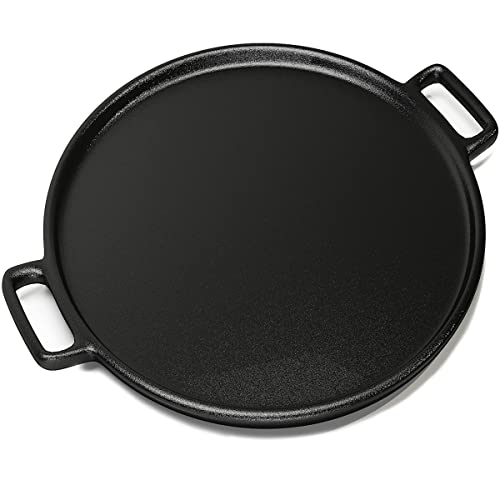
CAST IRON PAN - Constructed from durable cast iron, this flat pan will survive tough wear and tear for many years to come while being easy to maintain. To clean, simply rinse with hot water and wipe with a soft sponge, then dry and rub with oil.

Heavy Duty Construction: The Lodge Seasoned Cast Iron Pizza Pan features rugged cast iron craftsmanship built for dependable durability, everyday versatility, and generations of use
Ingredients & Dough Amounts
Your cast iron skillet pizza starts with quality dough—and you’ve got flexible options. You can grab frozen or refrigerated dough types from grocery stores or local pizzerias, then let it warm to room temperature for easier stretching and superior workability.
Your crust thickness preference determines dough quantity. For a chewy thick crust, use 3/4 pound; for crispy thin results, use 1/2 pound. A standard 10-inch skillet accommodates a full pound of room temperature dough, while a 12-inch skillet produces slightly thinner, crispier results with that same amount.
Once you’ve selected your dough, you’ll need 1.5-2 cups low-moisture mozzarella, 1/3 to 3/4 cup pizza sauce, and two tablespoons olive oil. These ingredients combine beautifully in your prepped skillet, delivering authentic pizzeria-quality results in roughly 30 minutes. Additionally, if using a cast iron skillet on a glass top stove, ensure it has a smooth bottom to avoid scratching the surface. To enhance your cooking accuracy, remember that emissivity plays a crucial role in obtaining precise temperature measurements when using infrared thermometers for cooking.
Temperature & Oven Settings
Getting your oven to the right temperature makes all the difference between a soggy, undercooked pizza and one with a crispy, golden crust and perfectly melted cheese. You’ll want to preheat your oven to 450°F for balanced browning, or push it to 500°F if you’re after extra crispiness in about 10-12 minutes. Proper temperature control is crucial to achieving that perfect pizza.
Strategic oven placement matters tremendously. Position your skillet on the bottom rack initially to brown the crust thoroughly for 18-20 minutes at 450°F. If your toppings need more color, shift the pizza to the top rack for 2-3 minutes. This dual-rack approach lets you control temperature adjustments independently, giving you a perfectly caramelized cheese layer without burning your crust. Additionally, the Dutch oven’s excellent heat retention can help in achieving that crispy texture if you decide to experiment with cast iron options. Monitor closely during final minutes to catch that ideal golden moment.
Preparation & Dough Shaping
Before you shape your dough, you’ll need to let it come to room temperature—this essential step prevents the cold dough from snapping back and shrinking as you stretch it. If your dough resists stretching, allow 10-15 minutes of dough resting to enable gluten relaxation, making the dough more pliable and forgiving. Fresh ingredients like Dutch oven desserts can make for a great pairing with your homemade pizza while camping.
When you’re ready to shape, dust your work surface lightly with flour to prevent sticking without overdoing it. Pat the dough gently into an 8×10 inch circle, favoring pressing motions over intense stretching to preserve those vital air pockets. Press the dough directly into your pre-oiled, preheated cast iron skillet, molding it to fit the base and edges. Create a slightly thicker outer edge by pushing dough outward from the center, forming a natural crust border that’ll bake beautifully. Remember, seasoning your skillet can significantly enhance the flavor and texture of your pizza crust.
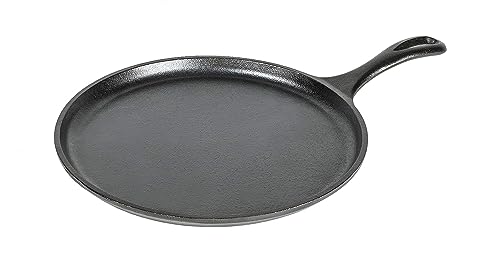
Pre-Seasoned & Ready to Use: The Lodge Cast Iron Griddle comes naturally pre-seasoned and ready to use for tortillas, pancakes, and more right from the box

✅ EVERY PIZZA PURIST'S DREAM: From delivering that perfect crispy golden-brown crust, to its flexibility of using it in the oven or outside on the BBQ, a cast iron pizza pan is a must-have in your pizza-making arsenal. If you love a thick and crispy crust that's golden on the bottom, but puffy and soft under the layers of sauce and mozzarella, the Chef Pomodoro 12 inch Cast Iron Pizza pan will make you think twice before eating a frozen pizza again!
Cooking Process & Timing
Once you’ve shaped your dough and oiled your skillet, it’s time to harness the power of high heat. Place your dough into the preheated skillet and press it toward the edges, adjusting for your skillet size. Let it cook undisturbed for 3–5 minutes until the bottom browns and bubbles form—this essential step prevents sogginess, mimicking the heating process used in soldering to ensure an even cook throughout the dough.
Add toppings next, then bake at 450–500°F for 10–18 minutes. Higher temperatures need just 10–12 minutes, while lower settings require up to 20. Watch for a golden crust and bubbling cheese. The unique ability of cast iron to retain heat ensures that your pizza develops a deliciously crisp base.
Position your skillet on the bottom rack initially for crust browning, then move it to the top rack during the final minutes to achieve perfectly browned cheese and toppings. Check the dough consistency throughout—it should transform from pale to crispy and golden.
Topping & Sauce Application
With your dough browning beautifully on the skillet’s bottom, you’re ready to layer in the flavors that’ll make your pizza memorable. Start with sauce layering—spread ¼ to ½ cup evenly across the dough, leaving the edges bare for crust development. A thin layer prevents sogginess while guaranteeing crispiness.
Next comes topping distribution. Sprinkle shredded mozzarella generously over the sauce as a protective barrier. Arrange your toppings—whether pepperoni, sautéed mushrooms, or bell peppers—in balanced portions across the surface. This even distribution guarantees heat penetrates uniformly, preventing soggy spots and undercooked areas. To achieve that perfect finish, keep in mind the final baking time to ensure your pizza is bubbly and golden brown. A cast iron skillet can also help create that perfect crust due to its superior heat retention.
Finish with a light drizzle of olive oil around the edges and fresh herbs like oregano or basil. These final touches add depth and visual appeal before baking.

One 16-ounce bag of low-moisture part-skim Shredded Mozzarella Cheese

Brought to you by Whole Foods Market

One 8-ounce bag of Shredded Pizza Four Cheese Blend
Tips for Perfect Results
Several key decisions you’ll make before sliding your skillet into the oven will determine whether you’re biting into a crispy, evenly-cooked masterpiece or a soggy disappointment.
Master dough handling by allowing your dough to rest at room temperature for thirty minutes before shaping. This simple step transforms resistant dough into pliable material that stretches without tearing. If resistance returns during shaping, pause for ten minutes rather than forcing the dough. After cooking, remember to revive your cast iron with proper cleaning methods to maintain its quality for future use.
For crust texture, pre-bake your crust for two minutes before adding sauce and toppings. This creates a firm foundation that resists sogginess. Keep toppings minimal to guarantee even cooking and maintain that coveted crispy exterior.
Monitor your oven closely at high temperatures, watching for browning rather than burning. Position your skillet on the top rack for direct heat on toppings and superior crust bubbles. Additionally, ensure to maintain the non-stick layer of your cast iron by seasoning it properly, which significantly enhances your pizza’s cooking performance.

Secure Dual Assist Handle: The Lodge Seasoned Cast Iron Dual Handle Pan features dual assist handles for a secure grip when moving this cast iron skillet

Versatile Cooking Skillet: The Lodge Cast Iron Skillet is a multipurpose, everyday cooking pan that excels at searing, sautéing, baking, frying, and campfire meals

【Heavy-Duty Cast Iron Construction with Non-Stick Coating】- Made from premium cast iron and finished with a scratch-resistant, non-toxic non-stick coating, this sizzler pan delivers exceptional durability and easy food release. Built to last for generations, just like your favorite heirloom cookware.