

You’ll transform your manual slow cooker into a sous vide system by connecting an external temperature controller and Type J thermocouple for ±1°F–±3°F precision. Vacuum-seal your trimmed proteins in BPA-free bags, then submerge them in the temperature-controlled water bath. Cook steaks at 129°F–145°F for 1.5–4 hours depending on thickness, or tough roasts for 12–24+ hours. Monitor vacuum seal integrity throughout cooking. Rapidly chill finished dishes below 3°C within six hours. The balance between precision equipment, proper technique, and food safety determines your success.
Equipment Setup for Sous Vide With a Slow Cooker
To successfully adapt a slow cooker for sous vide cooking, you’ll need to evaluate several critical components: the cooker itself, water circulation apparatus, temperature monitoring and control systems, and food containment methods. Start with slow cooker selection by choosing a manual knob model over digital controls to prevent auto shut-off after power loss. For water circulation, integrate an aquarium air pump with a bubble stone positioned at the cooker’s bottom to maintain uniform temperature distribution. It is essential that the internal temperature of the food reaches a safe level to ensure a delicious outcome. Secure tubing away from vacuum-sealed bags. Add a Type J thermocouple immersed in water—not touching sides or bottom—connected to an external temperature controller that cycles power for precision temperature maintenance. Finally, use heat-safe vacuum seal bags and stackable racks to elevate food away from direct heat sources while ensuring complete water submersion. It’s important to use proper plastic materials for sous vide cooking, as not all plastics are safe at elevated temperatures.
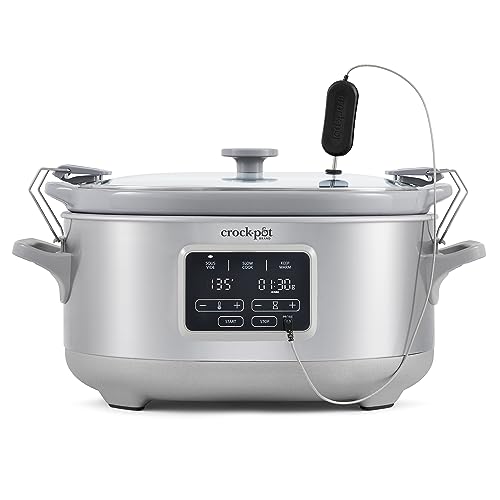
Sous Vide Function: Food cooks in a temperature controlled water bath, in air-tight bags, for unrivaled results. The removable probe ensures food reaches a precise internal temperature, so there's no over- or under-cooking. Finish on the stove for a perfect, caramelized sear

UNIVERSAL FIT: Black replacement control knob designed for CrockPot Hamilton Beach slow cookers with standard shaft mounting

[Secure Fastening Integration] Engineered as a specialized mounting fastener designed to hold heating units firmly against pot rims without slipping or wobbling during use.
Temperature Control and Precision
The thermostat—your sous vide setup‘s critical control mechanism—cycles power on and off to maintain your target temperature with precision that unmodified slow cookers can’t achieve. You’ll experience temperature fluctuations of ±1°F to ±3°F depending on your controller and cooker model. External controllers reduce temperature swings considerably compared to unregulated slow cookers, which exhibit poor stability unsuitable for sous vide without modification. For precision control, you’ll calibrate your setup by setting the slow cooker to HIGH, then adjusting the temperature knob until water stabilizes at your desired setpoint. Mark this knob position for future reference. PID-based controllers offer superior stability by minimizing overshoot and undershoot. Additionally, using a lid and avoiding opening frequently can help maintain consistent temperatures throughout your cook, keeping in mind that External controllers can further enhance stability of the cooking environment. Furthermore, cooking with Le Creuset skillets can also contribute to better heat distribution, enhancing the overall cooking experience.
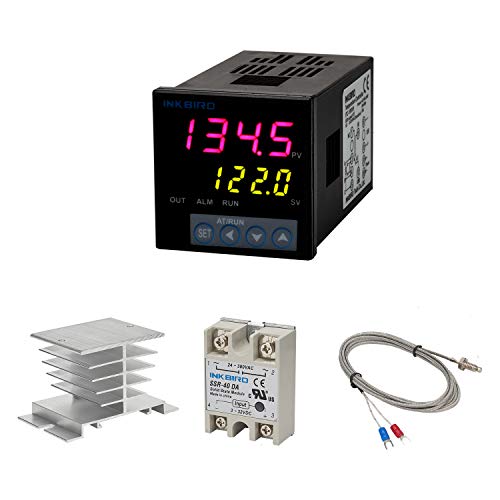
Alarm Output: With 1 alarm relay output, AC250 V, 3 A (Resistive load), ON or NC, you can wire a buzzer

Pros have been doing it for years, and now you can too. Sous vide (pronounced sue-veed) is a cooking technique that utilizes highly precise temperature control in a circulating bath of water to deliver consistent, edge-to-edge perfect results, with virtually no risk of overcooking your food.

Support reading with Centigrade or Fahrenheit unit.It is more suitable for setups with water cycle. If the device does not have water cycle, the ITC-100 series is recommended
Food Preparation and Packaging
Before you seal anything, you’ll need to thoroughly clean your ingredients to remove dirt, debris, and surface contaminants—a crucial step that directly impacts food safety in the controlled sous vide environment. This is similar to ensuring a proper environment for bread-making with high hydration dough, as cleanliness in preparation can greatly influence the end result. Pat everything dry afterward; moisture interference compromises seal integrity.
Trim or portion large cuts for even cooking and easier packaging. Consider ingredient seasoning strategically—sous vide intensifies natural flavors, so minimal seasoning often suffices. You can marinate beforehand if desired, but it’s optional.
Select vacuum-sealable, heat-resistant, BPA-free bags specifically designed for sous vide. Thicker bags resist punctures from bones or sharp edges. Remove air completely using a vacuum sealer or water displacement method. Align bags carefully to avoid wrinkles that compromise seals. Additionally, using specialized sous vide bags enhances safety and improves cooking results.
Label each bag with contents and date for organization and food safety tracking.

✔️【Wide Range of Use】Made of PE/PA food grade material, FIRAWER sous vide cooking bags are reusable up to 10 times, can keeps fresh for meat, seafood, vegetables, fruits, grains, nuts snacks and sandwiches, ect. Suitable for kitchen, camping, spring outing, travel and other scenes.

Compatible with All Desktop Vacuum Sealers: These vacuum sealer bags are designed to work with all traditional desktop vacuum sealer machines. Simple to operate and convenient to use. (Note: These bags do not feature an air valve and are not compatible with handheld vacuum sealers.)
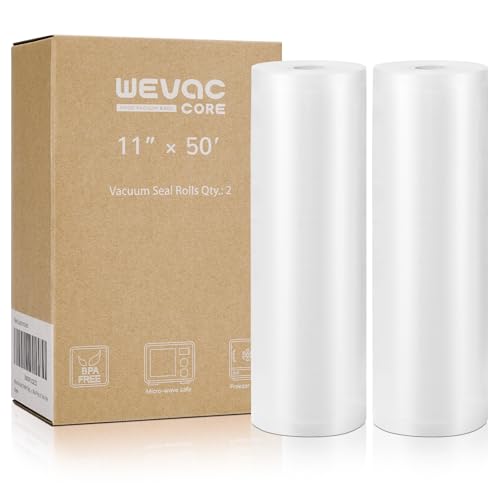
HEAVY DUTY AND PUNCTURE PREVENTION - 2 pack of 11 inch by 50 feet rolls with embossed channels to increase suction, keep fresh without freezer burn or dehydration
Cooking Process and Timing
Once you’ve sealed your ingredients, you’ll need to establish precise temperature control—the cornerstone of successful sous vide cooking. Set your slow cooker’s target temperature based on ingredient types: 129°F–145°F for steaks, 110°F–132°F for fish, or specific temperatures for eggs and delicate items. Vacuum sealing helps ensure that air and moisture are locked out, further slowing spoilage and enhancing the cooking process. Monitor temperature continuously using an immersion thermometer or probe sensor to maintain ±1°F accuracy.
Cooking times vary considerably by thickness and ingredient type rather than weight. A 1-inch steak typically requires 1.5–4 hours, while fish needs 30 minutes–1.5 hours. Tough roasts benefit from 12–24+ hours for ideal tenderness. The beauty of sous vide lies in its flexibility: once your ingredient reaches target temperature, you’ll maintain it safely for extended periods without overcooking, allowing convenient sequential cooking adjustments. While a vacuum sealer is not absolutely necessary, using one can significantly enhance cooking results by ensuring even cooking and improved flavor retention.

Fully Automatic Operation: Fresko fully automatic vacuum sealer, includes 10 pre-cut bags, 140W power, dry & moist modes and bag-mouth clamp (prevent bag from moving for a better seal). The food sealer machine is Ideal for meal prep, food storage, and sous vide cooking

【42 PCS Food Vacuum Sealer Set, Use for Home /Restaurant /SuperMarket】Kosbon 42 PCS Sous Vide Vacuum Sealer Set - 30 Reusable Bags, 5 Clips and Sealing Clips for Anova, Joule Cookers.

👍Innovative Pressure Release Function – The FEPPO vacuum sealer with bags automatically releases pressure at -40kpa, ensuring efficient sealing and easy detachment without mess. No more struggles or spills, unlike traditional models.
Advantages and Limitations of Using a Slow Cooker for Sous Vide
While slow cookers offer an economical entry point into temperature-controlled cooking, they present distinct trade-offs when you’re attempting to replicate sous vide results. You’ll notice that slow cooker compatibility with precision cooking is limited due to inconsistent temperature maintenance, which undermines sous vide benefits like exact doneness control. Your food won’t achieve the uniform texture that vacuum sealing provides—instead, trapped moisture creates sogginess. You’ll sacrifice nutrient retention and flavor concentration without vacuum protection. Additionally, delicate proteins require finishing steps like searing to develop crust, complicating your workflow. While slow cookers excel at affordability and hands-off convenience, they can’t match sous vide’s consistency or capacity for large batches. Consider your priorities: budget-friendly versatility versus precision and food quality. Remember that rust can degrade performance when using any cookware, including slow cookers, emphasizing the importance of proper maintenance.
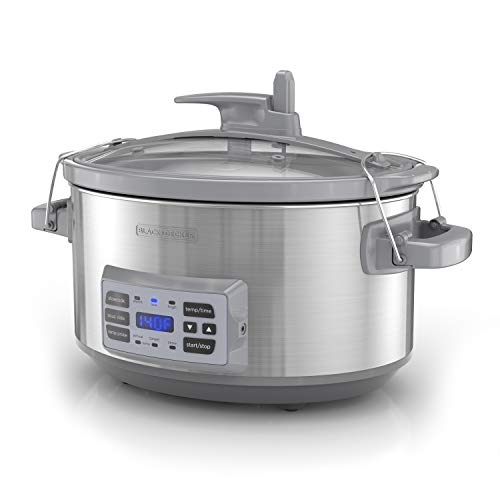
Temperature Probe: Set your desired temp and insert the probe—unit adjusts heat to maintain it automatically. Keep lid closed to avoid heat loss, which can cause uneven cooking or undercooked results. Great for perfectly cooked meats every time

Results: Sous vide offers the most precise cook times and temperatures to produce the most tender and perfectly cooked steak possible.

Get Doneness Right: Take the guesswork out of medium-rare steaks, juicy chicken, tender fish, and more with precise control that keeps the water at your chosen temperature. With 1100W power for baths up to 15L, continuous circulation moves heated water throughout the container and around your food for steady, even heat from every direction.
Food Safety and Quality Considerations
Temperature precision separates safe sous vide cooking from dangerous bacterial proliferation. You must maintain core temperatures at 60°C for 45 minutes minimum, ensuring your slow cooker reaches and sustains these benchmarks consistently. Under-temperature cooking risks Clostridium botulinum and Salmonella growth, particularly in the 4–60°C danger zone. Additionally, using a smart meat thermometer can help accurately monitor both internal and ambient temperatures during the cooking process.
Ingredient quality directly impacts sous vide safety. You’ll want sashimi-grade fish or premium cuts rather than minced meats, which cook unevenly and harbor contamination risks. Avoid serving under-pasteurized dishes to vulnerable populations. Additionally, marinating meats like skirt steak can enhance flavor while ensuring even cooking and safety when using a sous vide method like skirt steak.
Post-cooking protocols matter equally. You must either serve immediately or rapidly chill below 3°C within six hours, preventing bacterial multiplication. Verify vacuum seal integrity throughout cooking—leaks signal contamination requiring immediate discard. You’ll balance food quality against safety demands, as extended holding alters texture while risking foodborne illness.


