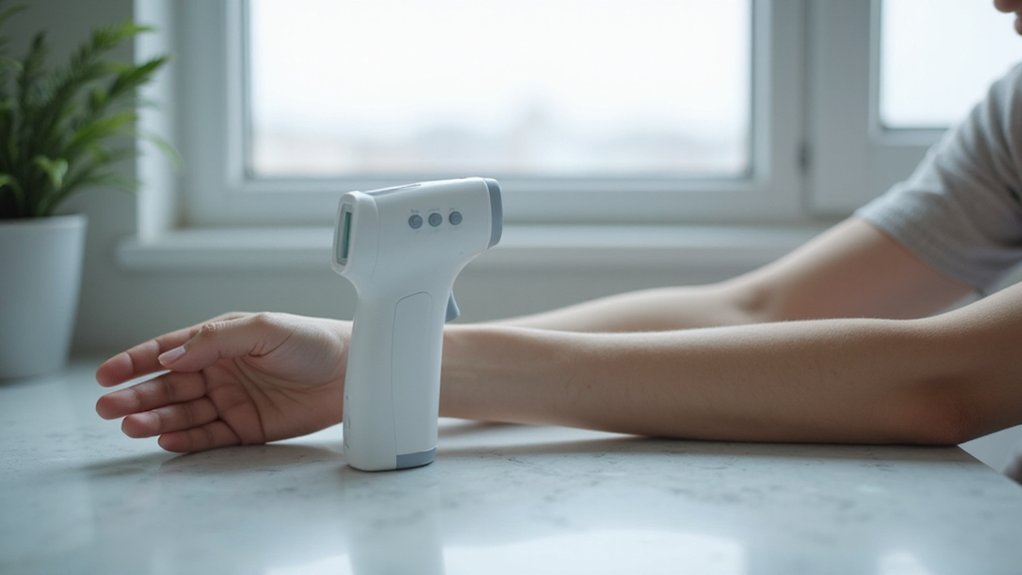
Ever wondered how accurate your IR thermometer readings are when measuring human skin? The key is setting the right emissivity, and for skin, that value is usually about 0.98.
This high emissivity makes skin behave like a nearly perfect blackbody, giving reliable temperature readings without needing adjustments for skin tone or pigmentation.
Keep reading to understand why surface conditions still matter.
What Is Emissivity and Why Does It Matter for Temperature Readings?
Emissivity is a measure of how effectively a surface emits thermal radiation relative to a perfect blackbody, with values ranging from 0 to 1. It’s crucial because it directly influences the accuracy of infrared temperature readings. Different materials have different emissivities; for example, polished aluminum has a low emissivity around 0.10, meaning it emits less thermal radiation and reflects more, which can cause an IR thermometer to read a lower temperature than the actual surface temperature. Conversely, matte surfaces like paint typically have high emissivities near 0.90, emitting most of their thermal radiation and yielding more accurate readings. All objects are imperfect emitters, as no perfect blackbody exists in nature. For instance, a Dutch oven’s matte surface has a high emissivity, making it suitable for accurate IR readings. A cotton crochet cover similarly offers a high emissivity surface for precise readings.
If you do not account for emissivity, your temperature measurements may be significantly off. IR thermometers are usually calibrated for a blackbody, with an emissivity close to 1. When measuring real-world objects with lower or different emissivities, you need to input the correct value into the device. Failing to do so might cause a shiny metal surface to appear artificially cold, while matte surfaces are more accurately represented. Proper adjustment ensures your temperature readings truly reflect the surface’s temperature, not a distorted mix of emitted and reflected energy. This principle of adjusting for surface properties is similar to using the water displacement method to remove air from bags for precise sous vide cooking, where achieving the correct environment is key to accurate results.

🎁【High Accuracy】 DESOMIYE laser thermometer gun adopts the latest high-sensitivity temperature sensor, which can measure the temperature range of -50°C~600°C (-58°F~1112°F) in only 0.5 seconds. For best results, the reader should be 14 inches away from the object.

🎁【High Accuracy】 DESOMIYE laser thermometer gun adopts the latest high-sensitivity temperature sensor, which can measure the temperature range of -50°C~600°C (-58°F~1112°F) in only 0.5 seconds. For best results, the reader should be 14 inches away from the object.

【Wide Range】Every Sanliang infrared thermometer gun passes the strict and precise calibration test, so you can accurately measure between -58°-1112°F(-50°–610°C), even above boiling point and below freezing point from a safe distance. And you can get the results in 500 ms.
Why Human Skin Emissivity Nears a Perfect Black Body
Human skin has an emissivity of approximately 0.98 plus or minus 0.01 in the infrared spectrum. This high emissivity makes it one of the most reliable surfaces for infrared thermography. The reason lies in skin’s structure, which causes it to behave near a perfect black body. The high water content in your skin, similar to water itself, which has an emissivity of about 0.98, dominates infrared interactions. This means your skin effectively radiates heat, making it an excellent thermal emitter. Similar to how vinegar spray solution loosens rust from cast iron by breaking down surface oxidation, the physical properties of your skin’s water content reliably break down and emit thermal infrared radiation. Skin pigmentation does influence visible light absorption, but it does not significantly affect infrared emissivity. Instead, your skin’s molecular composition and water molecules handle most of the heat radiation. This physical property keeps your skin’s emissivity consistently close to the ideal black body standard of 1.0. Unlike metals such as aluminum foil, which have an emissivity around 0.03, your skin’s high emissivity ensures that infrared thermography readings remain accurate without needing correction for superficial features like melanin. A similar principle applies to glass, where material composition must be carefully considered because glass lids often have lower heat tolerances than the cookware they accompany. This consistency across diverse individuals makes your skin a dependable surface for temperature measurements in infrared imaging.
Does Emissivity Change With Skin Tone? (Spoiler: No)
Emissivity does not change with skin tone. Research with 65 participants shows no significant differences in emissivity when grouped by Fitzpatrick skin types or reflectance spectrophotometry (p > 0.3). Skin pigmentation influences how skin reflects visible light, but it does not affect infrared emission around 10.6 micrometers. Melanin doesn’t interact with far-infrared wavelengths, which explains why emissivity remains consistent across different skin tones. This means you can reliably use a standard emissivity value of 0.98 for any skin color. When using an infrared thermometer, there’s no need to adjust for skin tone. Instead, focus on factors like sweat, humidity, or lotions, which can impact readings by altering the surface properties. For instance, this principle mirrors the one-pot convenience of a Dutch oven, which reliably cooks all ingredients at once regardless of external variables. Forehead temperature readings typically range from 31.0°C to 35.6°C, which is naturally lower than core body temperature.
How a 5% Emissivity Error Skews Skin Temperature by 1°C
A 5% emissivity error, such as setting your device to 0.95 instead of the correct 0.98, causes a measurement bias of about 1°C in skin temperature. This is significant because a single degree can hide critical clinical signs; for example, hot spots just 2°C above baseline may indicate health issues. Accurate calibration depends on knowing the exact emissivity value for the skin. When your scanner assumes a fixed, incorrect emissivity, it consistently underestimates the true skin temperature. Emissivity variation across different areas of skin is minimal but still compounds this error when not properly accounted for. The physics behind it is straightforward: setting a lower emissivity makes your device think the skin emits less infrared energy, resulting in a calculated lower temperature. In medical screening, especially for fever detection, this 1°C discrepancy can lead to false negatives or misdiagnoses, highlighting the importance of precise emissivity calibration. Just as vacuum seal bags rely on removing oxygen to prevent spoilage and maintain food quality, infrared thermometers used in kitchens also rely on adjustable emissivity to accurately measure surfaces like sugar syrups and cake tops. Achieving this accuracy requires understanding the heat retention properties of different cookware, such as a cast iron skillet, which creates even heat for consistent caramelization.
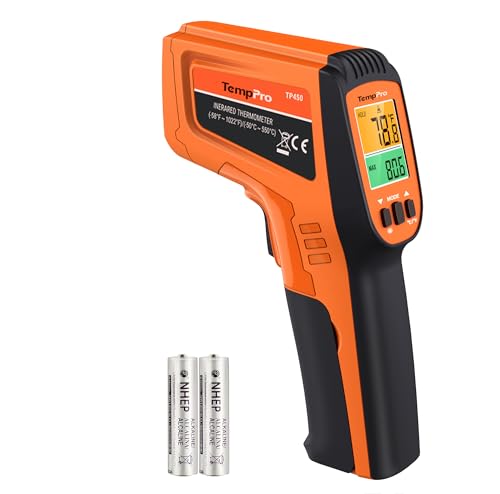
【Ultimate Versatility for Kitchen, Garage & House】Ideal for a multitude of tasks! Check pizza oven or griddle heat for perfect cooking, monitor HVAC system vents, or safely diagnose automotive repair issues like overheating engine parts, all with our infrared thermometer gun

【Highly Accurate & Adjusts to Any Surface】Designed with the latest thermopile sensor technology, the infrared laser thermometer gun is accurate to +/-1.5%; Improve this pizza oven thermometer gun measurements by adjusting the emissivity from 0.1–1.0 to match the surface material being measured

𝐕𝐞𝐫𝐬𝐚𝐭𝐢𝐥𝐞 𝐓𝐨𝐨𝐥𝐬: Infrared technology allows you to measure various objects at home and outdoors; Use it for 𝒎𝒆𝒂𝒕, 𝑫𝑰𝒀 𝒄𝒂𝒏𝒅𝒚, 𝒐𝒗𝒆𝒏𝒔, 𝒈𝒓𝒊𝒍𝒍𝒊𝒏𝒈, 𝒇𝒐𝒐𝒅, 𝒄𝒐𝒐𝒌𝒊𝒏𝒈, 𝒂𝒖𝒕𝒐𝒎𝒐𝒕𝒊𝒗𝒆 𝒖𝒔𝒆, 𝑨/𝑪, 𝒓𝒆𝒇𝒓𝒊𝒈𝒆𝒓𝒂𝒕𝒐𝒓𝒔, etc.
Why Forehead and Eye Readings Need Different Emissivity Settings
Forehead and eye canthus readings require different emissivity settings because surface conditions vary significantly between these areas. The forehead’s high sweat gland density and porosity can trap moisture, reducing emissivity from the standard 0.98 to about 0.96. Environmental factors such as sunscreen, makeup, and oils further lower emissivity to around 0.82, making temperature readings less accurate if settings aren’t adjusted. In contrast, the skin around the eye canthus remains relatively dry, with a thinner surface that reflects core temperature more directly. Because of these differences, you must set your infrared thermometer’s emissivity higher when measuring the eye canthus and lower when measuring the forehead. Adjusting the settings properly helps prevent temperature reading errors that could exceed 0.75 degrees Celsius. For example, keeping the skillet thoroughly dry after cleaning ensures no moisture remains to interfere with surface conditions. Properly calibrating the emissivity setting is crucial because high-emissivity surfaces are easier to measure accurately with an infrared thermometer, whereas low-emissivity surfaces require more careful adjustment to minimize errors. Sous vide cooking relies on precise temperature control to achieve consistent egg textures, similar to how emissivity settings must be precisely adjusted for accurate skin temperature measurements.
Common Emissivity Mistakes That Ruin Fever Screening
Assuming skin emissivity is universally 0.98 can lead to significant errors in fever screening. ASTM data show skin emissivity varies between 0.94 and 0.99, and neglecting this range causes site-to-site and individual variations that systematically distort temperature readings. This variability directly affects infrared sensor calibration, leading to uncertainties up to 0.5% of the measured temperature. Relying on a single default setting across diverse populations increases the risk of missing fevers—false negatives—and misinterpreting health status. For instance, the assumption of a default emissivity value causes inaccuracies when measuring low-emissivity materials like polished copper, as observed in the lab measurements. This is analogous to how metal knobs on Le Creuset cookware withstand high heat better than phenolic knobs, where material selection directly affects performance. Properly controlling these variables is akin to applying a thin, even layer of oil to build durable seasoning on a cast iron skillet.
Ignoring the importance of distance-to-spot ratios is another common mistake. Standing too far from the patient causes the sensor to pick up background radiation instead of skin temperature, invalidating the clinical standard of ±0.3 °C. Environmental factors like drafts or hot objects nearby further skew infrared readings, destabilizing the calibrator and compromising accuracy. Using non-FDA-cleared devices that normalize temperatures downward can mask true fevers, increasing false negatives and undermining screening effectiveness. To ensure reliable measurements, you must carefully control emissivity settings, maintain proper distance, and account for environmental conditions.

【CAL Function for Stable Reading】 Features exclusive one-button calibration technology to maintain measurement consistency for objects over time, effectively countering the reading drift often seen in standard thermometers. Our advanced sensor delivers dependable data for your projects.

【Dual Accuracy Optimization with ±1.5℃ Tolerance】The temperature gun features adjustable emissivity to offset measurement errors from different surface materials and a dedicated CAL calibration function to correct long-term reading drift. Combined dual technologies keep the measuring error within ±1.5°C for precise and consistent temperature readings.

High-Precision Measurement: VEVOR infrared thermometer features dual laser configuration, 0.10-1.00 adjustable emissivity, and ultra-fast response time within 0.25s, allowing for accurate surface temperature detection across different materials and varying conditions.
How Gel, Ointments, and Creams Alter Skin Emissivity
Topical skin treatments frequently interfere with accurate fever screening because they alter the skin’s spectral emissivity. When you measure skin coated with creams, ointments, or gels, these substances create a surface coating that changes the spectral emissivity in the 2–14 micrometer range. Such coatings often reduce the measured temperature by more than 4°C, leading to false readings. Ultrasound gel, for example, directly distorts surface temperature readings because its emissivity differs significantly from bare skin. Disinfectants and other topical substances can also affect measurements by modifying the surface properties. Infrared thermometers detect the emissivity of the coating, not the skin itself. To obtain correct temperature assessments, you must account for each substance’s emissivity in your calculations. Unlike cooking chicken where visual cues like juices run clear indicate doneness, skin coatings require explicit emissivity compensation, similar to how Stasher bags require careful management to prevent leakage during sous vide cooking. For the most accurate results in internal temperature measurements, digital probe thermometers are generally recommended for verifying true body temperature. Failing to do so results in measurements that reflect the topical layer rather than the true skin temperature, compromising fever screening accuracy.

Acoustically correct for the broad range of frequencies used
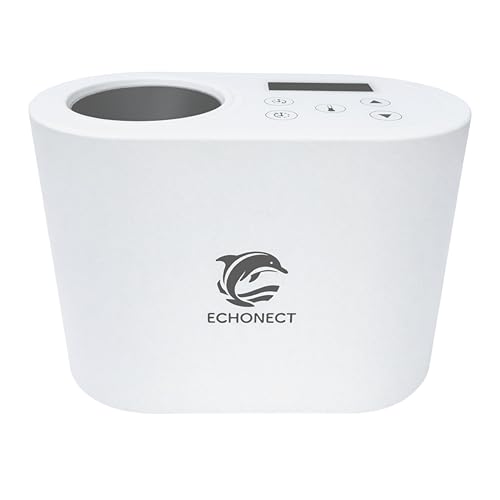
New Lite Model – Professional Performance at an Economical Price The Ultrasound Gel Warmer Lite delivers dependable heating in a streamlined, budget-friendly design. Ideal for medical imaging rooms, physiotherapy clinics, chiropractic offices, OB/GYN, MSK ultrasound, and massage therapy practices.

Hospital grade plug and power cord
How to Set Your Thermometer to 0.98 for Accurate Skin Readings
To set your IR thermometer to an emissivity of 0.98 for accurate skin readings, start by calibrating the device with a known temperature source. Heat your target skin area to a steady temperature and measure it with a contact probe, ensuring the temperature is stable. Aim the IR sensor at the same spot and adjust the emissivity setting until the IR reading matches the probe measurement. This process typically results in setting the emissivity to 0.98, which is ideal for skin surfaces. Notably, unlike a Dutch oven prank that traps heat and odor under blankets, this calibration ensures precise thermal measurement. As with refilling a butane torch, you should work in a stable, well-ventilated area free of open flames to maintain safety during calibration.
Alternatively, you can use matte black tape on the skin. Set the emissivity to 0.95 and record the temperature reading through the tape. Remove the tape and aim the IR thermometer at the bare skin, then adjust the emissivity until the reading matches the previous measurement. This confirms that an emissivity of 0.98 is correct for your skin. Remember to disable reflected energy compensation and keep ambient temperature around 24°C to maintain measurement accuracy.
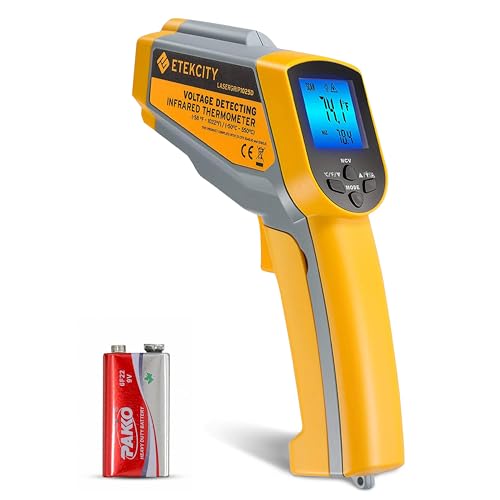
NOT FOR HUMAN: Temperature readings from this device are inanimate objects. The measured temperature for humans or animals will not be correct, 9V battery included. Class 2 laser, optical power 0.3-0.49Mw

PRECISE TEMPERATURE MEASUREMENT: Infrared Thermometer (Cat. No. IR1) with a 10:1 optical resolution ensures accurate temperature readings from a distance

More Valuable 2-in-1 Set】Include a temp gun and instant read thermometer; The laser thermometer with range from -58 to 1022 °F supports food prepare, auto maintenance, home repairs, while the cooking thermometer ranging from -58~572 °F gets internal temps for BBQ, grill, smoker, deep-frying and candy making