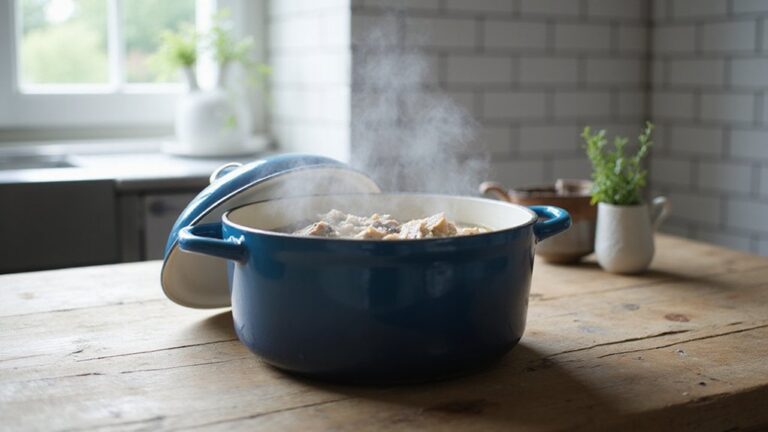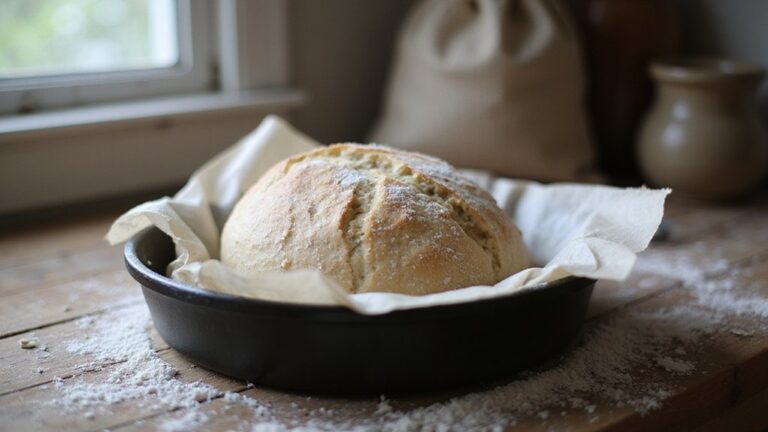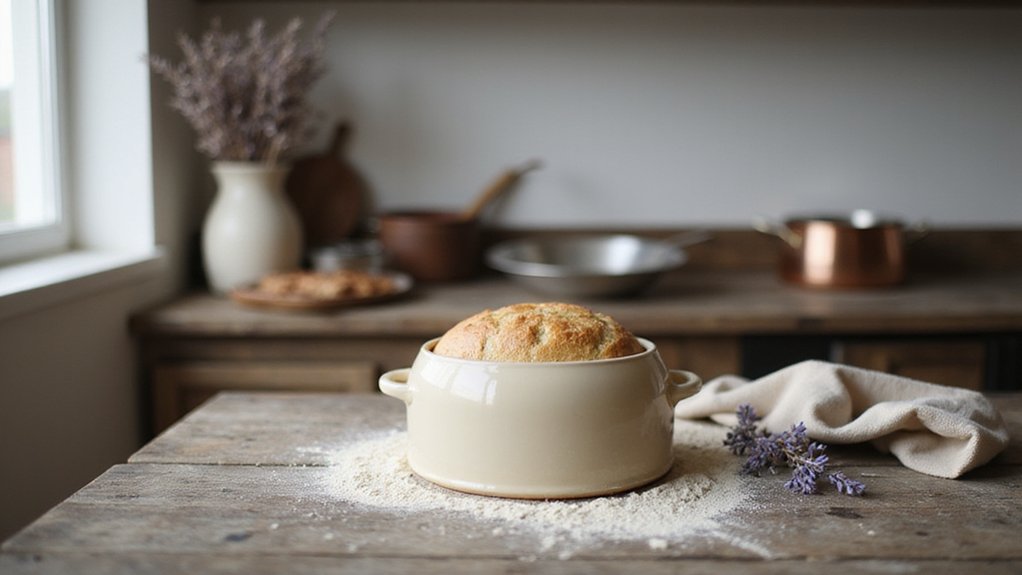
Deciding between a cloche and a Dutch oven for baking bread can feel confusing. Both deliver great crusts, but they create different textures and finishes.
Your choice depends largely on whether you want a rustic, thick crust or a light, delicate one.
Whatever your preference, the right tool makes all the difference, and the details are just below.
What Each Tool Does Differently for Bread Crust and Texture
A cloche creates a crisper, thinner crust, while a Dutch oven produces a thicker, chewier one. The ceramic walls of a cloche offer superior insulation, maintaining a consistent temperature that promotes a rapid oven spring. This results in an open, airy crumb and a delicate, crisp crust that stays thin and crisp thanks to locked-in steam. However, the porous ceramic requires gentle cleaning to prevent stains and damage. Like a well-seasoned cast iron skillet, the Dutch oven can be coated with a high smoke point oil to build a natural non-stick surface over time. In contrast, a Dutch oven, made of cast iron, heats up more quickly, trapping moisture inside. This environment encourages a tender crumb, with a thicker, chewier crust that browns intensely. The sealed lid helps retain steam and moisture, producing a shiny, crackly surface. Overall, the Dutch oven’s design makes for a softer crust with more substantial bite, ideal if you prefer a richer, denser bread. Your choice depends on whether you want a crust that’s crisp and delicate or thick and chewy. For precise temperature control, a sous vide water bath can achieve specific textures for eggs, but bread baking relies on the steady heat retention of these vessels.
Dutch Oven vs. Cloche: Which Retains Heat Better?
A Dutch oven retains heat better than a ceramic cloche because of its higher thermal mass. The dense cast iron construction allows it to store and transfer heat more efficiently, providing a stable temperature during baking. This means when you add cold dough, the oven maintains a consistent environment, promoting better oven spring. To maintain that performance over time, it helps to bake the skillet upside down after seasoning to ensure an even, nonstick layer. It also preheats faster than a cloche, usually within 10 to 15 minutes, which helps streamline your baking process. The preheated Le Creuset Dutch oven produced taller, more upward-rising loaves compared to the cold Emile Henry cloche. Even if you use alternative heating methods like a baking stone, they typically do not deliver the same intense and rapid heat transfer as a Dutch oven. For those with access to advanced tools, electrolysis tanks can remove all rust more thoroughly than other methods.
While a cloche can hold heat well once fully preheated, it doesn’t store as much energy because of its ceramic material. This results in slightly less heat retention throughout the baking process. For achieving an environment with high, consistent heat that encourages excellent rise and a crusty crust, the Dutch oven remains the more reliable choice.

Quality Enameled Dutch Oven: The Lodge Essential Enamel Cast Iron Dutch Oven gives you all the benefits of cast iron cooking, great heat retention and durability, without fear of rust; it's also PFAS free

IDEAL FOR FAMILY MEALS - Perfectly sized for families of 3–5 people, this 5.5QT Dutch oven handles everything from hearty soups and stews to one-pot dinners, pasta dishes, and Sunday pot roasts. Spacious enough for a whole chicken yet practical for everyday cooking, it delivers the ideal balance between daily family meals and weekend entertaining. Also well-sized for artisan bread bakers who want one pot for both family dinners and sourdough baking.

Even Heat Distribution Retention: This Dutch oven Made with heavy-duty enameled cast iron, ensures even heat distribution for perfect searing and slow cooking, locking in flavors. thickened walls lock in heat for slow braising, searing, and baking. Unlike thin pots that scorch food, this professional-grade Enameled cast iron pot maintains steady temperatures
Which Baking Tool Creates the Crust You Want: Thick and Chewy or Thin and Light?
A Dutch oven creates the thick, chewy crust you want, while a cloche is better for a thin, light crust. Baking without steam—such as leaving the Dutch oven lid off—produces a softer, more tender exterior with less crispness. You sacrifice the shattering surface but gain a more delicate bite. A cloche, with its dome shape and ceramic insulation, provides a humid environment that encourages a rustic, well-developed crust. However, it does not deliver the same extreme chewiness as a Dutch oven equipped with the lid, which traps intense steam during baking. Similar to how blanching deactivates enzymes in squash to preserve texture, trapping steam in a Dutch oven preserves moisture for a chewier crust. For cast iron cookware, be aware that extended soaking in Evapo-Rust can cause surface etching and a dulled appearance on pristine areas. Select your tool based on whether you prefer a thicker, chewier crust or a thinner, crisper one. For removing stubborn carbon build-up on a cast iron skillet, methods like prolonged soaking or physical scrubbing with steel wool can be effective before reseasoning.
How Dutch Ovens and Cloches Manage Steam for Oven Spring
Both Dutch ovens and cloches trap steam during the first 10 to 15 minutes of baking to support oven spring, but they manage that moisture slightly differently. With a Dutch oven, you preheat the heavy cast iron pot for about 30 minutes, then add a tablespoon of water right before loading your dough. This creates an instant, dense steam burst that helps the dough expand quickly and retain moisture. In contrast, a cloche’s domed lid allows steam to rise and condense directly onto the crust, promoting even expansion and a uniform crust formation. Using enameled cast iron requires preheating gradually to avoid damaging the coating, a key beginner tip for optimal results. Your flavor variations and fermentation techniques also influence how each tool handles steam—wetter dough from longer fermentation releases more vapor, further enhancing oven spring. After approximately 20 minutes, you remove either lid to transition to dry heat, which helps the crust set properly without becoming soggy. This affordable, versatile cookware is also ideal for making budget-friendly Dutch oven recipes for two, such as hearty bean and bell pepper chili or slow-cooked whole chicken stew. For bakers who also value reliable preservation methods, choosing a model with sealing modes for different food types can extend the life of leftover dough or baked goods.
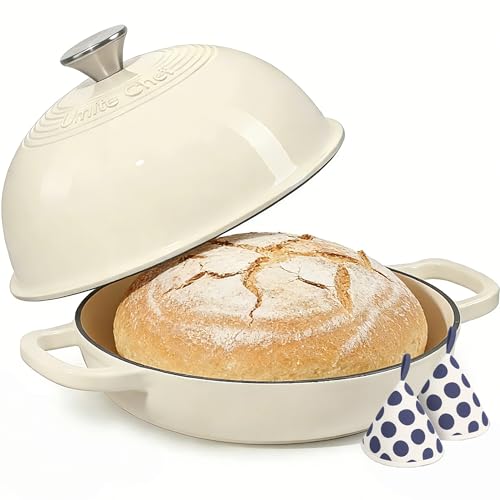
Achieve Professional Artisan Bread at Home - Expertly designed for bread baking, this 6 qt cast iron bread oven creates the ideal steam baking environment. Crafted from high-quality cast iron, it ensures superior heat retention for a crispy, golden crust and impressive oven spring—just like a bakery. The domed cloche lid traps moisture perfectly, guaranteeing delectable results every time

The Ultimate 9-in-1 Pro Bread Baking Kit – From Beginner to Artisan. This complete set is engineered for perfect homemade bread, covering the entire workflow: a 5QT Enameled Cast Iron Sourdough Bread Oven (with lid), 10inch Rattan Proofing Banneton, Stainless Steel Dough Scraper, Bread Sling, Dough Whisk, Bread Scoring Lame, Cleaning Brush, and Heat-Resistant Gloves. No need for extra purchases. Ideal for sourdough, no-knead, rustic bread, and even meatloaf.

The Ultimate 9-in-1 Pro Bread Baking Kit – From Beginner to Artisan. This complete set is engineered for perfect homemade bread, covering the entire workflow: a 5QT Enameled Cast Iron Sourdough Bread Oven (with lid), 10inch Rattan Proofing Banneton, Stainless Steel Dough Scraper, Bread Sling, Dough Whisk, Bread Scoring Lame, Cleaning Brush, and Heat-Resistant Gloves. No need for extra purchases. Ideal for sourdough, no-knead, rustic bread, and even meatloaf.
Baking Temperature and Timing: Preheating, Baking, and Lid Removal
Preheating, baking, and lid removal follow a specific schedule that varies slightly depending on your vessel, but the core principle remains the same: trap steam at the beginning to develop a good crust, then remove the lid to allow it to crisp up. For a Dutch oven, preheat at 475°F for 45 minutes. Bake the bread covered for 30 minutes, then remove the lid and continue baking for another 20 to 25 minutes. With a cloche, preheat at 450 to 475°F for 30 to 45 minutes, bake 30 minutes covered, then uncover and bake for 15 to 20 minutes. Temperature calibration is important—cloche methods often start at 525°F, then drop to about 485°F after 7 minutes. The final internal temperature of your bread should reach between 200°F and 210°F to ensure it’s fully baked. For comparison, FoodSaver bags can withstand boiling temperatures up to 212°F, making them reliable for sous vide cooking at similar heat levels. Remember, maintaining your vessel’s seasoning and condition affects heat distribution and overall baking results, so keep up with its upkeep. Alternatively, home bakers can achieve a crusty loaf by using a large baking tray with a pan of steam placed on the bottom oven rack. For a similar approach in a cast iron skillet, a 9-inch skillet is the ideal standard size for cornbread, though precise sizing is forgiving.
Why Dutch Ovens Burn Your Bottom Crust (and How Cloches Don’t)
The flat cast-iron base of a Dutch oven acts like a heat sink, concentrating intense radiant energy directly under your dough and causing the bottom crust to burn. The heavy, dark surface absorbs and retains excessive heat, while its large heat capacity prevents quick temperature changes. Without insulation, heat focuses on a small area, accelerating the burning process. Cloches, on the other hand, are designed to prevent this. Their domed, elevated bases reduce direct contact with the dough and distribute heat more evenly. Made from lighter ceramic materials, cloches retain less heat overall, preventing hot spots. The curved interior promotes better heat circulation, reducing the chance of heat pooling and burning. Adding parchment paper or seeds acts as a buffer, further protecting the bottom crust. If you’re adjusting your baking setup, remember that shaping techniques that create a tighter dough contact with the pot floor also help reduce scorching. Cloches give you this control naturally without risking a burnt bottom. This is similar to how seasoning steak with salt before sous viding allows flavor to penetrate deeply into the meat rather than just coating the surface. A Dutch oven’s even heat distribution is excellent for other methods, but its flat base directly under the dough creates a problematic hot spot for baking bread. In contrast, using an infrared thermometer with an appropriate emissivity setting ensures you accurately measure the surface temperature of your cloche or dough, preventing guesswork and further reducing the risk of burning.
Cast Iron vs. Ceramic: Heat Retention vs. Moisture Regulation
Cast iron provides superior heat retention due to its dense material, making it ideal for maintaining consistent, high temperatures during baking. Its hefty weight ensures maximum thermal stability, so your bread’s bottom crust develops evenly without temperature fluctuations. This steady heat spread helps produce a uniform crust and well-cooked interior. This same principle of reliable heat retention makes cast iron indispensable in industrial settings for monitoring the temperature of boilers and furnaces. In contrast, ceramic cookware heats up quickly because of its lighter build, but it doesn’t hold that heat as long. Ceramics are better suited for tasks that require moisture regulation, like steaming or delicate baking, where controlled evaporation is key. The difference in heat distribution is noticeable: cast iron distributes warmth evenly and stays hot, while ceramic cools down faster once removed from the oven. If your goal is a reliable, high-temperature vessel that maintains heat throughout baking, cast iron is the choice. If you prefer lighter handling with a focus on moisture control and lighter weight, ceramic can work, but be prepared to compensate for its reduced heat retention. For accurate temperature checks to ensure baking consistency, you should rely on fixed reference points like the ice point of water rather than a measurement like 120°F.

【2-IN-1 PRACTICAL DESIGN】: This pre-seasoned sourdough loaf pan with lid features a versatile top that also serves as a second baking surface, offering multiple cooking options. Whether used as a classic loaf pan for sourdough bread or flipped for additional use, it delivers even heat distribution for perfectly baked homemade loaves.

Even Heat for Better Rise: The Lodge Seasoned Cast Iron Loaf Pan provides even heat distribution that helps breads and cakes rise well while baking evenly

9 x 5 inch cast iron loaf pan, suitable for full size loaf bread. You can make two loaves at once, or use the 2nd pan as a lid. Perfect for making homemade sliced bread for sandwiches.
Can You Get the Same Results From a Dutch Oven and a Cloche?
You can achieve similar results with a Dutch oven and a cloche, but they are not identical. Both designs trap steam effectively, which helps you get a good oven spring and a crust that’s crispy. They also promote caramelization, enhancing the flavor and color of your bread.
However, there are differences in the crust and browning. A Dutch oven tends to produce a darker, chewier crust because it retains and conducts heat more intensely. In contrast, a cloche offers a thinner, more evenly browned crust, thanks to its slightly different heat flow and moisture regulation.
Cleaning is another area where they differ. The lighter weight and smoother interior of a cloche make it easier to wash than a heavy, sometimes sticky Dutch oven. While both tools can produce excellent bread, your results will vary slightly, especially in crust texture and overall browning. For bakers considering alternative methods of steam trapping, remember that reliable results often require products designed for vacuum sealing rather than improvised bags. Infrared thermometers, while useful for surface readings, are less reliable than digital probe thermometers for measuring the actual internal temperature of mixtures like candy syrups.
Which Tool Should You Pick Based on Your Baking Style?
A Dutch oven is ideal if you bake larger loaves and want a thick, chewy crust. Its heavy cast iron construction handles thermal stress well, reducing the risk of cracking during high-temperature baking. This versatile tool can also be used for roasting, frying, or stewing, making it a durable, long-term investment. Because of its robustness, it’s suitable for serious bakers who prefer one multi-purpose piece that can handle various kitchen tasks. Ultimately, your batch size and whether you prioritize crust thickness or versatility will determine if a Dutch oven is the best choice for you.

This cast iron bread oven is specifically designed for sourdough bread baking. The base of this bread oven is shallow, makes it easy to place the bread dough. The dome lid of the cast iron oven allow for the upper expansion of your breads.

LOW MAINTENANCE: a great alternative to the traditional bare cast iron pot for busy working individuals, our ovenproof casserole dish is coated with enamel for a sleek smooth finish, enjoy quick and easy cleaning with no need of seasoning!

Pre-seasoned 2-in-1 cast iron dutch oven: The 2-In-1 cast iron dutch oven pot with skillet lid has been burned with vegetable oil,(no synthetic coatings or chemicals). The shallow skillet that can be used as a lid
Top-Rated Dutch Ovens and Cloches for Serious Home Bakers
For serious home bakers, a 5.5-quart Dutch oven like the Staub Cocotte offers a top-tier option that balances size and performance. It costs around $278 and provides excellent heat retention, essential for achieving consistent bread crusts. The Lodge 5-quart Dutch oven is a budget-friendly alternative at approximately $60, delivering reliable results for less money.
Cloche-style covers are designed to create a sealed environment that traps steam, which helps develop a crust with a perfect texture. The Challenger and Fourneau models feature specific geometries optimized for even steam distribution and crust formation. Meanwhile, the Le Creuset Bread Oven, priced at about $310, functions as a high-quality Dutch oven alternative with the added benefit of enameled surfaces that prevent rust and ease cleaning.
When choosing between enameled and unenameled options, consider your maintenance preferences. Enameled models like Staub and Lodge Oyster are rust-resistant and require no seasoning, making them ideal for frequent use. Unenameled cast iron, on the other hand, needs seasoning and careful maintenance but offers a more traditional baking experience. Whether you invest $60 or $310, these highly rated tools are designed to produce consistent, bakery-quality bread results at home.

Even Heat Distribution Retention: This Umite Chef Dutch oven Made with heavy-duty enameled cast iron, ensures even heat distribution for perfect searing and slow cooking, locking in flavors. thickened walls lock in heat for slow braising, searing, and baking. Unlike thin pots that scorch food, this professional-grade Enameled cast iron potSuperior heat retention after preheating (allow 5-7 mins for even distribution). CRITICAL: Always cool naturally for 45+ mins before cleaning. Thermal shock (hot-to-cold contact) cracks enamel. USE TIP: Preheat 2-3 mins on medium-low only

𝐃𝐨𝐦𝐞 𝐃𝐞𝐬𝐢𝐠𝐧: Perfect for Crusty Sourdough The AHJ pre-seasoned Dutch oven is ideal for sourdough baking. When used with the lid in the oven, it locks in steam—ensuring condensation drips down the lid walls without soggying the bread—for an ultra-crisp crust and soft, fluffy interior. The 5-quart large capacity easily accommodates big sourdough loaves, perfect for sharing with the whole family.

Achieve Professional Artisan Bread at Home - Expertly designed for bread baking, this 6 qt cast iron bread oven creates the ideal steam baking environment. Crafted from high-quality cast iron, it ensures superior heat retention for a crispy, golden crust and impressive oven spring—just like a bakery. The domed cloche lid traps moisture perfectly, guaranteeing delectable results every time This explicitly states that this is a premium, delicate kitchen item that requires careful handling to maintain its beauty and durability